An Italian Summer(y)

Centro Maschere e Strutture Gestuali

Earlier this summer, I posted about my study with the Sartori in Abano Terme, a small city of 19,000 near the larger city of Padova. Here are a few photos of the rest of that work!


From our initial designs on paper, we sculpted our masks in clay. Then we made a mold, did a test run in carta pesta (an Italian papier mache), and made modifications as necessary. We then used all of our research to sculpt the wooden matrix, which was used as the base to shape our leather. This entire process took a month. It’s such a wonderful experience to be able to take the time to concentrate on a project like this without other pressures.

After finishing the masks, we met with Giorgio Bongiovanni of the Piccolo Teatro di Milano to investigate the performance of commedia masks, and later, our own. Fabian Gysling of Ècole Gysling was also there to help us find our characters and play in the masks. The slideshow above is from the public demonstration of our work. Luckily, the theater was air-conditioned.

A Two Week Interval

After completing the Sartori workshop at the CMSG, I had a little time to kill before my next workshop. I spent an extra day sketching masks at the Museo Internazionale della Maschera Amleto e Donato Sartori in Abano Terme. Next, I went to a farmhouse in Chiesanuova to visit my classmate Barbara, and together we traveled to San Miniato to visit mask maker Matteo Destro. Afterwards I traveled north to Malcesine, where I visited costume designer Fabio Toblini.  I regrouped with  friends to see Marmolada in the Dolomiti mountain range (a UNESCO World Heritage site). Finally, I explored historic Roma. It wasn’t built in a day, and you certainly can’t see it in three (especially in the summer heat). However, I was able to strategize a tour of Caravaggio paintings and some awesome historic buildings (e.g. the Basilica San Clemente) with the kind help of the friends and family of a fellow Portlander! (Molte grazie a Arturo, Anna, Riccardo, Guya, and Francesco!)

Here’s a slideshow sampler of my travels!

Familie Flöz Sommer Akademie

My other study was a two-week course in mask performance and the creation of performance material in ensemble with the Berlin-based company Familie Flöz. Our classes were held in the Abbazia San Giusto, a refurbished monastery on the outskirts of the small town of Tuscania. When I told people in Italy where I was going, they (reasonably) assumed I was mispronouncing “Toscana” (aka the large region we call “Tuscany”). It only confuses the matter that Tuscania is quite near the border of Toscana.

The Familie Flöz is pretty unique. They create original, wordless, character-centered mask performances that often play in a clown-like sense of comedy. (Check out a short film of one of their first shows in 1995, and also a trailer for their show that just swept the Edinburgh Fringe off its feet). I was very curious to find out how they devise their work and the techniques they employ to bring these full-face masks to life.

Though some students came to study how to build masks, and others came for performance training, we all began the work together each morning with a movement class. What an amazing and perfect way to start the day! Apparently birds thought so too, because they would frequently find their way into the studio—screens on windows were rare—and take a long time to find their exit.

The first four days were conceived as a quick introduction to all of the subjects we could study more in depth beginning on day five. Not only was it a great way to survey the kind of work we would do, it also gave us an opportunity to see which of the company members had a teaching style that worked for us.  In the end, I focused on Alexander Technique & Neutral Mask, Character Building in Full Face Mask, and Devising & Directing Mask Theater.

We spent a lot of time both in and out of the mask as ways to approach building both characters and scenes. Character interviews, partnered movement studies, and improvisations all flipped between these two modes. Another important idea in the beginning of the work was to remove the pressure of producing something—this pressure often only stifles the breath of creativity, and the relative value of a given improvisation can be determined the day after.

We ended the workshop with a large celebration. This included masked characters walking around the grounds of the Abbey as visitors entered, followed by a number of short scenes —including the one our group created about a composer finding inspiration in his everyday surroundings. Then, of course, lots of food and dancing!

When I thought back over my experience, I thought a lot about what conditions made for my best work over the summer. None of these are necessarily surprising, but the combination of these things was important.

  • Doing one thing at a time
  • Working in community
  • Limiting distractions
  • Being in a supportive culture
  • Proactive learning: pursuing questions vs waiting to receive wisdom
  • Listening to my intuition
  • Daily movement practice / Intentional connection with the body
  • Remaining emotionally available
  • Exchange with other cultures

The same might be said of life in general.

IMG_4694
Final Dance Party at Abbazia San Giusto

Many thanks ! The study with Familie Flöz was made possible in part by a professional development grant from :

racc_orange_horiz


Dancing (and chanting) the night away

I’ve been back a month now! And I haven’t been dancing nearly enough. Here are some moments that take me back.

Topeng

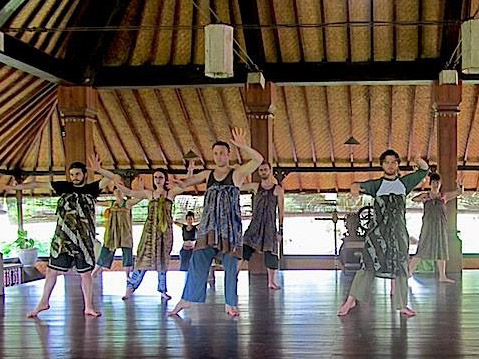
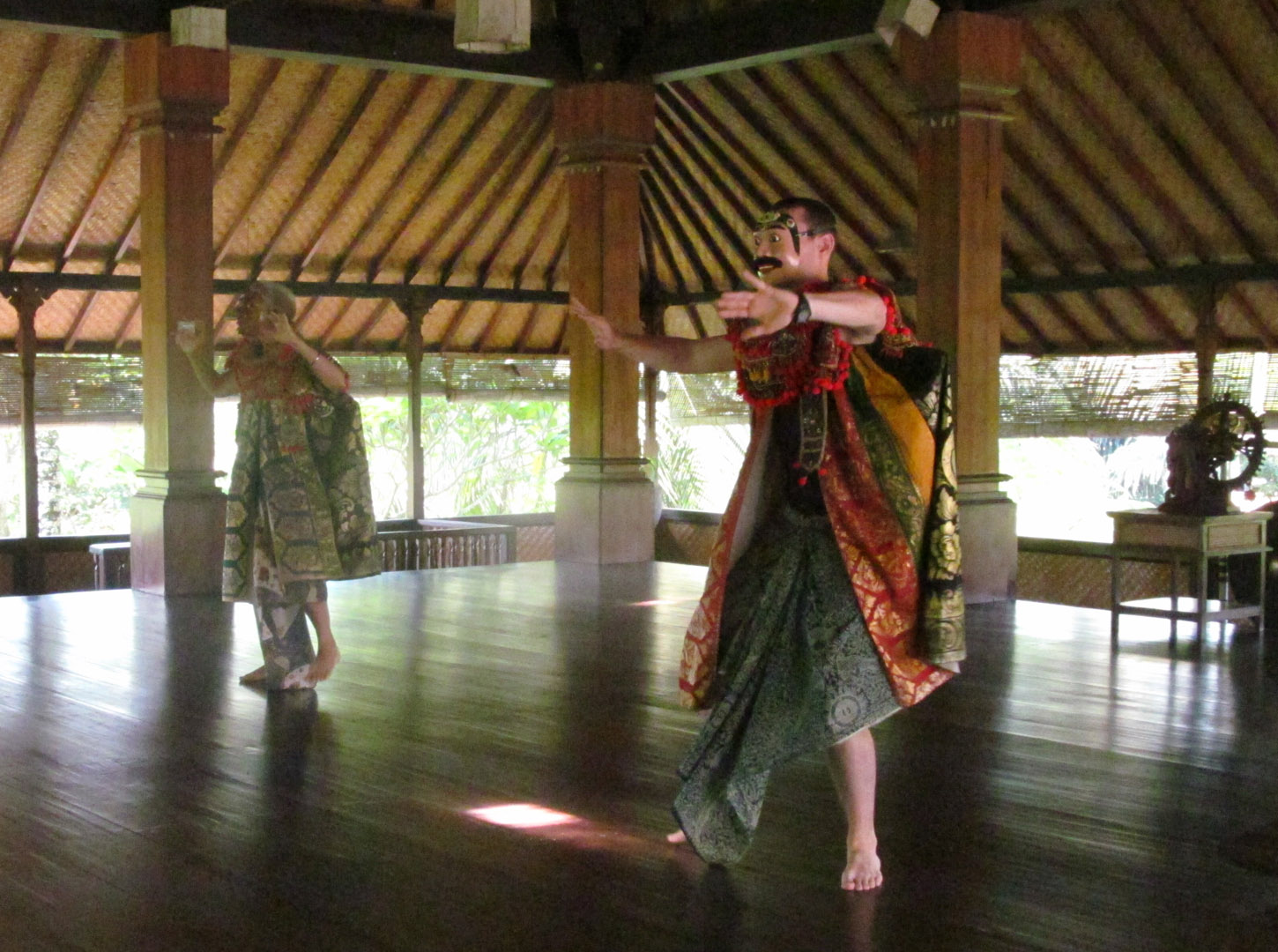
In dance class, we tied our sarongs high to simulate the costume we would eventually wear.
IMG_1031-andrewdance
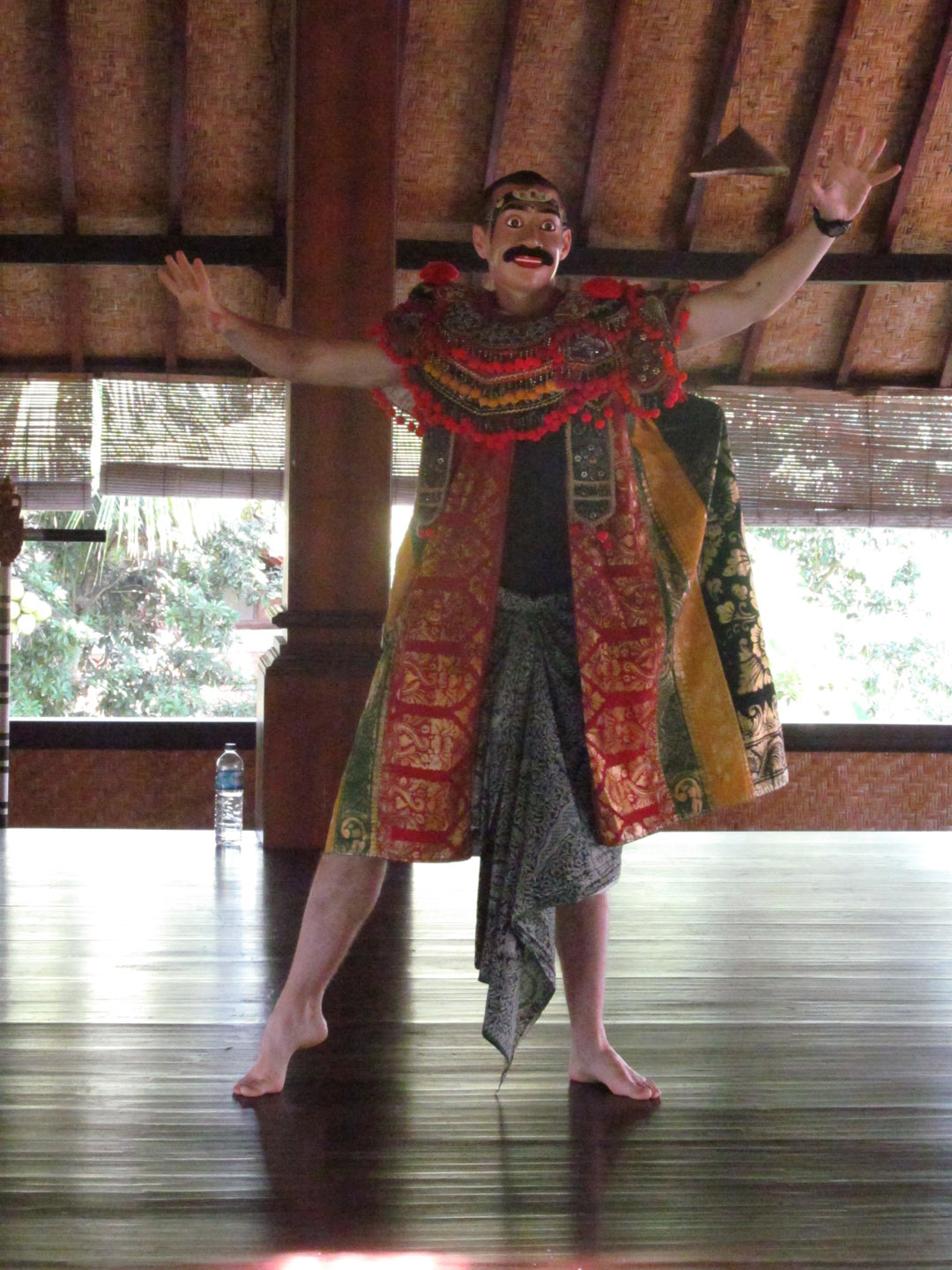
One of the more genial masks of the ones we used in class
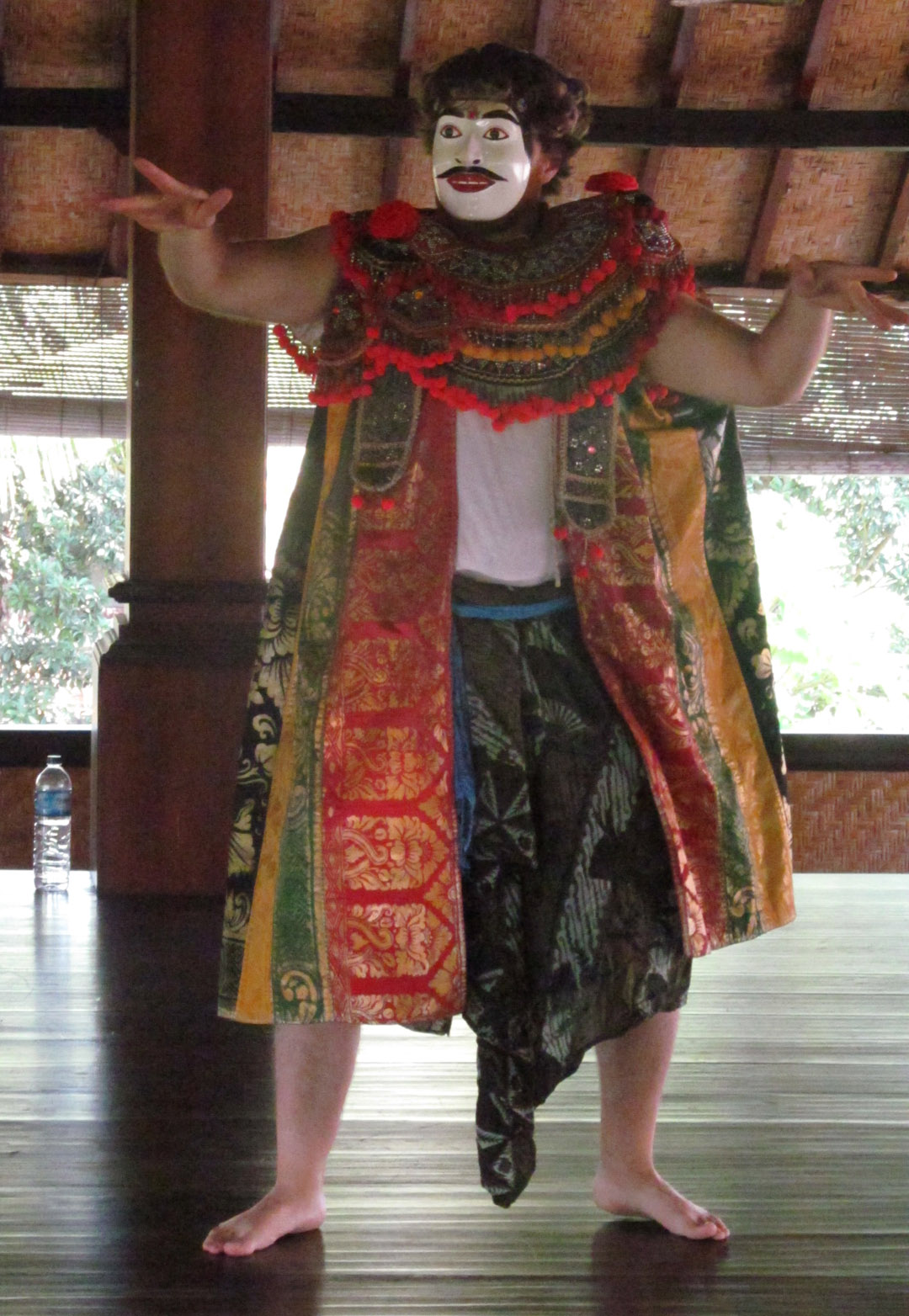
Another variation of the keras mask.

After a few weeks of study, we started wearing  a mask and the basic parts of the costume in class.  Both really change the way you move.

We began each class with a review as a whole, then dancing in pairs for greater detail work.

The costume frames the mask—which is typically carved slightly smaller than a face—in a way such that the arms and shoulders must be held high for it to play correctly. It feels odd at first, but it’s much easier to get a feeling for the choreography  when observing others use the mask and costume pieces.

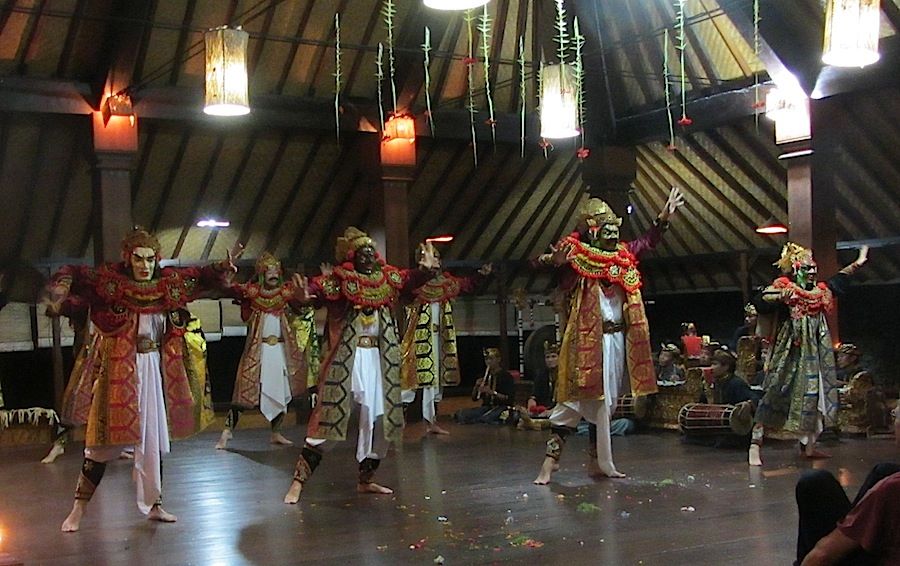
Some of the costume pieces—the wig, the hat, and the flowers by the ears—we used for the first time before performing for the public. It can be a little disorienting to add things at the last minute, but that’s how it goes. Below is a video of our final dance performance. It should give you a sense of what we were doing. It should be noted that normally the dance is actually done solo, and the music follows the dancer.  Conversely, we danced in a group, and were attempting to follow the music. We got it mostly right.  🙂

(Psst! I’m on the right.)

Kecak

On that night, we ended with our kecak performance.  There are six interlocking rhythms that form the majority of the chant (we each learned one of the six), as well as a bit of singing.  Originally, the kecak was done as a part of a trance ceremony. Since the artistic intervention of Walter Spies in the 1920s, this chant includes the story of the Ramayana when performed for tourists.

The video below is a section toward the beginning of the piece, so unfortunately you don’t get to see the exciting part we chase each other with fire …which we used for the first time during our actual performance. Can you say “trust exercise”?

This trip was made possible in part by a grant from the Regional Arts & Culture Council.

racc_orange_horiz

Photos from the Setia Darma House of Masks and Puppets

Photos from the Setia Darma House of Masks & Puppets

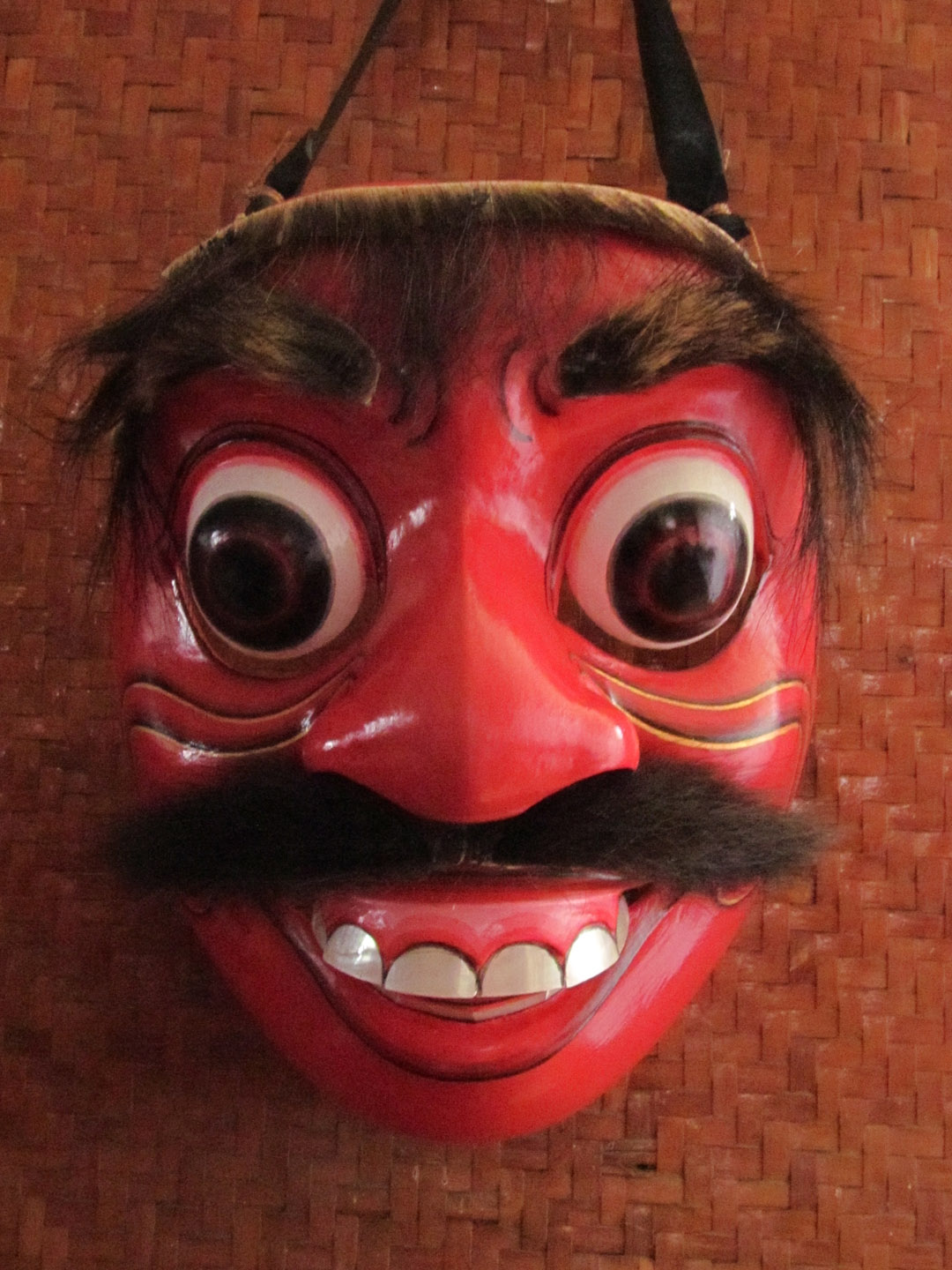
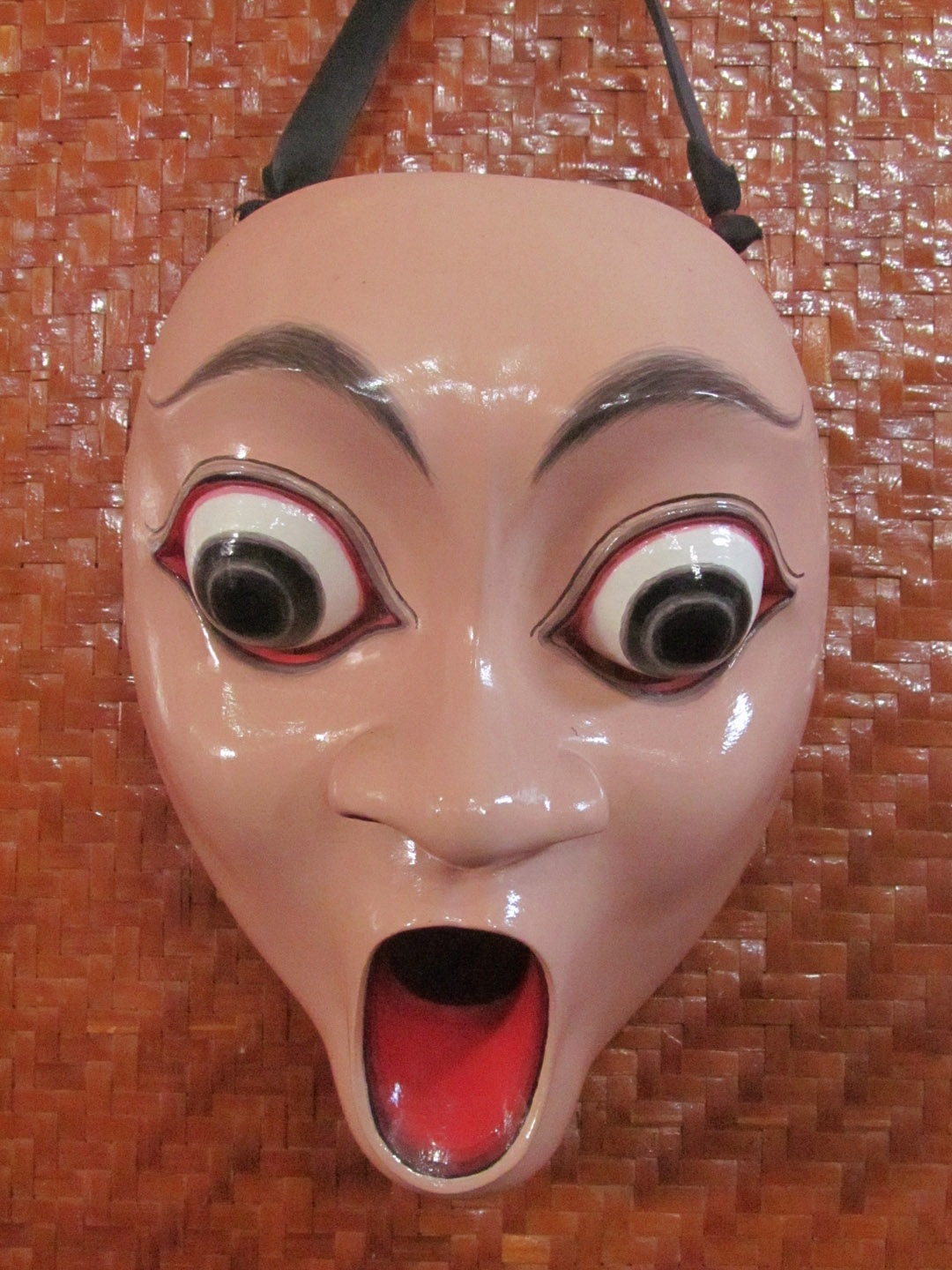
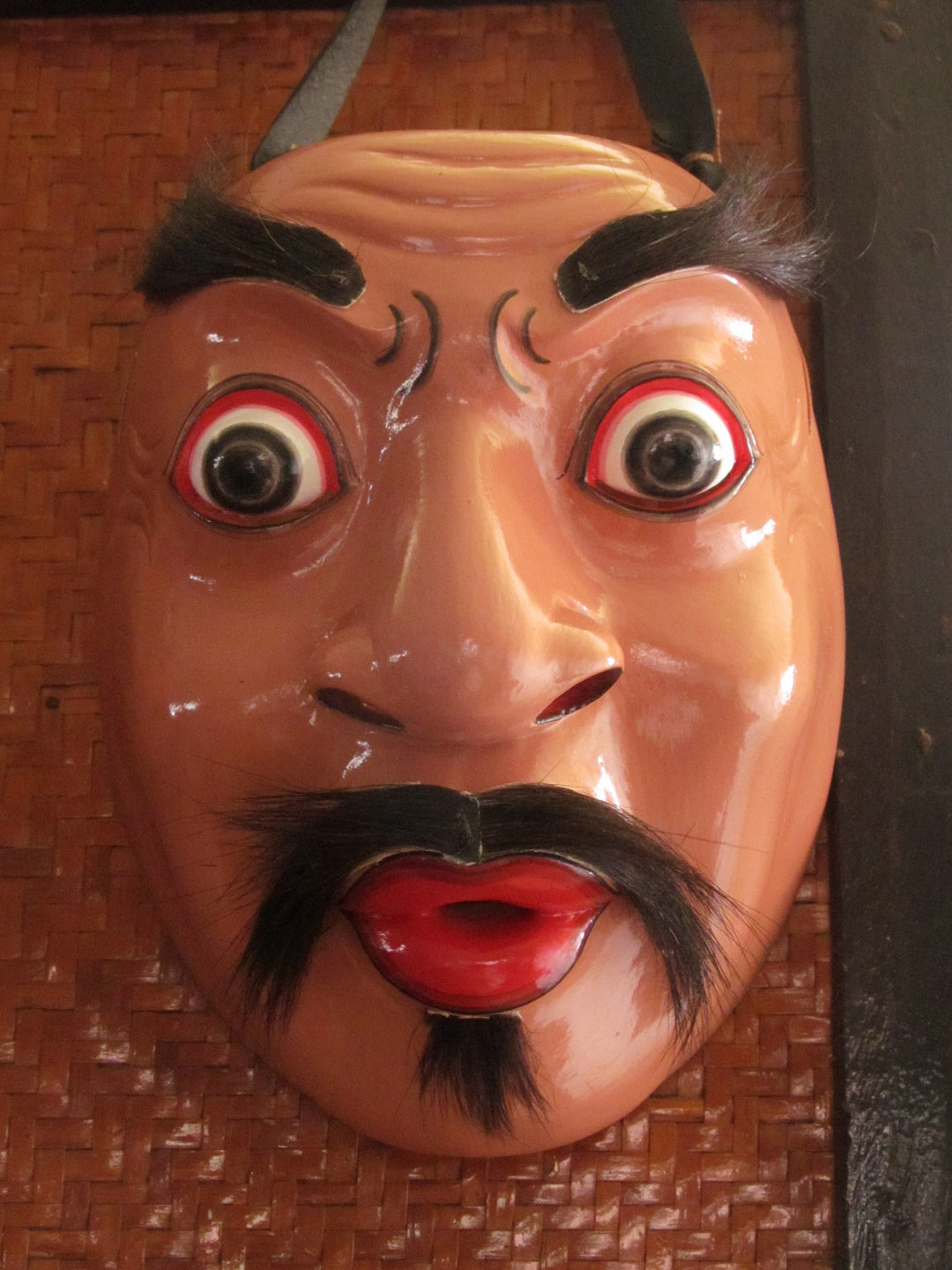
Here are my photos from our visit to the mask and puppet museum near the village of Mas in Bali.  There are many masks from major Balinese performance traditions of Calonarang, Topeng, and Wayang Wong included. There were also masks from other Indonesian isles and many other countries. I’ve included text from the museum placards (or at least the spirit of it) in the descriptions for each photo.

Enjoy!  Full photo album from the trip forthcoming!

Your friendly neighborhood mask maker,

Tony


This trip was made possible in part by a grant from the Regional Arts & Culture Council.

racc_orange_horiz

Things to Remember

The Surprises of Surprise

Wearing one of I.B. Anom's creations the first week in Bali.
Wearing one of I.B. Anom’s creations the first week in Bali.

Re-entry is interesting. And by interesting, I mean full of surprises. Surprise is also, itself, interesting. And therefore surprise is…surprising.

I’m not just playing circular word games.  Surprise, like accidents, cannot ever be fully predicted.  For example, when thinking about my reactions to coming back to the US after studying abroad, I could see some likely outcomes, and was therefore relatively prepared for those. But re-entry is surprising (=interesting (=surprising)). No matter how much I might look ahead or prepare, there will always be something surprising, something I won’t see coming.  Yet somehow I’m always surprised by the fact that I get surprised. And that’s interesting.

Melati Cottages, our home away from home. At the time this picture was taken, Portland was 66 degrees colder than Bali. But that was to be the least surprising change.

It was surprising to me to find the way in which the known parts of my life at home were feeling foreign. Suddenly awake and confused with jetlag at 4am, I looked at everything  in my room.  “This is mine. I chose these things. This is the way they look.”  Somehow it felt all very faraway. Recognizable, yes; but the thread of connection was difficult to perceive.

Nyoman Setiawan and I at the last group class in Pondok Pekak.
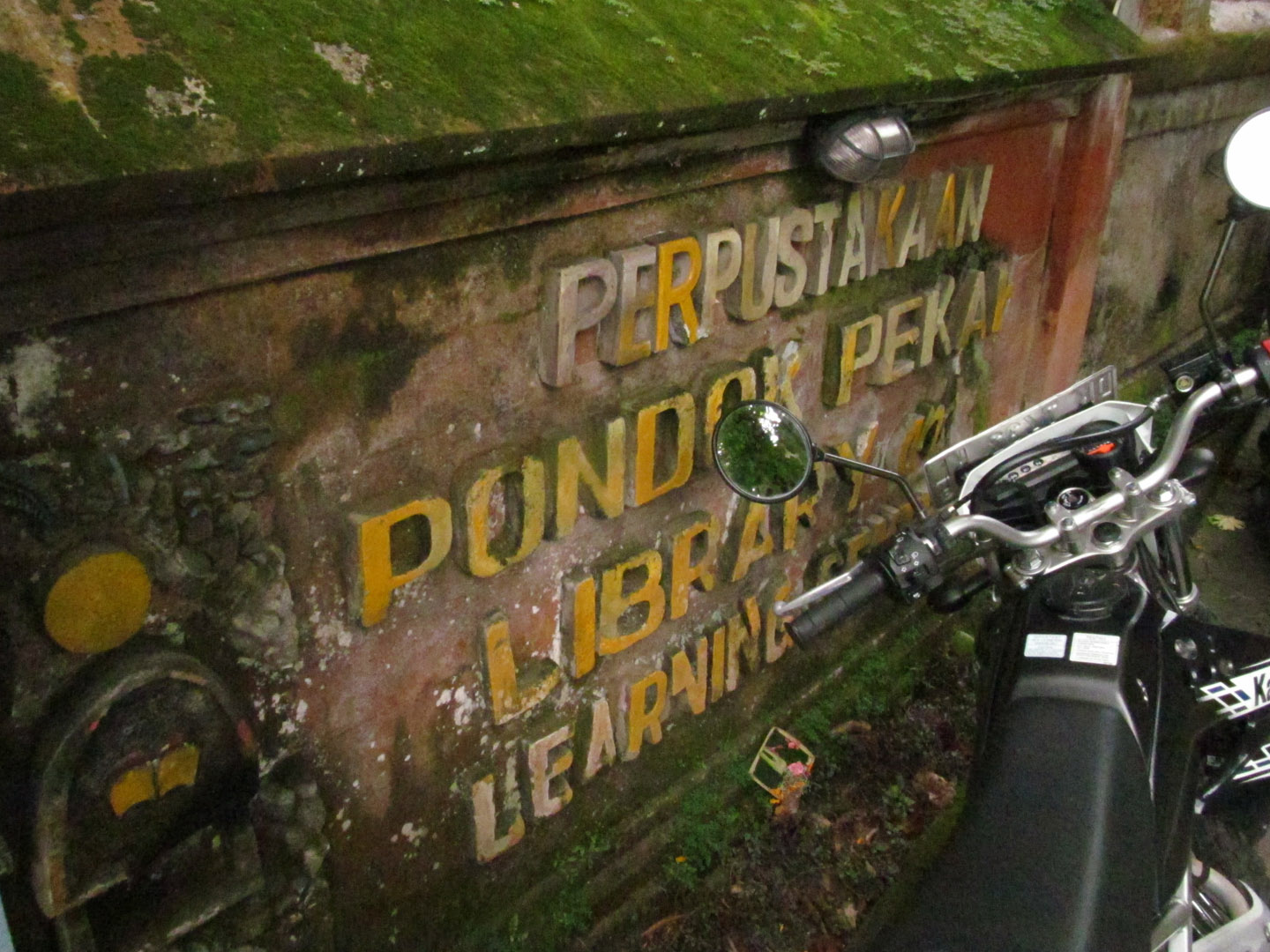
Nyoman Setiawan and I at the last group carving class in the Pondok Pekak Learning Center in Ubud.

A few days have passed, and the feeling has largely diminished. And as my home reality takes precedence, I want to record a list of sights and impressions from my trip before they, too, seem distant and difficult to connect with.

Sights and Sites

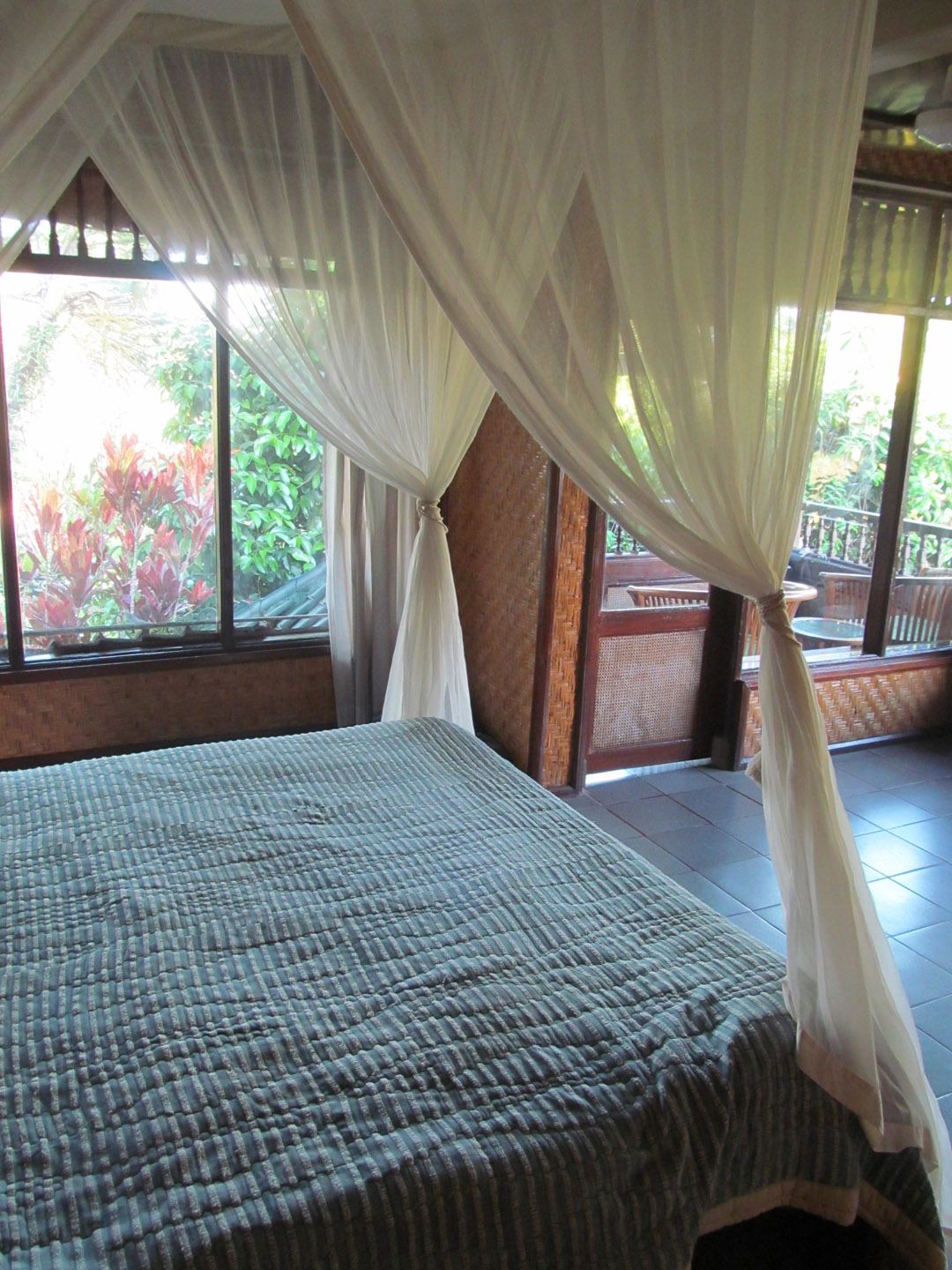
The second room I enjoyed at Melati Cottages. Much whiter and open than my first accommodations. Aren't mosquito nets ineffably romantic?
The second room I enjoyed at Melati Cottages.  Aren’t mosquito nets ineffably romantic?

(These are in no particular order)

° Sidewalks are segmented, and some stones  have metal handles. The walkway often has several stones which have fallen in, revealing the water channels beneath. These channels are all connected to each other.

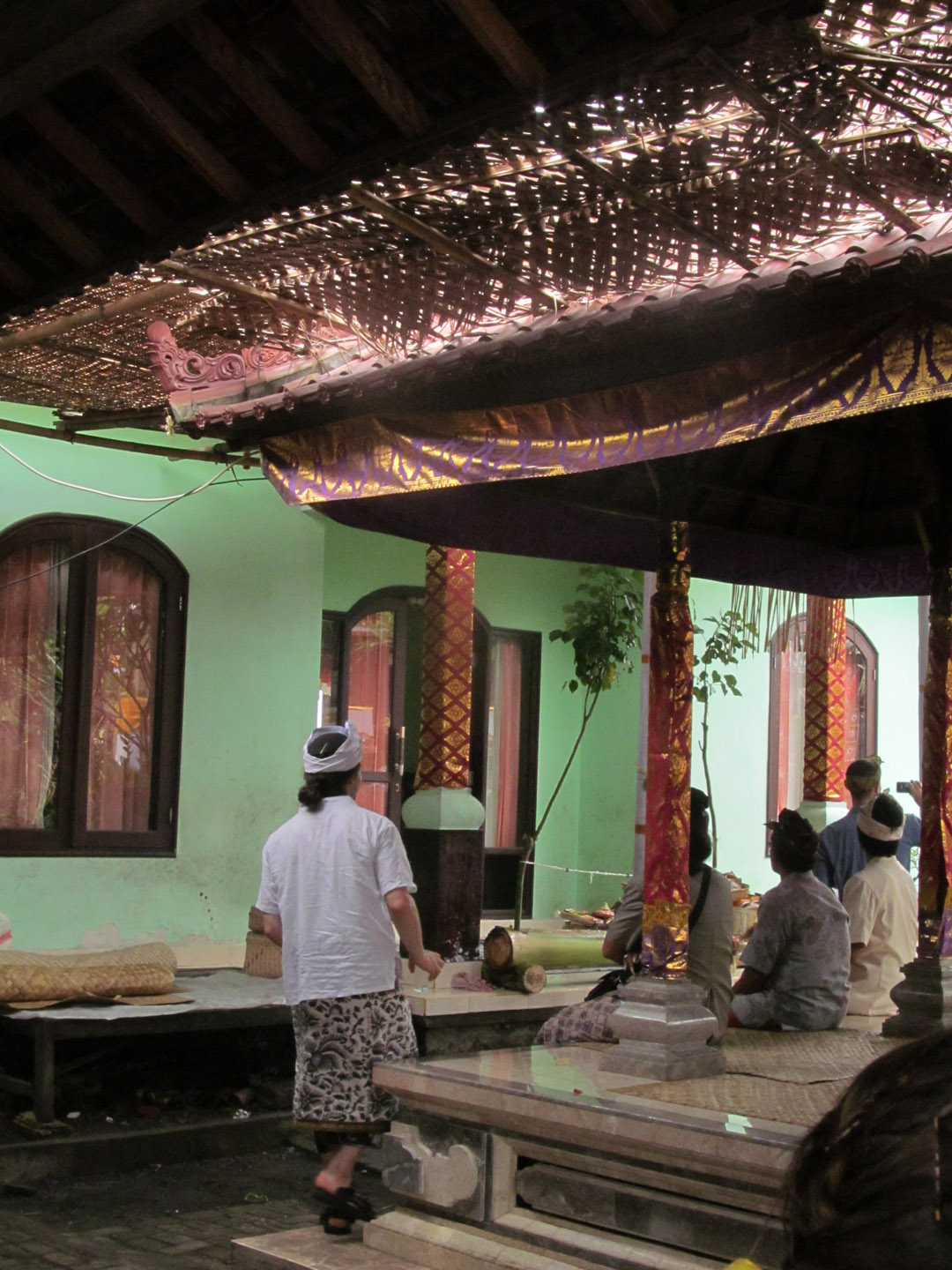
Lucy and I in temple dress at a ceremony in Batuan.

° Sarongs, sarongs, sarongs! They are commonly sold in printed, batik, or ikat fabrics.

° Shops that are all selling mostly the same things, right next to each other. Bargaining is the way things are done. “I give you good price, for luck.” Keep your sense of humor.

School children in their uniforms are frequently seen on motorbikes or waiting for the bemo. Very sharp looking crowd.
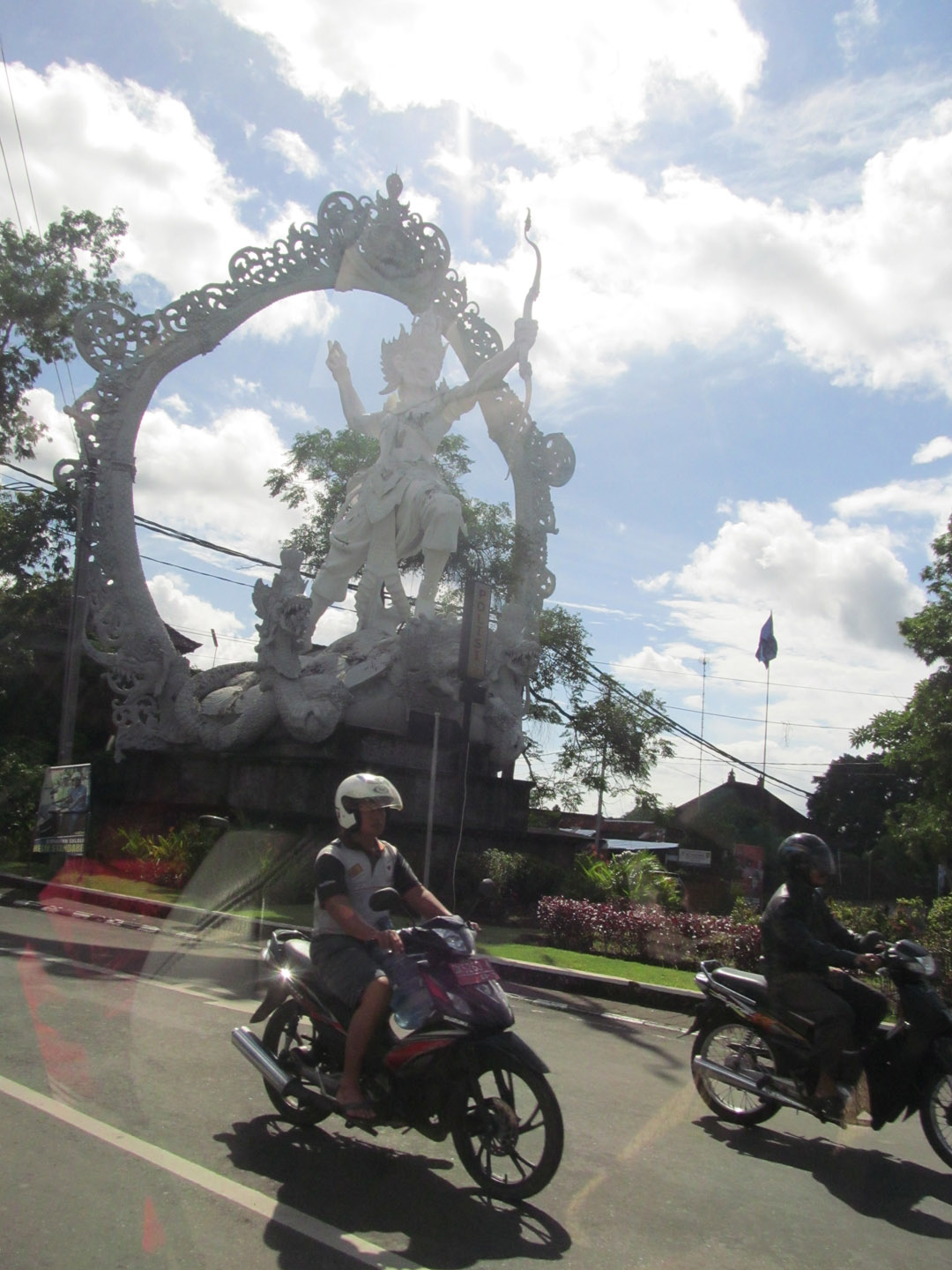
Amazing statuary at major intersections is very popular. I vote no billboards, more huge sculpture, America
Amazing statuary at major intersections is very popular. I vote no billboards, more huge sculpture, America.

° The lack of idle chatter about first world problems, celebrities, and so on. How refreshing!

Tempe, a favorite of mine for many years, is an Indonesian food that is a fermented soybean cake. As pictured here, it also battered and fried and served with several types of spicy sambal.
Tempe, a favorite of mine for many years, is an Indonesian food that is a fermented soybean cake. As pictured here, it is also battered and fried and served with several types of spicy sambal.

This is not to say I didn’t witness some very odd Javanese game shows and soap operas on mute in the central room at the hotel.

° Coconut, banana, papaya, and jackfruit trees are widespread. There was even a mangosteen tree on the grounds of the hotel! Thankfully durian were more rare.

Daily breakfast at the hotel included fresh fruit (papaya, pineapple, watermelon, lime), some sort of eggs, and ALWAYS banana crepes.

° The frequent appearance of the words “spa” and “villa.” These words are replacing the words “rice paddies” with increasing frequency.

° Bottles of petrol for sale on the side of the road. You can buy in either kecil (small) or besar (large). The large fills your motor scooter tank, and costs 1400 rupiah. That’s about $1.

° Very noticeable is the red and grey and black coloration of so many housing compounds and temples.

Much is exposed to the elements in Bali. Many buildings and restaurants and shops have few external walls, if any.

° I enjoyed the moments where I started to understand what I was seeing.  Just the beginning of understanding really, like when you’re learning a language, and every so often you recognize a word instead of only hearing sounds.  The positions of the golden statues I’d seen along the road when I arrived were suddenly recognizable choreography.  When looking at  a painting or temple figure,  I could recognize a character or sometimes a part of the story of the Mahabharata or Ramayana. What was aesthetic appreciation at first now carries more context and has more meaning.

Rice paddies along Jalan Bisma.

° Black and white checkered sarongs wrapped around banyan trees, signifying they have a spirit and are protected. These sarongs also sometimes appear on certain statues.  Balinese religion is a fascinating mix of Buddhism, Hinduism, and animism. Good and evil are both acknowledged as forces in the world—our purpose is to keep them in balance.

The family temple, as seen from above, of my mask carving teacher. Note the Moe (of Larry, Curly, and) hairstyle of the small towers.
The family temple, as seen from above, of my mask carving teacher. Note the Moe (of Larry, Curly, and…) hairstyle of the small towers.
Dewi Suraswati, the goddess of learning and the arts. Careful observers will note that in this rendition, a toothbrush is in the mouth of the goose. Much debate among international scholars about the relevance of said toothbrush doubtless to follow.
Architectural detail. Much of the construction is cinder block. Scaffolding is done with bamboo.

° Offerings are everywhere. Not just on the front porch, or in a little box at the corner of a building. Even in the middle of the supermarket, there are offerings.

° Wayan Wija talking to us about his role as a dalang (puppeteer). The dalang is also a sort of a priest and philosopher. He often deals in ancient stories that bring to life questions of philosophy, while also providing something for the eyes to enjoy. Wija says that even in Bali, so many now are filled up with material concerns, few have room in them for philosophy.

I.W. Wija lets us experiment with this amazing expressive shadow puppets at his house in Ubud. (Photo by Yavni Bar-Yam)
At least I looked completely inconspicuous and at ease at all times.

° Parisawata tour buses choke the small, winding back roads… Chinese and Australian tourists wander in downtown Ubud… white people look hot and uncomfortable while some Balinese are wearing jackets, because it’s cold to them.

° The smell of cempaka incense.

° Frogs performing their own version of a kecak or a gamelan. All three—frogs, chant, and orchestra—produce interlocking sounds that are beautifully trance-like and transporting. But how do the frogs all know to cease at same time?

Nyoman shows off his dancing hands. Carvers are also dancers.

° Our mask carving teacher talked to us about the meaning of the progression of the characters in the one-man topeng pajegang. The progression of the story mirrors the the entire life of a person. The dancer moves from the rough path of youth with strong will and body (topeng keras) to the strength of mind and experience (topeng tua) to the enrichment of life gained from sharing experience (topeng penasar) to the leadership of others (topeng dalem) and finally to  success and prosperity (topeng sida karya).

The large market is Ubud is a confusing trail of stalls spanning several buildings and multiple levels.  FYI the scent does not improve as you descend.
The large market is Ubud is a confusing trail of stalls spanning several buildings and multiple levels. FYI the scent does not improve as you descend.
Snake deities called naga line the staircases of this temple at Goa Lawah.
Shadow puppets!  They are painted because they are sometimes used in daylight. Also, the paint design helps remind the puppeteer of the feeling of the character.
Shadow puppets! They are painted because they are sometimes used in daylight. Also, the paint design helps remind the puppeteer of the feeling of the character.

This trip was made possible in part by a professional development grant from the Regional Arts and Culture Council.

At left, how the camera captured Mt. Agung on my last morning walk. However, it was much more visible to the naked eye. At right, a highly altered photograph reveals the outline of the peak. Tricksy mountain.

racc_orange_horiz

A Weekend Outing

Friday Night

Calonarang

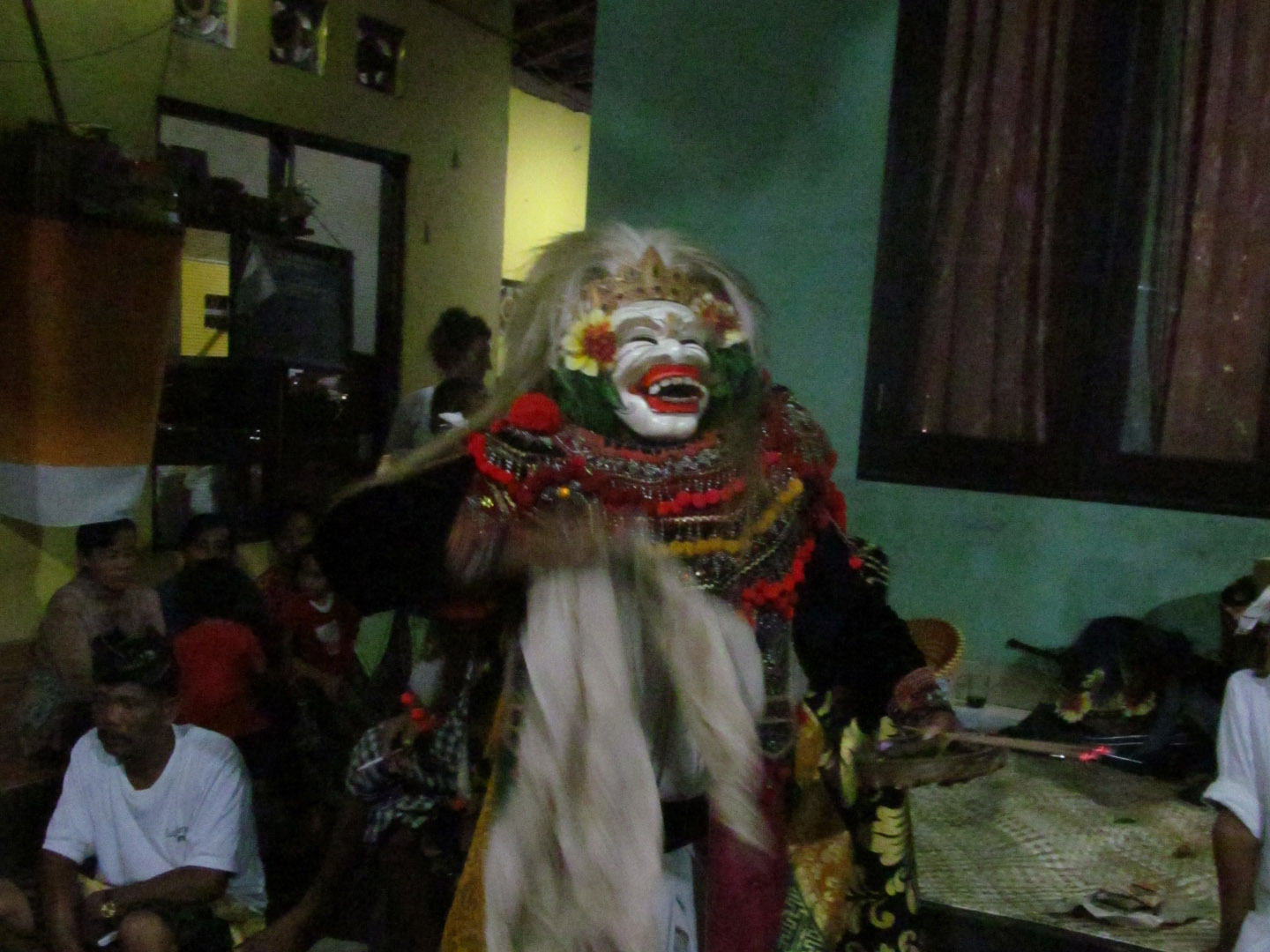
Late Friday night at 10:30 pm, we drove to a pura dalem (temple of the dead) in a nearby village to witness a Calonarang ritual. After mistakenly landing at what seemed to be a carnival, then finding a Calonarang, but at the wrong temple, we  arrived and settled in to watch. It was a little hard to follow, but it deals with white and black magic, and honoring the balance between good and evil. We got home around 2:30 am.  To the pictures!

Somewhere after an young woman sings and an old man sings, these 3 clowns come out. I didn't understand the jokes, but the young men around me laughed. Their faces are painted in a sculptural way, making me wonder if sometimes these are masked characters.
Somewhere after an young woman sings and an old man sings, these 3 clowns come out. I didn’t understand the jokes, but the young men around me laughed. Their faces are painted in a sculptural way, making me wonder if sometimes these are masked characters.
Celuluk, a follower of Rangda, is sort of a funny witch. She taunts the clowns.
Rangda, the head witch and . Later in the show, a character tries to stab her, but fails.  The end of the ritual involved a dance of Rangda and a human body on the ground which might be dead or alive. It is paraded around a few blocks and then brought to the cemetery, where he revives.
Rangda, the head witch. Later in the show, a character tries to stab her, but fails. The end of the ritual involved a dance of Rangda and a human body on the ground which might be dead or alive. It is paraded around a few blocks and then brought to the cemetery, where he revives.

Saturday

Turtha Empul

The next morning, five of us went to a water temple in Tempaskiring. It was a really awesome place.

My favorite statue at the water temple.
The spring burbles
The spring burbles
Ariel gets excited about rules.

A spring billows up through the sand in a rectangular pool populated by some plants, a few minnows and an eel.

Not far away are a couple of pools featuring many spouts from the spring, each with it’s own spiritual function in a purification ritual. The first ten are for cleansing the undesirable aspects of character, the next two for death and cremation rituals (most necessarily skip these), then one for cleansing bad dreams, one for supplying wisdom,  one for erasing unkept promises, one for bad memories, and the final seven for cleansing the seven chakras of the body. It’s a special experience.

The first sequence of purification. Offerings are placed at the spout as a sign of good faith and pure intention in entering into the purification ritual.
Offerings are placed at the spout as a sign of good faith and pure intention in entering into the purification ritual.

Coffee Plantation

Afterwards, a trip to a coffee plantation last weekend was also pretty amazing.  We were lead through a path containing a couple kinds of coffee plants, vanilla vines, cinnamon and clove trees (the leaves smell too!!), ginger flowers, cocoa pods, lemongrass, citronella, and snakefruit.

A Cinnamon tree. From my vantage point, the only way to see the difference between it and clove was the bit of red at then end of the clove leaf.

We reached a small hut where another fellow was slow roasting (2 hours) a small batch of coffee next to another small cage where the luwak (civet) was kept.

Cocoa pods!
Cocoa pods!

For those unfamiliar, this small weasel-like mammal has a taste for ripe coffee cherries–but it can’t actually fully digest the bean. A delicacy (and purported aphrodisiac) is the coffee made from the beans collected from the poo of the luwak. At our subsequent coffee tasting, some elected to pay 50,000 rupiah (about $4) to try the luwak coffee. I elected to to stick with the other complimentary and poo-free varieties. Call me unadventurous if you will, but there was nothing but a tepid response among those who dared.

This guy roasts coffee over a very low fire for two hours – the flames aren't directly under the pan, but offset. In the foreground are Bali kopi and cocoa.
This guy roasts coffee over a very low fire for two hours – the flames aren’t directly under the pan, but offset. In the foreground are Bali kopi and cocoa.
From R to L: Bali kopi, Ginseng coffee, Ginger coffee, Vanilla coffee, Coconut coffee, Rosella tea, Ginger tea, Lemon tea, Bali herbal tea and Pure chocolate.  Ginger won the day for me.
From R to L: Bali kopi, Ginseng coffee, Ginger coffee, Vanilla coffee, Coconut coffee, Rosella tea, Ginger tea, Lemon tea, Bali herbal tea and Pure chocolate. Ginger won the day for me.
Sunday

The Wonders of Klungkung

I began the last day of our only full weekend  looking at the murals at Kertha Gosa (the Hall of Justice) at the Klungkung Palace. These grounds were largely destroyed in conflicts with the Dutch in the early 20th century.   The grounds were renovated in the 1960s.

Murals depicting a story from the Mahabharata in which Bhima rescues his parents from torment in the afterlife. The painting style is very similar to the style of shadow puppetry.
Lots of heads!
Lots of heads!

In addition to the morally instructive depictions, there are also series of panels telling the Balinese story that parallels A Thousand and One Nights as well as instructions for marriage… or at least our guide told us. We weren’t sure how much he was making up and how much was accurate. We also visited the museum nearby.

IMG_0914-kerthagosa
More of the Palace Grounds
Roundabout: Klungkung
An array of colors in the woven fabrics available at the market in Klungkung.

Pasir Putih

It is a small trek to get to this white sand beach, but the reward is worth it! The water was an amazing blue blue blue and it was so warm and buoyant. I even went snorkeling for the first time!

These feet didn't know it, but they would be getting a massage before the day was over
These feet didn’t know it, but they would be getting a massage before the day was over.

As someone who grew up in a landlocked place, I’ve always found the prospect of purposely immersing yourself a location where simply anything can eat, sting, or drown you to be mortifying. But after a few mistaken gulps of salt water, it wasn’t too bad. Seeing a school (I almost typed “herd.” See also: Midwestern) of medium-sized black fish swim through the coral was fantastic. I actually look forward to the chance to do it again!

Goa Lawah

The day rounded out with a dusk visit to Goa Lawah, the Bat Cave Temple. As we waited for the evening exodus of the bats, we watched the evening offerings being made and chatted with some Hungarian ex-pats who were showing the sights to visiting relatives.

At the entrance to the temple, all of which was carved from volcanic rock.
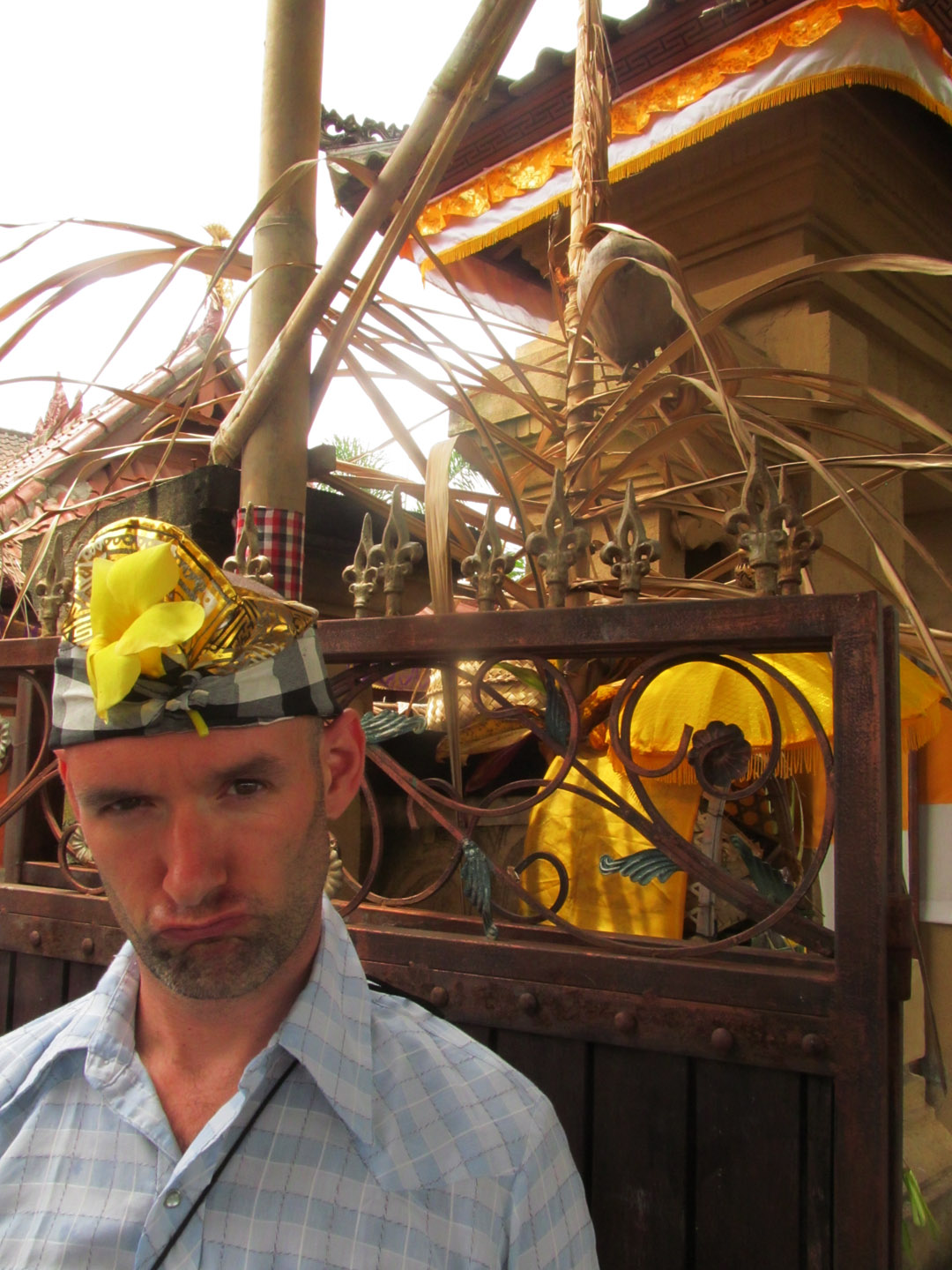
Being an idiot at the entrance to the temple, all of which was carved from volcanic rock.

When the bats started leaving, it was a real sight—not quite like a horror movie, but a pretty dense cloud of flying mammal. I wasn’t sure how long to stay, but the bats let me know with an offering of their own placed on my head. As I was in full temple gear, I was mostly relieved it didn’t get on my udeng—and really grateful for the packages of baby wipes my boyfriend had packed for me.

Looking out the temple doors to the sea at dusk.


racc_orange_horizThis trip was made possible in part by a grant from the Regional Arts & Culture Council.

Juxtapositions

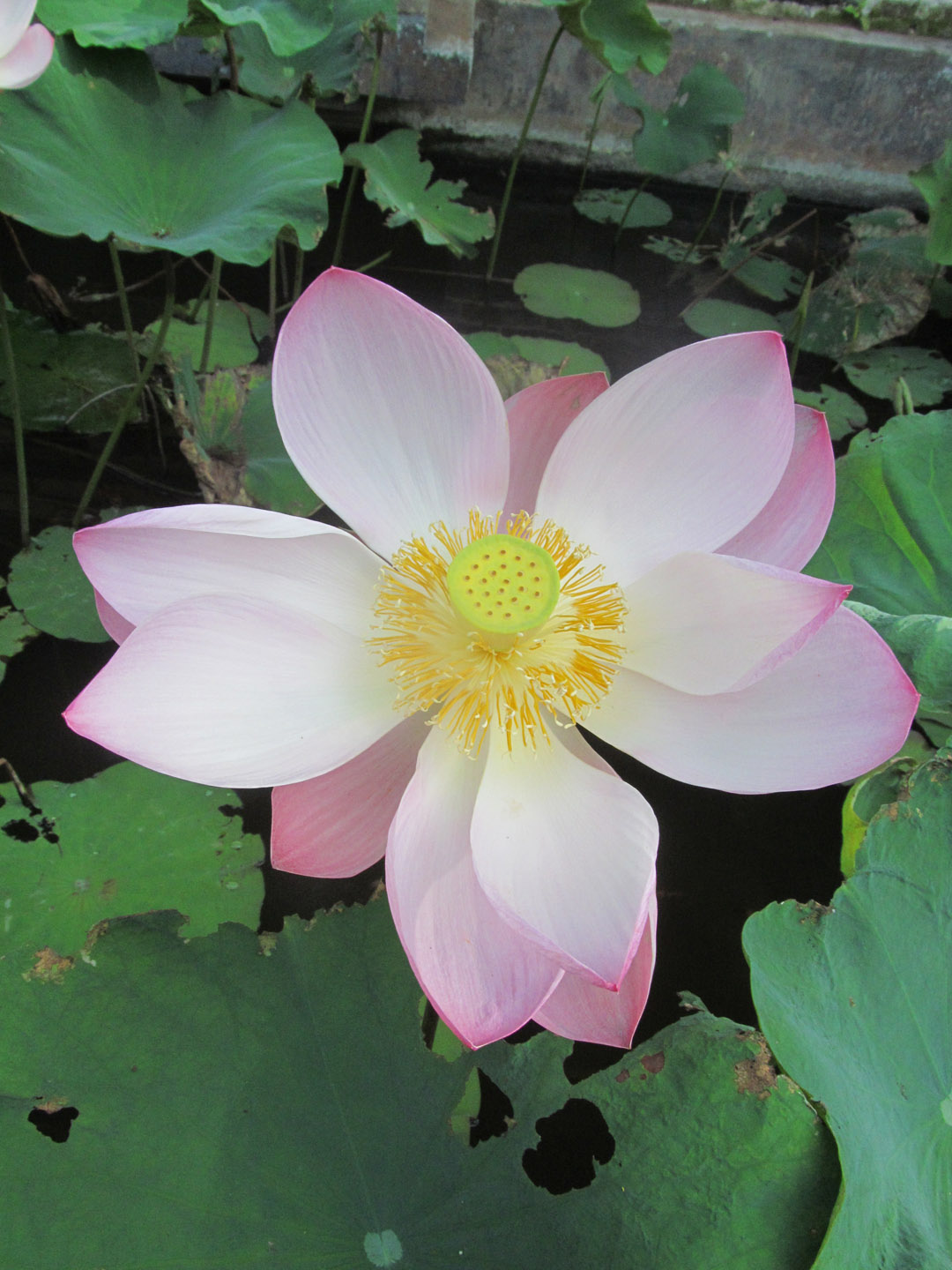
A lotus flower on the way to the Wantilan at Melati Cottages, where we have daily warmups and classes in kecak and topeng

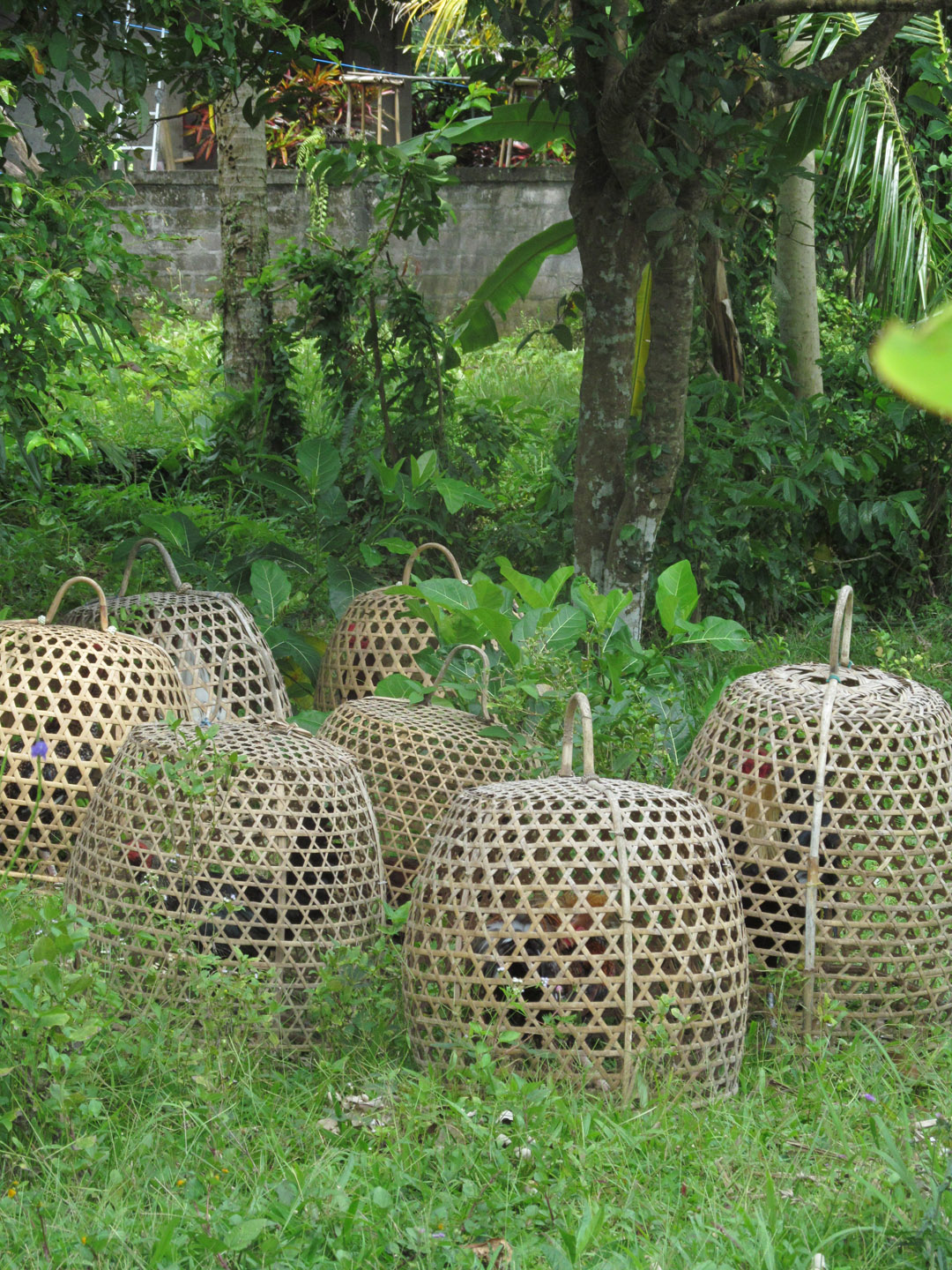
Most days I wake naturally about 6:30 am (2:30 pm the previous day Pacific Standard Time). The sound of roosters is frequent, regardless of the time of day. Roosters are often in small round bamboo cage baskets by the edge of the road. Apparently this is to desensitize them to loud noises and sudden disturbances so that they perform better in cockfights. These fights are simultaneously a part of the religion and technically illegal.You might see a man washing his cock by the side of the road late at night in the U.S., but I assure you it’s a different thing here in Bali.

Said roosters.
Said roosters.
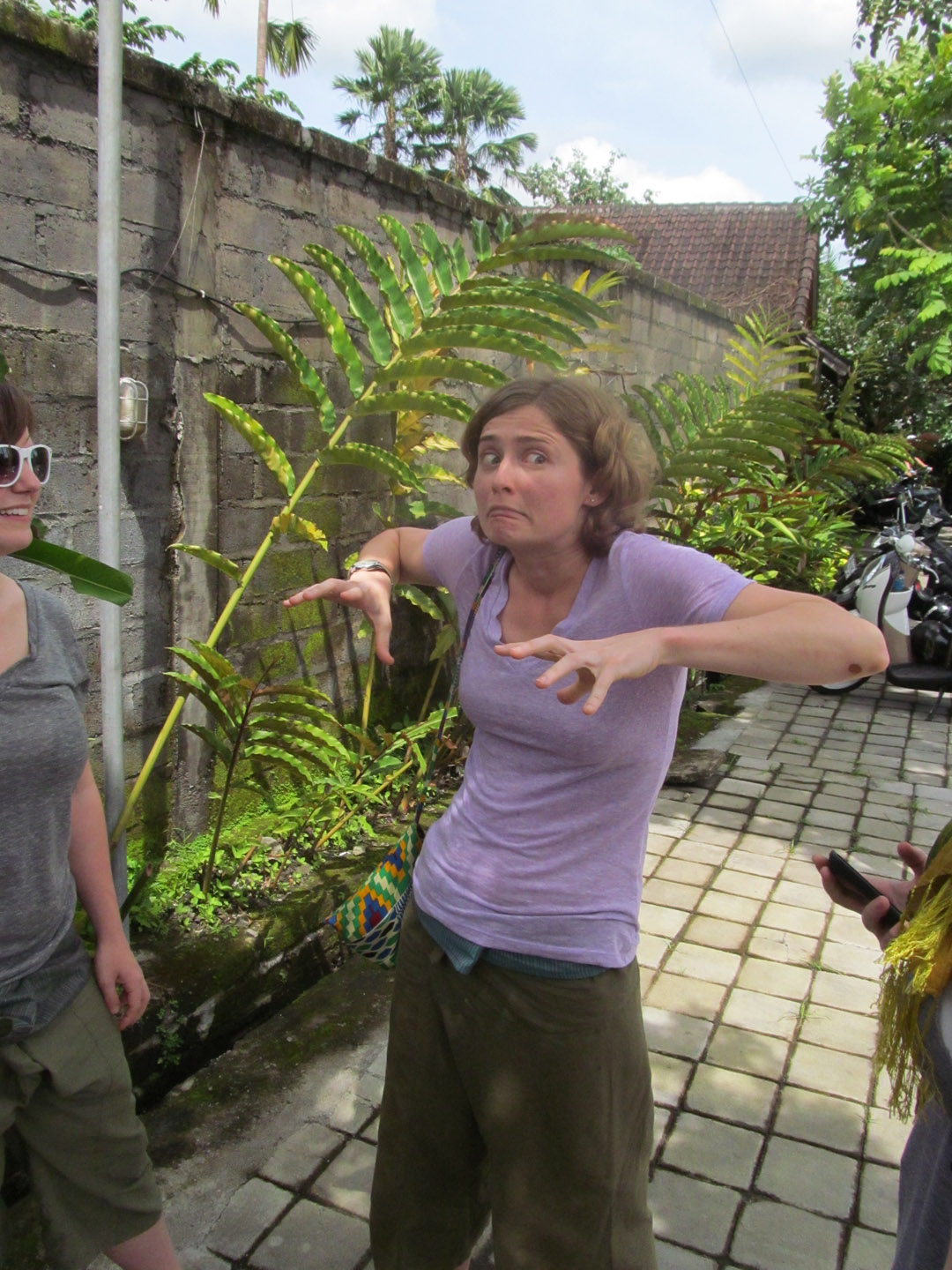
Allie's gecko impersonation
Allie’s gecko impersonation

Geckos are similarly omnipresent. I have discovered their name is onomatopoeic for the sound they make. Some are quite large;all are walking over the walls and ceiling. These small lizards eat pesky insects, so who can complain?

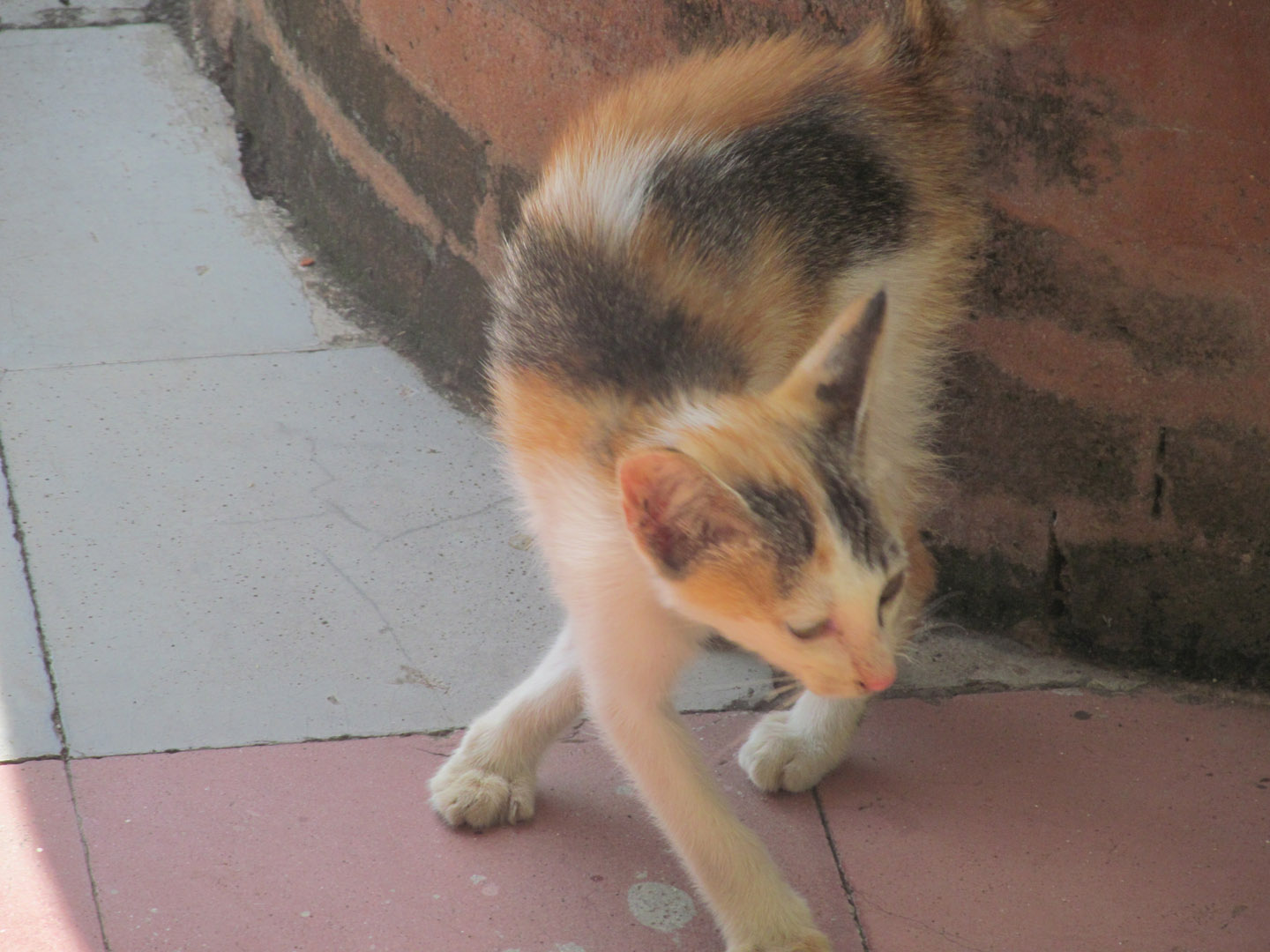
A very plaintive (and hungry) kitten who found me outside the museum at Kertha Gosa.
Not a dog, but a very plaintive (and hungry) kitten who found me outside the museum at Kertha Gosa.

Dogs are quite common, though not kept in the same be-sweatered and organically fed way now fashionable in urban USA.  Judging from appearances as you pass by on the street, many range from very skinny to malnourished. Some unwanted dogs are also driven to certain locations and left to fend for themselves. There are some organizations lobbying for better treatment of the canines; some restaurants donate portions of their profit to the cause.

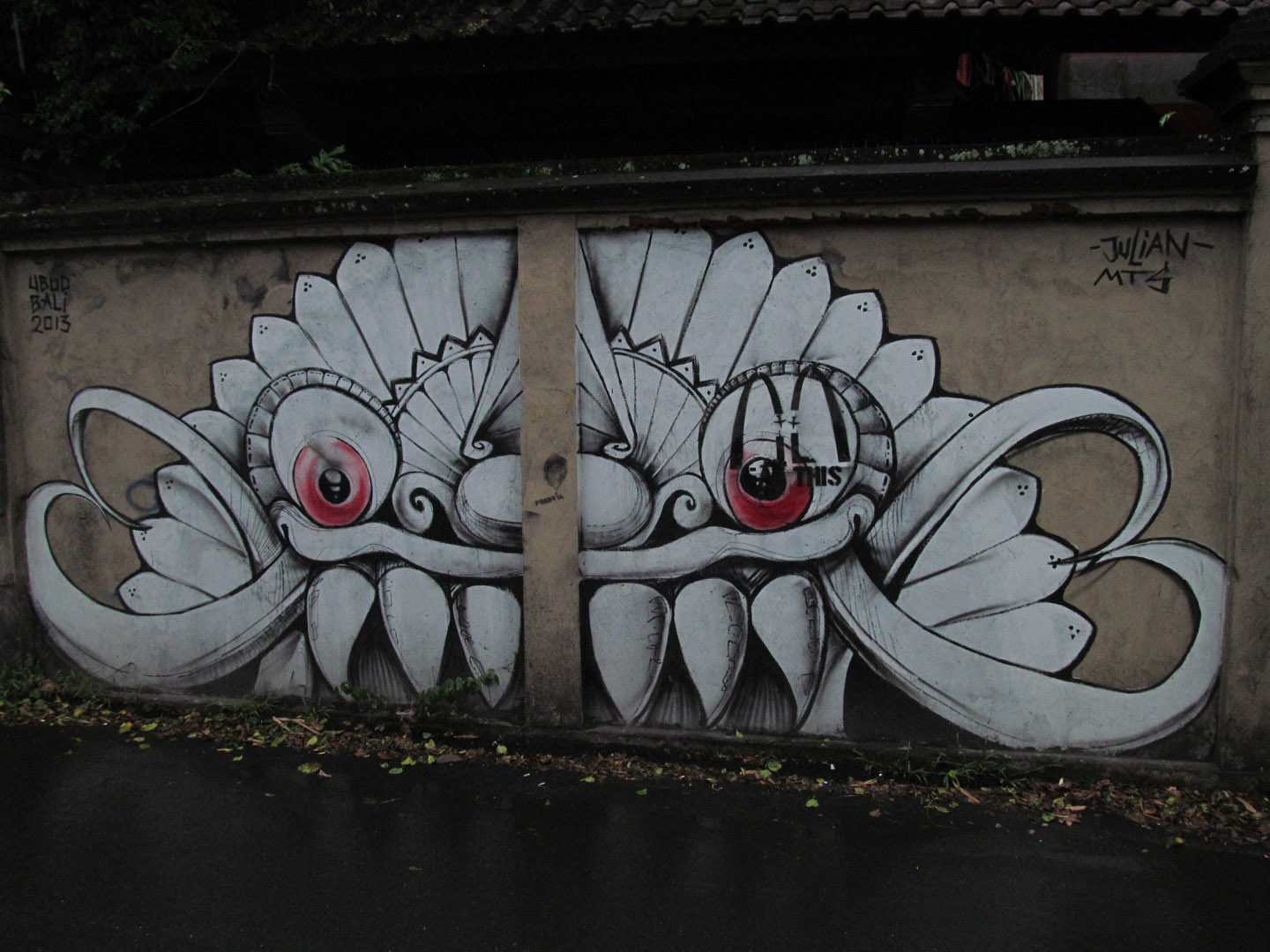
Street art on Jalan Penestanan: a mix of tradition and contemporary

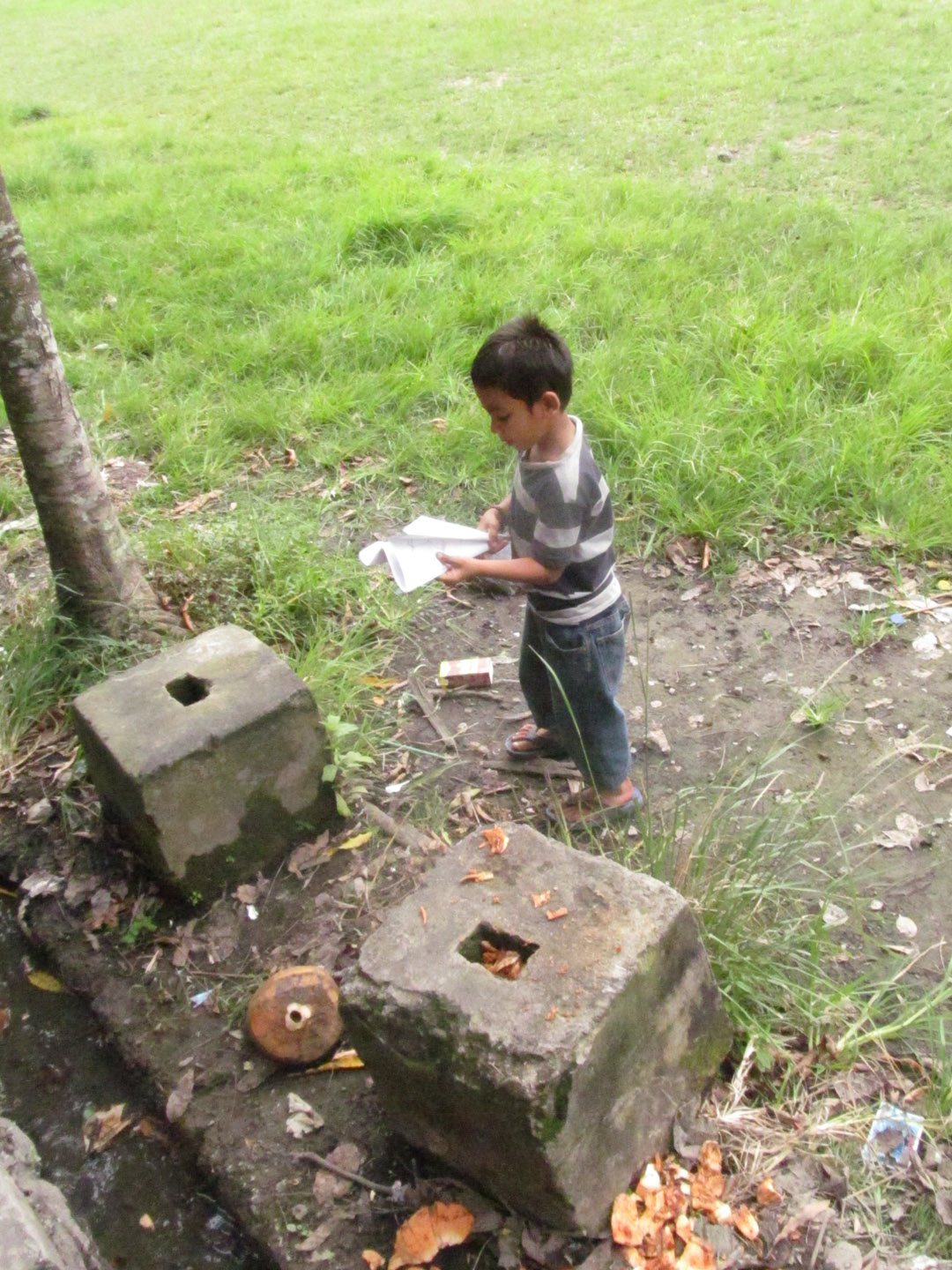
Frequently sighted are all kinds of trash. Before the advent of petrochemicals, nearly all waste items were organic. For example, food was served on banana leaves; when the meal was over, the ‘plate’ would be tossed into a nearby irrigation canal to eventually drain to the ocean. No problem, right? But as the type of materials has evolved, the habit of tossing trash has remained constant.

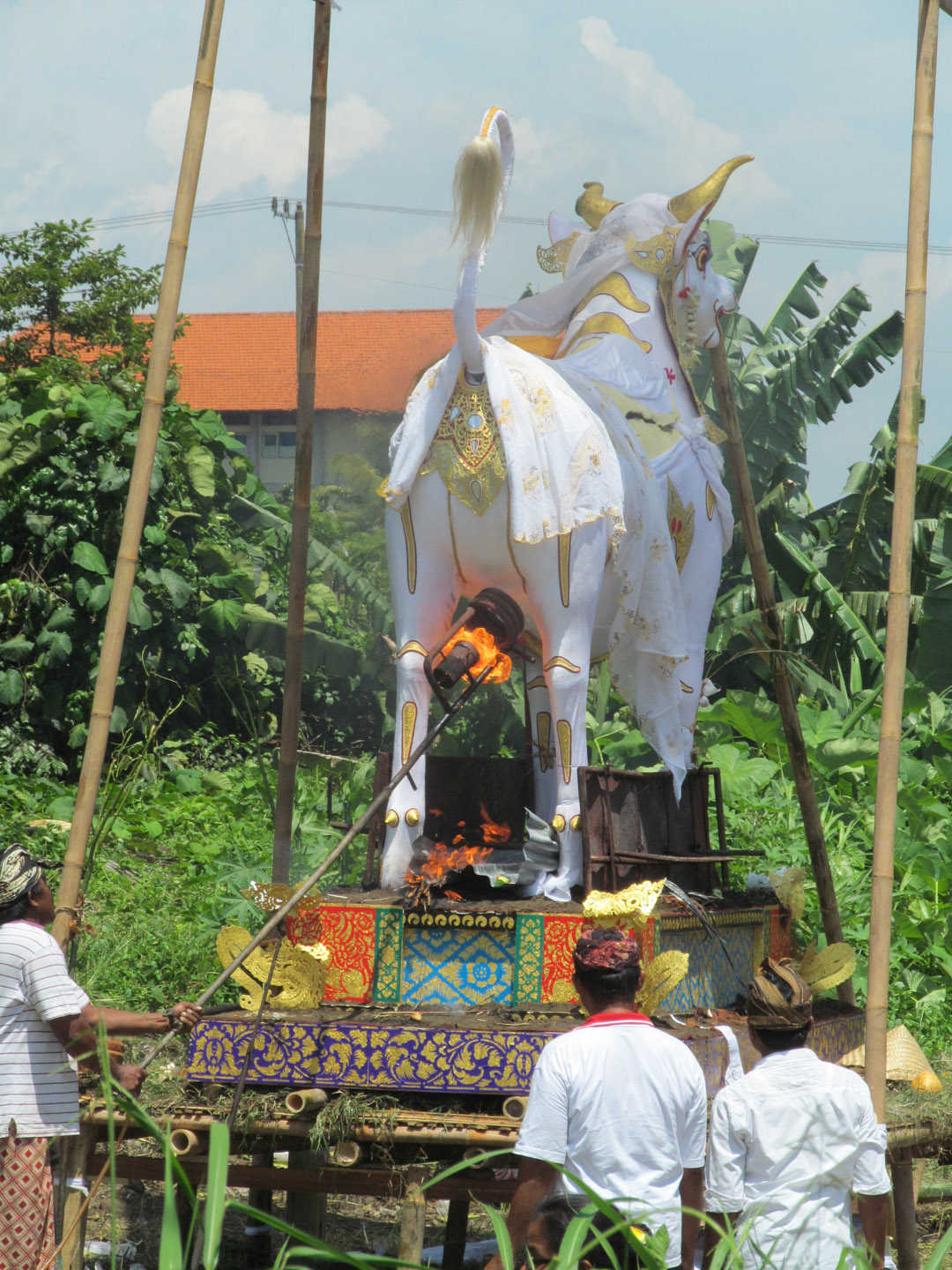
A priest is being cremated within the frame of this bull. Which animal you are cremated in depends on your caste. The very poor often have mass cremations, no animals included. Though many ceremonies are carried out with slow burning wood fires beneath the effigy, a different approach is taken here.

We were at a cremation ceremony a few weeks ago, and someone had collect our garbage of soda cans and potato chip bags into a plastic bag.  A Balinese woman saw it, threw the bags into the bushes and kept the cans (presumably for a deposit). Even as beautiful offerings of palm, flowers and incense are carefully place everywhere you look, trash of all sorts is being frequently burned, if not dumped in the water. I have taken to the game of playing “Garbage or Incense?”  A cliffhanger every time!

The people of Bali are really great. Everyone I’ve met has been warm and gracious. There a variety of visitors, some on vacation, some on a program of study. Many people come here looking for paradise, affordable goods, or a healing from some perceived deficit in themselves. Eat, Pray, Love seems to have stoked that fire. On my less generous days, I feel if I never see another middle-aged white woman wandering wide-eyed and wistful in yoga pants through the streets of Ubud, it will be too soon.

This is the coolest kid ever. His mother runs the warung near the library where we carve some days, and he would frequently come inside to try on our masks, play on the gamelan, or climb Spencer.
This is the coolest kid ever. His mother runs the warung near the library where we carve some days, and he would frequently come inside to try on our masks, play on the gamelan, or climb Spencer. He is also not talkative, so I never caught his name.

However, even with the stream of visitors beginning back at least in the 1930s (if you don’t count colonial times as a “visit”), the Balinese remain so friendly and accommodating. We are always treated very well as guests.  If at a ceremony not knowing where to sit, they will offer a seat for you. Fall on your motorbike? They quickly move to help. Yesterday, our mask teacher told us he’d been up all night with his father at the hospital, and had come to class directly from that experience. Yet he was full of genuine smiles and easy laughter as he shared his knowledge and art with us. I hope to pay these kinds of gestures forward.

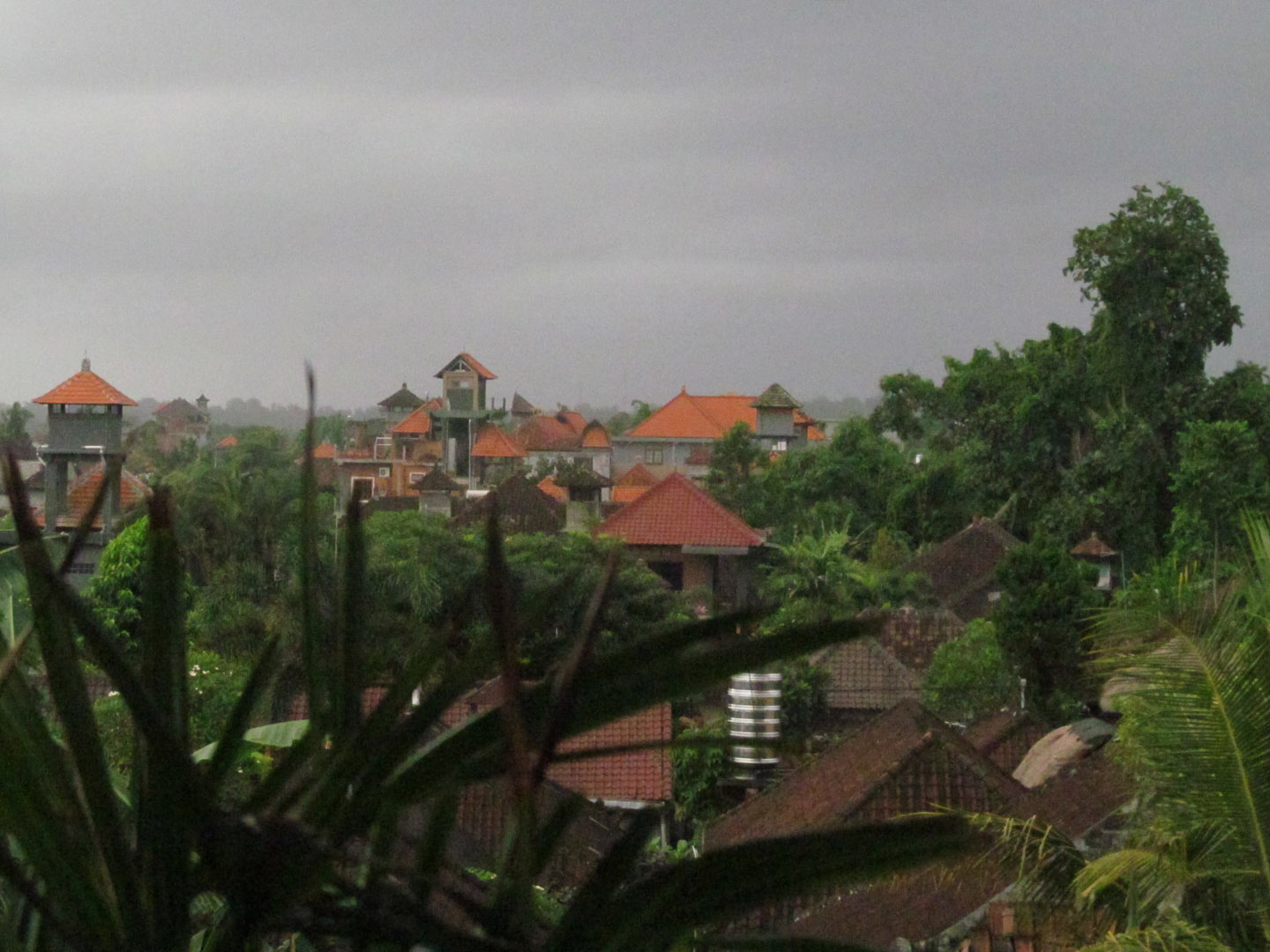
A view of Ubud from three stories up.
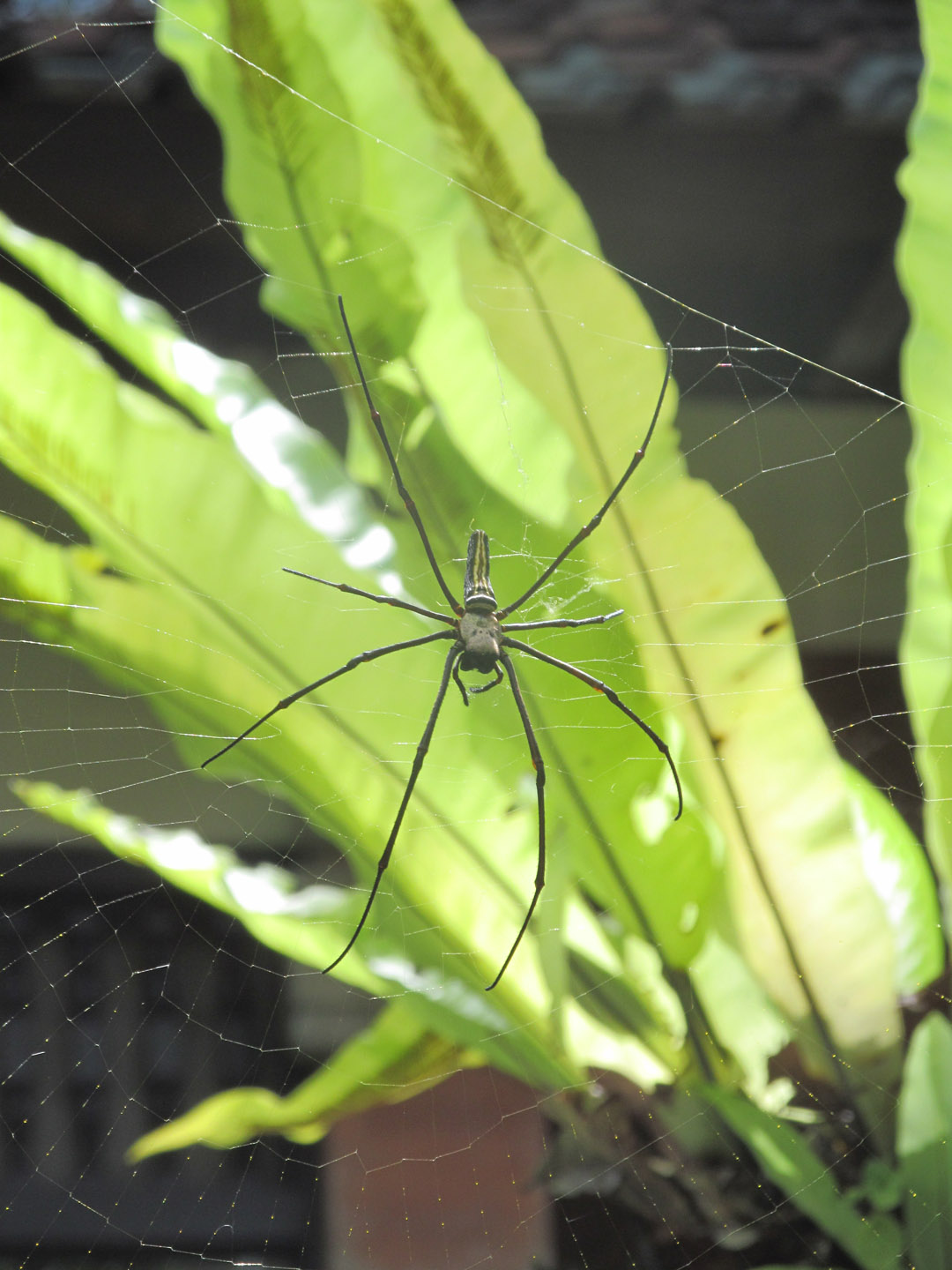
Not really a clear segue here, but THIS SPIDER IS AS BIG AS MY HAND. I see it every morning.
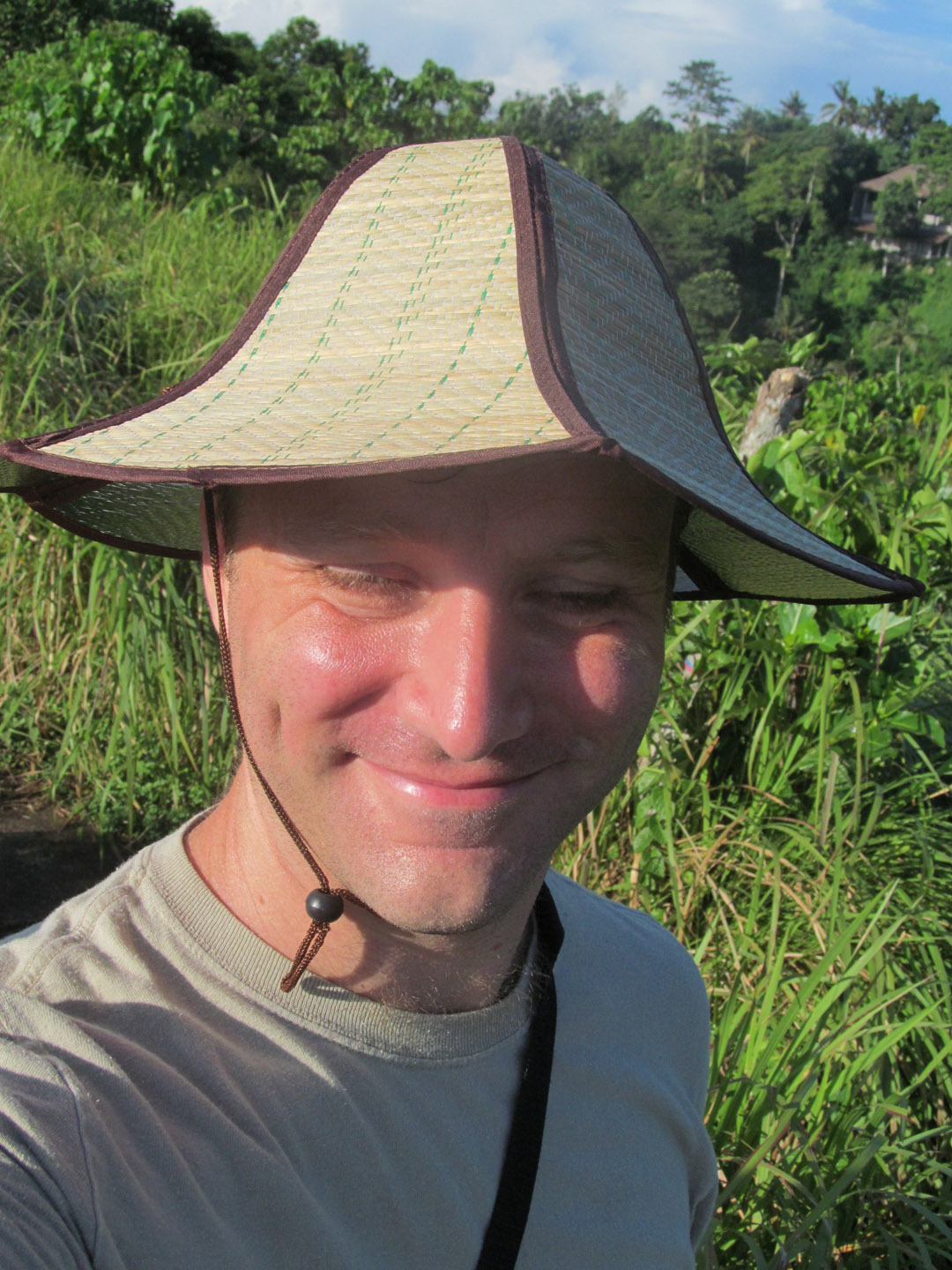
Fun hats make the world go round!  This one is an amazing find from Japan Town in San Francisco - it collapses to completely flat, and is (oddly) foil-lined.
Fun hats make the world go round! This one is an amazing find from Japan Town in San Francisco – it collapses to completely flat, and is (oddly) foil-lined.

I haven’t worn shoes in about a month. Flip flops carry you from location to location, and are removed before entering most places. When I first arrived, I was taking the bemo to and from classes.  Well, sort of. The bemo is actually more of a public bus; ours is hired specifically for our group of students.

An Arjuna statue near Gianyar, as viewed from a hired car.

It was a great education on the nature of traffic in Bali. Traffic keeps to the left here, but that’s the least of the differences. The center line is a little more of a general guideline. Autos, motorcycles and scooters weave with in subtle moment-to-moment negotiations of speed, turns, right of way, potholes, and hanging banyan vines. Vehicles of all sizes may suddenly pass or approach you from any direction, on any side of the line. It’s not as unsafe as it may sound, just structured slightly differently than the more controlled queue format in the States. I never even thought of our traffic this way until witnessing its counterpart.

Not my scooter, but one of my fellow classmates.
Not my scooter, but one of my fellow classmates.Who can trust blogs these days? Misleading juxtaposition everywhere!

And a week later, I hired a motor scooter. After a few days of practice, I was set to go! I think my decade and a half of bicycle riding prepared me well—like the rooster by the side of the road, I’m acclimated to large vehicles passing by all of a sudden. It’s really quite nice, and the most efficient way to balance getting to class and seeing the island for myself.

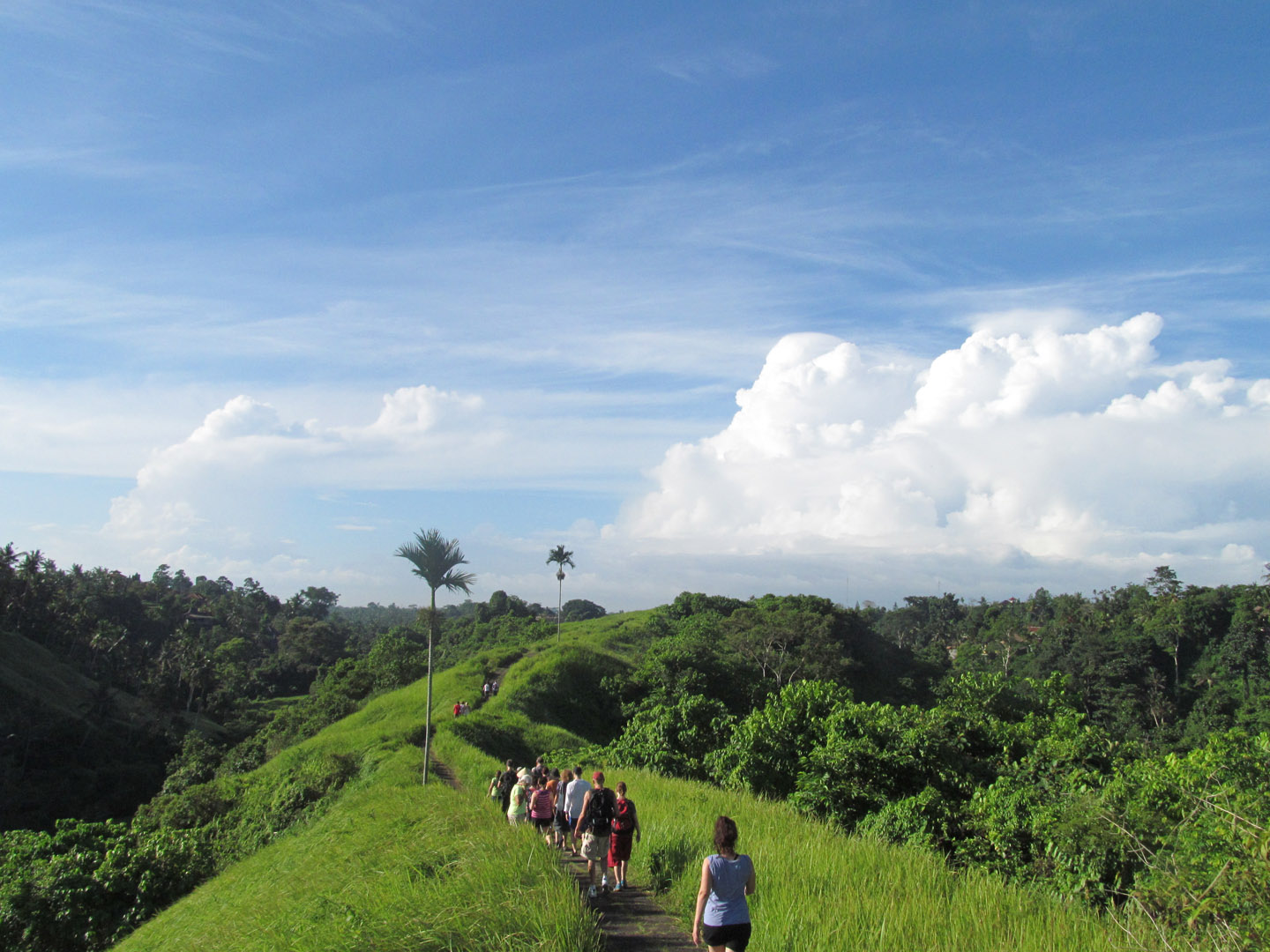
Hiking the "Ants Back"- the Campuan Ridge in Ubud one morning
Hiking the “Ants Back”- the Campuan Ridge in Ubud one morning


racc_orange_horizThis trip was made possible in part by a grant from the Regional Arts & Culture Council.

A Topeng dance

We wait for maybe four and half hours, just outside a new house that will have a blessing ceremony, before any sign of the activities. Our dance teacher, Gustu, is to perform a topeng at the ceremony.  Initially he thought it would be in the morning, then received word that it would be closer to 1:30.

My roommate Jerome by the front gate.

There are related ceremonies happening elsewhere, and the people will not arrive until those are done. Whenever that is.

Yavni explores the house. We didn't know it, but he's walking in what we'll be in the main performance area that evening.
Yavni explores the house. We didn’t know it, but he’s walking in what we’ll be in the main performance area that evening.

We are served a few coconut snacks and coffee as we wait and entertain ourselves.  Word games abound.

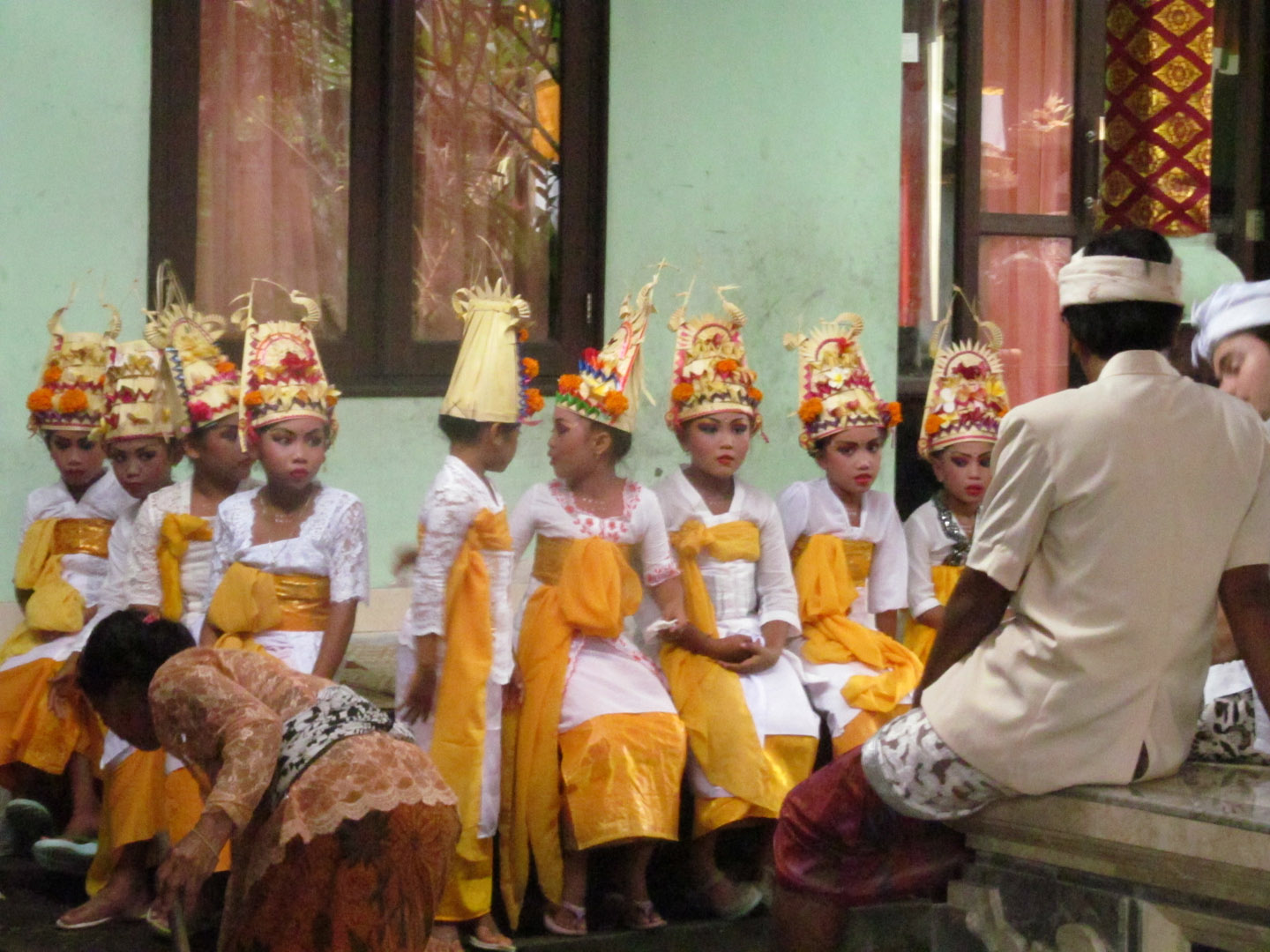
A few give up and take their motorbikes home. The rest of us wait it out.  A group of girls, aged approximately 8-10, enter the housing compound. They are dressed in white and gold, and have beautifully ornate headdresses made of woven palm. Their eyes are accented in red, blue, yellow, and black. They sit and wait for others to arrive. Curious giggles arise as one of my classmates begins to sketch one of them.

The young dancers. They had been likely dressed since early morning. They, too, were waiting for the ceremony to start.
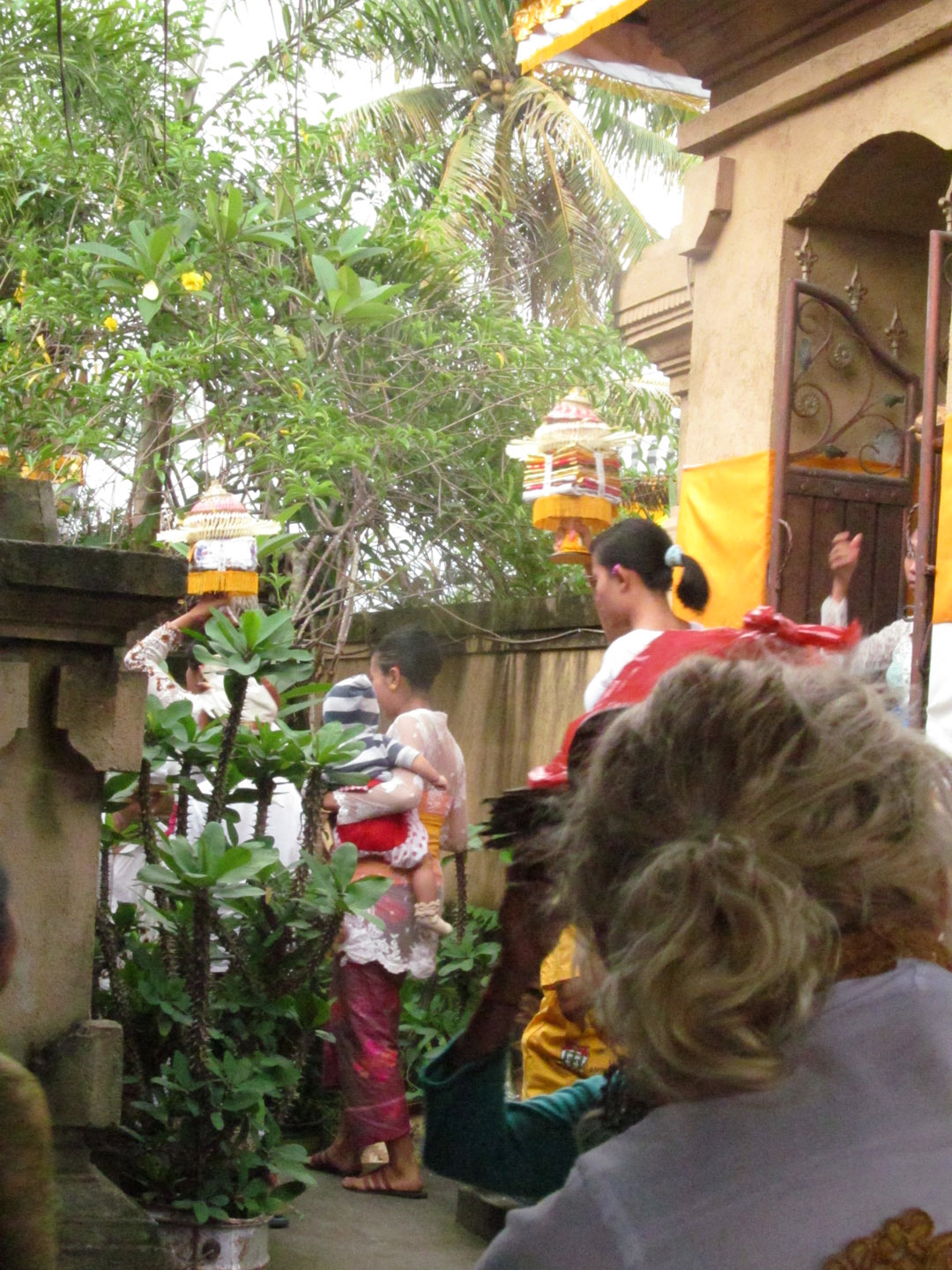
Offerings for the ceremony begin to arrive. Many women are practiced in carrying burdens on their head in Bali.
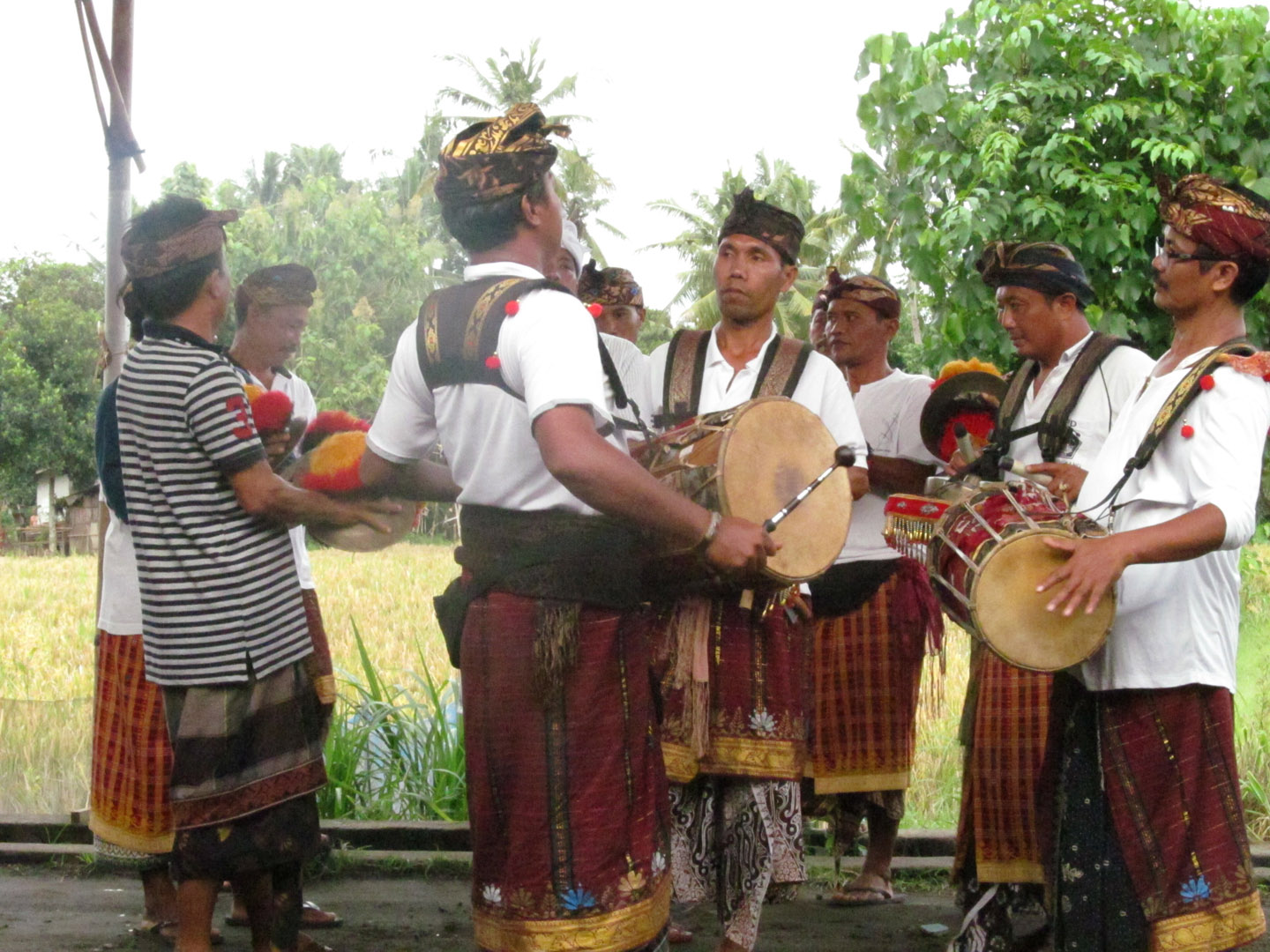
Musicians herald the beginning of the evening's events.
Musicians herald the beginning of the evening’s events.

Thirty minutes later, a number of Balinese stream into the housing compound and sit around the various open air bales.  It is just about sunset on this cloudy day. The gamelan players arrive, and one compliments us on our Balinese style of dress with a warm and toothy smile.  Many women arrive in an amazing array of colors in their sarongs and kabaiyas. Offerings are being uncovered near the house temple. Snacks and hot tea are being circulated and the gamelan begins to play.

I take a moment to inhale it all, and think about it less. The percussive melodies of the gamelan are both stirring and trancelike. The sound envelops everything. It is a transcendent experience. The young girls are now dancing a little ways away. There are easily 80 people in the outside area, and I try to understand if it will be respectful to move closer to see.

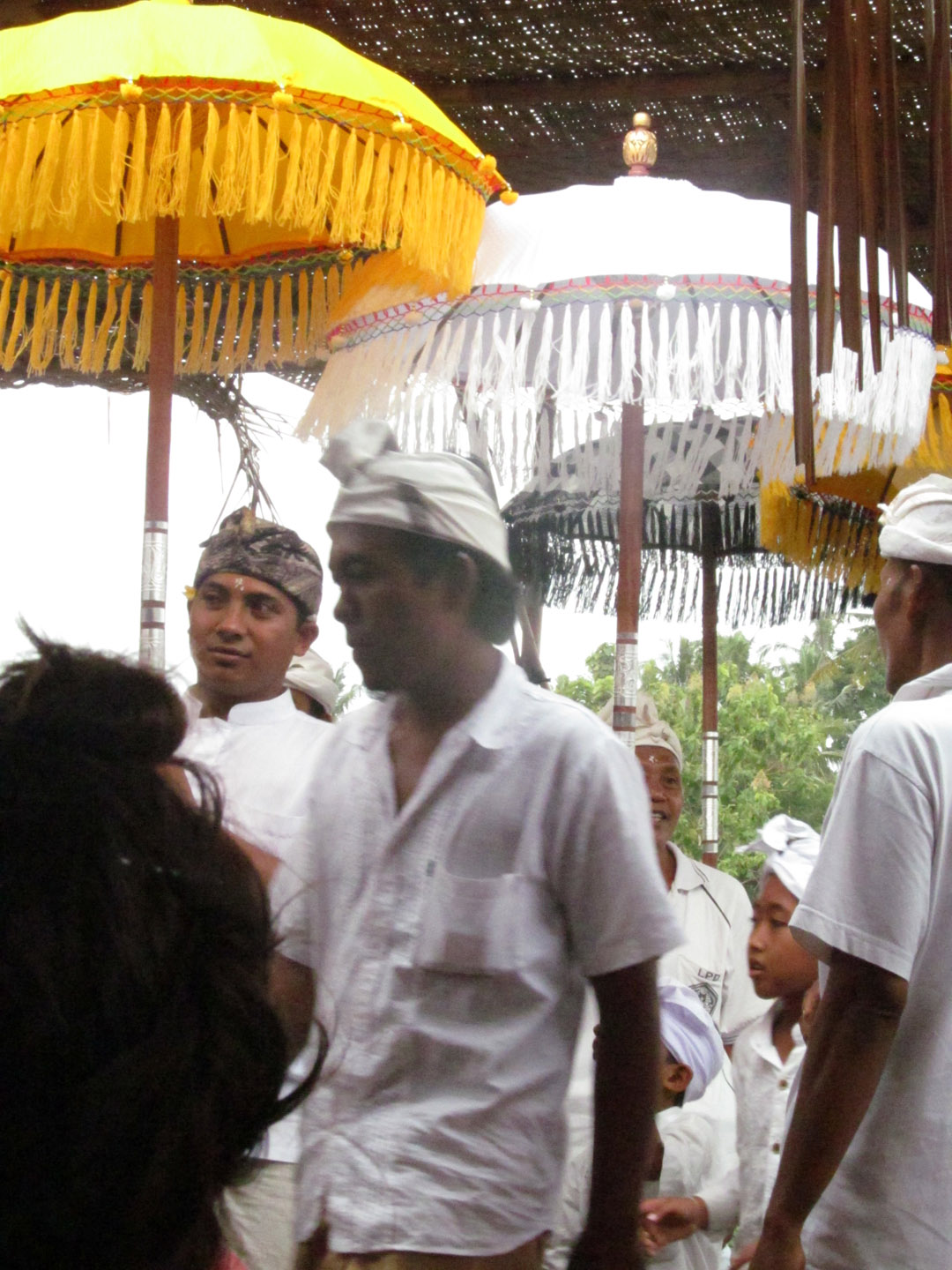
Umbrellas are everywhere in Bali. One of our choreographic notations in our dance study is "Check Umbrella"-- the umbrella is a landmark for your stage position when you can see very little from the mask.
Umbrellas are everywhere in Bali. One of our choreographic notations in our dance study is “Check Umbrella”– the umbrella is a landmark for your stage position when you can see very little from the mask.

But this is where this kind of performance is so different from watching dance or theatre or seeing a concert in the West.  There is not a defined start time at which point all must quiet themselves and observe—there are children moving around the space, priests conducting a blessing ceremony, and a puppeteer readying his puppets. It is a beautiful mish-mash.  What’s important here seems to be the actions that need to happen: a dance must happen, a puppet show must happen, a series of masks must be performed, offerings must be made… and it’s okay if they overlap or happen all at once. It seems much less about the ego and so much more about what is being offered.

Gustu performs the dance of the Prime Minister first.

Pak Gustu is absolutely amazing as he dances the keras prime minister, followed by the old man tua.  These masks are so intense and strong. As they are full masks, all expression derives from the sculpture and movement, at moments sustained and others peppered with quick flicks of the eyes and hands. This is all done on a bit of floor perhaps 4 x 6 feet, surrounded by people on all sides, some watching, some doing other things.

The Tua mask.
The Tua mask.

Children pass through the space as he performs, as do women carrying various offering from the kitchen to the temple.  Following these two full masks are some servant bondres, three-quarter and half masks that speak directly to the audience, relating story line and making them laugh. Some lines he delivers to us in English as well, which we tamu (“guests”) appreciate. Remember there is also a puppet show, with its own music, being performed right next door, as well as some singing elsewhere. The topeng closes with the dance of Sida Karya, bringing blessings of success.

You can see more of the performance context in this photo of a bondres mask.
You can see more of the performance context in this photo of a bondres mask. The gamelan orchestra is seated off to the left in the picture.

The entire time, people at the house have been helping us find places to sit and see. We are more there to see the performance, they to be present at the ritual.  At every moment, we strangers are honored as their guests. We are even invited to a meal with them afterwards, including such dishes as mie goreng (fried noodles and vegetables), hard boiled eggs, numerous meat dishes and sate, and spicy sambal.

It was an experience unlike any I’ve had before. It was not only the complete warmth and openness to strangers that felt so new, but also the relationship of art and performance to the people. It was in some ways casual–people could really choose how they would like to relate to or focus on the performances–yet each element had to happen for the ceremony to be complete.

Sida Karya is a character of a priest from Java who has traveled a long time to bless a village in Bali. Initially, he is rejected for his odd appearance and strange ways. Crops begin to fail, and ruin comes to the village until it becomes clear he is the priest they were waiting for all along.

It is said that in Bali there really isn’t a word for “artist” as we understand it in the West. However, there are farmers and electricians and bus drivers and cooks who also play the gamelan, or dance legong, or chant the kecak, or carve masks or puppets. I saw an integration and appreciation of  the arts into everyday life and spiritual practice that benefited from the collective interdependence of  Balinese life.

It felt so very rich.

racc_orange_horizThis trip was made possible in part by a grant from the Regional Arts & Culture Council.


Week 2 in Bali

Selamat sori! Good afternoon!

On the stairs to Goa Gajah, the "Elephant Cave" named for the statue of Ganesha inside
On the stairs to Goa Gajah, the “Elephant Cave” named for the statue of Ganesha inside

It’s been another delightful week in Bali.  How interesting it’s been to discover how all the arts we are studying are connected.  The masks must be carved for the dancers to wear. The hand movements of the dancers echo the movements of the puppets. Mask carvers are also often dancers, or sometimes gamelan players.

And faces appear everywhere, not just on performers.

They appear in the middle of stone walls facing the wantilung where we have dance  and kecak classes. Faces line the paths in the forest that trace the path of the river and adorn the edges of  buildings and columns.  Faces are everywhere!

The entrance to Goa Gajah
The moss-covered faces on the path to Goa Gajah from our carving area in Bedulu.
More mossy mugs!
More mossy mugs!

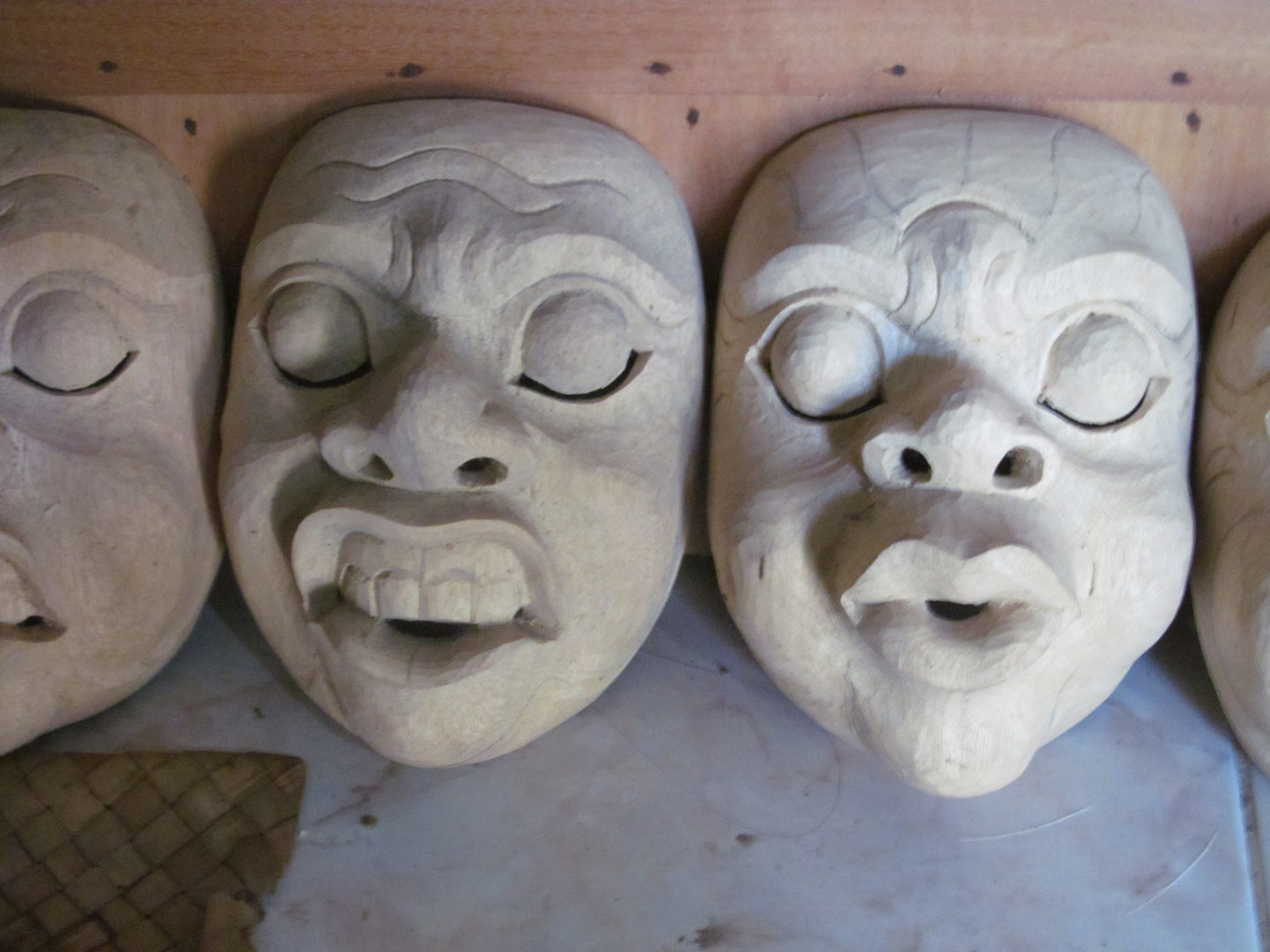
Mask carving is progressing nicely- I may be able to begin a second mask on Monday! It’s fun trying to translate things I already know into a new medium, and to hear the insight of a master carver.  Nyoman is also full of stories about Balinese culture.

mask process
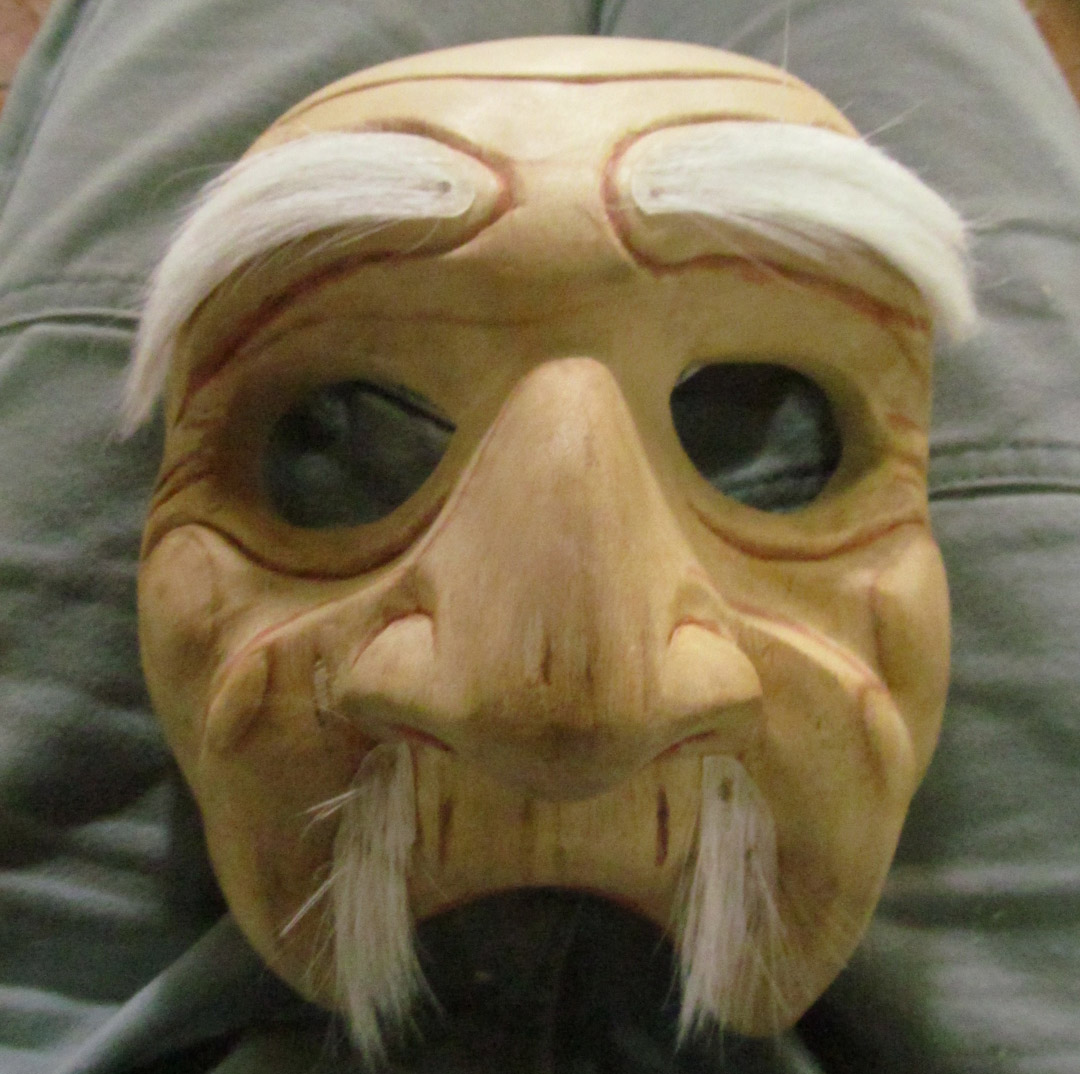
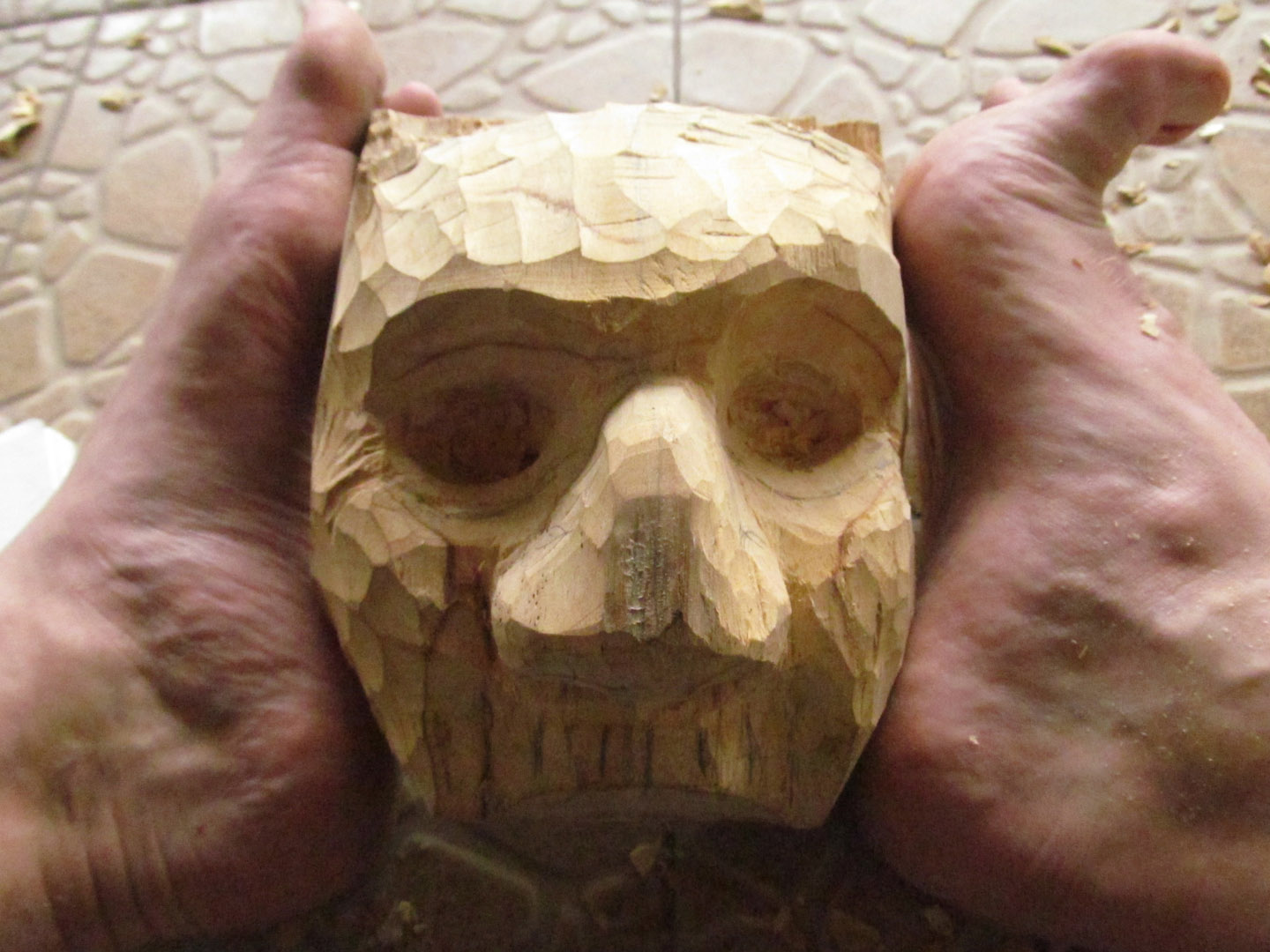
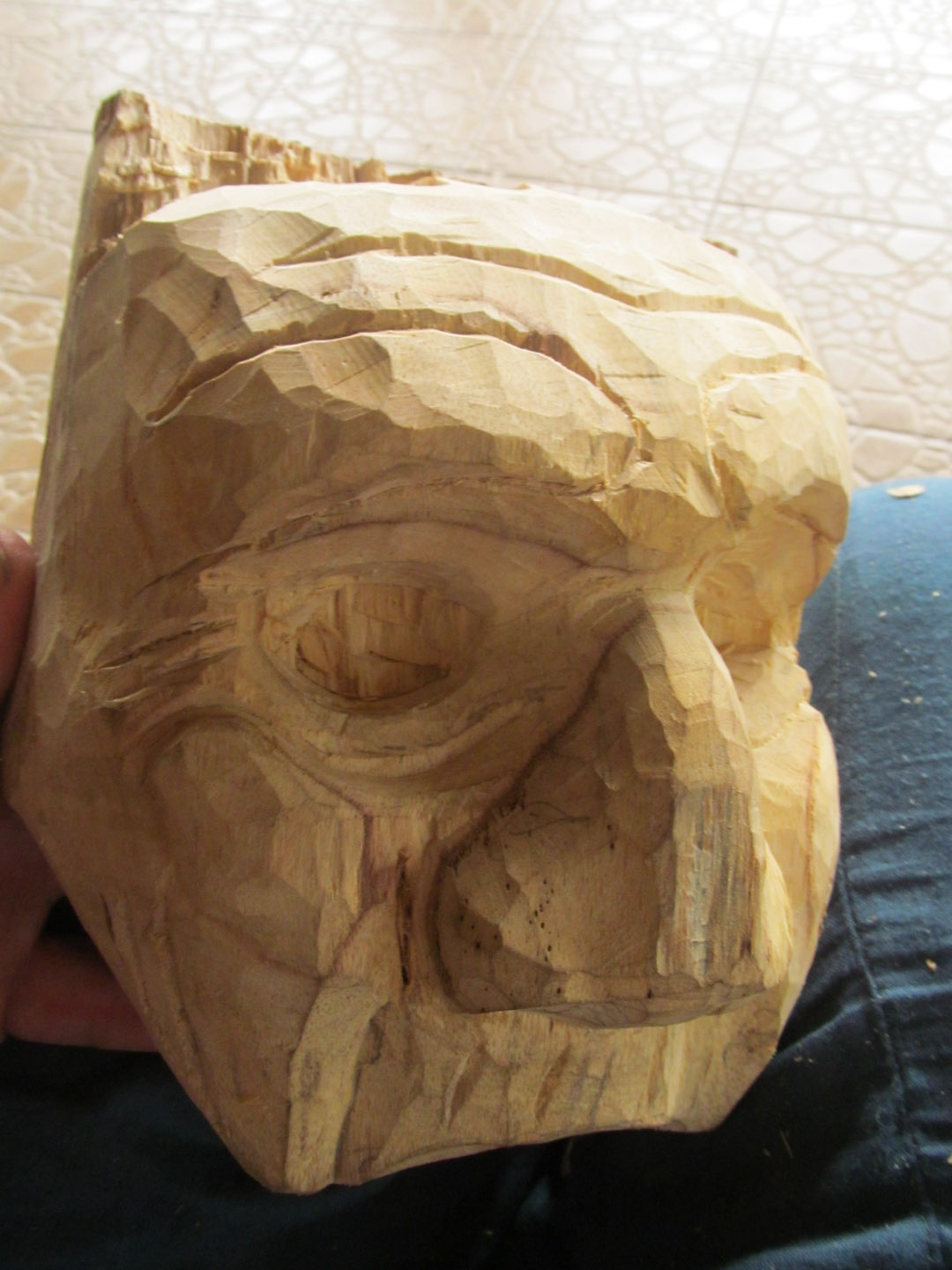
My progress this week! With half masks, you must work back and forth between the finished character design and the fit of the mask. If the inside is not sufficiently hollowed, it affects how the mask sits on your face, and therefore the proportion of the character design.

And here are some more faces around Ubud:

Close-up of a painting. The face seems to be made of words
The edge of a doorframe.
Statues outside a building compound

The Mask Museum

Last Wednesday, we took a mini-break from classes to visit a mask and puppet museum in a nearby village.  It is so very rare to see this many masks in one place– and the whole visit is free of charge.

Barong Ket mask by Tisnu.
Barong Ket mask by Tisnu. Operated like a puppet, he has a jaw that opens. His power is in his beard.

The first building concentrated mostly on variations of the Barong mask. The Barong is an animal figure that protects the village. There are several variations, including the boar barong, elephant barong, tiger barong, and the barong ket.

The next building featured many masks of the Topeng—the mask dance form we are studyingas well as character masks from the Ramayana.  Topeng dances feature storylines from the golden age of Balinese kings, and feature characters like the prime minister, the old man,  and the king. While those characters are pantomimed, the servants and bondres clowns speak to the audience.  Each dance closes with the Sida Karya mask.

The Sidha Karya mask. This set of three photos shows how an excellent mask can provide a wealth of expression from all angles, even when it is stationary.
The Sida Karya mask. This set of three photos shows how an excellent mask can provide a wealth of expression from all angles, even when it is stationary.

The museum also houses collections of masks from around the world, as well as shadow puppets from all over SE Asia.

Visiting some  carvers: Tisnu

The Barong Ket carved by Tisnu's grandfather.
The Barong Ket carved by Tisnu’s grandfather.

We were taken to the house of Tisnu, a carver renowned for his sacred masks – including the Barong Ket, the Rangda, and more- by Judy Slattum, author of Masks of Bali: Spirits of an Ancient Drama.

We were able to hear more about his work, the processes of creating sacred mask and costumes, and purchase some of his non-sacred masks.

The details for the costume are carved from bison hide (as are shadow puppets) before being painted and decorated.
Some masks that are being re-conditioned and re-painted. Left is a comic witch mask, right is a Durga or Rangda.

Pak Tisnu not only is an accomplished carver and dancer of a masks, but I believe he plays the gamelan as well. He is a former vice-chair of the University, too.  We visited this talented man at his home, which is part of a palace compound in a village outside of Ubud.

Visiting some carvers: Tangguh

We also were able to visit a carver who lives just down the road from Pak Tisnu. The majority of the Balinese masks in the Museum of Masks are his work. His name is I Wayan Tangguh.

I Wayan Tangguh at work weaving horse hair into strands for masks.

In addition to topeng, he creates masks that are part of the wayang wong tradition. His son and some apprentices were working on a large order when we dropped by.

Mask by I Wayan Tangguh
Masks by I Wayan Tangguh
Myself with Tisnu!
Myself with Tisnu!


racc_orange_horiz

This trip was funded in part by a professional development grant from RACC.

The First Few Days in Bali

It’s been such a busy Bali so far– so writing on the blog is challenging to make time for.  There are so many more interesting things to do than type at a computer, but it is also great fun to share some of what’s been happening.   What follows is  a quick summary, told partly in pictures—how many pictures, the internet speed will determine. (Please forgive awkward formatting.. the computer’s being a bit unforgiving at present.)

Day 1. Arrival. The trip from the airport in Denpasar is relatively quick. We get in slightly later than anticipated, and go out for dinner at a warung down the street. Sleep is welcomed.

Day 2. Orientation. I see my room by daylight! After breakfast the whole group meets at the Wantilung at the hotel to get some of the basics of our schedule.  For me, every day will include a daily warmup, a class in topeng dance, and mask carving.

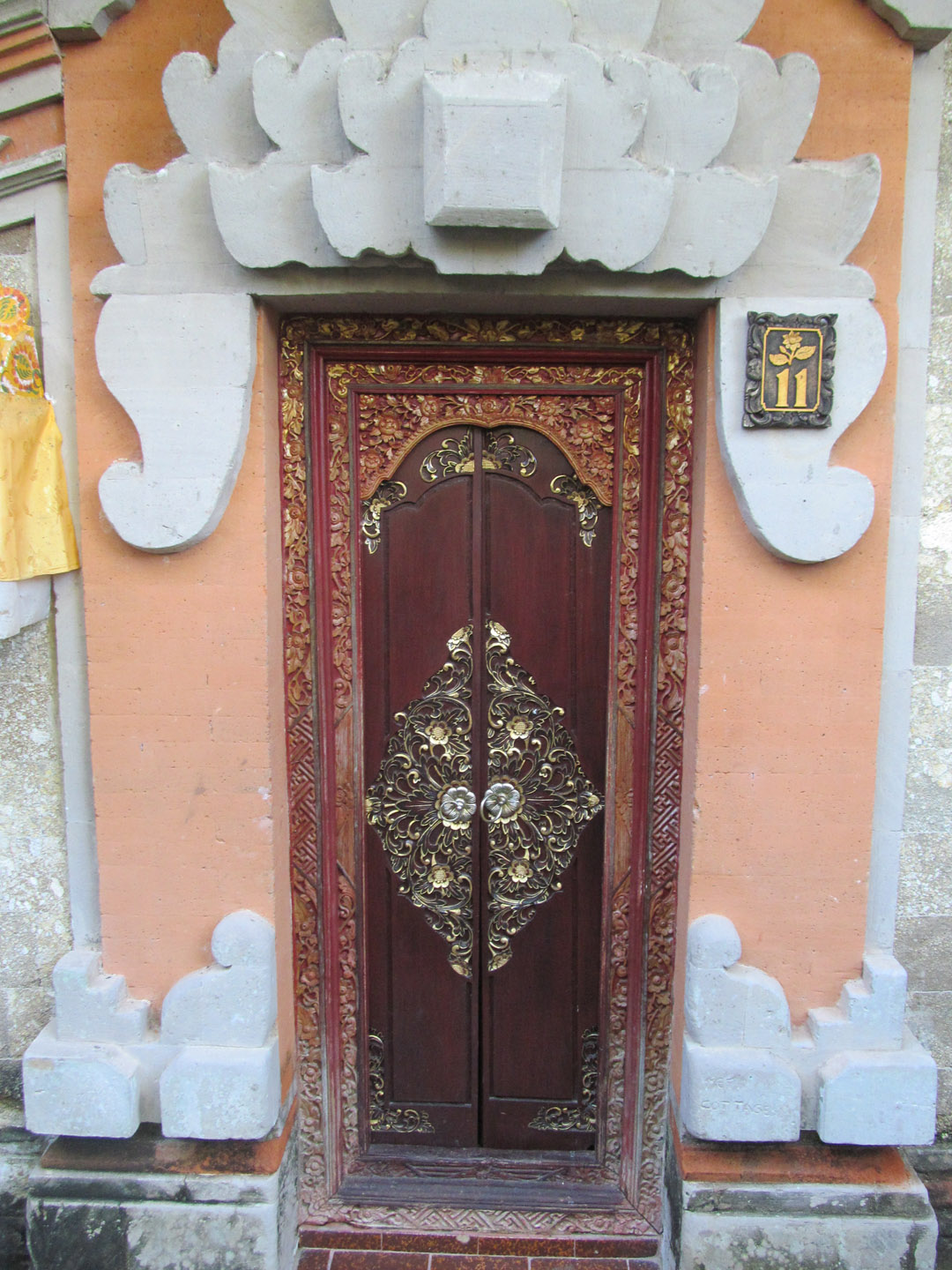
The door to my room has Dutch roots, as well as Balinese.
My room!
My room!

In the afternoon, we gather essentials, including sarongs and sashes for attending temple ceremonies.  We have a nice opening buffet dinner in downtown Ubud.

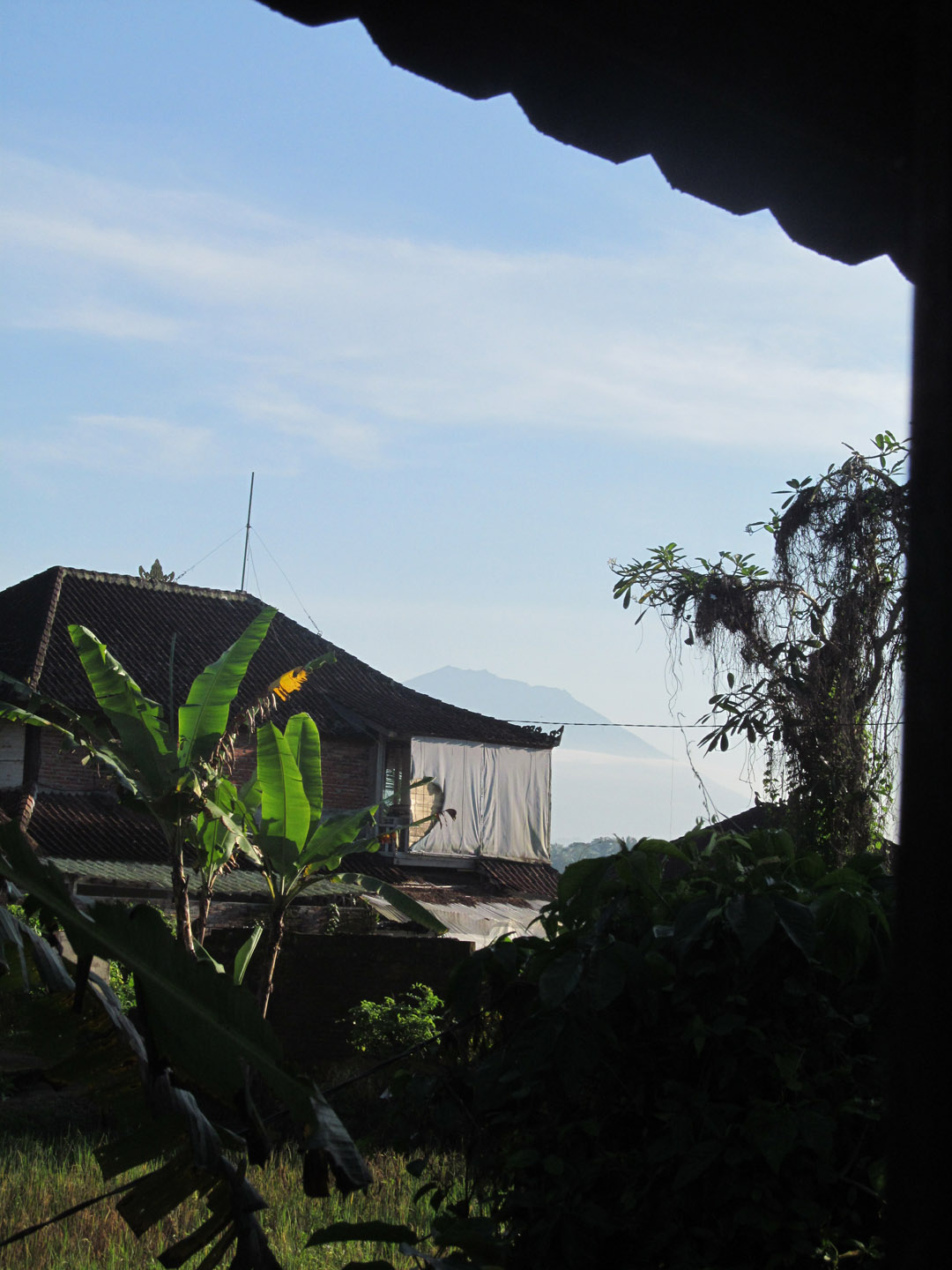
The view from inside my room, featuring Mt. Batur in the distance

Day 3. Getting Some Perspective. We travel to a famous carver’s home in village of Mas. His name is I.B. Anom. He tells us about the general process of mask carving, the differences of process in the creation of sacred and profane masks. He also shares his gallery with us.

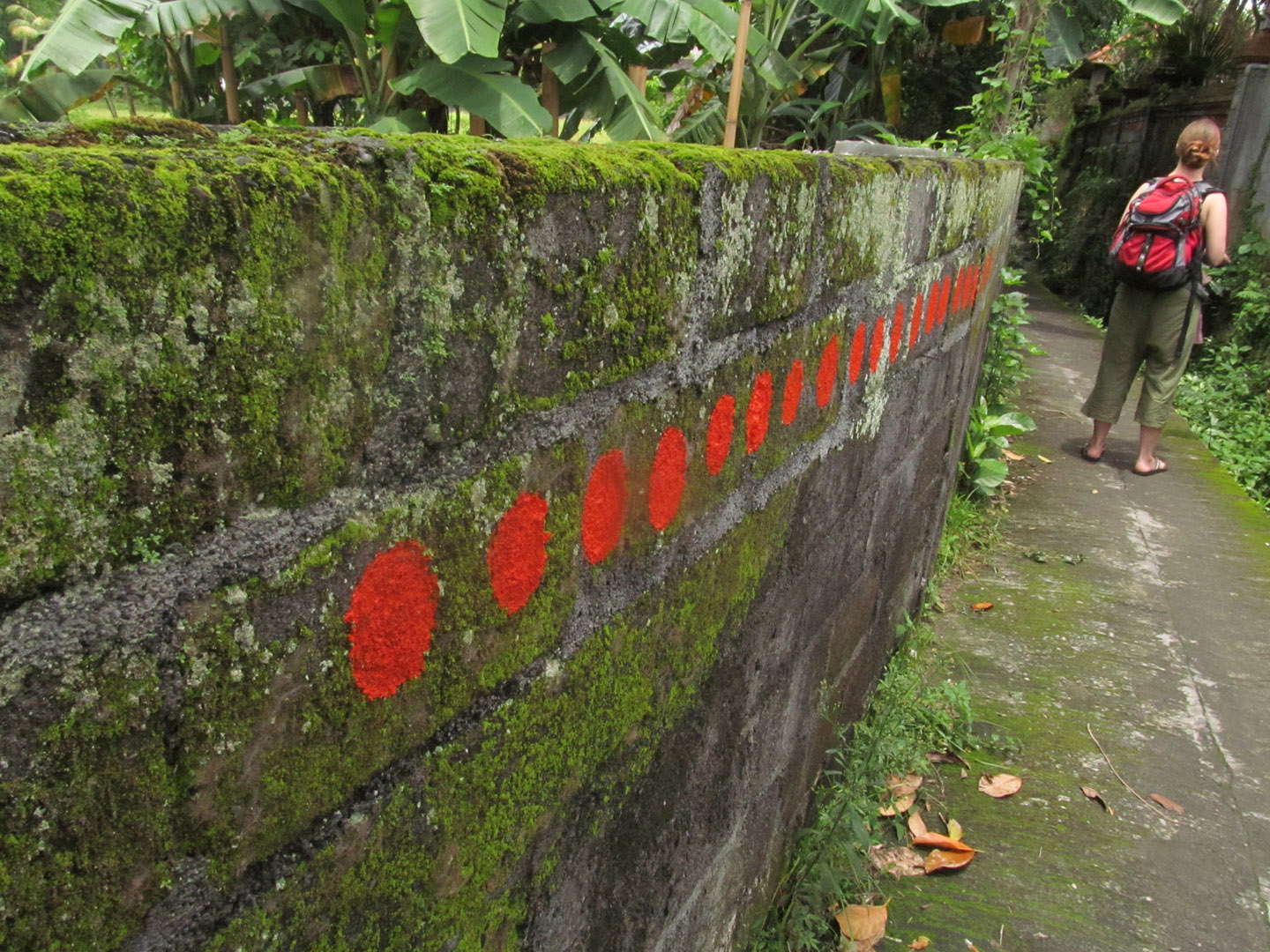
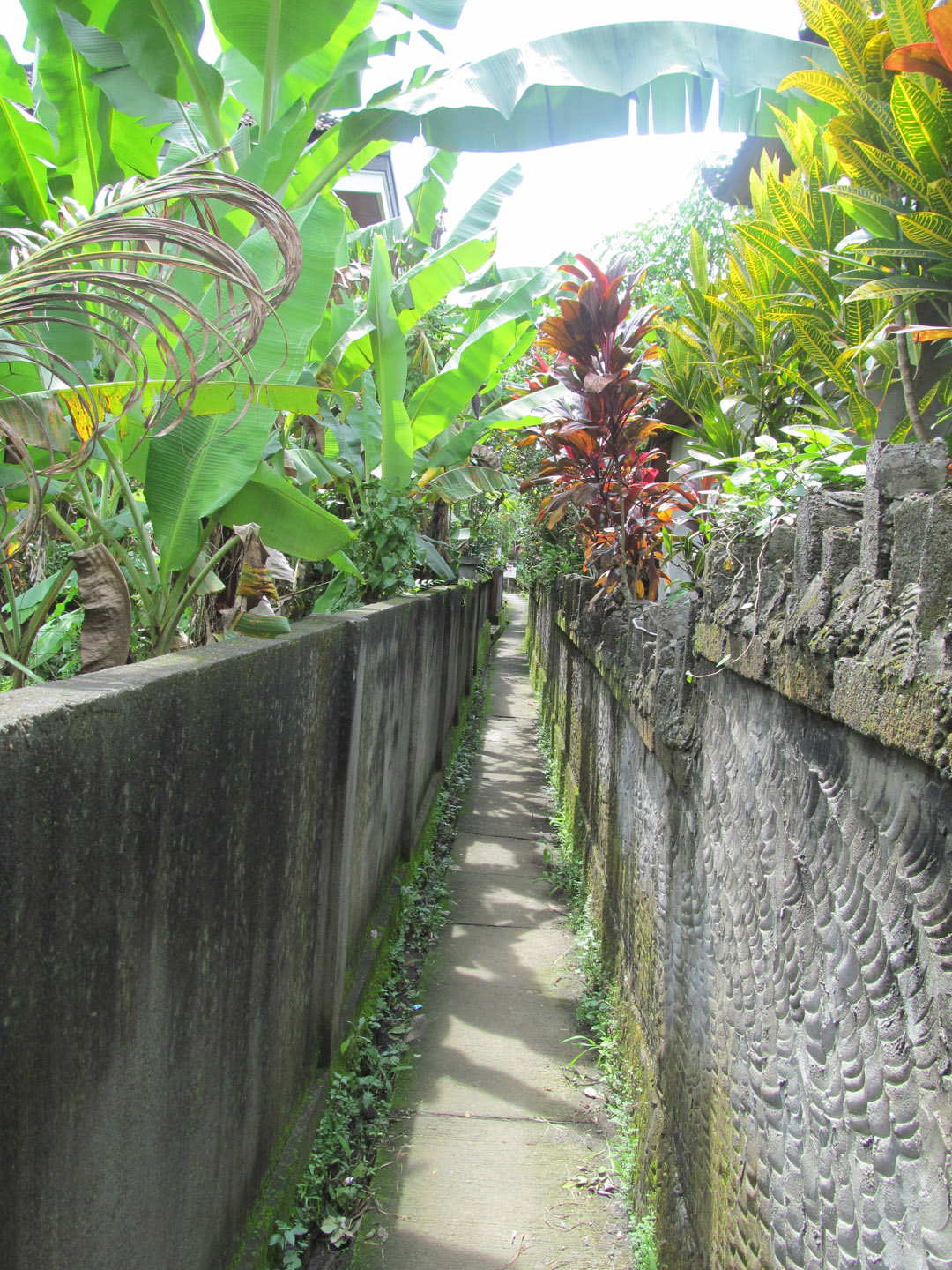
A sidewalk, or backway to the grocery store. It's almost like a  mini alley. Water irrigation systems follow these paths, feeding rice patties sequentially from the highlands to the sea.
A sidewalk, or backway to the grocery store. It’s almost like a mini alley. Water irrigation systems follow these paths, feeding rice patties sequentially from the highlands to the sea.
I.B. Anom discusses mask carving

Below are some images of his work.

Mask by I.B. Anom
Mask by I.B. Anom
Mask by I.B. Anom
Mask by I.B. Anom

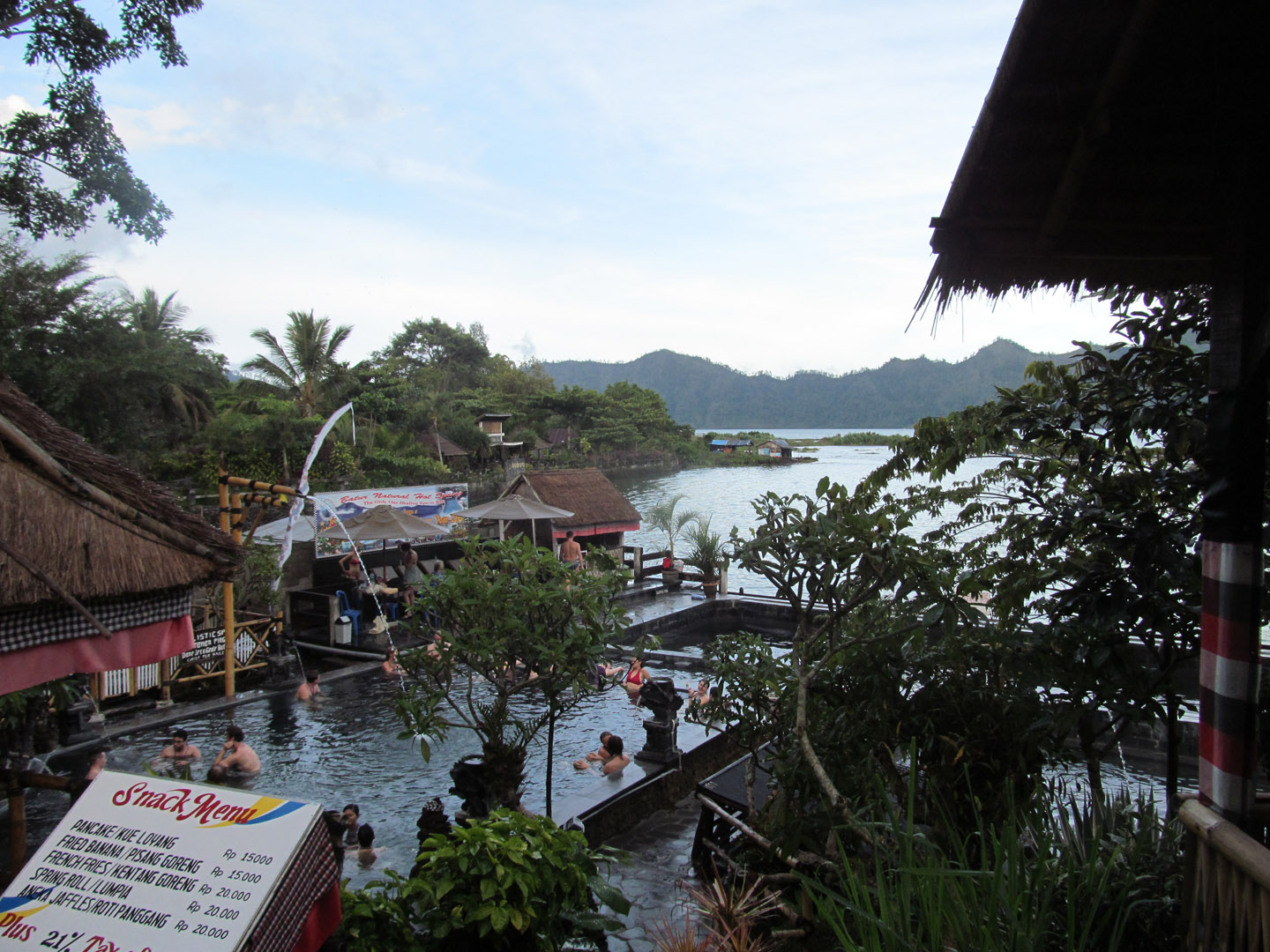
After we look at many masks, we head to  a nice hot springs to

Mask by I.B. Anom
Mask by I.B. Anom

recover from jet lag.  It was a couple of hours in  a crowded van, but it was worth it.

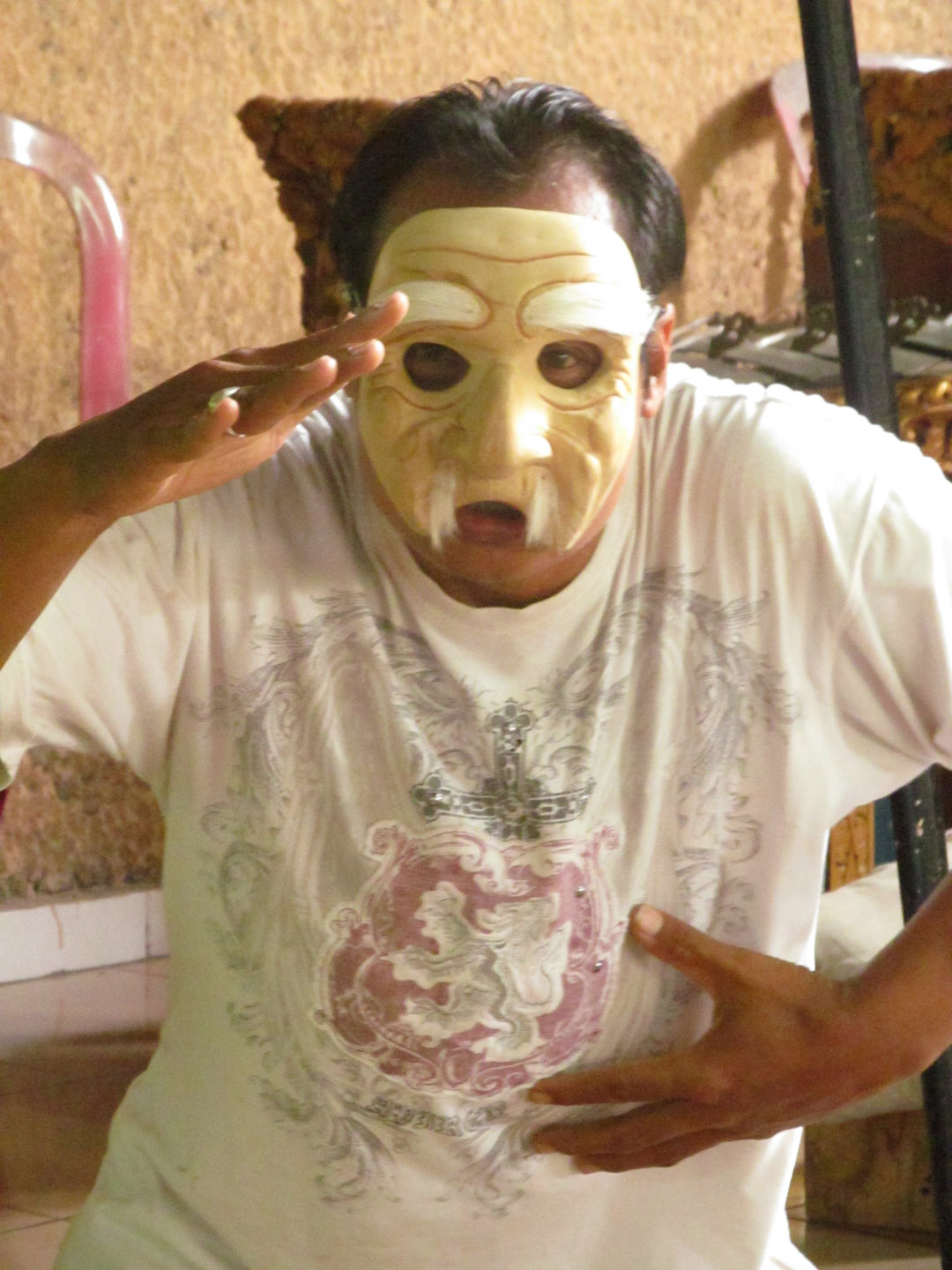
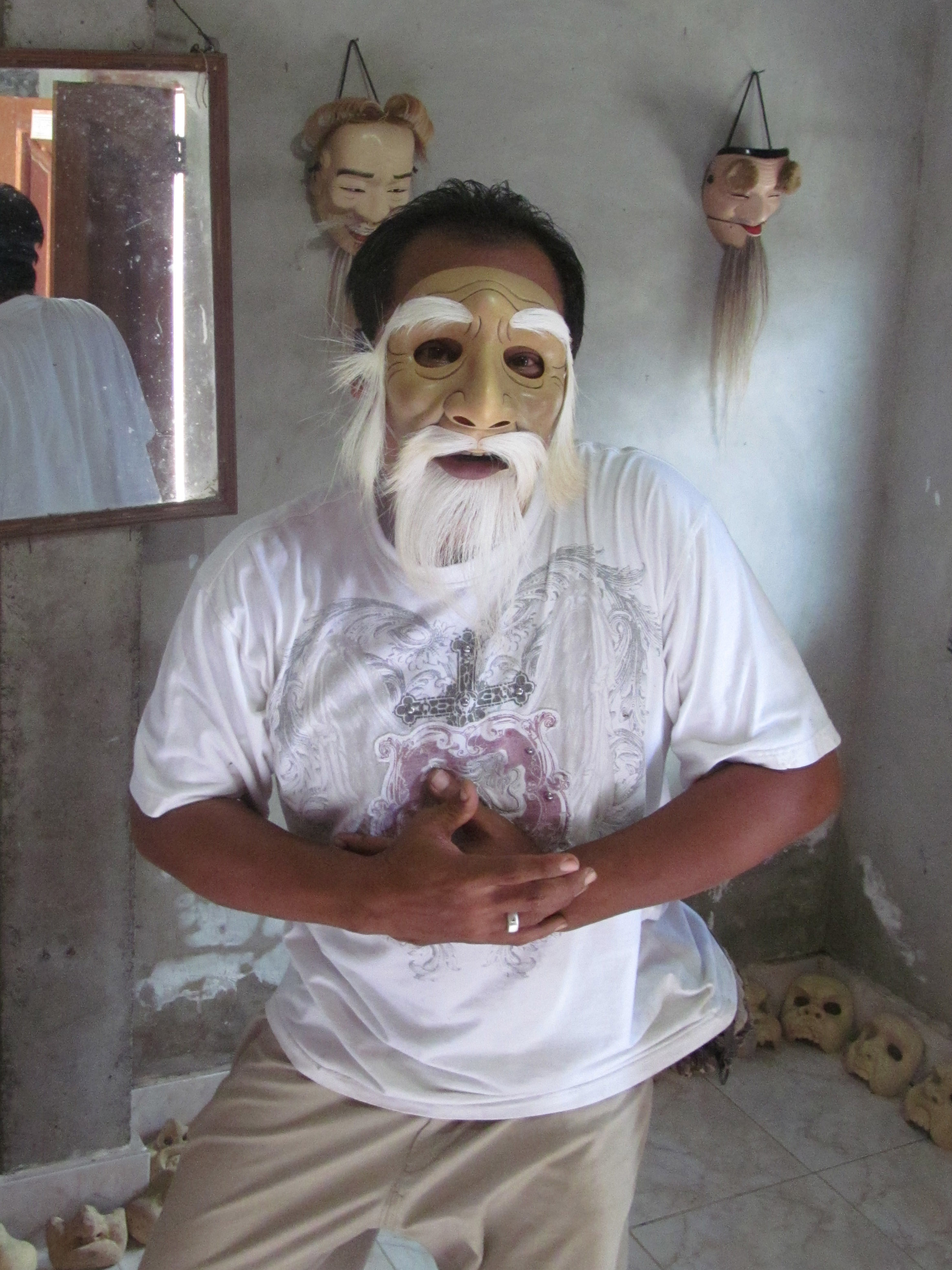
Me in a mask by I.B. Anom

And so we ended the last day before classes.

Hot springs at Mt Batur!

Day 4. Topeng!

We have a great dance class with Gustu. Balinese dance has a lot to do with arms and legs. More on that later.

We arrive at our teacher Nyoman’s house with  only a little difficulty and a couple of confused Balinese neighbors.

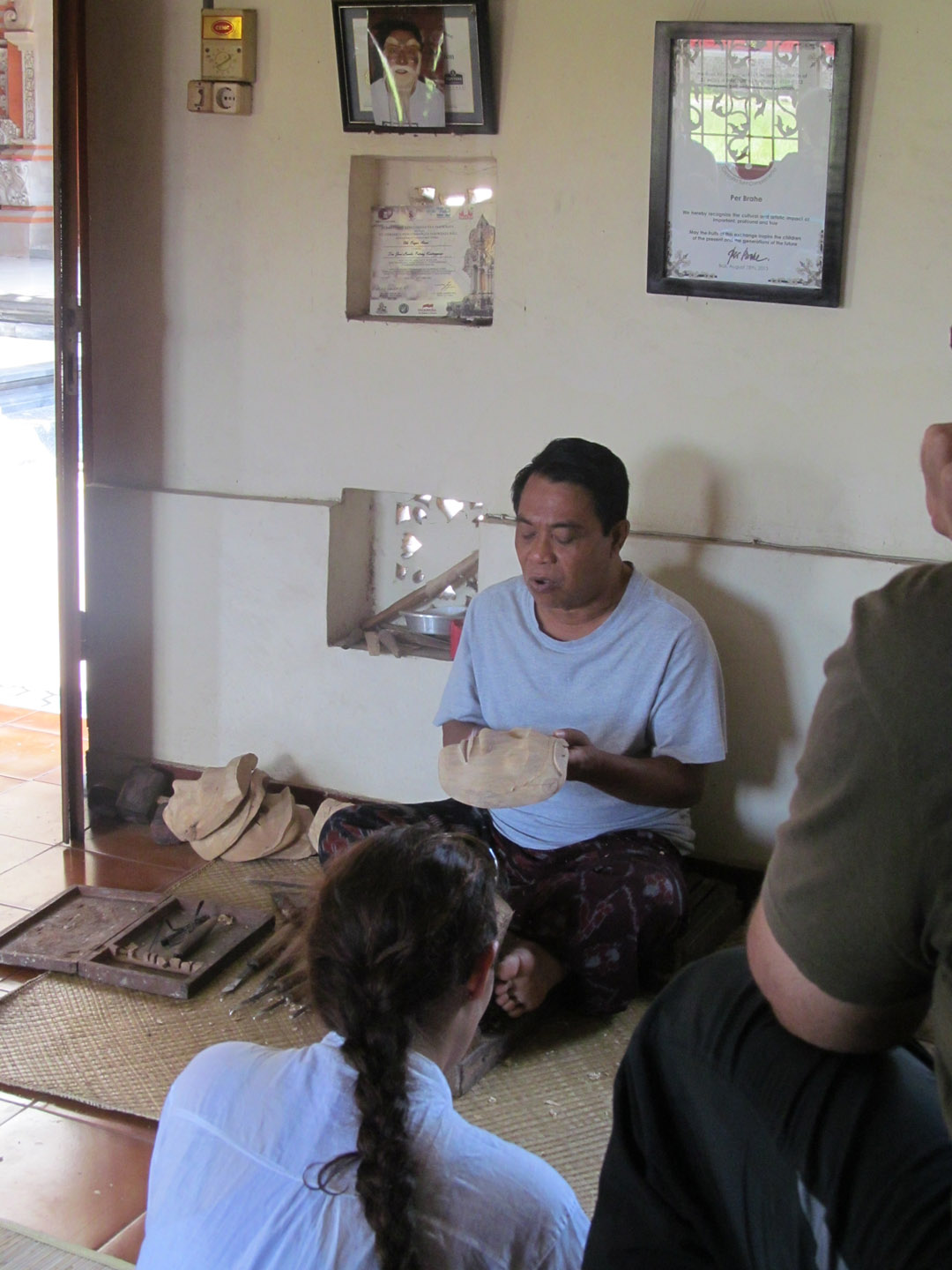
He is a charming man with a great laugh.  We look at his studio, and prepare to work, but not before the drinking from the coconuts he offers.

Nyoman in one of his creations.

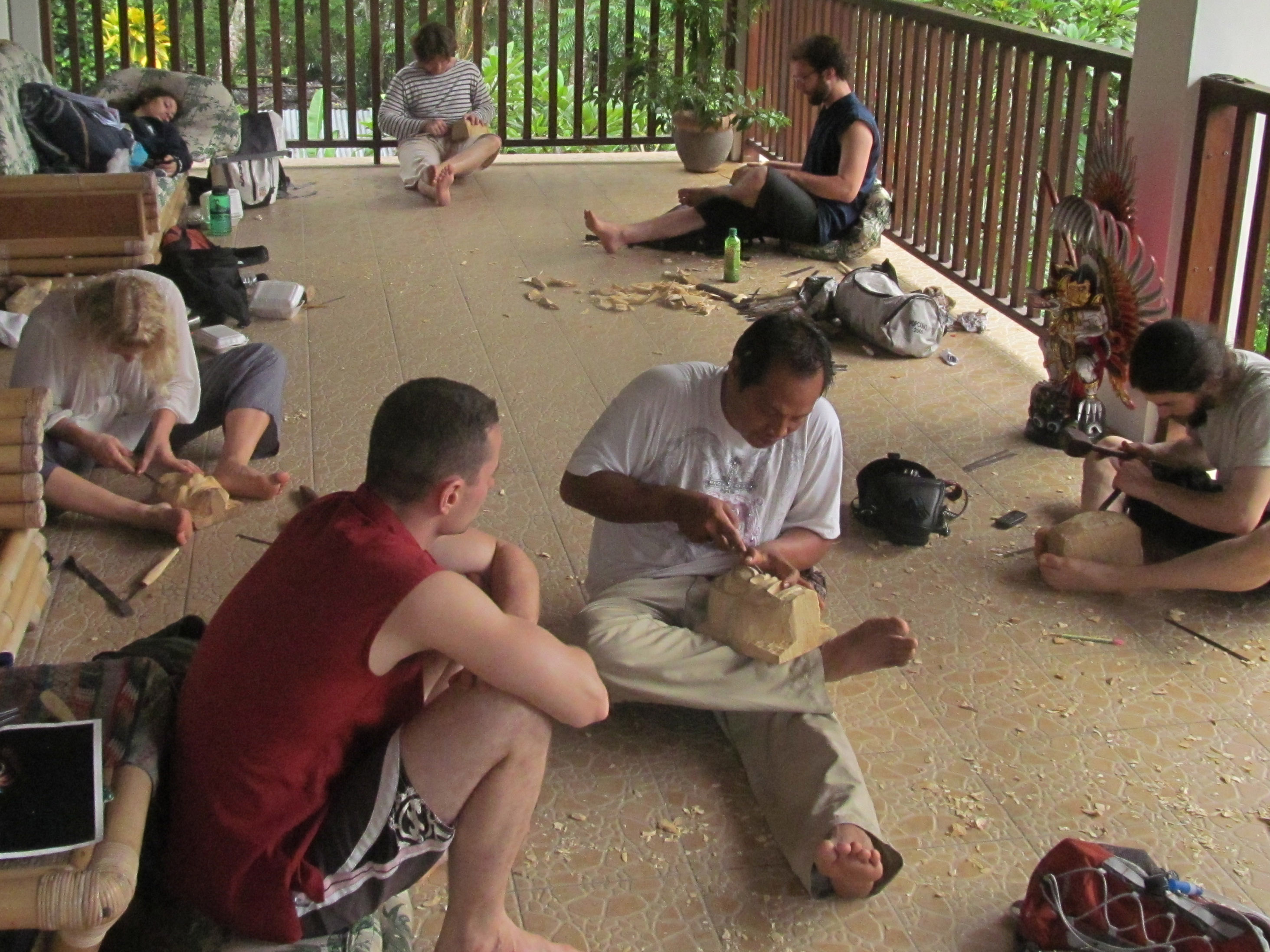
He is a great help!  Once we (quickly) decide what we will carve, he gets us started.

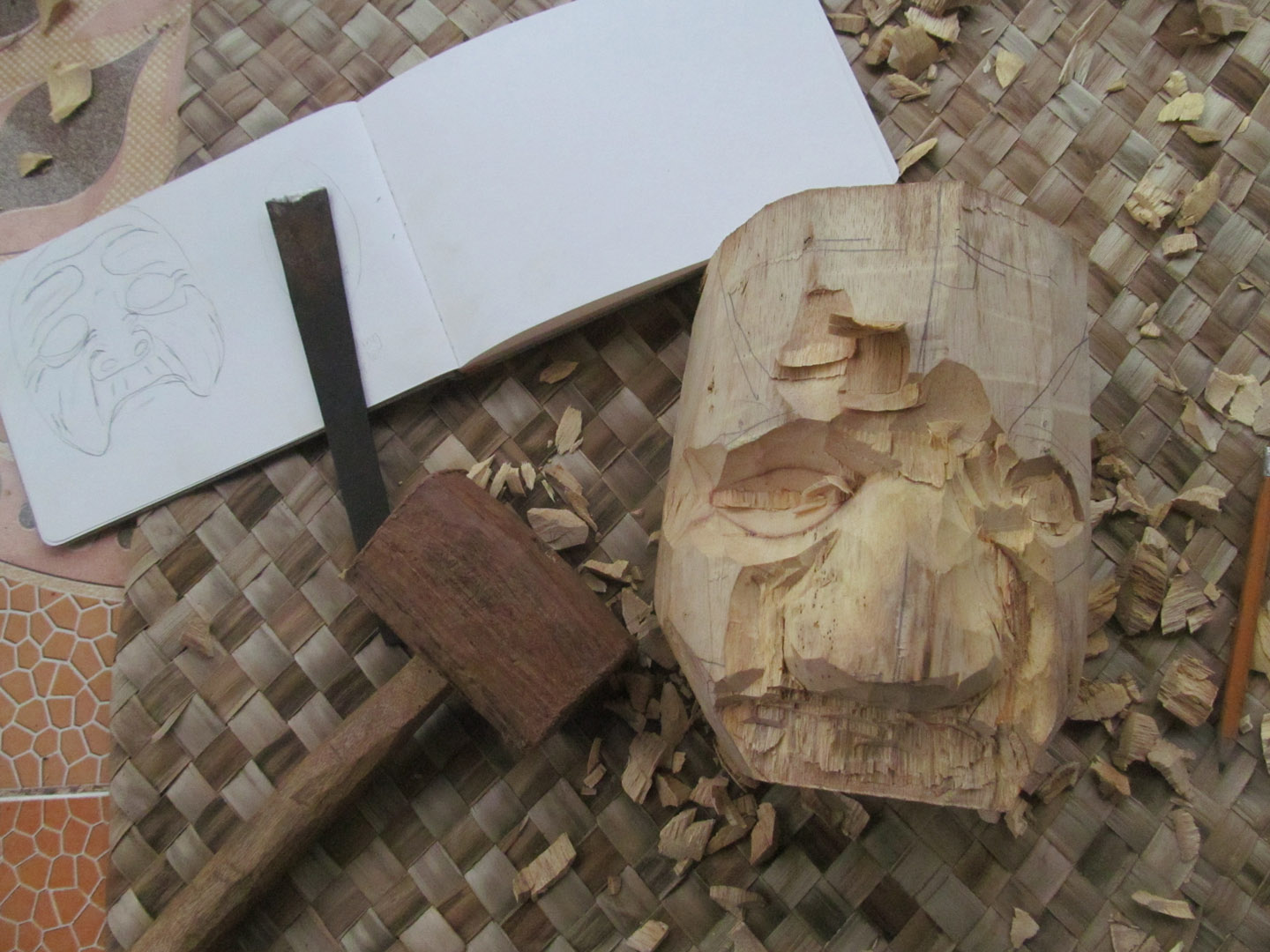
We work for several hours as rains come and go. We carve while sitting on the floor, holding the mask between our feet.

My beginnings. I had lots of help :)
My beginnings. I had lots of help 🙂

I have decided to carve an old man half-mask.  If I am fast enough, I will make a second in a different style.

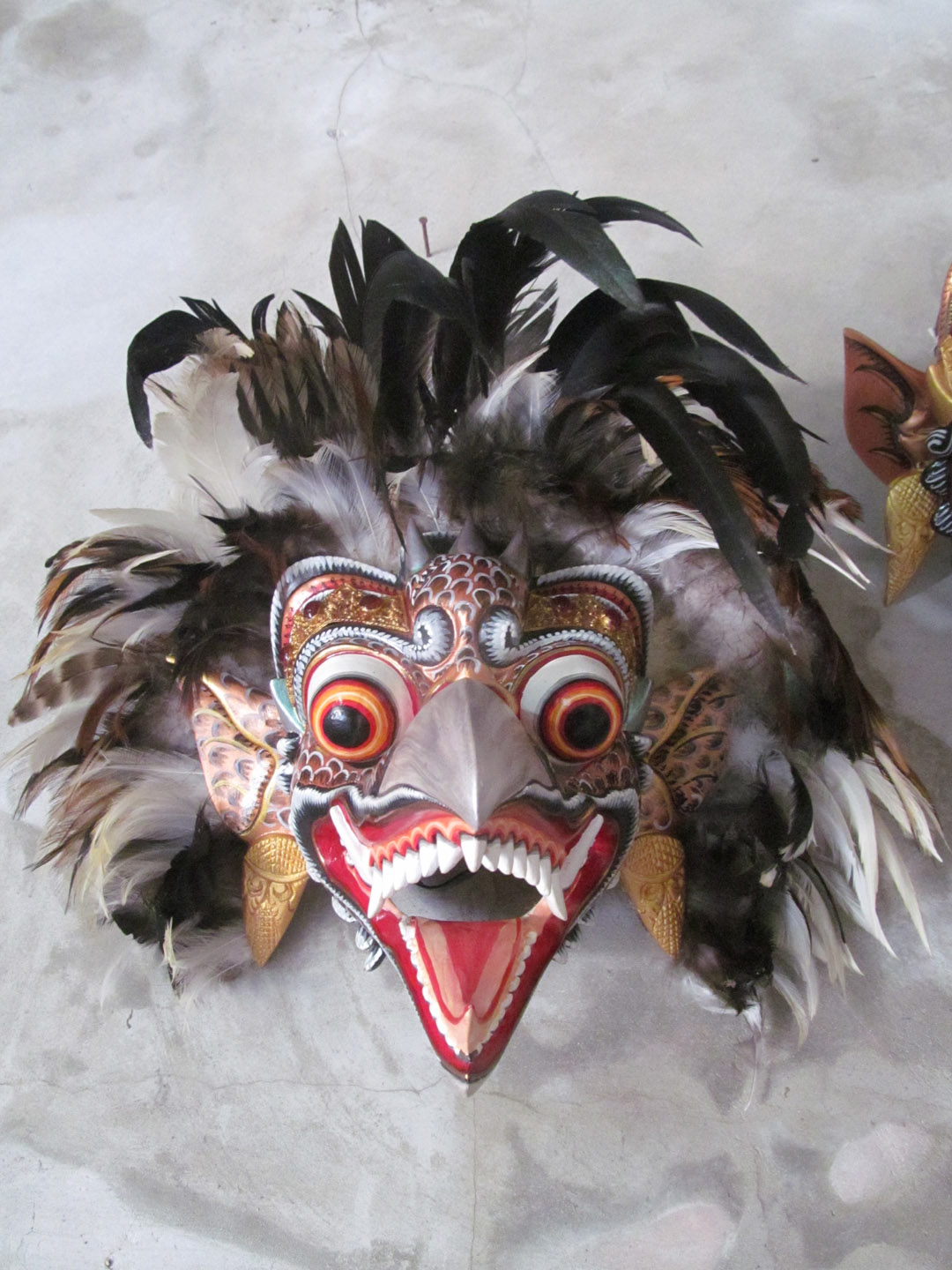
Garuda mask by Nyoman
Unpainted masks in Nyoman's studio.
Unpainted masks in Nyoman’s studio.

Later that evening I am beginning to feel poorly. We see a kecak  performance by a local banjar and then a fire trance. Intense.

Day 5. Officially Ill.  I stay in bed all day with a fever, sleep, and a few episodes of Downton Abbey. I’m better now.

Day 6. Continuing Classes.  Feeling better, I observe the dance class and continue carving.

Now I am headed off to class! Selamat siang!

Beginning of second day of work on my half mask
End of second day of work.
Nyoman with fellow students

racc_orange_horiz


This trip funded in part by a grant from RACC.