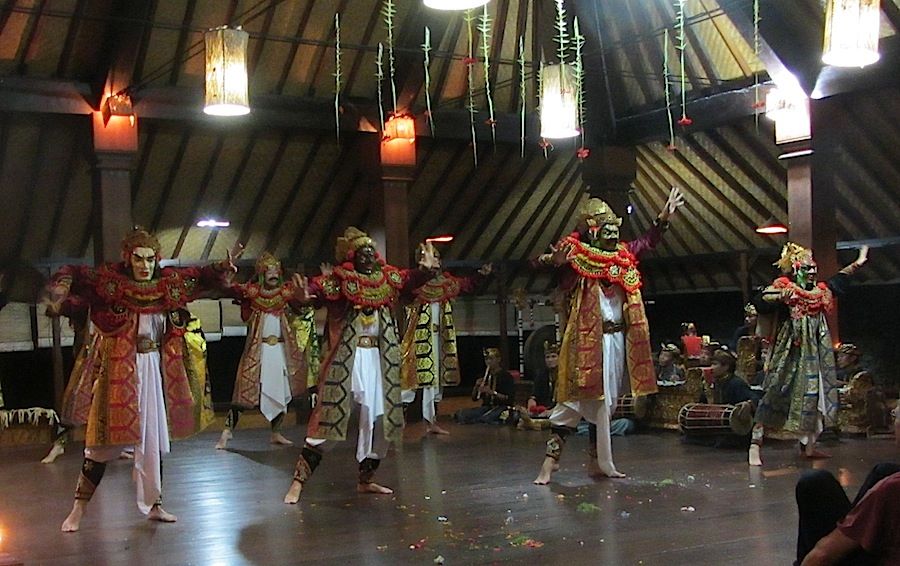
I’ve been back a month now! And I haven’t been dancing nearly enough. Here are some moments that take me back.
Topeng
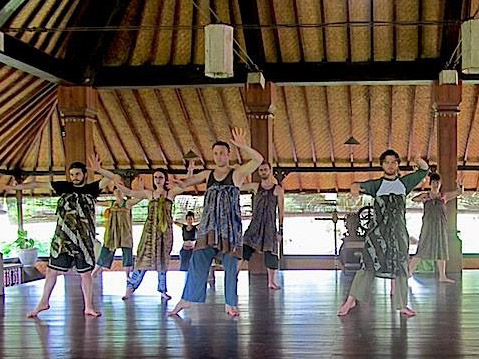
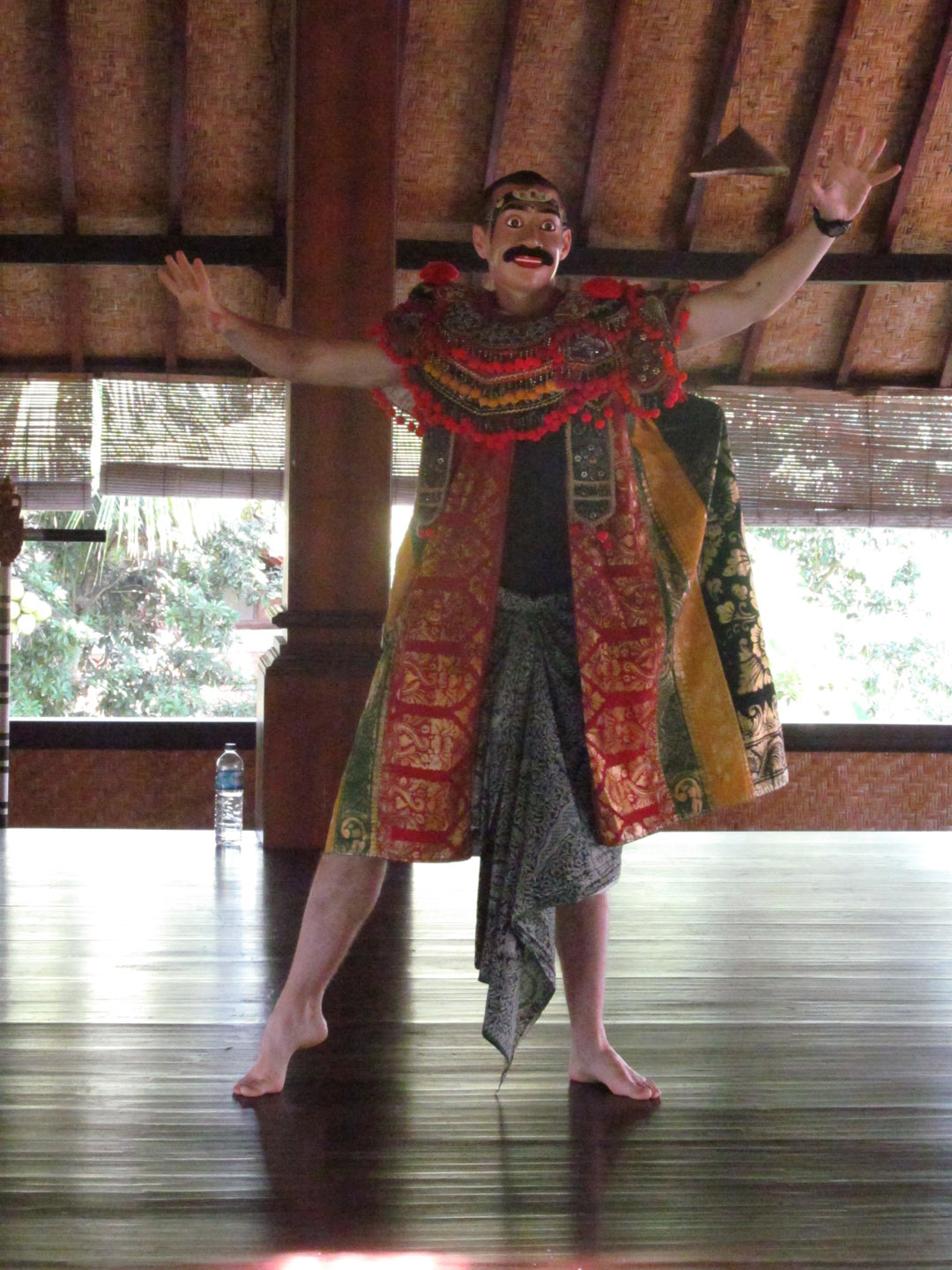
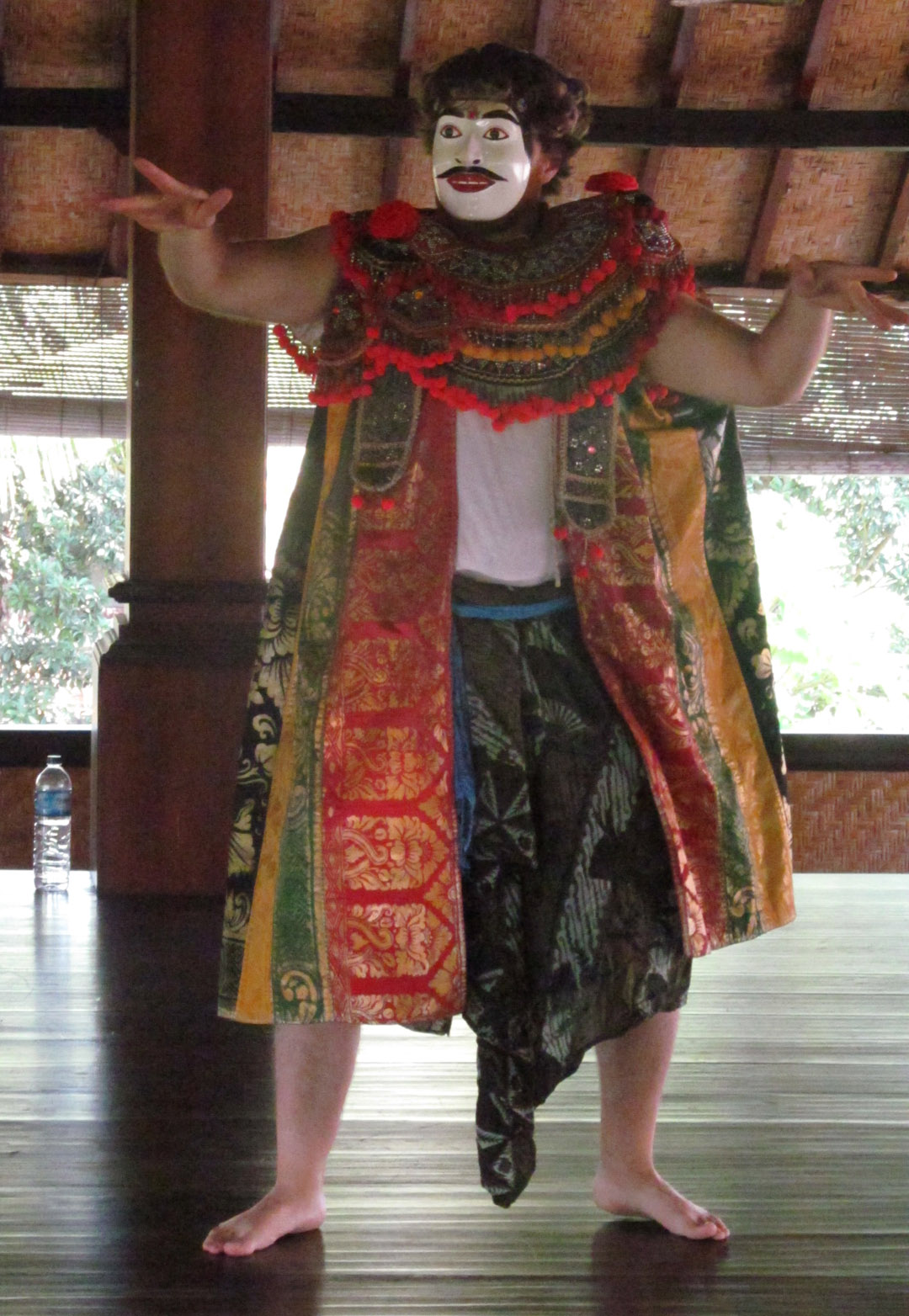
In dance class, we tied our sarongs high to simulate the costume we would eventually wear.One of the more genial masks of the ones we used in classAnother variation of the keras mask.
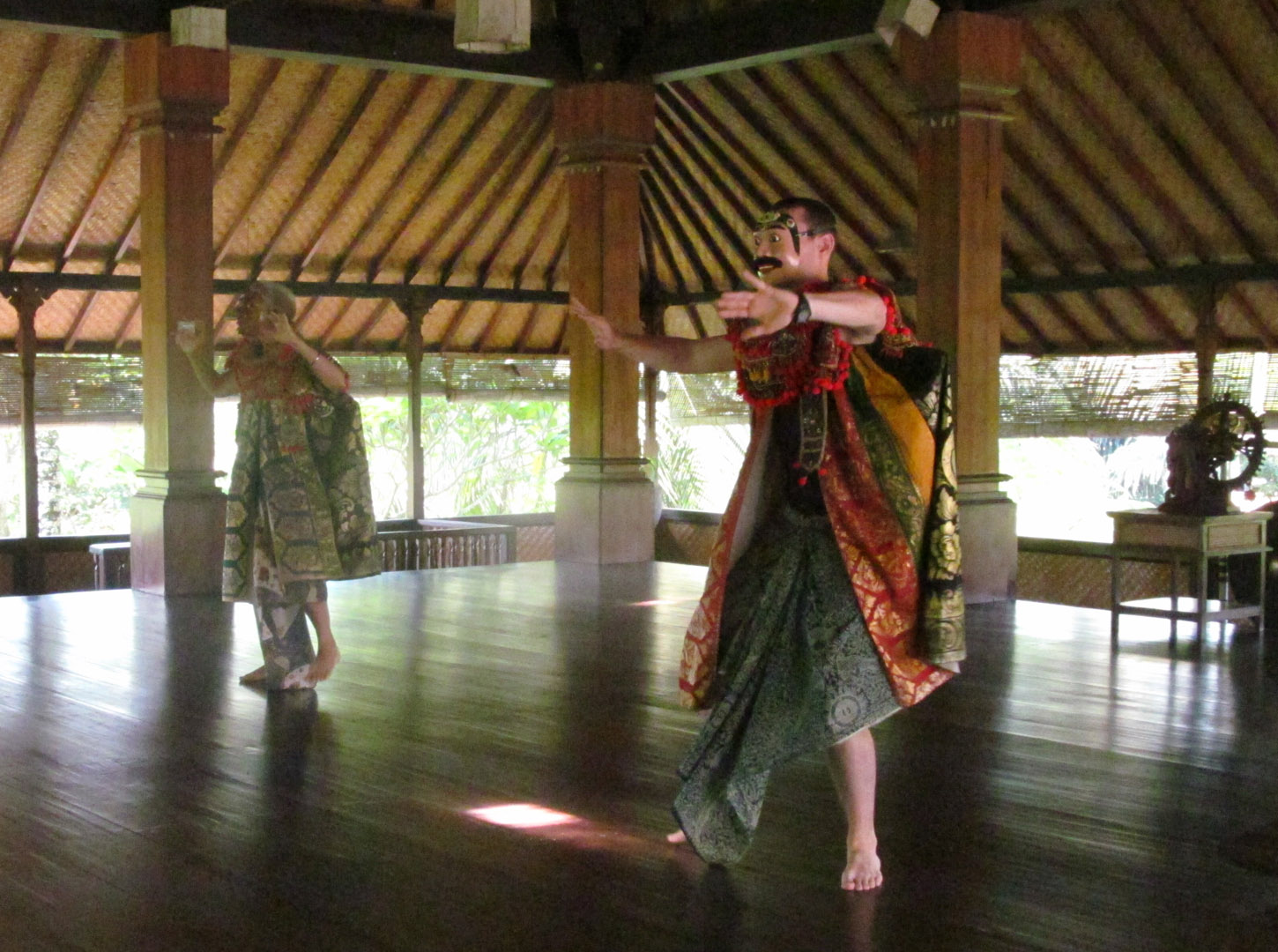
After a few weeks of study, we started wearing a mask and the basic parts of the costume in class. Both really change the way you move.
We began each class with a review as a whole, then dancing in pairs for greater detail work.
The costume frames the mask—which is typically carved slightly smaller than a face—in a way such that the arms and shoulders must be held high for it to play correctly. It feels odd at first, but it’s much easier to get a feeling for the choreography when observing others use the mask and costume pieces.
Some of the costume pieces—the wig, the hat, and the flowers by the ears—we used for the first time before performing for the public. It can be a little disorienting to add things at the last minute, but that’s how it goes. Below is a video of our final dance performance. It should give you a sense of what we were doing. It should be noted that normally the dance is actually done solo, and the music follows the dancer. Conversely, we danced in a group, and were attempting to follow the music. We got it mostly right. 🙂
(Psst! I’m on the right.)
Kecak
On that night, we ended with our kecak performance. There are six interlocking rhythms that form the majority of the chant (we each learned one of the six), as well as a bit of singing. Originally, the kecak was done as a part of a trance ceremony. Since the artistic intervention of Walter Spies in the 1920s, this chant includes the story of the Ramayana when performed for tourists.
The video below is a section toward the beginning of the piece, so unfortunately you don’t get to see the exciting part we chase each other with fire …which we used for the first time during our actual performance. Can you say “trust exercise”?
This trip was made possible in part by a grant from the Regional Arts & Culture Council.
As promised, more photos! Click on the link above to see all the photos in the blog and many, many more. It is such a pleasure to share them with you, and to give a little visual context for all I’ve been writing about.
This trip was done through a program of Dell’Arte International. It was made possible in part by funding from the Regional Arts and Culture Council.
Photos from the Setia Darma House of Masks & Puppets
Here are my photos from our visit to the mask and puppet museum near the village of Mas in Bali. There are many masks from major Balinese performance traditions of Calonarang, Topeng, and Wayang Wong included. There were also masks from other Indonesian isles and many other countries. I’ve included text from the museum placards (or at least the spirit of it) in the descriptions for each photo.
Enjoy! Full photo album from the trip forthcoming!
Your friendly neighborhood mask maker,
Tony
This trip was made possible in part by a grant from the Regional Arts & Culture Council.
We wait for maybe four and half hours, just outside a new house that will have a blessing ceremony, before any sign of the activities. Our dance teacher, Gustu, is to perform a topeng at the ceremony. Initially he thought it would be in the morning, then received word that it would be closer to 1:30.
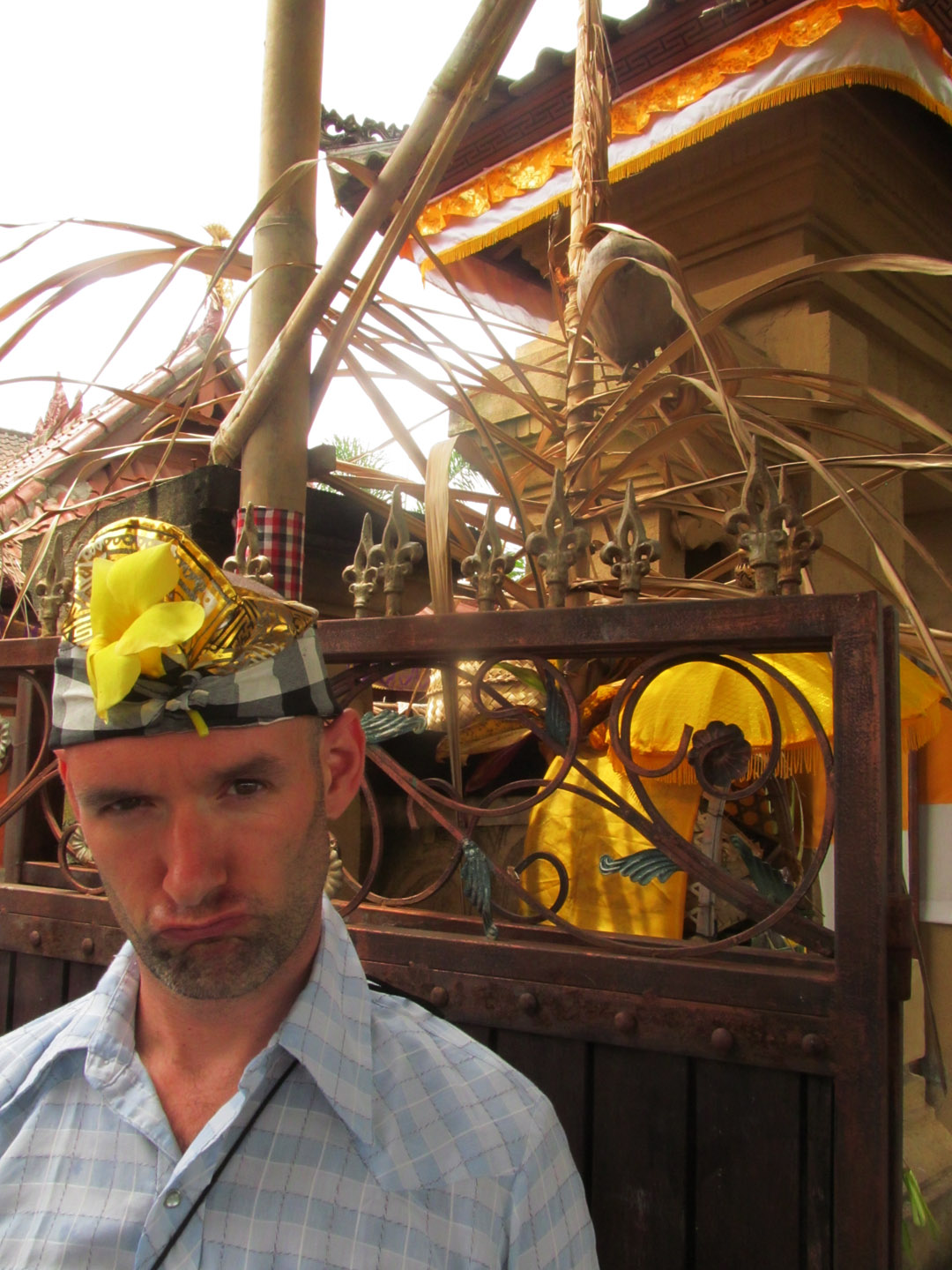
My roommate Jerome by the front gate.
There are related ceremonies happening elsewhere, and the people will not arrive until those are done. Whenever that is.
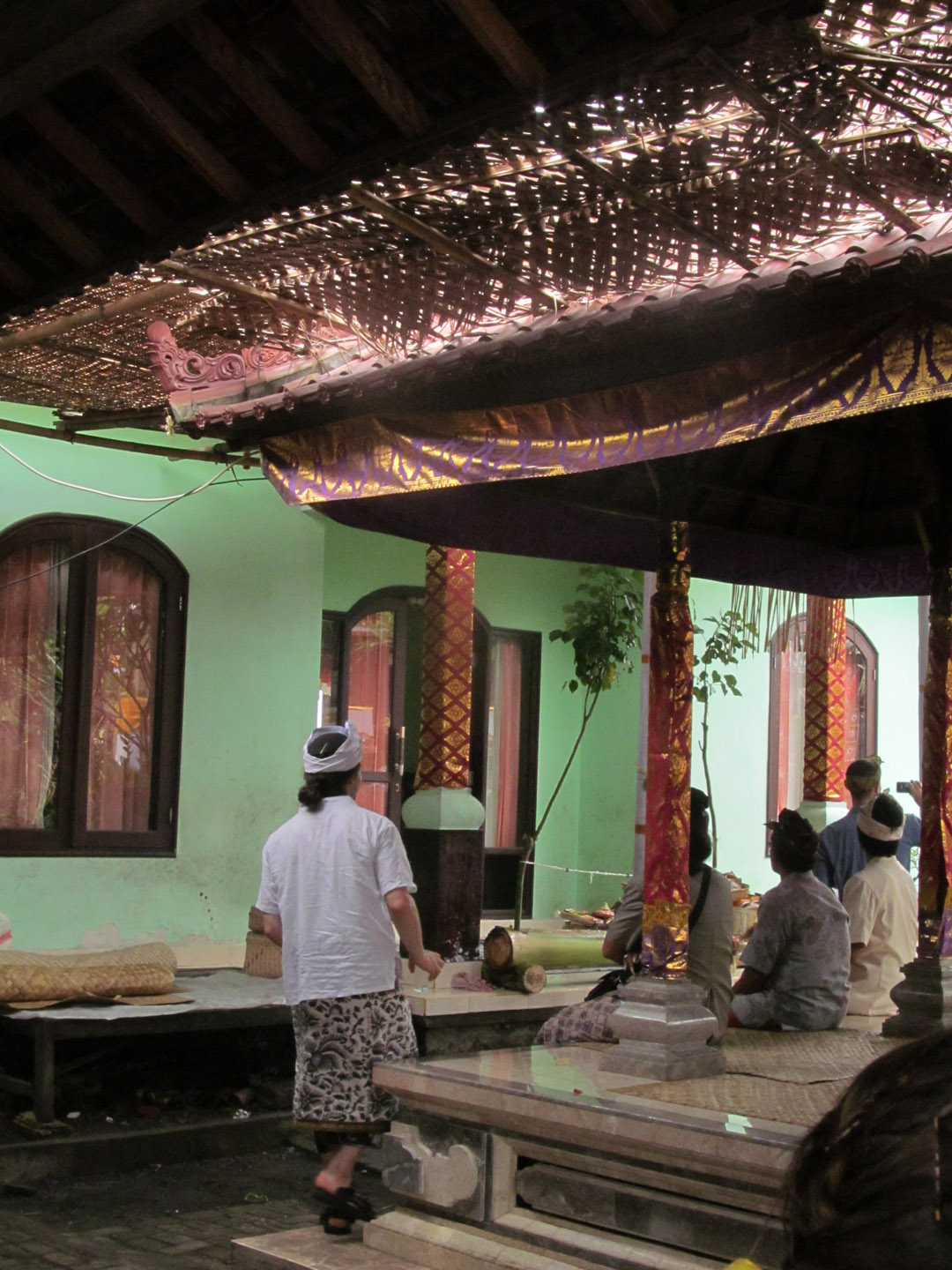
Yavni explores the house. We didn’t know it, but he’s walking in what we’ll be in the main performance area that evening.
We are served a few coconut snacks and coffee as we wait and entertain ourselves. Word games abound.
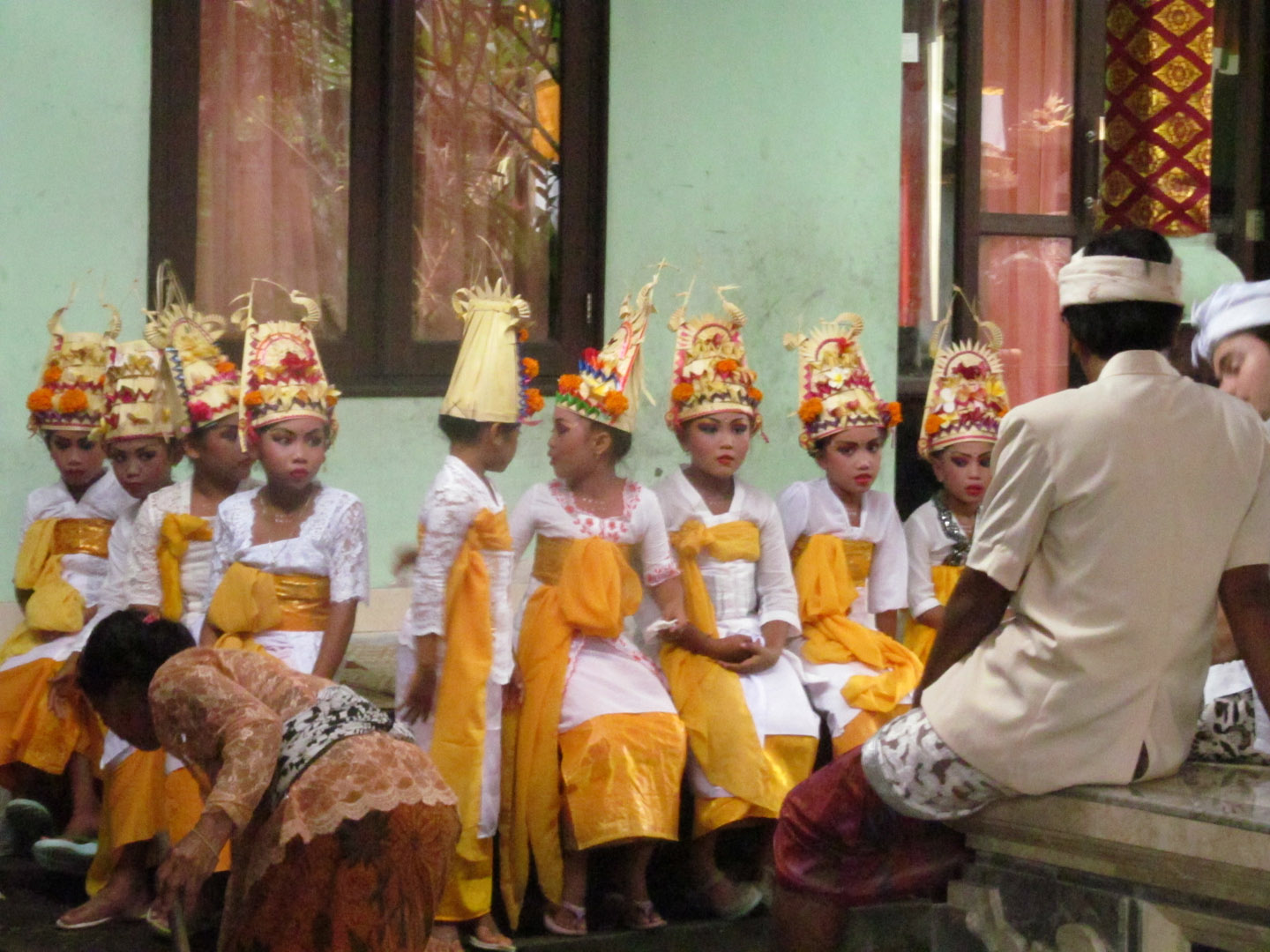
A few give up and take their motorbikes home. The rest of us wait it out. A group of girls, aged approximately 8-10, enter the housing compound. They are dressed in white and gold, and have beautifully ornate headdresses made of woven palm. Their eyes are accented in red, blue, yellow, and black. They sit and wait for others to arrive. Curious giggles arise as one of my classmates begins to sketch one of them.
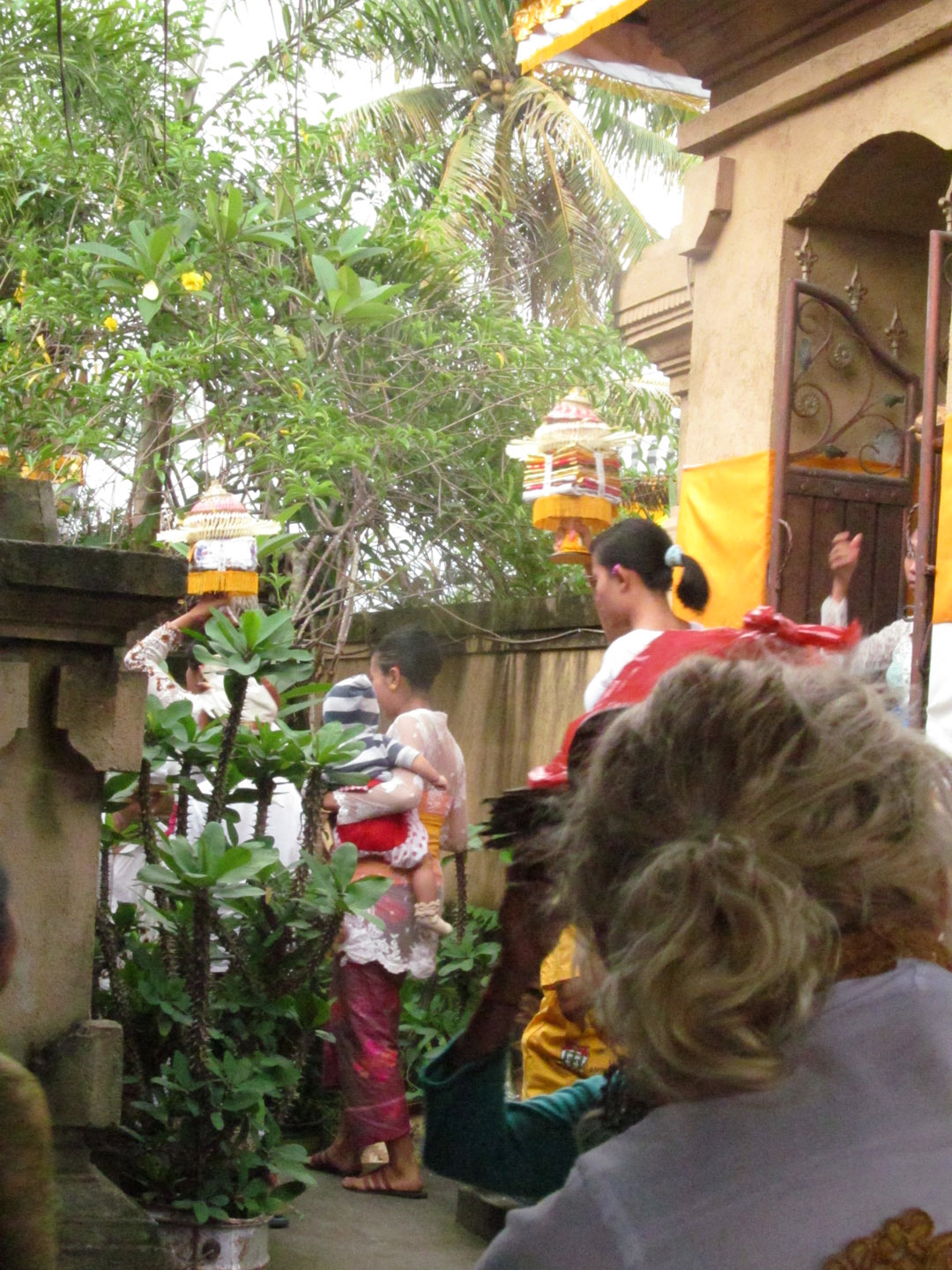
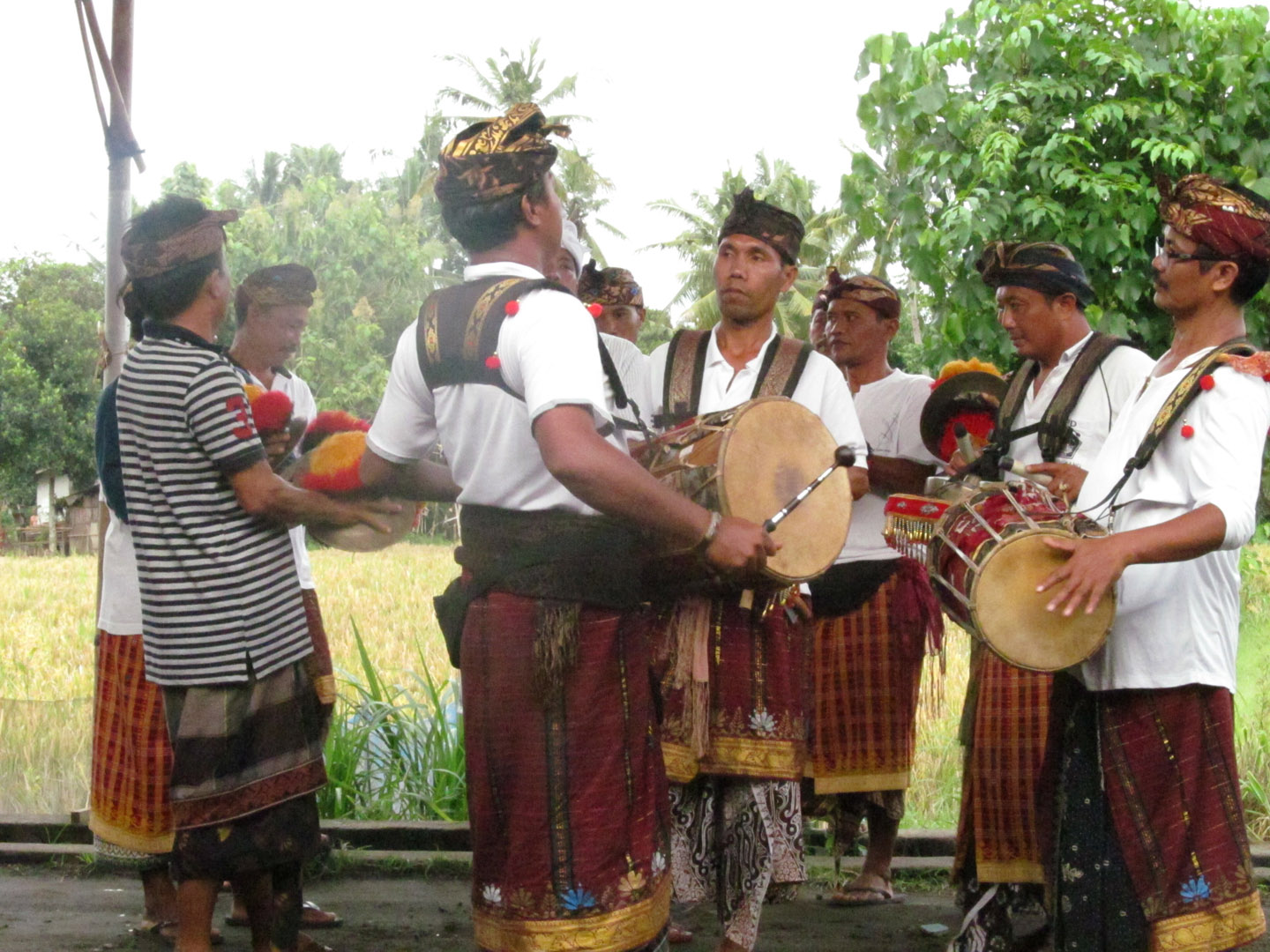
The young dancers. They had been likely dressed since early morning. They, too, were waiting for the ceremony to start.Offerings for the ceremony begin to arrive. Many women are practiced in carrying burdens on their head in Bali.Musicians herald the beginning of the evening’s events.
Thirty minutes later, a number of Balinese stream into the housing compound and sit around the various open air bales. It is just about sunset on this cloudy day. The gamelan players arrive, and one compliments us on our Balinese style of dress with a warm and toothy smile. Many women arrive in an amazing array of colors in their sarongs and kabaiyas. Offerings are being uncovered near the house temple. Snacks and hot tea are being circulated and the gamelan begins to play.
I take a moment to inhale it all, and think about it less. The percussive melodies of the gamelan are both stirring and trancelike. The sound envelops everything. It is a transcendent experience. The young girls are now dancing a little ways away. There are easily 80 people in the outside area, and I try to understand if it will be respectful to move closer to see.
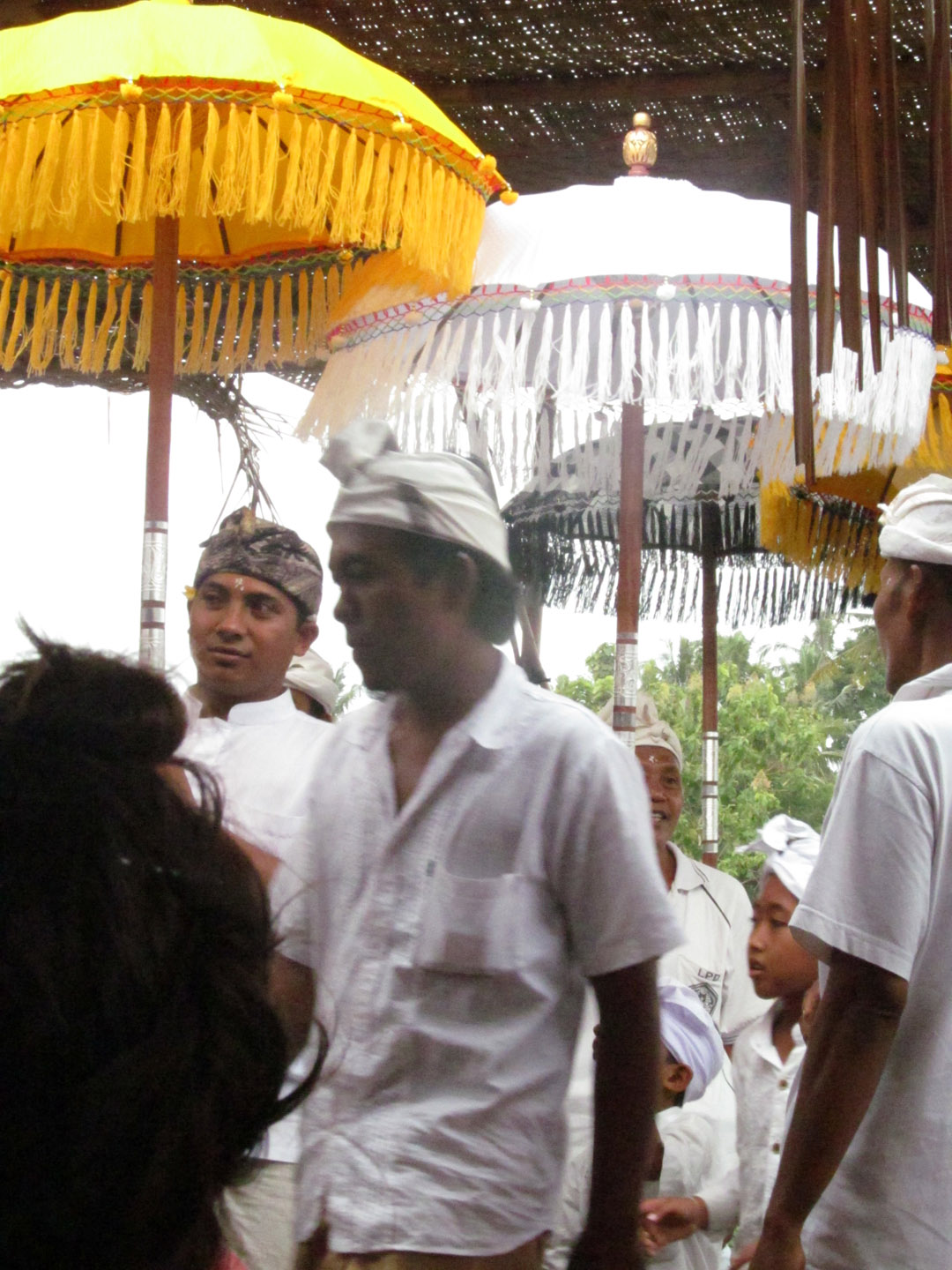
Umbrellas are everywhere in Bali. One of our choreographic notations in our dance study is “Check Umbrella”– the umbrella is a landmark for your stage position when you can see very little from the mask.
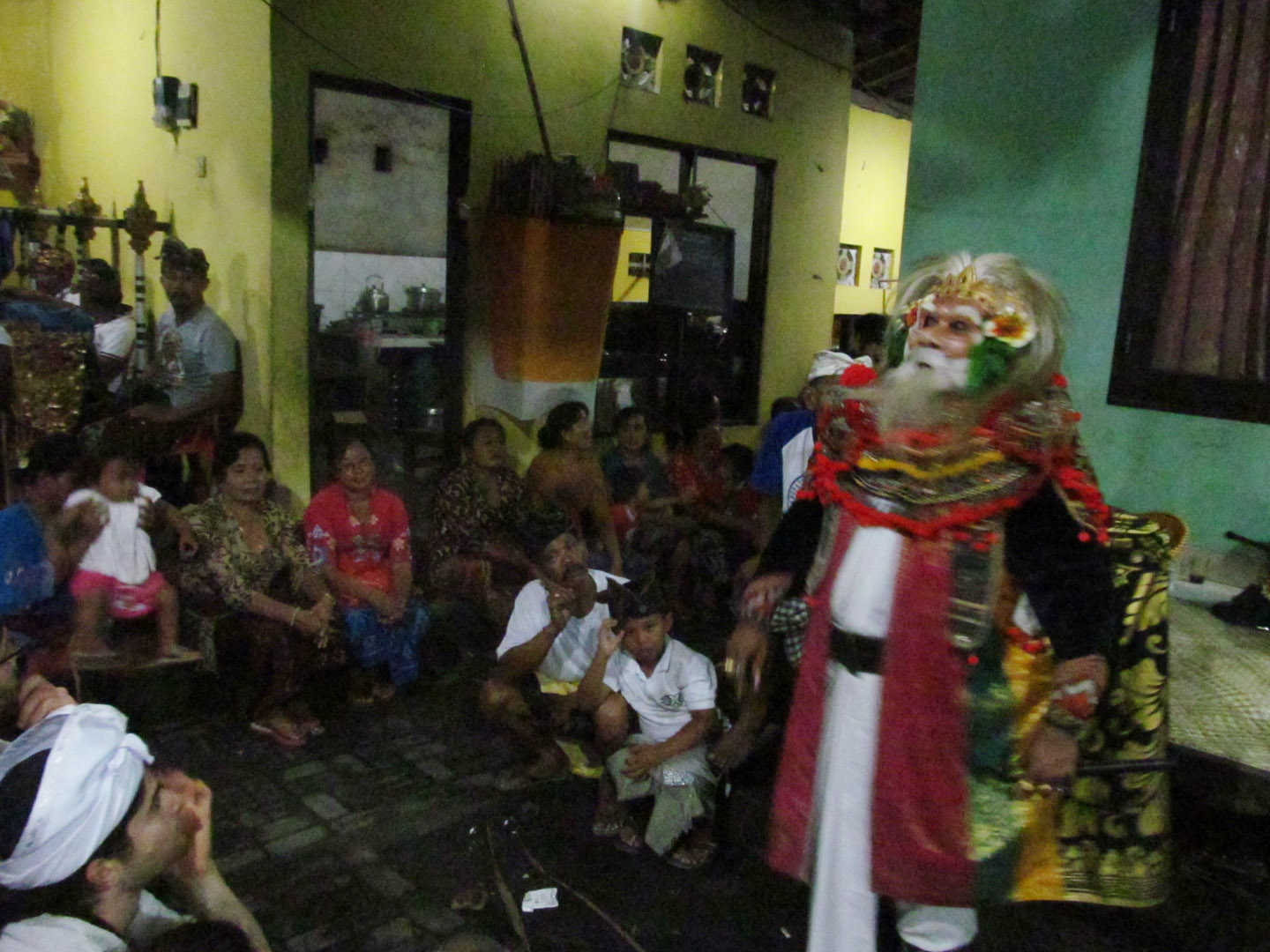
But this is where this kind of performance is so different from watching dance or theatre or seeing a concert in the West. There is not a defined start time at which point all must quiet themselves and observe—there are children moving around the space, priests conducting a blessing ceremony, and a puppeteer readying his puppets. It is a beautiful mish-mash. What’s important here seems to be the actions that need to happen: a dance must happen, a puppet show must happen, a series of masks must be performed, offerings must be made… and it’s okay if they overlap or happen all at once. It seems much less about the ego and so much more about what is being offered.
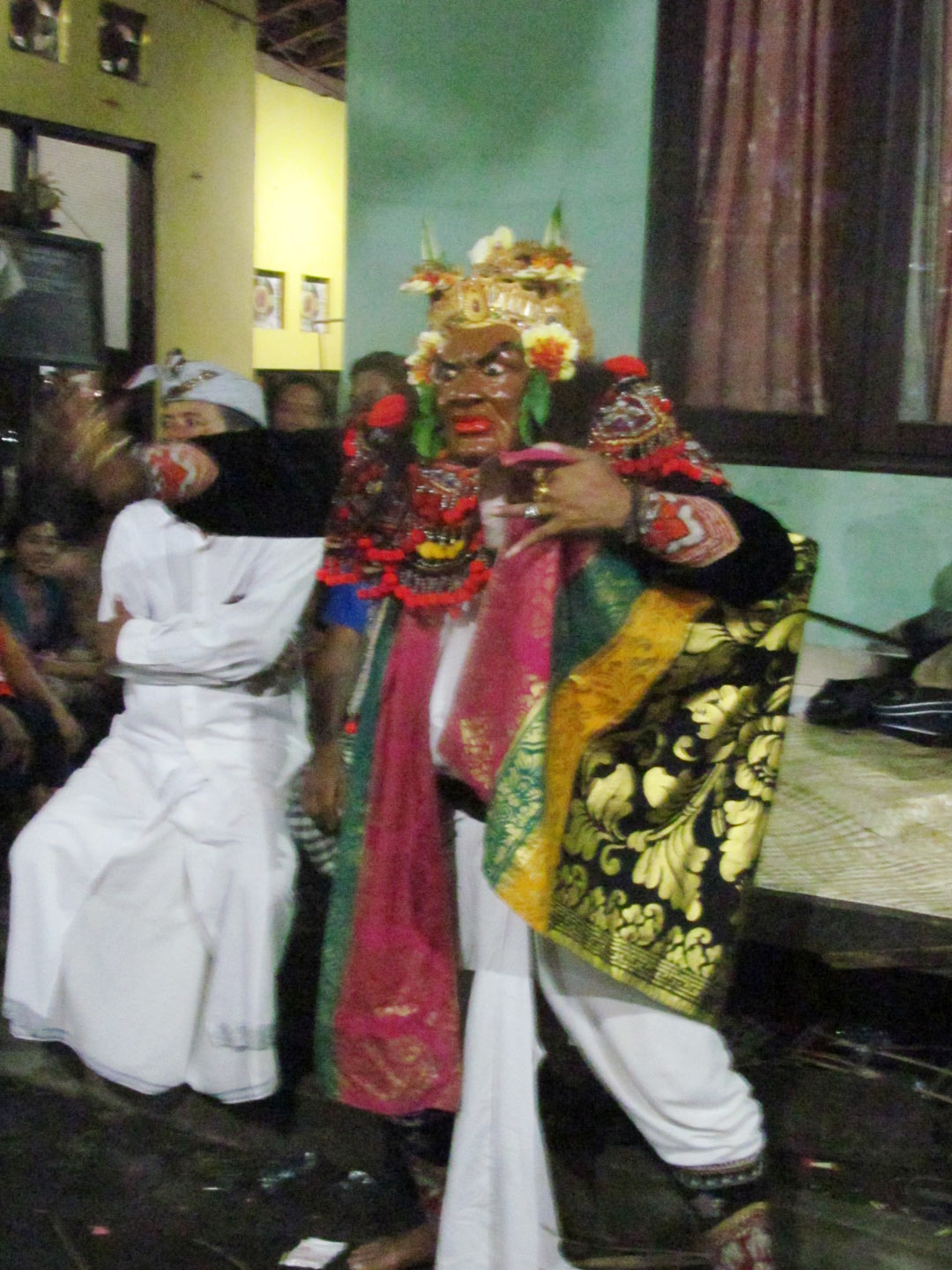
Gustu performs the dance of the Prime Minister first.
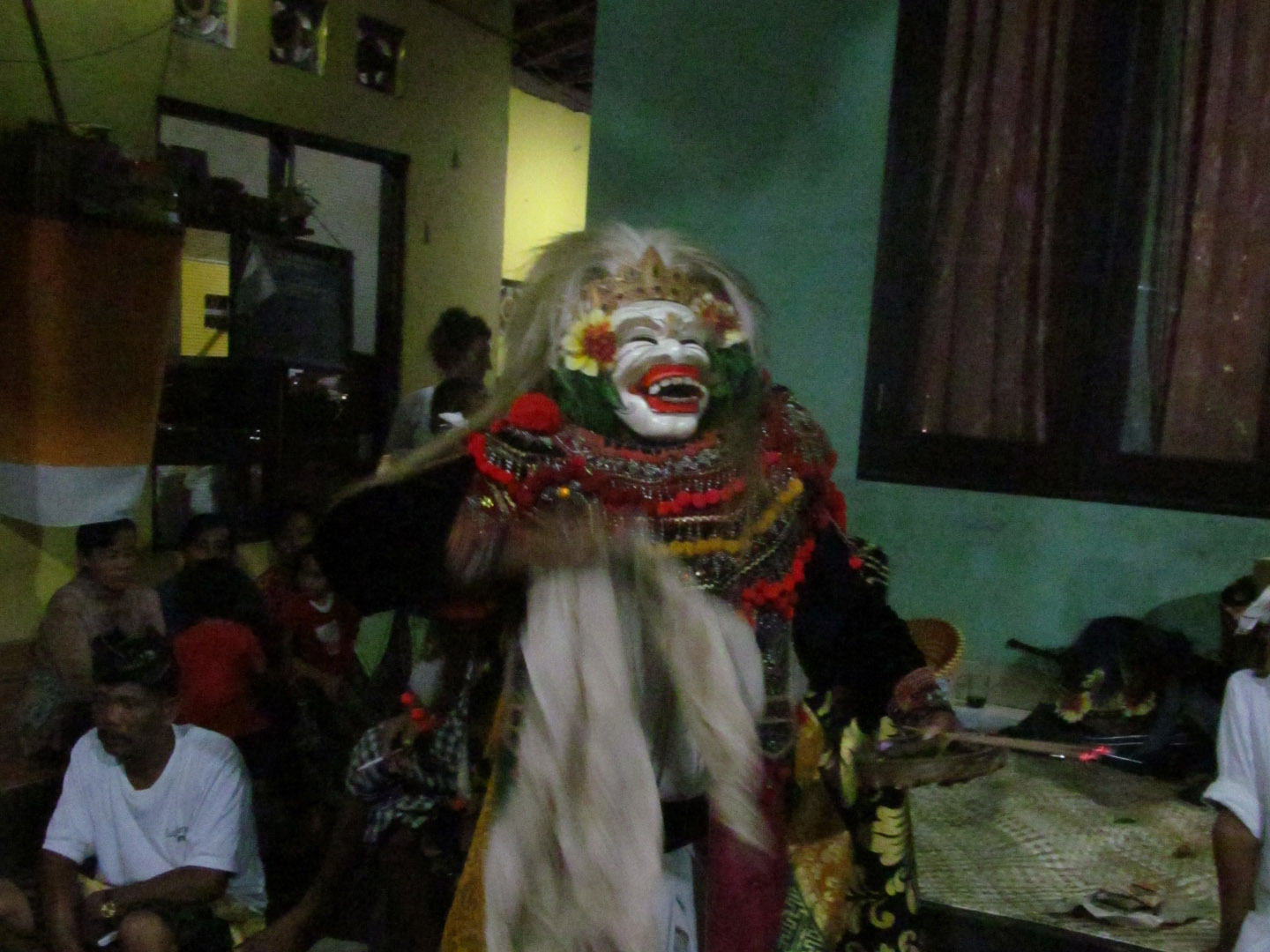
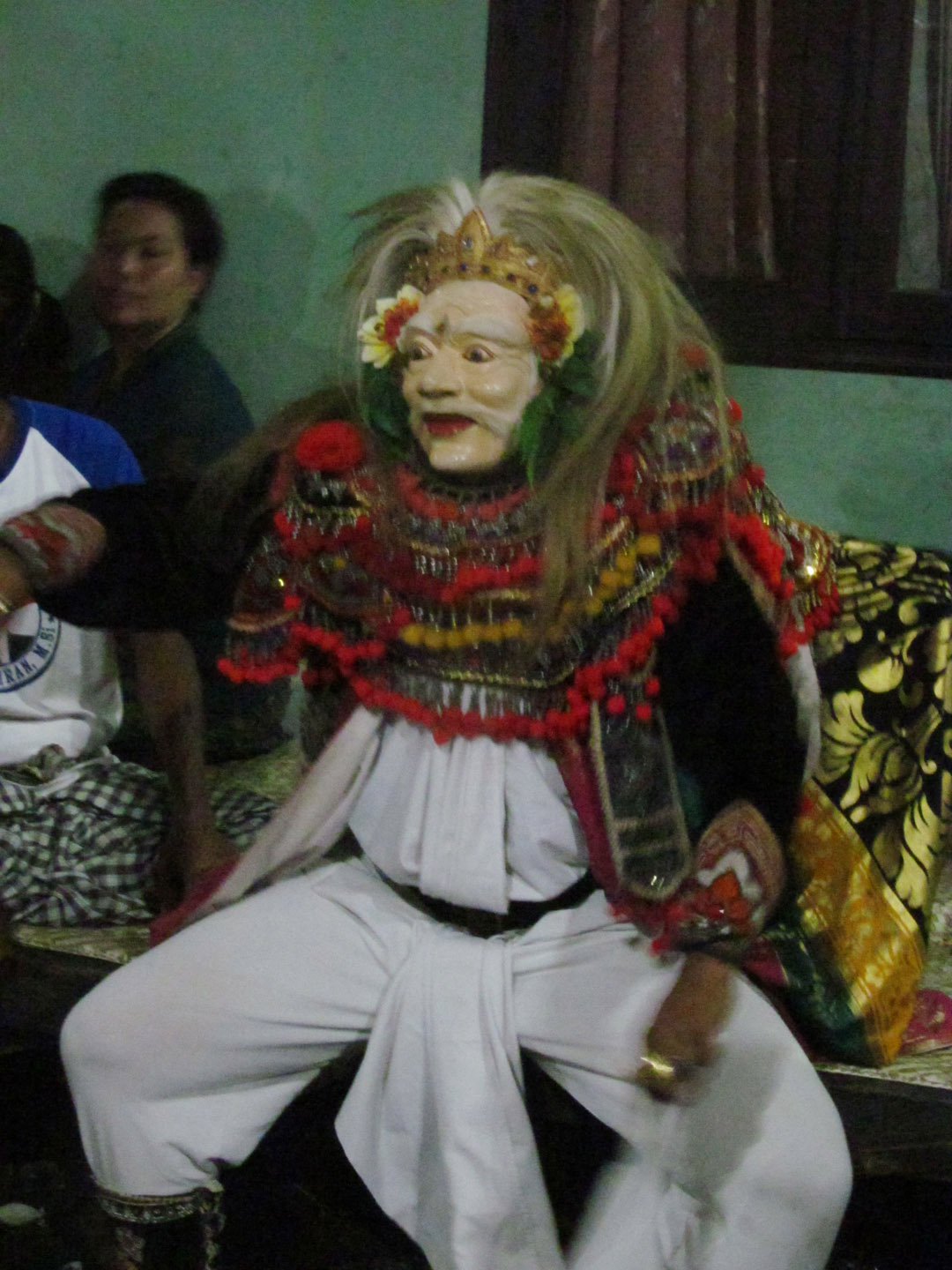
Pak Gustu is absolutely amazing as he dances the keras prime minister, followed by the old man tua. These masks are so intense and strong. As they are full masks, all expression derives from the sculpture and movement, at moments sustained and others peppered with quick flicks of the eyes and hands. This is all done on a bit of floor perhaps 4 x 6 feet, surrounded by people on all sides, some watching, some doing other things.
The Tua mask.
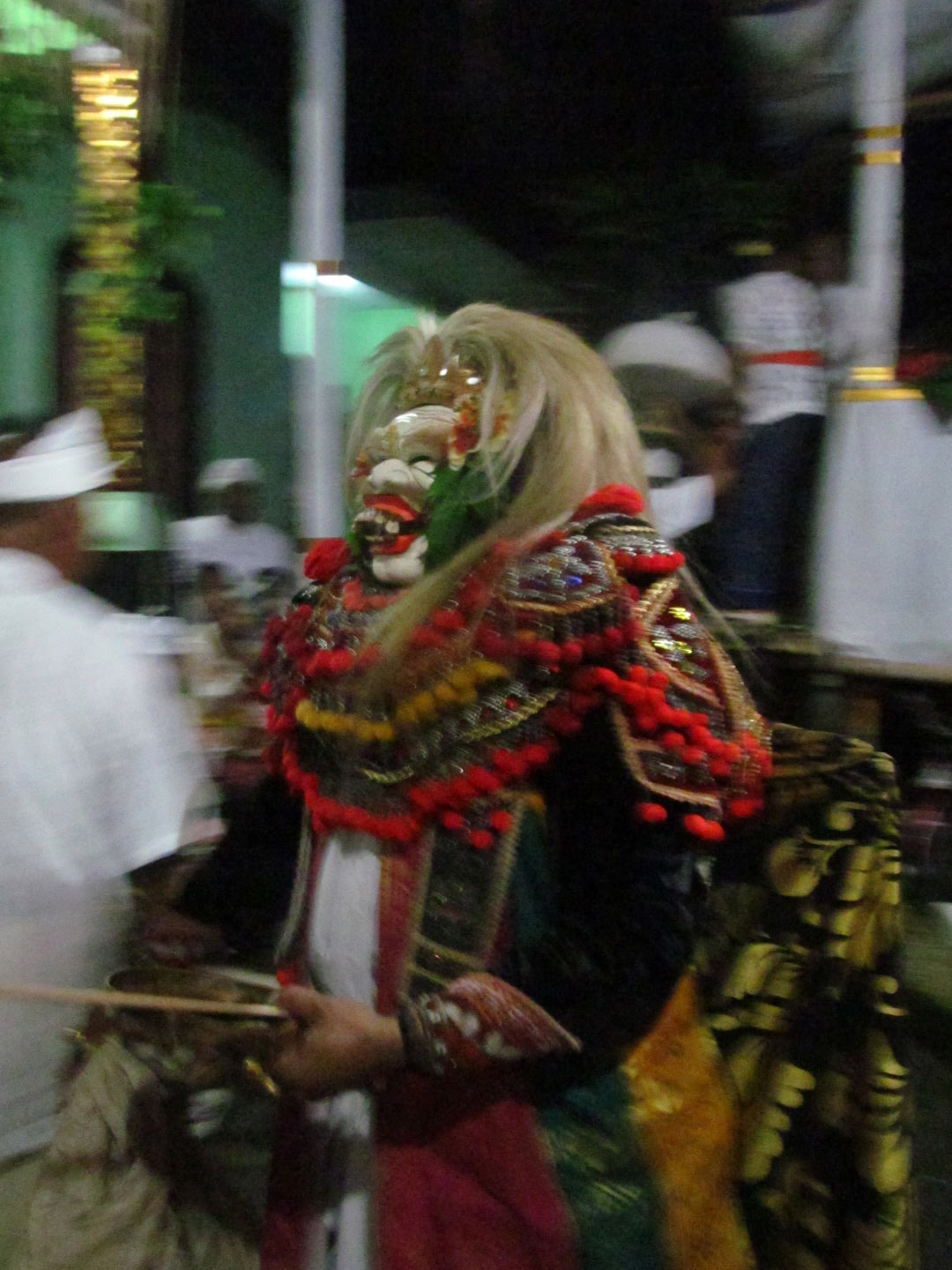
Children pass through the space as he performs, as do women carrying various offering from the kitchen to the temple. Following these two full masks are some servant bondres, three-quarter and half masks that speak directly to the audience, relating story line and making them laugh. Some lines he delivers to us in English as well, which we tamu (“guests”) appreciate. Remember there is also a puppet show, with its own music, being performed right next door, as well as some singing elsewhere. The topeng closes with the dance of Sida Karya, bringing blessings of success.
You can see more of the performance context in this photo of a bondres mask. The gamelan orchestra is seated off to the left in the picture.
The entire time, people at the house have been helping us find places to sit and see. We are more there to see the performance, they to be present at the ritual. At every moment, we strangers are honored as their guests. We are even invited to a meal with them afterwards, including such dishes as mie goreng (fried noodles and vegetables), hard boiled eggs, numerous meat dishes and sate, and spicy sambal.
It was an experience unlike any I’ve had before. It was not only the complete warmth and openness to strangers that felt so new, but also the relationship of art and performance to the people. It was in some ways casual–people could really choose how they would like to relate to or focus on the performances–yet each element had to happen for the ceremony to be complete.
Sida Karya is a character of a priest from Java who has traveled a long time to bless a village in Bali. Initially, he is rejected for his odd appearance and strange ways. Crops begin to fail, and ruin comes to the village until it becomes clear he is the priest they were waiting for all along.
It is said that in Bali there really isn’t a word for “artist” as we understand it in the West. However, there are farmers and electricians and bus drivers and cooks who also play the gamelan, or dance legong, or chant the kecak, or carve masks or puppets. I saw an integration and appreciation of the arts into everyday life and spiritual practice that benefited from the collective interdependence of Balinese life.
It felt so very rich.
This trip was made possible in part by a grant from the Regional Arts & Culture Council.