Making it work

As a child,  I would often hear my father say: “There’s more than one way to skin a cat.” The most pressing thing on my mind at the time was: Why would one want to skin a cat at all? 

I still haven’t answered that question. However, I do know there’s more than one way to get something done.  And I have been trying a good number of approaches as I work on the masks for the Maya project: different styles, different materials, different processes.

This (currently ear-less) cat was sculpted on top of a bucket on top of an old dabba of ghee on a pedestal, and skinned with papier mache.
Ska, the 9 headed serpent, nears completion!  The foam snake body was sculpted by Sunil, and I made  the vice-laden faces to attach.
Ska, the 9 headed serpent, nears completion! The foam snake body was sculpted by Sunil, and I made the vice-laden faces to attach.

There’s also more than one way to feel successful. I think some of the success of a mask is measured by its accessibility. It is a really satisfying feeling when a person can pick up a mask I’ve made and instantly feel that they know what they will do with it. There is a feeling that the mask is strongly and clearly communicating its nature to the performer.

This parrot mask, modeled perfectly by  Shahish,  was built on basket augmented by newspaper, cardboard, and cello tape.
This parrot mask, modeled perfectly by Shahish, was built on basket augmented by newspaper, cardboard, and cello tape.

I’m not trying to say that masks can’t or shouldn’t be mysterious. Many a mask can take some work to get to know and to perform well. However, when there is a sense of recognition in the actor’s eyes because they can intuit the nature of the character, or see the possibilities in the mask, I feel I’ve done a good job.

Avian Evolution

Materials, working conditions, and needs of the performance are often in flux, so I find that adaptability is key. I have my preferred methods of creation when on my home turf, but while in India there are a number of differences. For example, used cardboard boxes, brown bags, and newspaper are not easy obtainium in Mumbai as they are in the US.  Here they are commodities that can be purchased if you know where to look. The challenge can then become to use what you have in front of you to get the work done.

Phase 1: A costume mock-up before I arrived
Phase 2: Trying to improve the original
Phase 2: Adding detail and dimension to the original
Phase 3: Altering the position of the mask
Phase 4: Cutting it all up and putting it back together.
Phase 5: Testing the altered mask on a new volunteer. Accessibility—and wearability—achieved!
Phase 5: Testing the altered mask on a new volunteer. Accessibility and wearability achieved!
Phase 6: Painted and rehearsal-ready!

Furthermore when working on a project as large as Maya, often previously approved ideas need to change slightly to serve the show. Sometimes the choreography, blocking, and the style of mask just don’t synch up and to be successful we find how we might change.In some cases, the choreography can be altered with minimal fussiness. In the case of our peacock character, Prasad was so amazing and alive in physical characterization that it was better to change the position of the mask to match what he was proposing.

Five Sprites, Please

IMG_4373Just a few days before all the basic structures and paint jobs were due, I was asked to make the antlers of the deer masks removable. This would permit easier shipping from venue to venue on the tour. I decided to use old bottles and their lids as the mechanism for this request. A 600 ml Sprite bottle had the perfect neck, but also a very short lid to which I could attach the wire and foam antlers. But it would have to do. I went out into the madness of the Dadar market to purchase five Sprites, trying to decide whether I would drink any or just pour it out. It was a hot day. But I couldn’t find a single one. Then I found a plastics shop (owned by Shahish, incidentally. See parrot pic) that carried long neck bottles with tall lids. Success!

IMG_4383
Thanks to my good friend Amy Jo, who shared this idea with me years ago.
Mama Tiger with ears and paint. atop a bike helmet, atop an actor.

Photos from the Setia Darma House of Masks and Puppets

Photos from the Setia Darma House of Masks & Puppets

Here are my photos from our visit to the mask and puppet museum near the village of Mas in Bali.  There are many masks from major Balinese performance traditions of Calonarang, Topeng, and Wayang Wong included. There were also masks from other Indonesian isles and many other countries. I’ve included text from the museum placards (or at least the spirit of it) in the descriptions for each photo.

Enjoy!  Full photo album from the trip forthcoming!

Your friendly neighborhood mask maker,

Tony


This trip was made possible in part by a grant from the Regional Arts & Culture Council.

racc_orange_horiz

One month away!

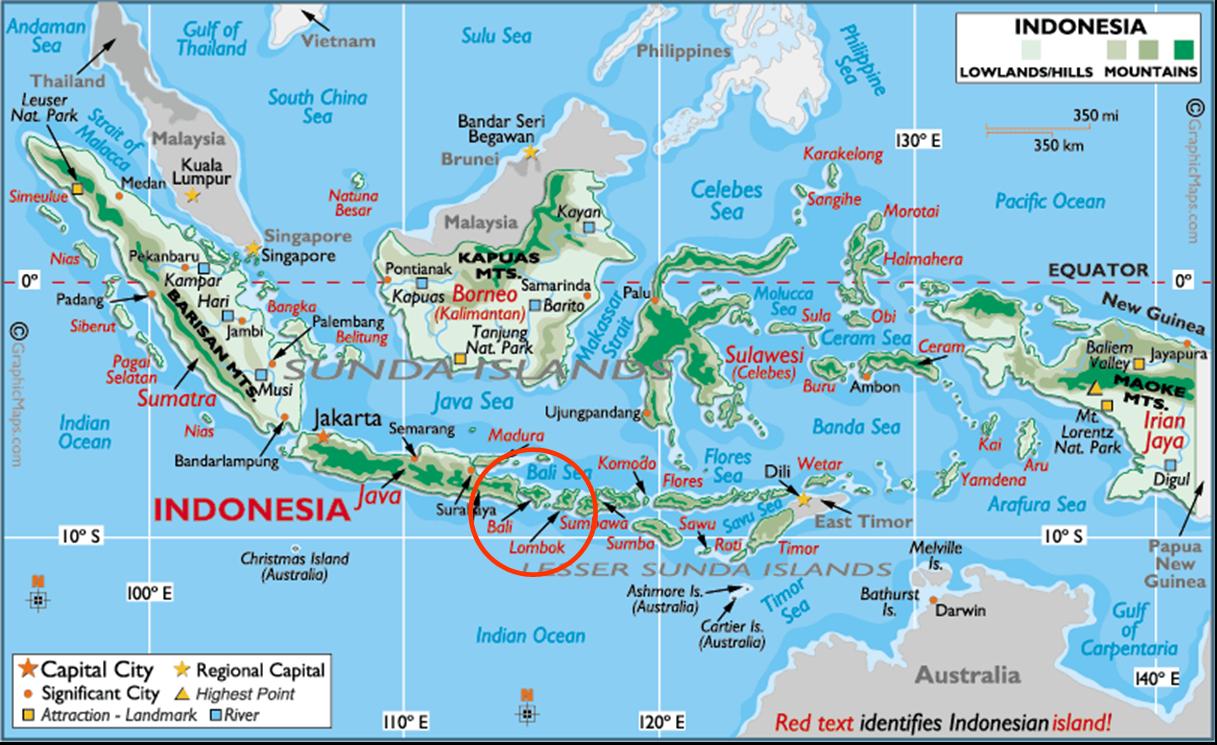
indonesia-bali-map

I started this blog to chronicle my 2014 trip to Bali — and it’s almost here! In just 30 days, I will be flying from San Francisco to Taipei, and then from Taipei to Bali.  When I travel, even small distances, the reality of the event hits me when I get in the car or approach the ticketing counter at the airport. Sometimes I don’t even pack until the day I’m leaving. This time, however, it seems like the month I have left to prepare is just barely enough to get it all done.

IMG_2259
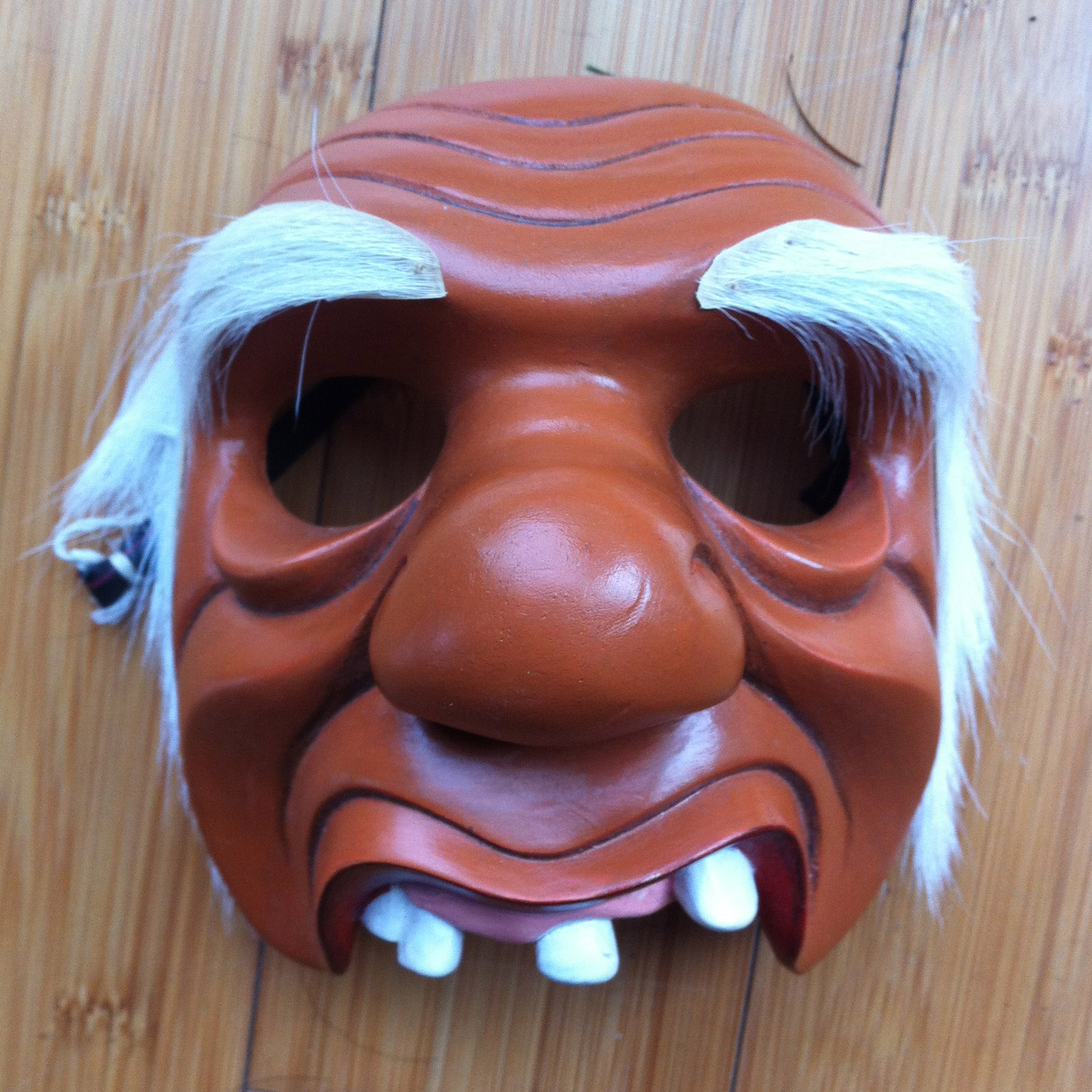
Balinese character mask. Crooked teeth are signs of comic characters.
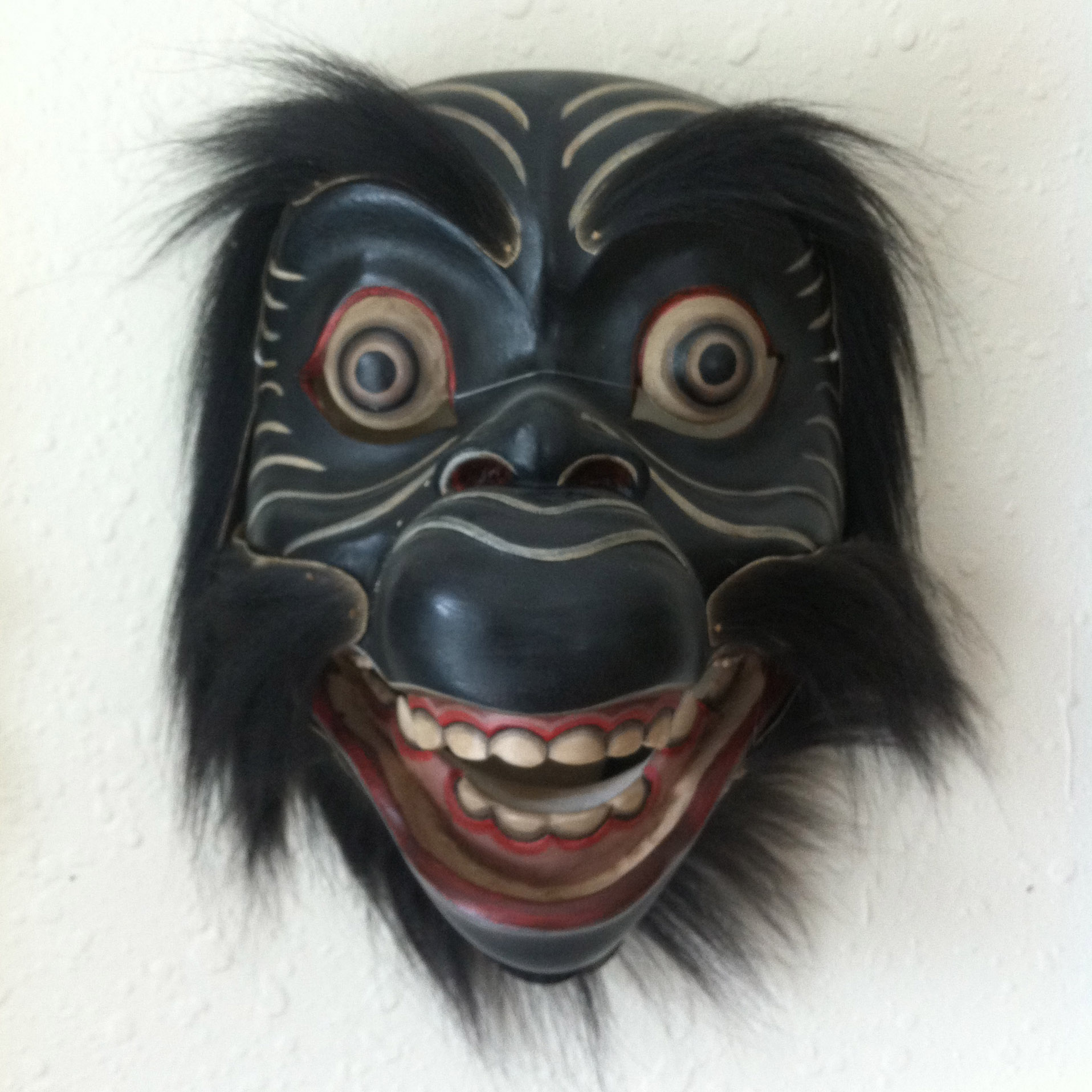
Balinese monkey mask. This one has a movable jaw!

I am going to Bali for an intensive month of study in the arts of traditional wooden mask carving and topeng (Balinese masked dance).  I will also have periodic classes in kecak (the monkey chant), Alexander Technique, and yoga; and symposia on the similarities between Western and Balinese mask traditions. This program is offered through the Dell’Arte International School of Blue Lake, CA. I like the the way that it’s structured to allow you to study masks from both sculptural and performative points of view.

It’s so exciting to be able to immerse myself in study and in a new culture!

This is a long-awaited opportunity. I have been working as a mask-maker the last 10 years. Most of the last 8 years have been in Portland, Oregon. I have spent that time creating masks for a variety of theatre and dance companies, and each collaboration has brought new ideas into the mix. I’m proud of the work I’ve done. I also feel ready for a bigger push, one that can help me find my way to the next level. I feel ready to study under a master.

But for now, I have to pack.

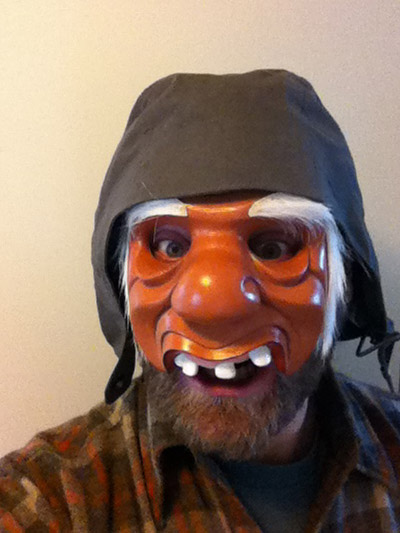
                                                        Me in Character Mask