Once it was confirmed that I would be working in India this fall, I was excited to see if I could find out more about Indian mask traditions. Quick internet searches yielded little, only some tribal Himalayan masks to the north, and a number of colorful pieces in neighboring Sri Lanka.Talking with some people on the Maya project as well as other mask friends gave me a few more ideas about where to look.
Here’s a little of what I found!
Kerala
Kathakali
Kerala is a state in southern India that borders the Arabian Sea. It is also home to kathakali, a highly stylized drama/dance. The stories told in this form vary, but many are from the Mahabharata epic.
Drummers and singers accompanied the characters throughout the performance.
If you arrive early to the performance, not only do you get to observer the performers apply their intense makeup, you also get a better seat. And I’m really glad we did.
Some of the makeup includes 3-D elements, like the white disc at his cheeks. The green faced pacha character is always a good guy in the story being told.The makeup is made largely from the powders of different stones, or sometimes vegetable matter, mixed with coconut oil.This clownish character had a white, flower-like nose attached on top of the makeup.
After the makeup was applied, there was a demonstration of the techniques used in the dance. You must train for many years before performing in the kathakali, and the abilities of the dancers makes this clear.
The way they could move their eyes was nothing short of amazing. Eyes are very important in the communication of emotions in the drama, and these dancers have amazing muscular control. In addition, the performers of kathakali can isolate muscle groups in their face. Not just like flaring nostrils or wiggling ears—try to imagine just the tops of the cheeks bouncing up and down while the rest of the face remains calm. It’s impressive!
The character designs painted on their faces come alive as these muscle isolations occur. These facial gestures are combined with mudras, or coded positions of the hands, to complete the attitude.
Lord Shiva and Parvati reveal their true nature to Arjuna after a series of comic antics.
Kerala Folklore Museum
There are artifacts from throughout southern India, including the states of Tamil Nadu, Andhra Pradesh, Karnataka and Kerala, inside this beautiful building.
In Ernakulam, a more modern town across the water from Kochi, I was excited to find a museum dedicated to folklore. There were several interesting faces inside. The museum was not always the most successful in providing context for the various images, but I did start to get a sense of mask styles from different regions.
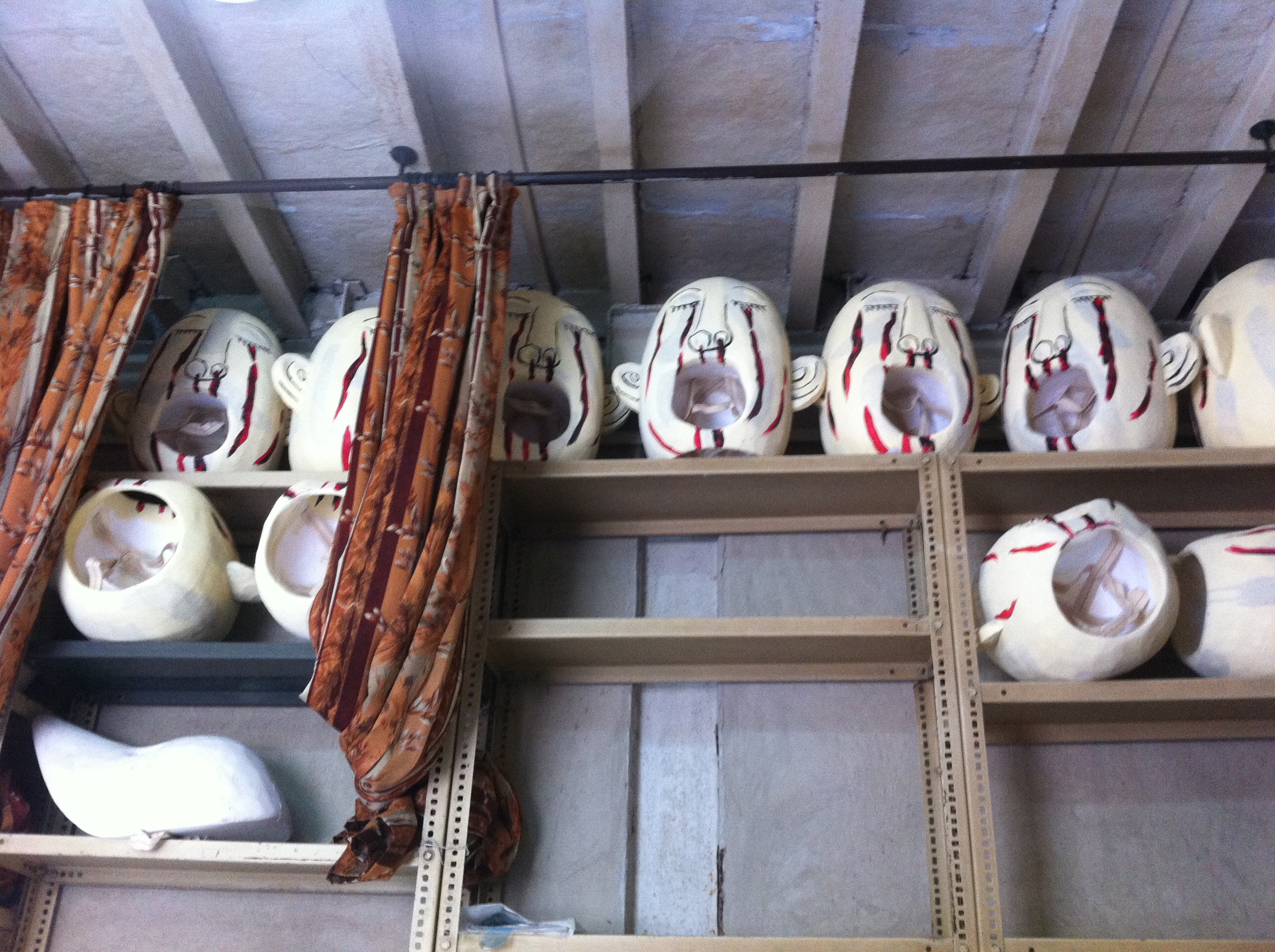
This beak is part of a costume for the Garuda bird in a Kathakali play.Costume for a Poothan ritual dance of Kerala. According to wikipedia, Poothan is the lieutenant of Shiva. These dances are performed once or twice year to clean the village of evil spirits.Another ritual dance mask from Kerala. Again I refer to wikipedia, which categorizes this (and the Poothan dance) as a “devotional art form”. The festival is in August/September, so I missed my chance to see it performed.Another ritual performance called Theyyam was represented by these painted heads.After some more research on wikipedia, it seems that these heads are records of some makeup styles for performers of the Theyyam cult.I include some pictures below from the wikipedia article for reference.“Bali theyyam, Payyannur” by Jasinth M V – Own work. Licensed under Creative Commons Attribution-Share Alike 3.0 via Wikimedia Commons – http://commons.wikimedia.org/wiki/File:Bali_theyyam,_Payyannur.jpg#mediaviewer/File:Bali_theyyam,_Payyannur.jpg“Bhagavathi at Vikranandapuram Kshetram, Taliparamba” by prasadnp – PhotographedPreviously published: 2013/04/29. Licensed under Creative Commons Attribution-ShareAlike 3.0 via Wikipedia – http://en.wikipedia.org/wiki/File:Bhagavathi_at_Vikranandapuram_Kshetram,_Taliparamba.jpg#mediaviewer/File:Bhagavathi_at_Vikranandapuram_Kshetram,_Taliparamba.jpg
I like this really basic expression.The mask in the lower center, also a ritual mask from Karnataka, seems to build on the basic expression.
At the rear of the kathakali stage inside the Kerala Folk Museum.
Puppets!
There were also a few examples of puppets in the museum. I knew there were some famous puppets in the state of Rajasthan in the north, but these have a different feeling than their northern relations.
Spare hands in mudras and extra feet.Shadow Puppet from Andhra Pradesh.
Karnataka
Museum of Mankind
A mask from the Limbu people near Geyzing, Sikkim in Northeastern India. It is carved in wood and depicts Bhairava, a fierce manifestation of Shiva associated with annihilation.
We moved on to the state of Karnataka, just north and east of Kerala. In the city of Mysore, famed for ashtanga yoga and sandalwood crafts, we visited the Indira Ghandi Rashtriya Manav Sangrahalaya (aka the Museum of Mankind).
A Mahakal mask from the Limbu of Geyzing, Sikkim. It is a variant of the one in red.
The collection features many tribal art forms from different parts of India. I was lucky to find included a couple of masks from the Himalayas in this southern state. The style is quite different form the types I had seen in Kerala. I imagine the species of wood used for carving is different as well.
Though I was a bit disappointed that I didn’t find as many masks as I had hoped, the museum also features a large collection of terra cotta figures from around India. These figures provide some insight into the style and decorative idiosyncrasies of the culture to which they belong.
Terra Cotta elephant at the Museum of Mankind in Mysore.
Terra Cotta from Bihar, in the northSculpture of a woman from a folk community in Karnataka.
Miscellaneous faces
Street art in KochiThere are schools on the backwaters of Alleppey, and where there are schools, there are computers. They are guarded by this fearsome beast.At a cafe in Kochi.Random kids who instantly wanted to be in my picture while I photographed ruins in Hampi.Case trying to speak tiger at the Mysore Palace.
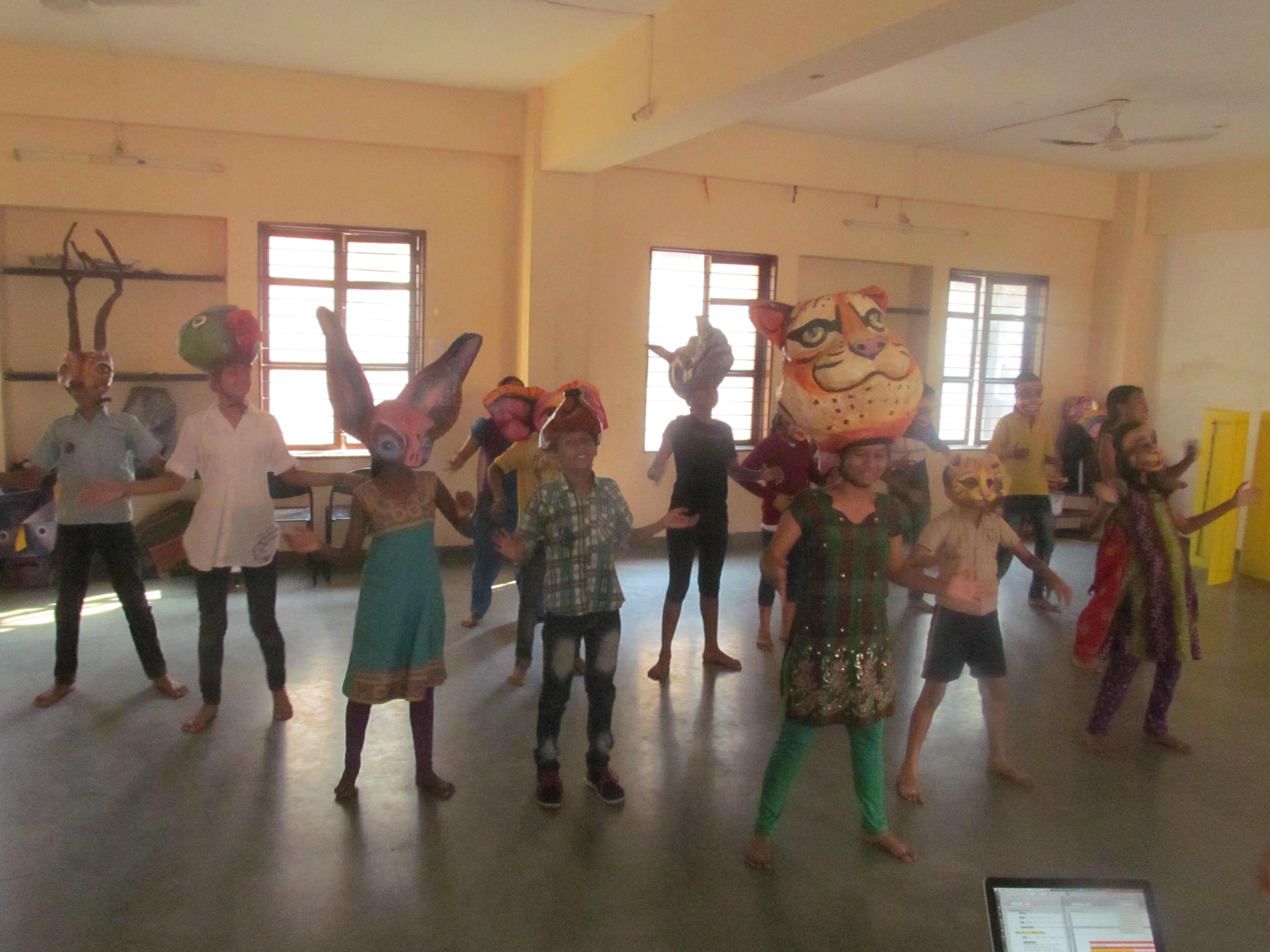
We’ve opened MAYA and the kids have performed at two of the three venues already! Here are some pictures 🙂
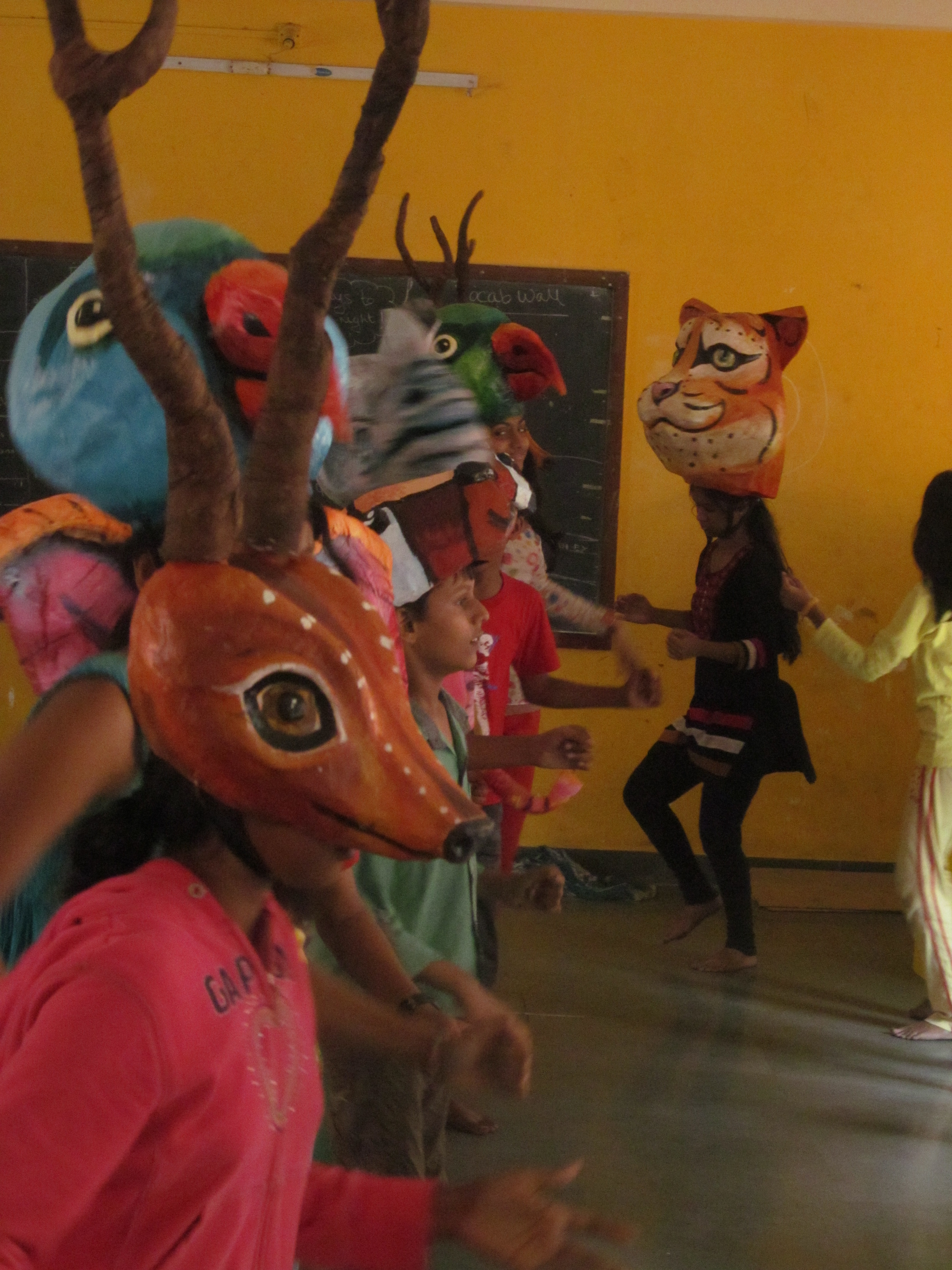
Technical rehearsal creeps along at Ravindra Natya Mandir. oh, look! the Himalayas!Baby tiger playing ukelele? I’d pay to see this show.The dance number for “Beast Feast” tries to find its light.Stopping and starting in rehearsals was sort of difficult for those in more elaborate costumes, but they smiled on!Few can resist the selfie.The Dadar Gang—Raju, Sunita, Rohit, and Sajida—get ready to watch on opening nightGlowing. Just glowing.Puppets that were cut from the show made their way to the photo booth in the lobby.I thought Astha was going to make the same face. Tricked again.Prasad as the wonderfully energetic peacock Indigo. His backstage face looks more nervous.Priyanka has the most complicated costume of them all. Not only is it large, it has three detachable heads. She was especially gracious with all the futzing it took to get the kinks worked out.Faces at closing circle after curtain call. It’s been great watching these kids learn so much.Moiz has such a stong presence and joy onstage. He is a delight to watch. When he becomes famous, I’ll be glad I have this picture.Look who came to visit! He was put to work right away during the last days of tech week. And then we had falooda!
I spent this last week in Pune, rehearsing with the cast at KCT. We had more fittings and used the masks in rehearsal to discover any potential difficulties in comfort and sightlines.
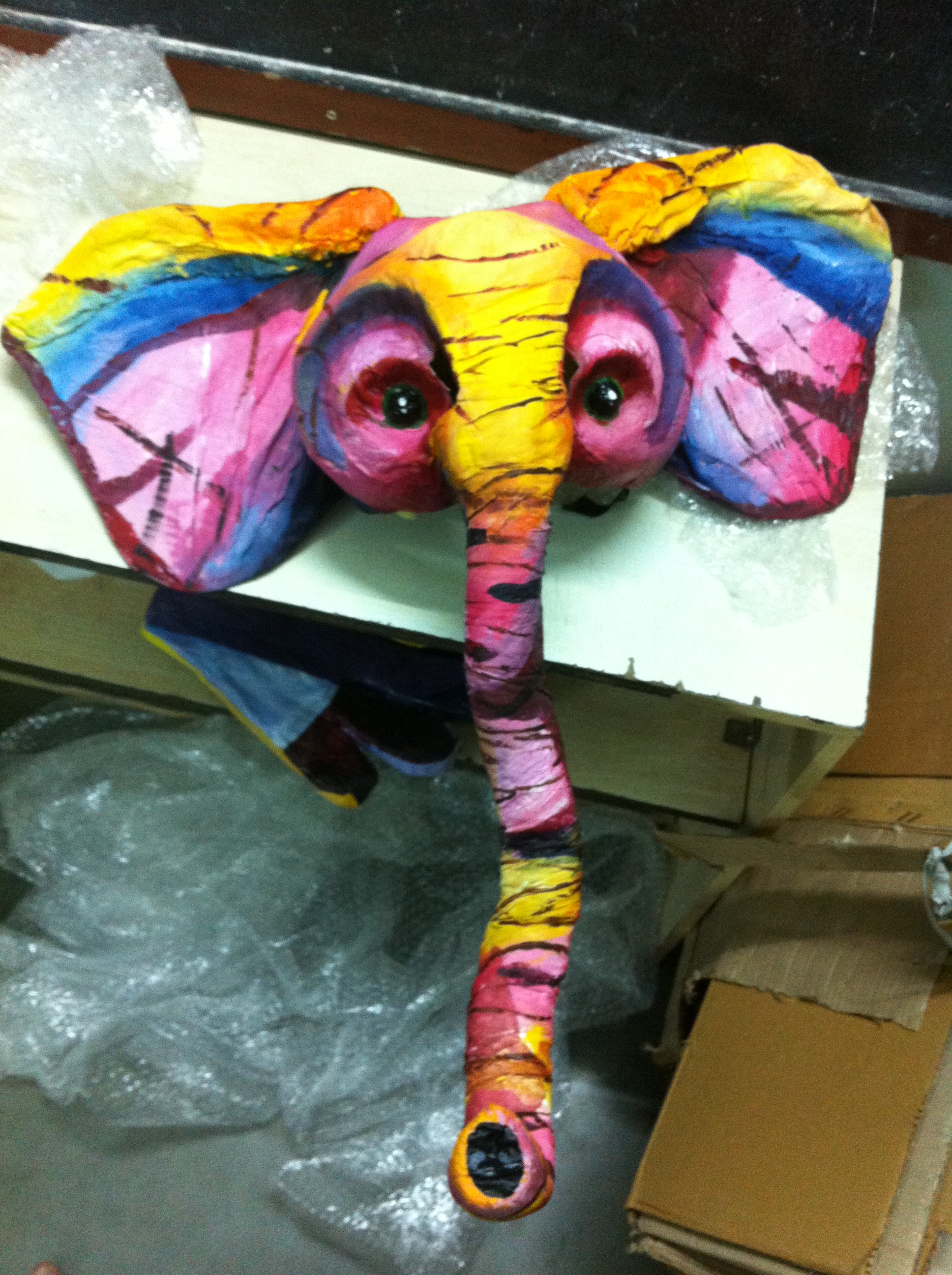
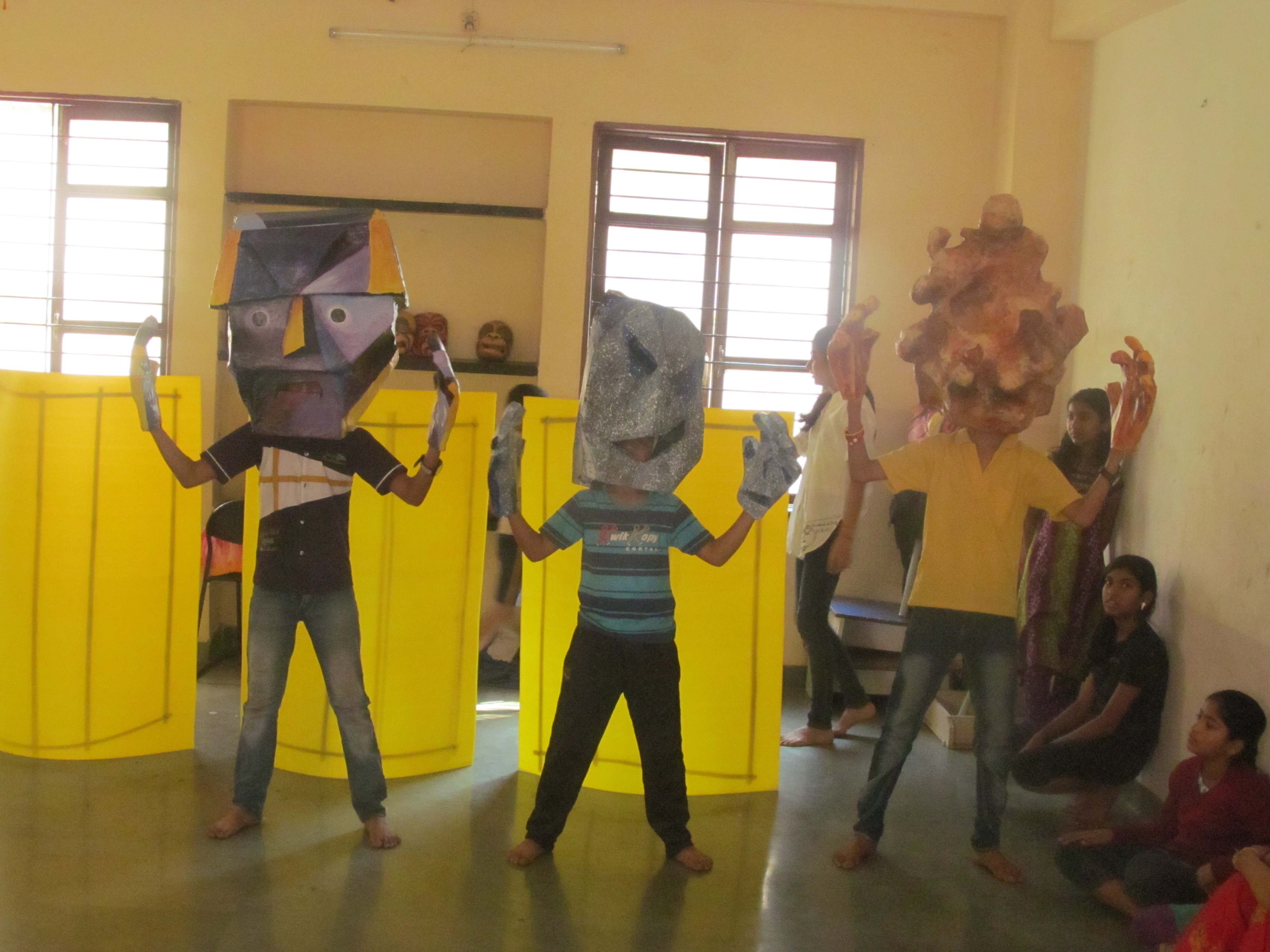
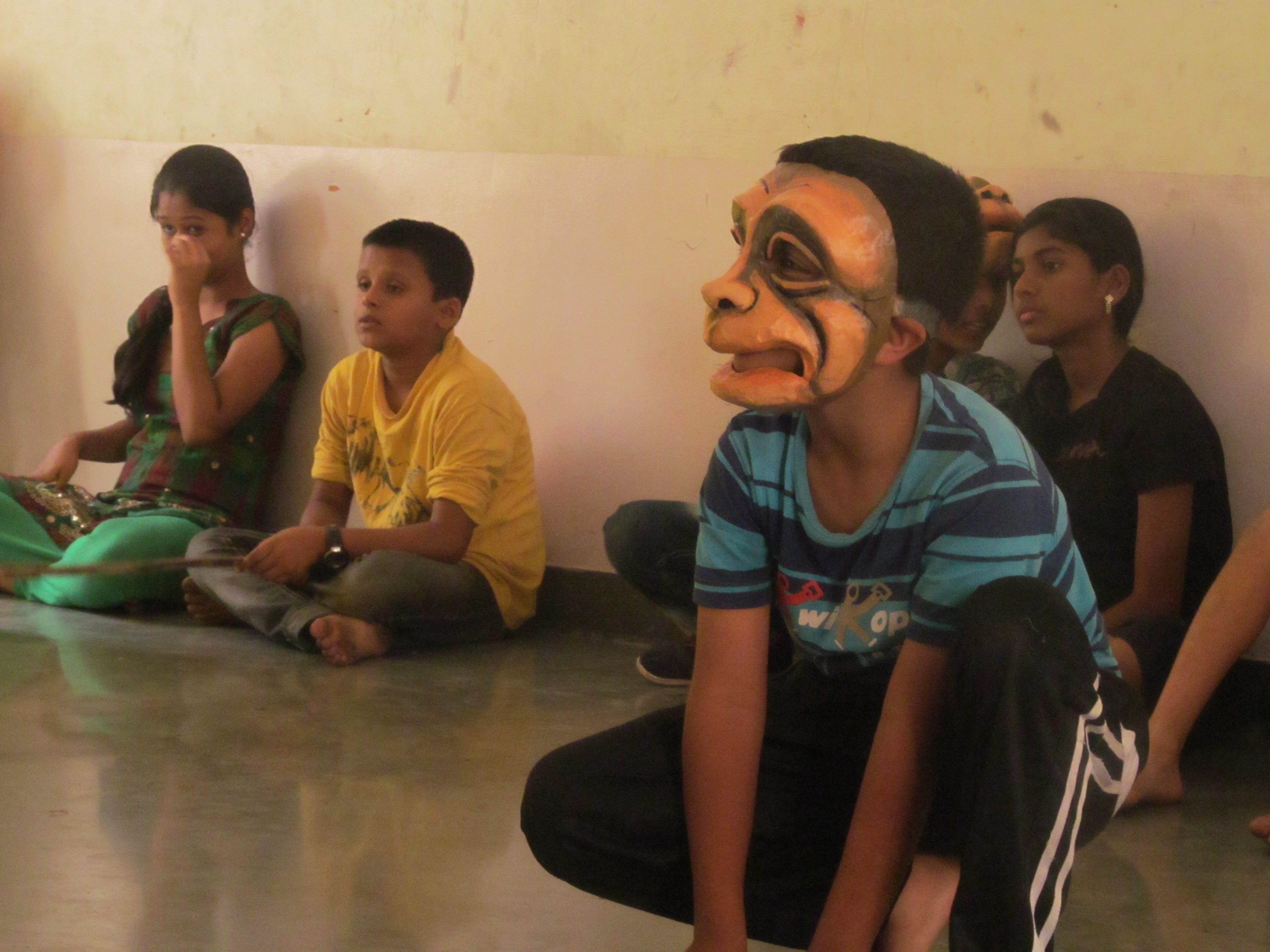
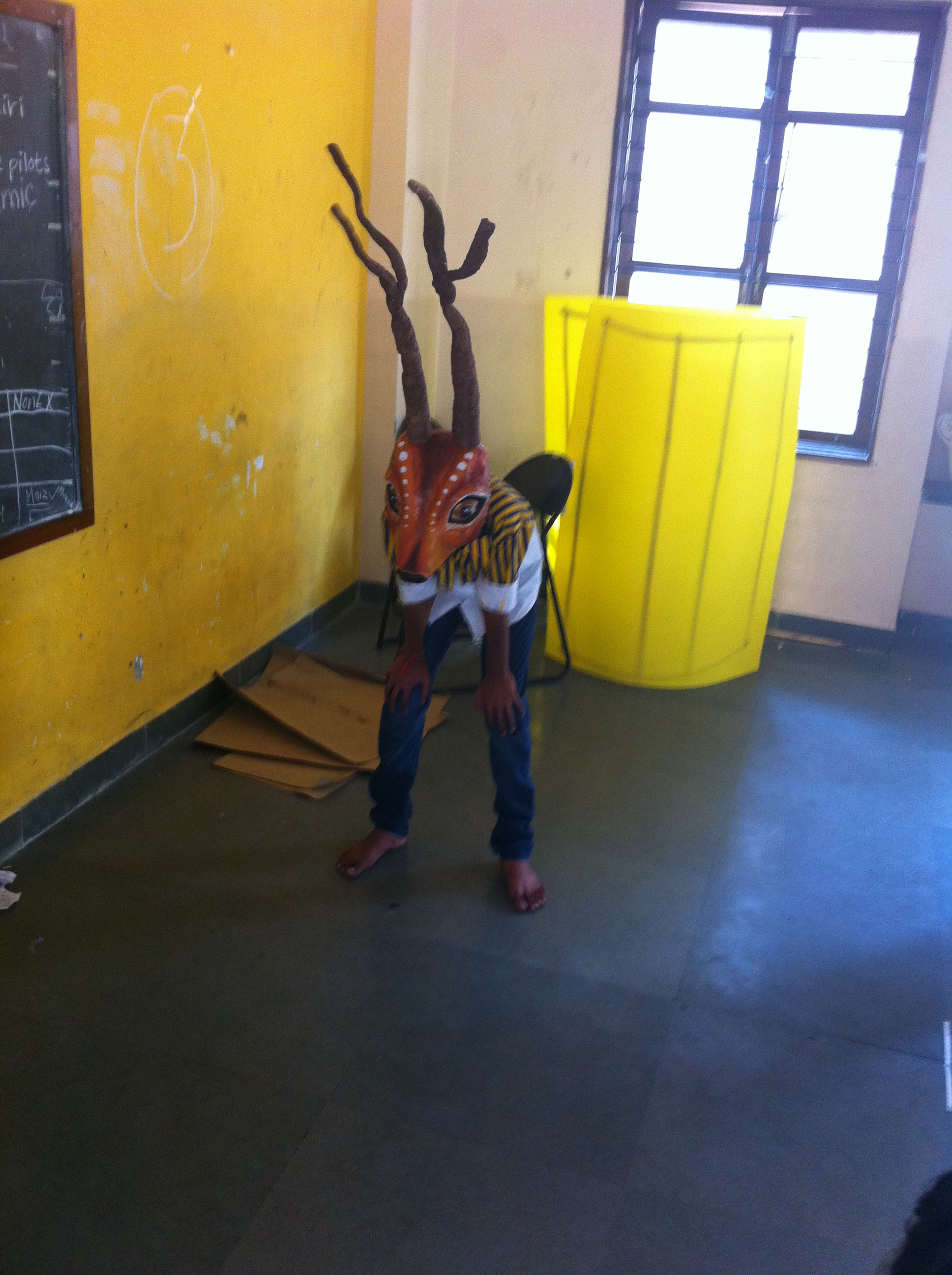
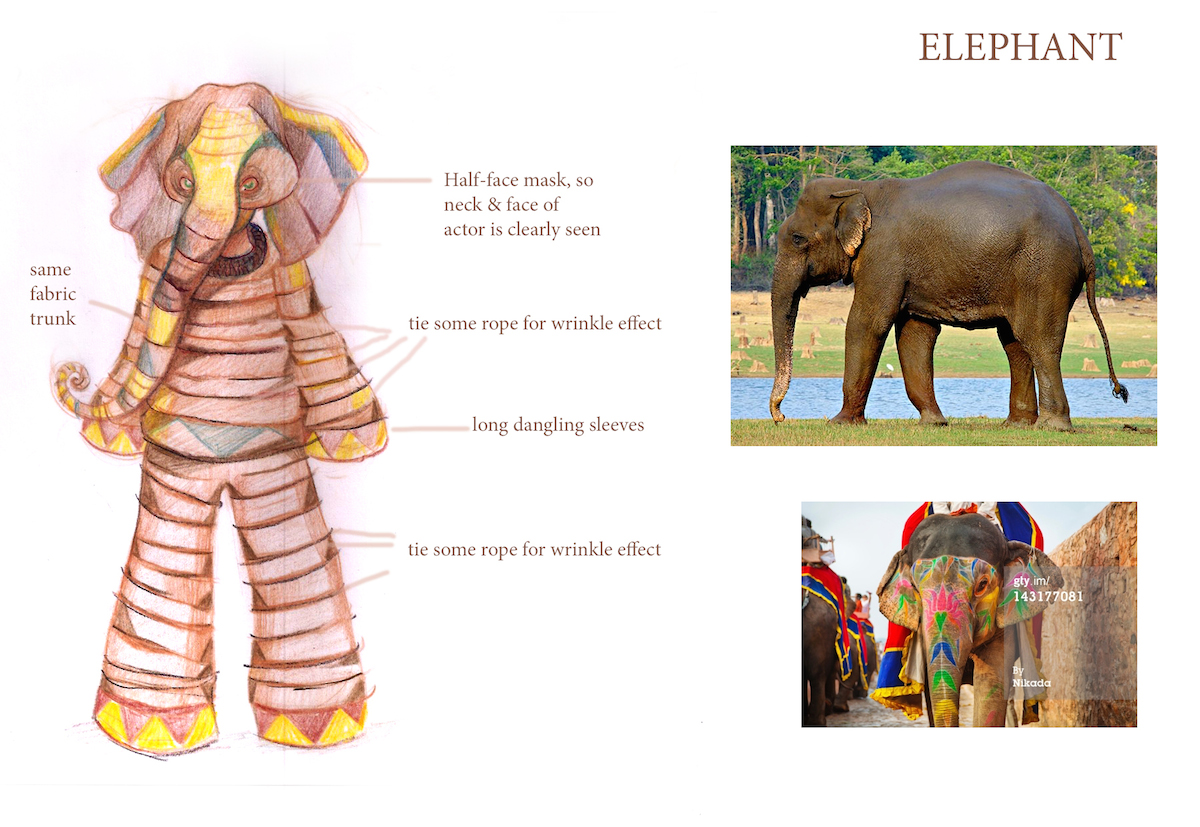
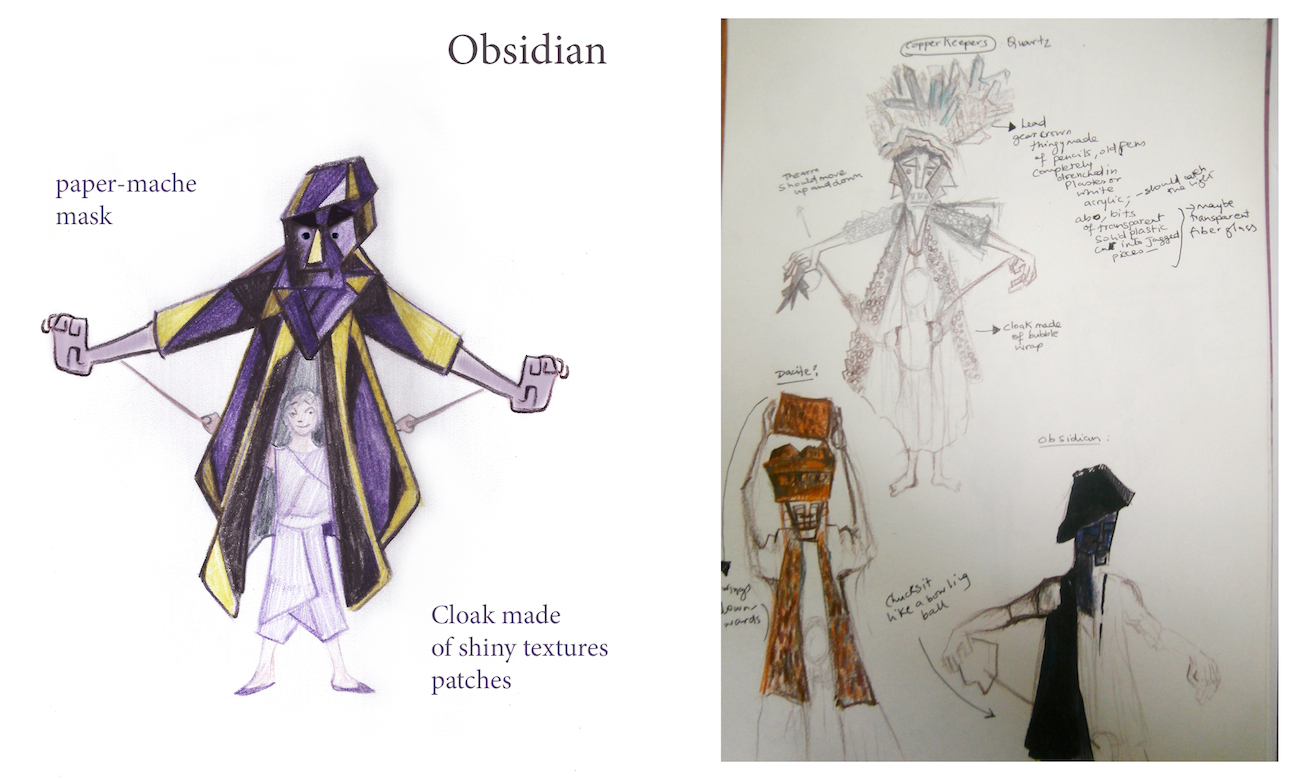
Sunset Elephant! I love it when I can conceal the eye-hole the actor looks through.Mountain Monsters: Obsidian, Dacite and Copper. These characters hurl rocks (puppeteered by other cast members) down the mountain at Maya and her companions.Hey Monkey Monkey! I used close-fitting face masks for the monkeys, and you can see the actor’s eyes move.
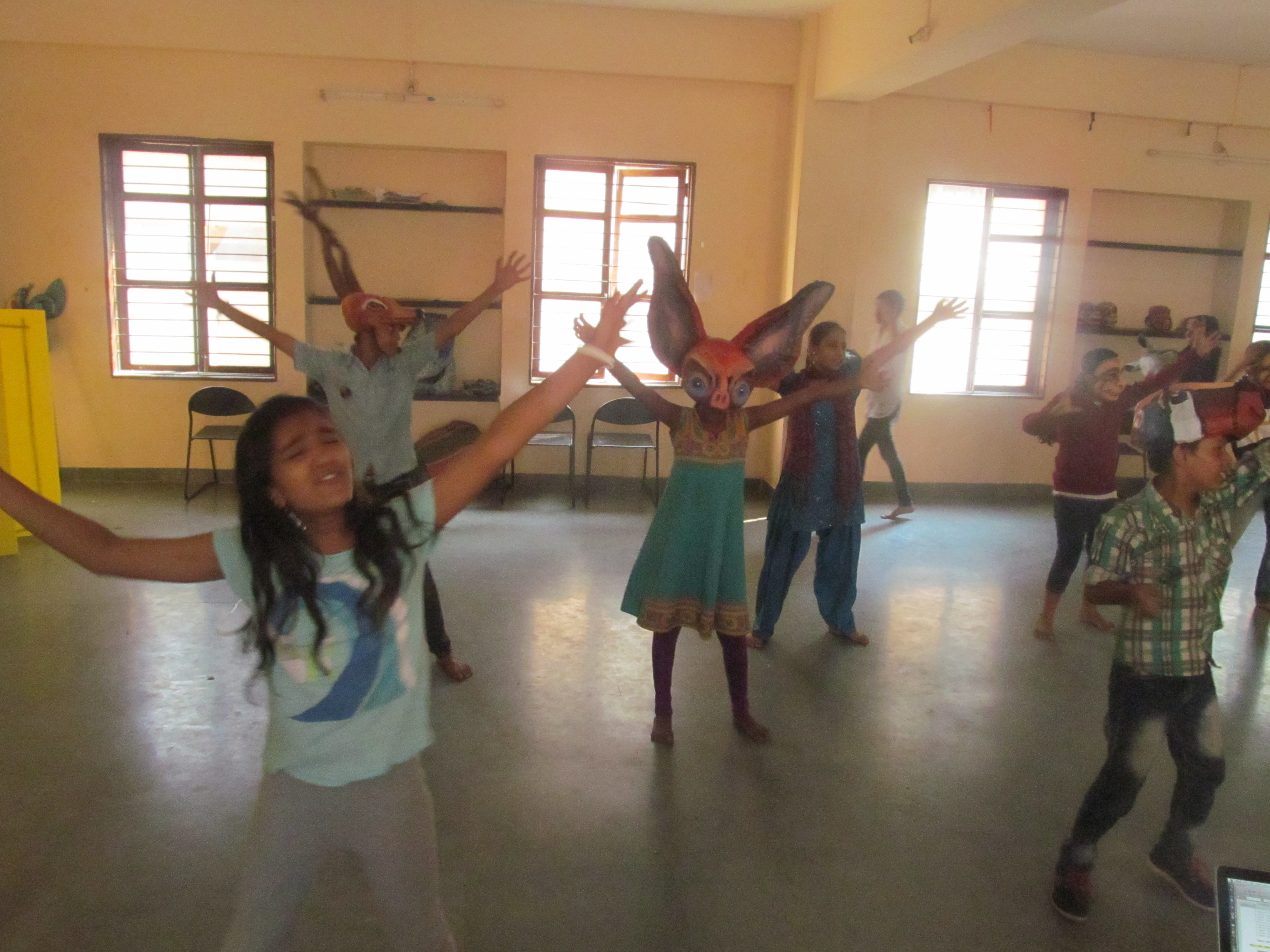
In the second act, there is a large dance featuring all sorts of animals, in a variety of masks styles that cover different amounts of the actors’ faces.
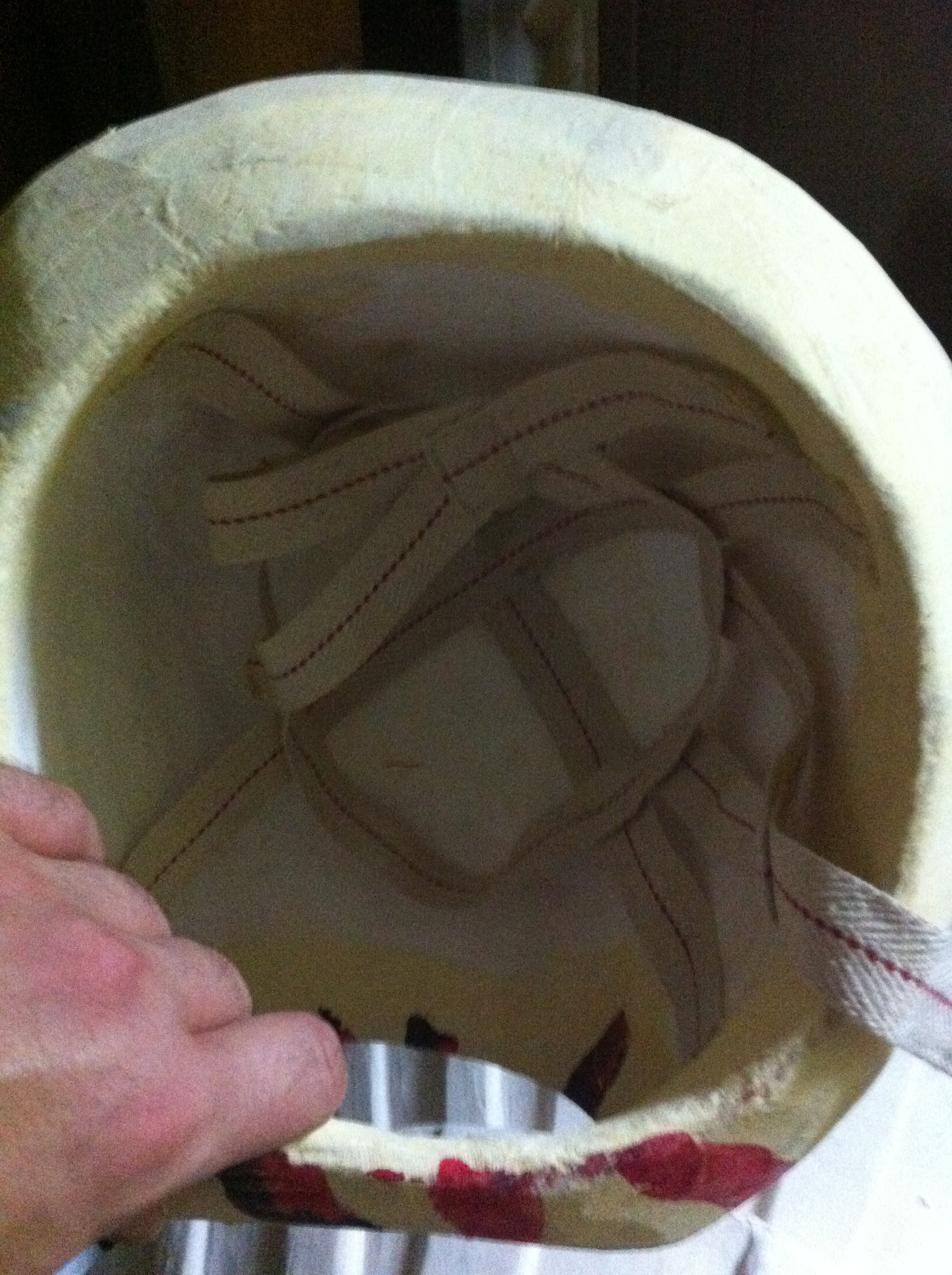
Queen Tiger leads a celebration dance. As we rehearsed, we only had to change minor details in spacing. Success!Deepak takes a rest in the dance rehearsal. Wearing a mask can be exhausting when you do the dance several times in a row!Beast Feast! The Queen Tiger’s mask is based on a bicycle helmet. When dancing, it still rocked front to back too much, so we added a bamboo back harness (not pictured).
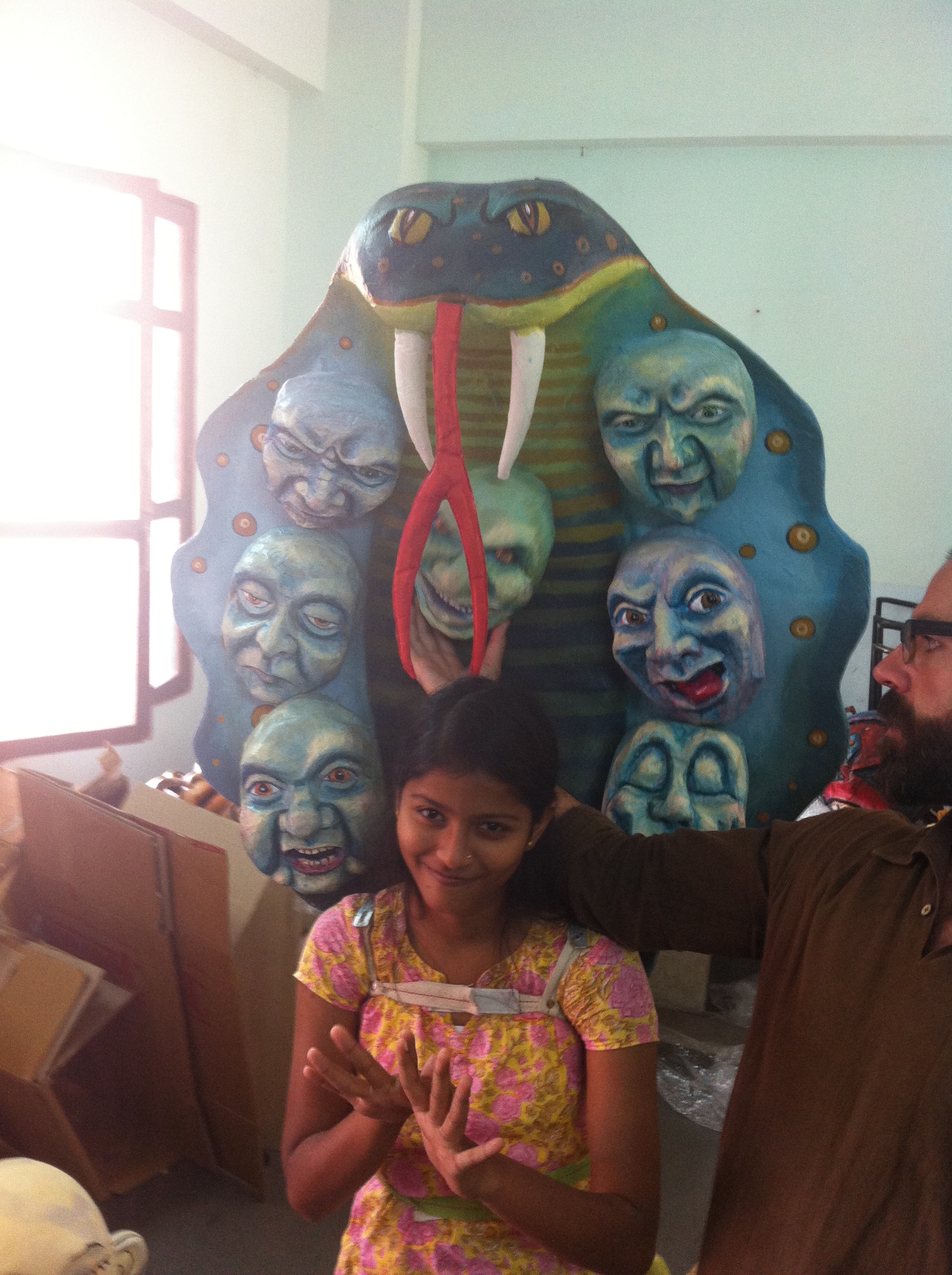
We also were finally able to try the full masks of the serpent Ska. There are some special tricks that these masks have to accomplish in the play, including the removal of three of the heads.
Priyanka surrounded by the sinful faces of the serpent Ska.
As a child, I would often hear my father say: “There’s more than one way to skin a cat.” The most pressing thing on my mind at the time was: Why would one want to skin a cat at all?
I still haven’t answered that question. However, I do know there’s more than one way to get something done. And I have been trying a good number of approaches as I work on the masks for the Mayaproject: different styles, different materials, different processes.
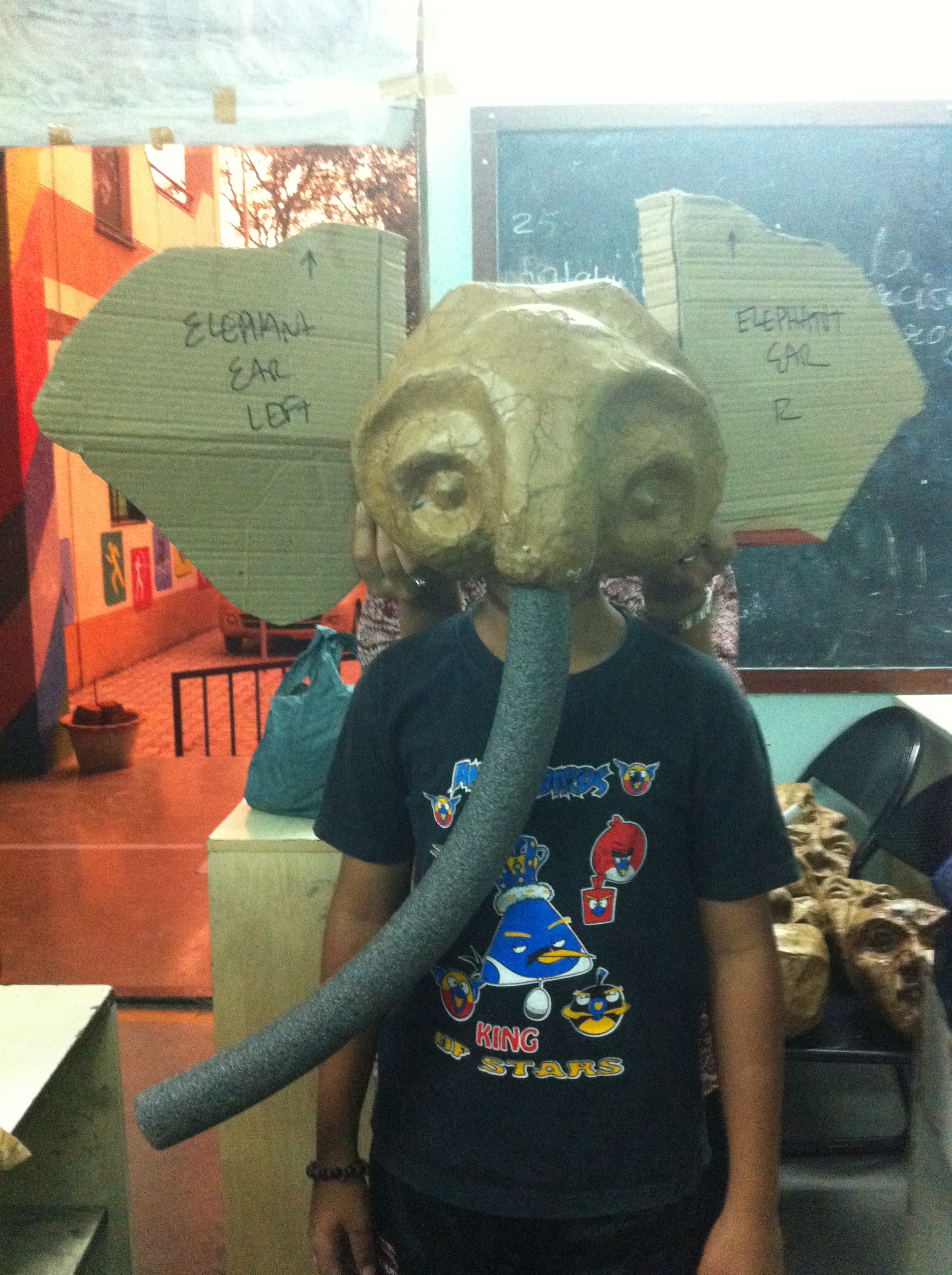
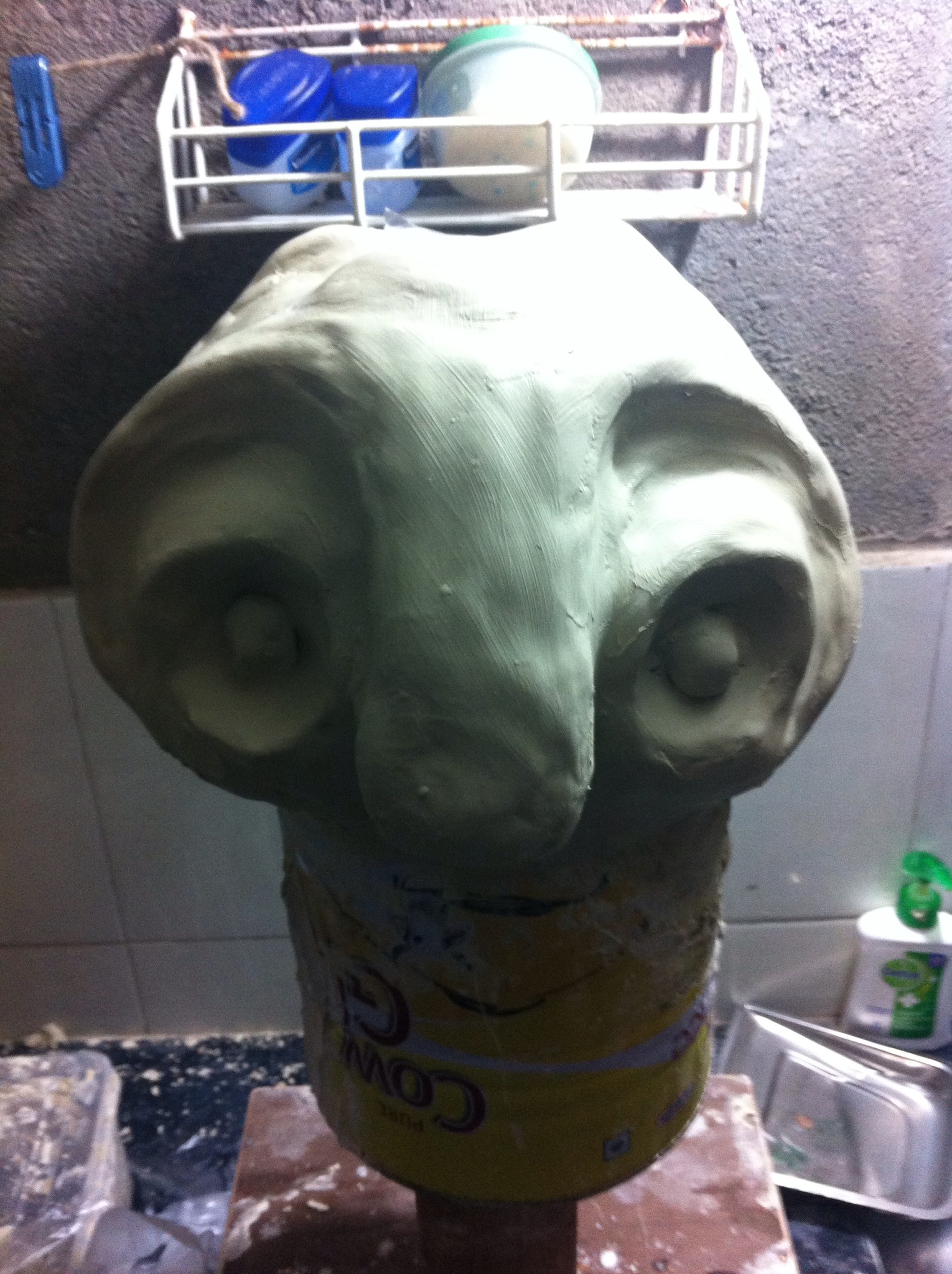
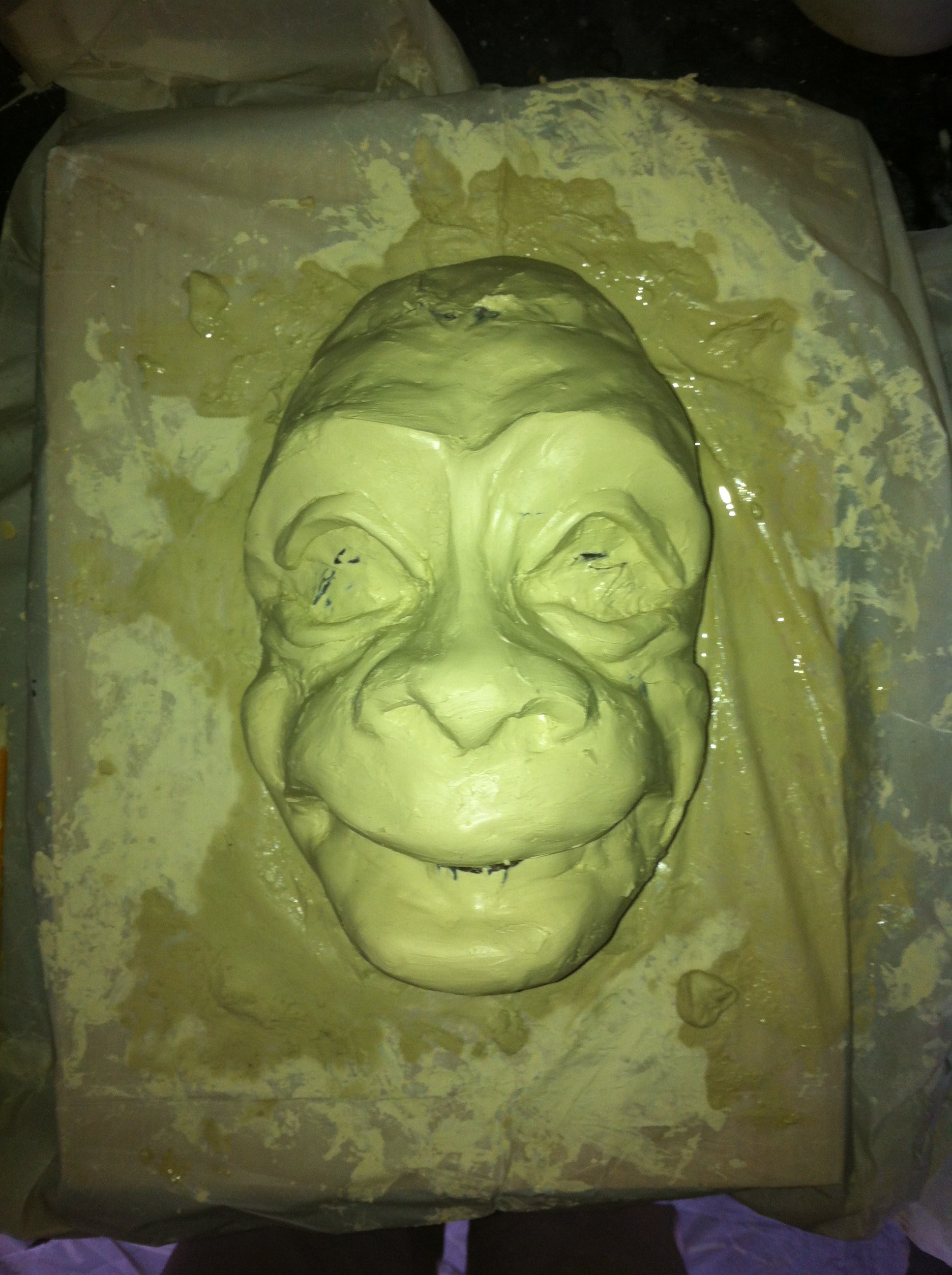
This (currently ear-less) cat was sculpted on top of a bucket on top of an old dabba of ghee on a pedestal, and skinned with papier mache.Ska, the 9 headed serpent, nears completion! The foam snake body was sculpted by Sunil, and I made the vice-laden faces to attach.
There’s also more than one way to feel successful. I think some of the success of a mask is measured by its accessibility. It is a really satisfying feeling when a person can pick up a mask I’ve made and instantly feel that they know what they will do with it. There is a feeling that the mask is strongly and clearly communicating its nature to the performer.
This parrot mask, modeled perfectly by Shahish, was built on basket augmented by newspaper, cardboard, and cello tape.
I’m not trying to say that masks can’t or shouldn’t be mysterious. Many a mask can take some work to get to know and to perform well. However, when there is a sense of recognition in the actor’s eyes because they can intuit the nature of the character, or see the possibilities in the mask, I feel I’ve done a good job.
Avian Evolution
Materials, working conditions, and needs of the performance are often in flux, so I find that adaptability is key. I have my preferred methods of creation when on my home turf, but while in India there are a number of differences. For example, used cardboard boxes, brown bags, and newspaper are not easy obtainium in Mumbai as they are in the US. Here they are commodities that can be purchased if you know where to look. The challenge can then become to use what you have in front of you to get the work done.
Phase 1: A costume mock-up before I arrivedPhase 2: Adding detail and dimension to the originalPhase 3: Altering the position of the maskPhase 4: Cutting it all up and putting it back together.Phase 5: Testing the altered mask on a new volunteer. Accessibility and wearability achieved!Phase 6: Painted and rehearsal-ready!
Furthermore when working on a project as large as Maya, often previously approved ideas need to change slightly to serve the show. Sometimes the choreography, blocking, and the style of mask just don’t synch up and to be successful we find how we might change.In some cases, the choreography can be altered with minimal fussiness. In the case of our peacock character, Prasad was so amazing and alive in physical characterization that it was better to change the position of the mask to match what he was proposing.
Five Sprites, Please
Just a few days before all the basic structures and paint jobs were due, I was asked to make the antlers of the deer masks removable. This would permit easier shipping from venue to venue on the tour. I decided to use old bottles and their lids as the mechanism for this request. A 600 ml Sprite bottle had the perfect neck, but also a very short lid to which I could attach the wire and foam antlers. But it would have to do. I went out into the madness of the Dadar market to purchase five Sprites, trying to decide whether I would drink any or just pour it out. It was a hot day. But I couldn’t find a single one. Then I found a plastics shop (owned by Shahish, incidentally. See parrot pic) that carried long neck bottles with tall lids. Success!
Thanks to my good friend Amy Jo, who shared this idea with me years ago.Mama Tiger with ears and paint. atop a bike helmet, atop an actor.
Today I complete another revolution around the sun. I am in the same place, but not in the same place. Unlike any previous year, I am in another country for my birthday.
Motorcycles and mopeds are everywhere in Mumbai.
I will be spending it NOT working, and doing a bit of roaming around Mumbai and sharing food with friends. I am so very lucky to do what I do. It’s not just the passive accident of where and when I was born, it is also the summation of active gestures—positive and negative— from people all over that create the circumstances in which I live. For all of these I am grateful.
Thank you to my supportive friends and family, to my boyfriend, to Teach For India and ASTEP, to the wonderful people of India, to the entire production crew of Maya, to all who have helped me afford to make this trip, to everyone whose actions may be invisible to me, but help me all the same.
Sheetal brought a Gujarati feast for lunch!
Special thanks to Sheetal, Raju, Sunita, Sajida, and Shaheen for helping me stay well fed.
To whoever invented the table top fan: I salute you. You have helped my sculpting in the back room of the Dadar studio feasible.
Cooling the workspace and decreasing drying time for papier mache—good work, fan.Masks for the 9 headed Hydra awaiting papier mache.
Thanks also to the Heart of the Beast and BareBones puppeteers of Minneapolis—Mark, Alison, Masa, Bart, Julian, Soozin, and all the others—who introduced me to the wonders of sculpting with recycled cardboard and to the eternally amazing Creature Stapler.
The P-35 “Creature” Stapler is a modern miracle. This one even has a handy knife at the tip. I use it all the time.Making puppets in Minneapolis, circa 2000.
Making the Keeper of the Copper Mask
Making a mask with cardboard armature is really fun. I started with a basic idea of an approach. As I made each decision, the next choice became clear. It’s one of the best things about creating.
Designer Drawing for the characterCreature Stapler at the readyI began with a big plastic bucket, cardboard strips and the silhouetteI added support strips and some dimensionLots of dimensionlI covered it in newspaper to establish the planes of the surfaceSajida and Sunita work to cover it in papier mache.After it dried, I pulled out all of the armature. Raju likes to dance in the big heads.
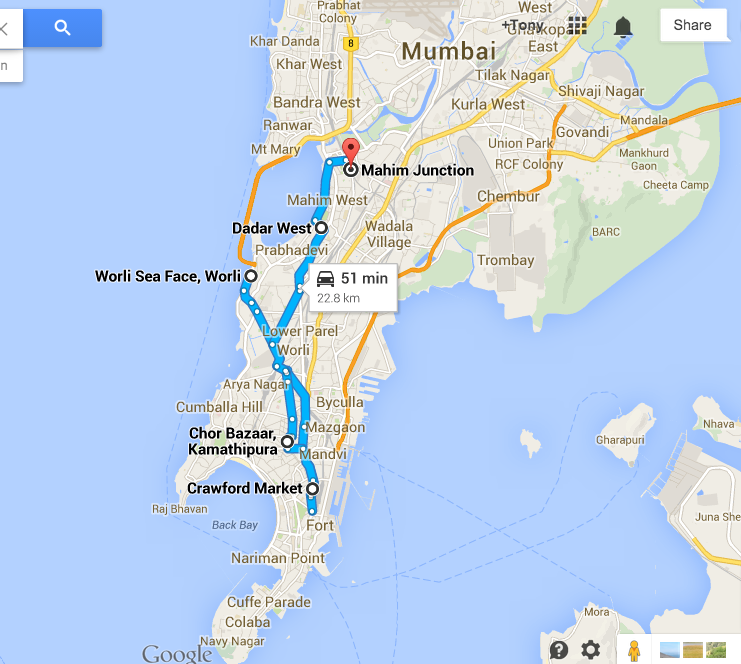
I’ve always been a very visual learner. When learning a new place, it is no different. Cross-referencing my physical experience of moving through a city with the visual representation of the journey on a map is important to me.
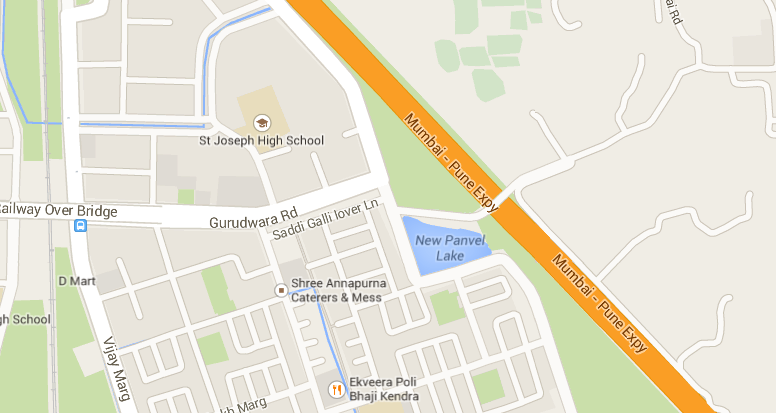
I had an idea of the location of my guest house before leaving, but only an idea. Addresses in India follow different syntax than what I am accustomed to, and many addresses include items like “nearby this prominent location” or “opposite of this building you will hopefully already know or be able to locate”. Building numbers and street names don’t’ seem to be used much, if it all.
My first night: Sector 8, New Panvel, Navi Mumbai
At 11:30pm, it was a dark ride and over an hour’s drive from the airport. I’m not really sure the path we took, but traffic was not bad. As we got closer, the cab driver would stop and ask people on the street about the location of my guest house, or at least the hospital it was said to be nearby. I checked in, notified my contacts I had safely arrived, and was asleep by 1:30.
Thursday, First Day
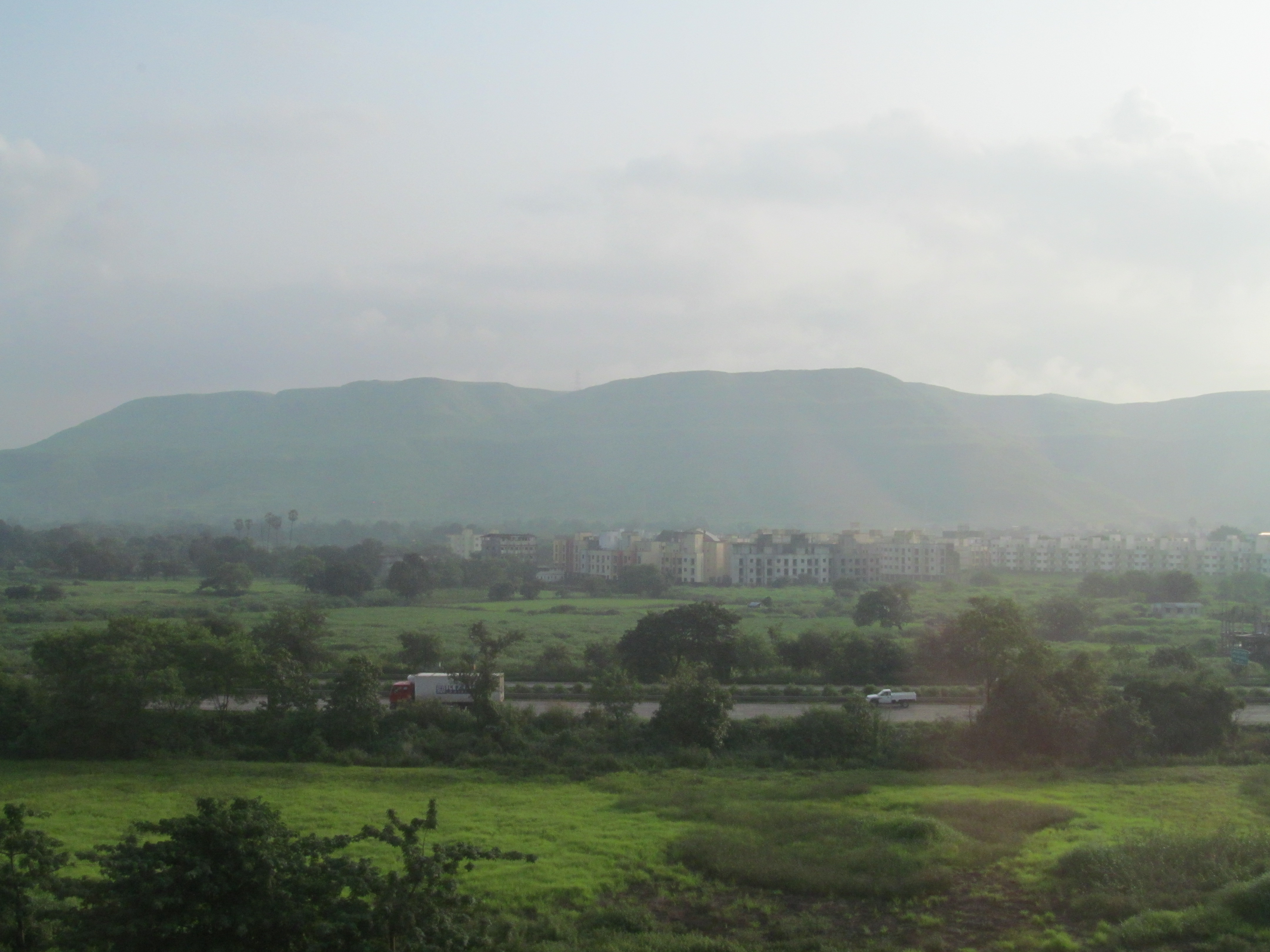
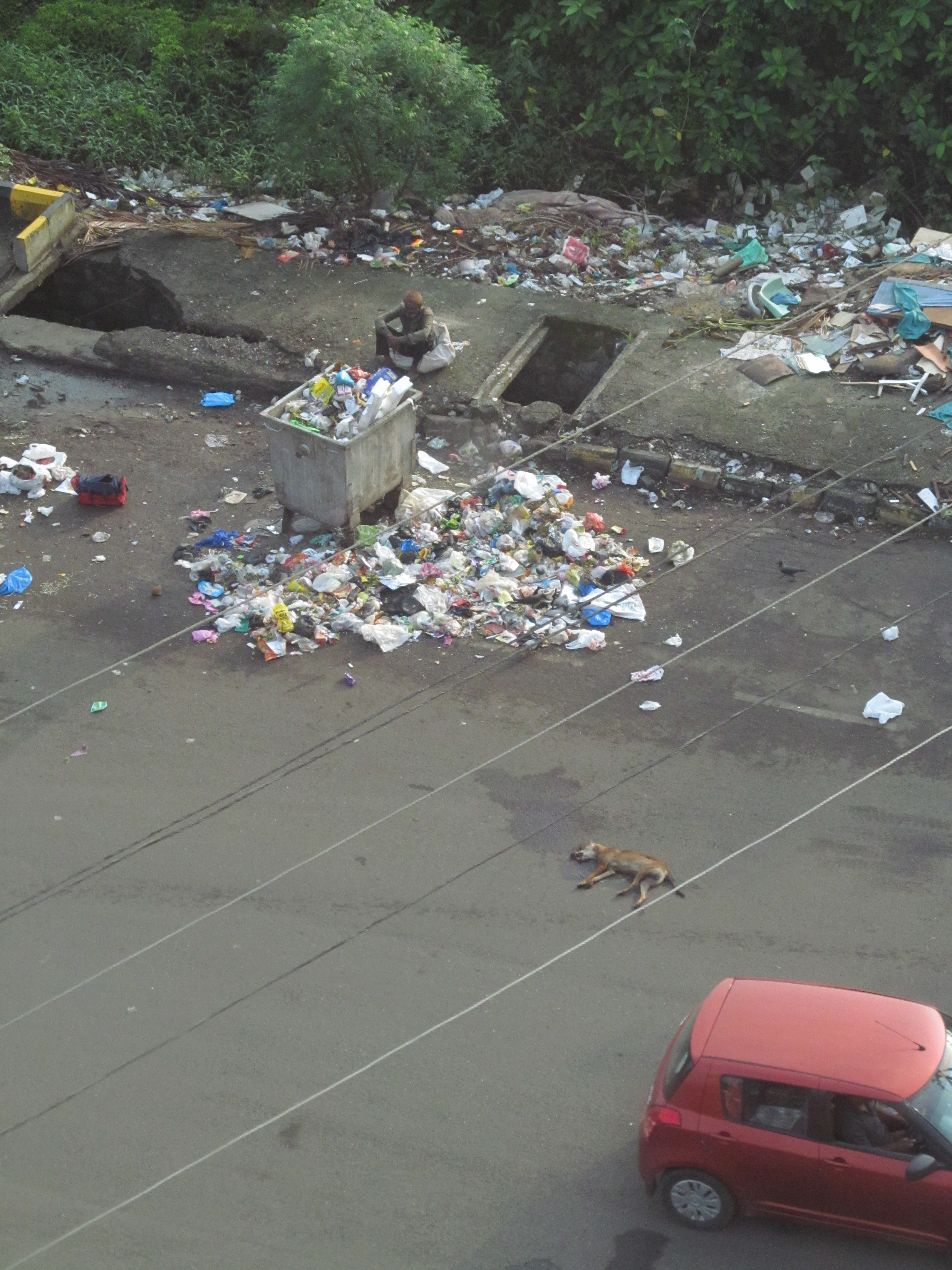
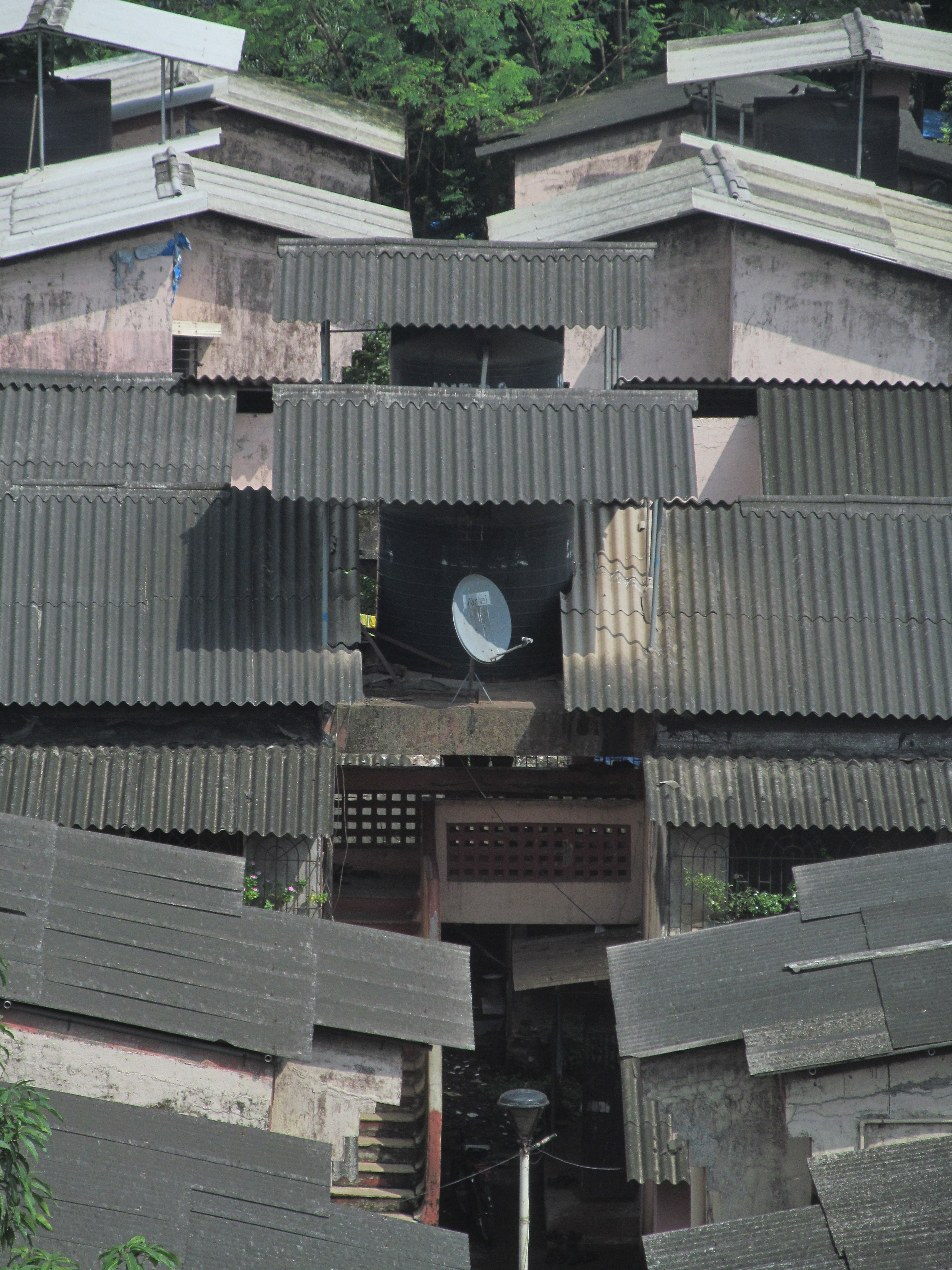
Eastern view from the guest houseDownward view from the guest houseSymmetrical view from the guest house
I looked out of my 6th floor window in the morning to look at the suburb of New Panvel. There were some nearby hills, a lake, and some cows grazing in a grassy triangle between the street and the highway. After a breakfast and couple quick phone conversations, it was determined that I would be changing residence to a more central location in Mumbai. I packed up my things, had a quick lunch, and took a taxi to Vashi station to meet Sheetal, our artistic consultant/coordinator, wardrobe supervisor, charge painter, etc.
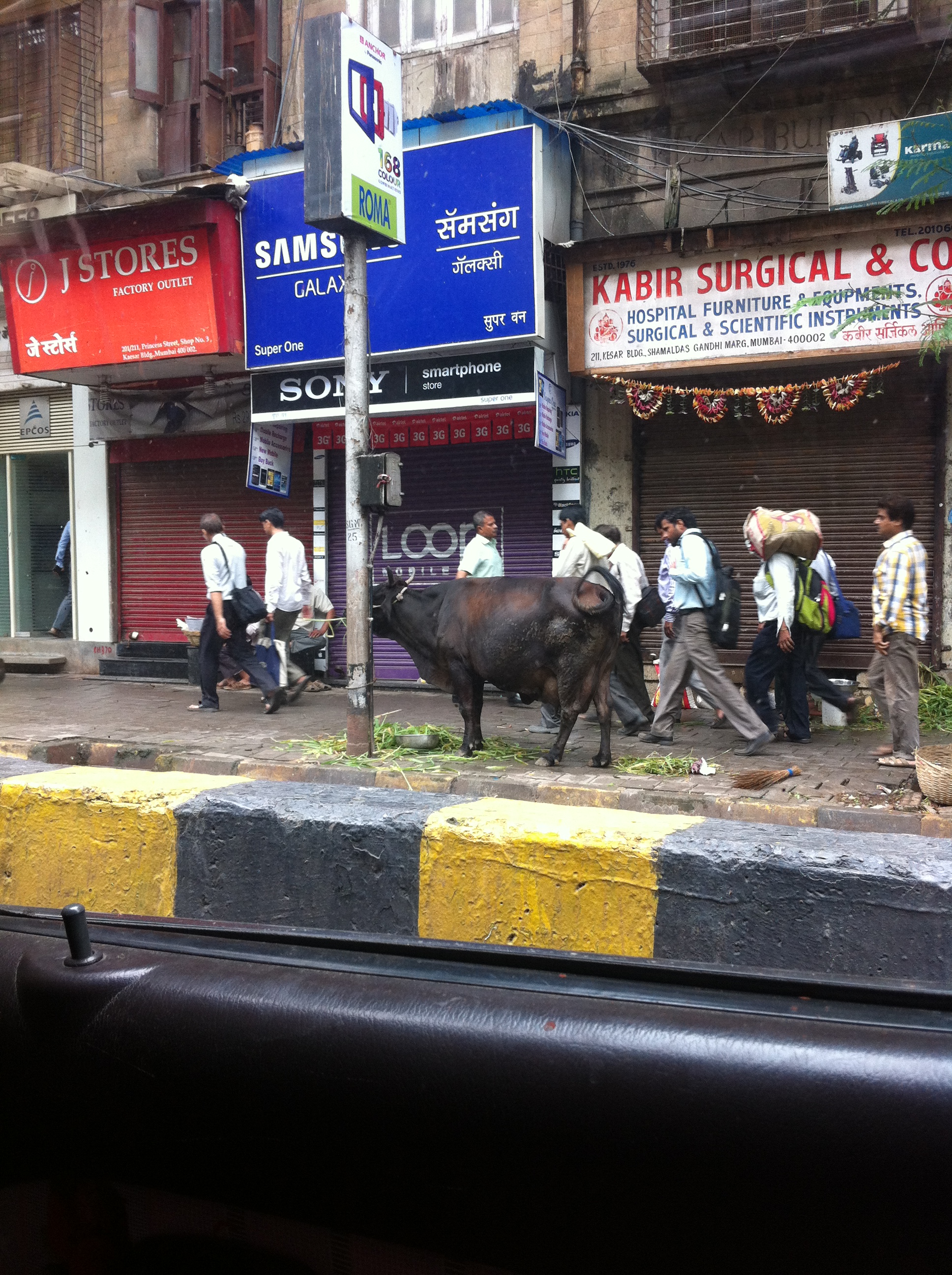
During our drizzly cab ride to join Jinal and Toral, who are working in production and stage management on Maya, Sheetal and I discussed a work plan. There was so much sensory information from the streets we passed along that it was difficult to focus. There were different styles of architecture and plant life. There was the constant (literally) honking of horns as cars, trucks, motorcles, scooters, rickshaws, hand drawn carts, and pedestrians wove the fabric of traffic. In many cases, traffic lanes and signals are merely a suggestion of what one might do if so inclined.
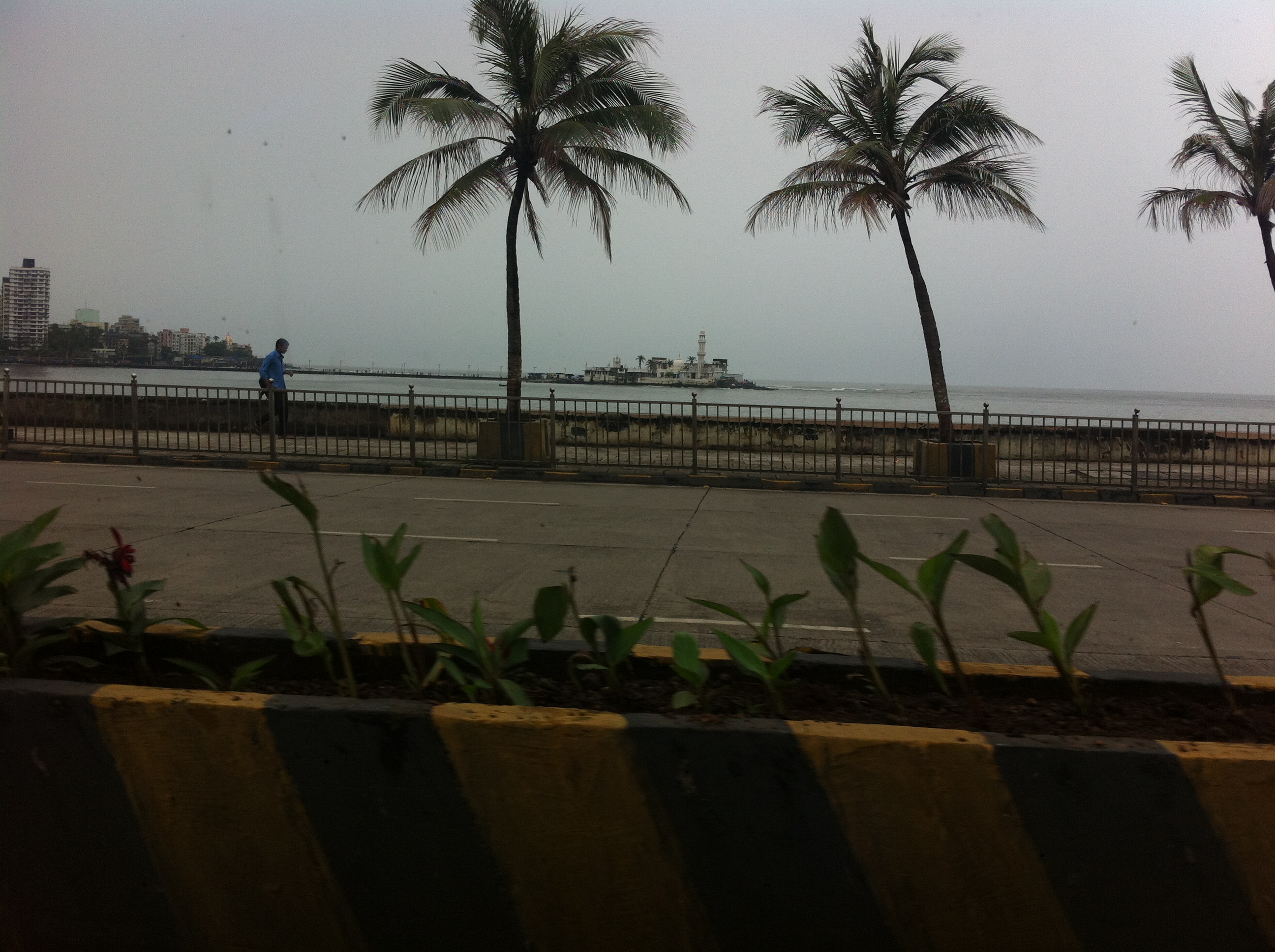
Haji Ali Dargah. This mosque is situated out in the water, and only accessible by foot path at low tid
We collected Jinal and Toral and looked at one of our two prospective workspaces. It was in an office in South Mumbai, not far from the beautiful Nariman Point. It was very clean, carpeted and formal, and the hours were restricted to 9-6. It’s pretty difficult to stay tidy when sculpting clay, using papier mache, etc. After the tour, we all agreed that it wasn’t optimal. The artistic process doesn’t always easily conform to a business day schedule. Sometimes the work you are doing suddenly takes off late in the day, and you would be a fool to stop working because of an external and arbitrary stop time…especially on the condensed time frame we are on.
With my wet bags up on the rack of the taxi, the four of us proceeded along the waterfront to Worli Sea Face and the home of Shaheen Mistri, founder and CEO of Teach For India. After meeting Raju, a former student of Sheetal and a recent arts school graduate, the five us stepped through each of the masks and puppets needed, the materials required and so on. After a delicious meal of dal, rice, and vegetable dishes, I moved my belongings into a room at Shaheen’s place.
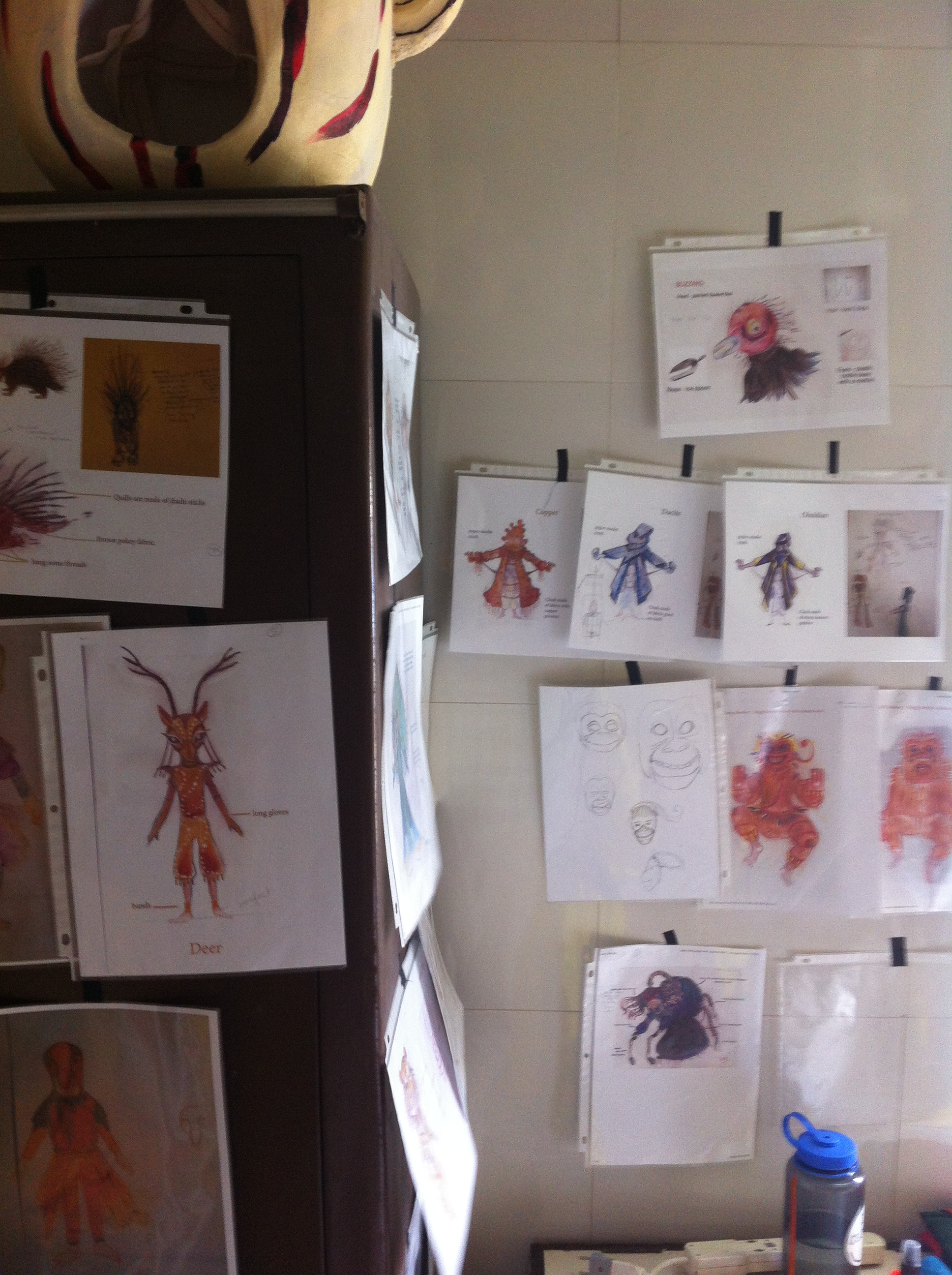
A character design from the show!I will be interpreting the designs of Simi as I create these creatures
Shop til you Drop
The next day was shopping day. or more like an education day. Either way you look at it, it was ALL day.
My new trusty sidekick Raju took me all around streets and streets of markets. I think we were in Crawford Market. Each street of stalls is sort of thematic: “Plastics”, “Stationery”, “Machine parts”, etc. Traffic is of course insane, and the horns remained constant. Social relationships were at play, it was very clear, though I don’t know who was which part. it took quite some time to break out of the spell of it and remember what things I was looking for. Most vendors spoke Marathi or Hindi, and very few spoke a little English. I still only have only the most general idea where we were most of the time.
Morning in South Mumbai
After dodging crumbling pavements and suspicious pools of water for sometime, we entered a primarily Muslim neighborhood. Here was much more of a ‘junk store’ approach. It reminded me of a parallel experience in years ago in Greenpoint, Brooklyn, where at the time there were many stores of collected junk for resale under awkward lighting. All this junk, however, is laid out in the street on tarps and such. According to Raju, all of it is second hand and/or stolen. This was in the Chor Bazaar (“Thief Bazaar”). Raju reminded me to watch my pockets.
At 1:30, the muezzin started calling, and the street was about to close for prayer. We caught a cab as soon as we could and got out of the neighborhood before it was impossible. We ventured forth and north to Dadar. This is where I will be working, close to the Dadar West train station. We grabbed lunch from a restaurant to go— really I suppose it was a food stand. Samosa chaat, a noodle roti and something else potatoey. It was all very good (though the next day Sheetal chided Raju for giving my untrained stomach street food). The work space is a little small, but accessible at all hours and surrounded by other markets. It will be awesome!
The first day!
We looked for more materials—it just takes sooo long! I was simultaneously taking note of, well, everything. The sounds, the signs, the traffic, the experience of being the only person who looks like me in a group of thousands, what materials are common in US but hard to find here, what materials are in both but with radically different names, and what the Indians like to use. Which is apparently thermocol. That’s styrofoam. There’s a lot of thermocol that has been intricately shaped and is often used for a variety of festivals. I may be learning some new materials!
Looking at the bottom of a mask carved from thermocol by Sunil
With things still running a bit slowly, and with all my senses still being assaulted, we took the train up to Mahim Junction to look at the baskets woven on the street. We commissioned a full sphere basket as a test as an armature for sculpting some of the helmet masks. We had at least and hour before it would be ready, so we took the train two stops back down to Dadar. Traveling back to Dadar was more hectic because of rush hour. The trains doors are left open, and many people sort of hang out the sides. New Yorkers: if you think you know the stress of a rush hour subway, think again. Mumbai has you on this one.
Suddenly the purchasing mojo sort of kicked in and things were found without too much trouble. Hooray! We dropped it off at the workspace. Once back in Dadar, we were suddenly able to find many materials we wanted right away. The reward of the day!
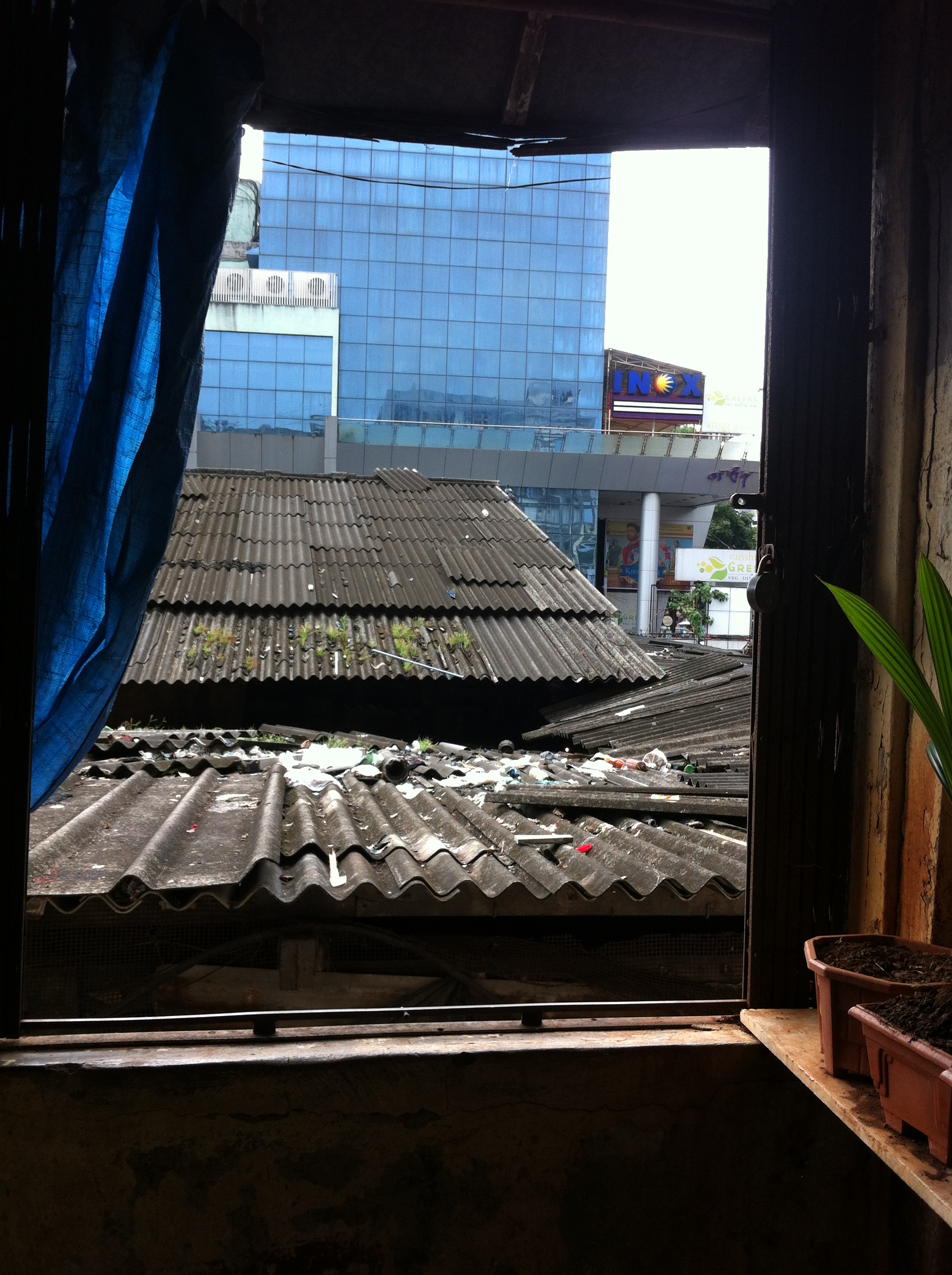
View out of our workspace.
We closed up the studio and went once more to the train to collect our new basket. As we let several overcrowded trains pass in the hope of a less populated car, Raju told me that he had once seen a drunk man climb on top of the train because it was so crowded. However, he hit the power line and was dead on the ground in six seconds. His entire person was aflame.
We took a cab.
The basket collected and the day ended, we traveled back to Worli Sea Face for some food and rest.
Setting it all up
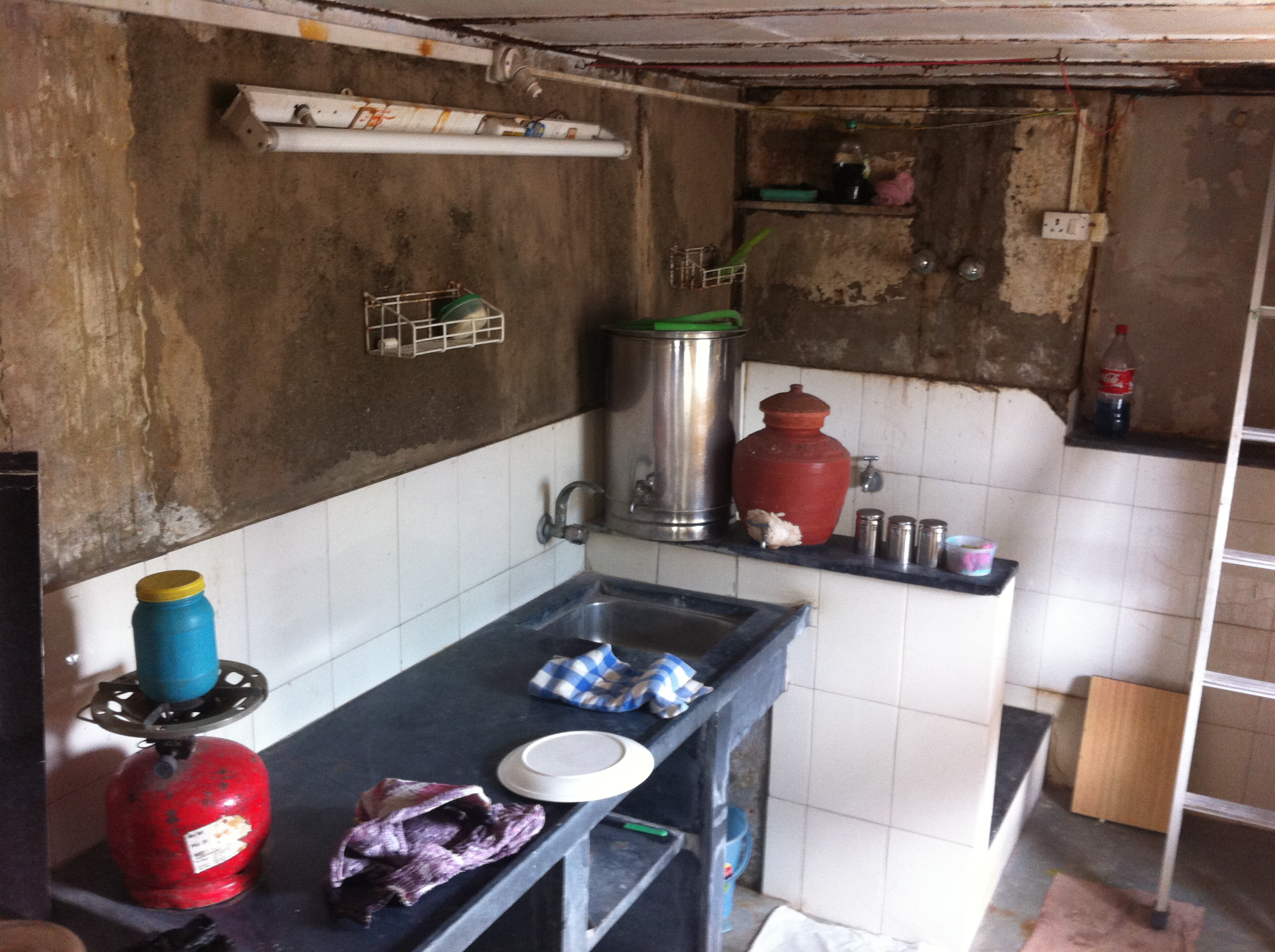
The Sculpting area!
The next day was full of plotting out work schedules for each day and setting up the studio. A well-organized workspace cannot be beat! Having experienced a bit of what was available in the markets, I tried to determine with what material each masks could be made. Sheetal brought me some powdered clay – I had never used it before and was dubious. As Raju painted some of the thermocol pieces created by another artist on the project, I managed to figure it out (I think). And now the first mask is underway!
Getting designs ready.Draft version of our monkey! I will make a mold and cast 9 of them.Sheetal and ZamirSunil’s work stored above, transforming the studio into an installation piece at the same time.
Rest easy
The following day I took off from studio work to change residence again. Now I am locate just between Worli and Dadar in Prabhadevi. A quick walk around yesterday afternoon yielded the location of Starbucks (and therefore internet) and thus I am able to write this all now. I don’t know how often my workload will permit blogging, but I will try to keep you all updated at least with a couple of pictures now and then!
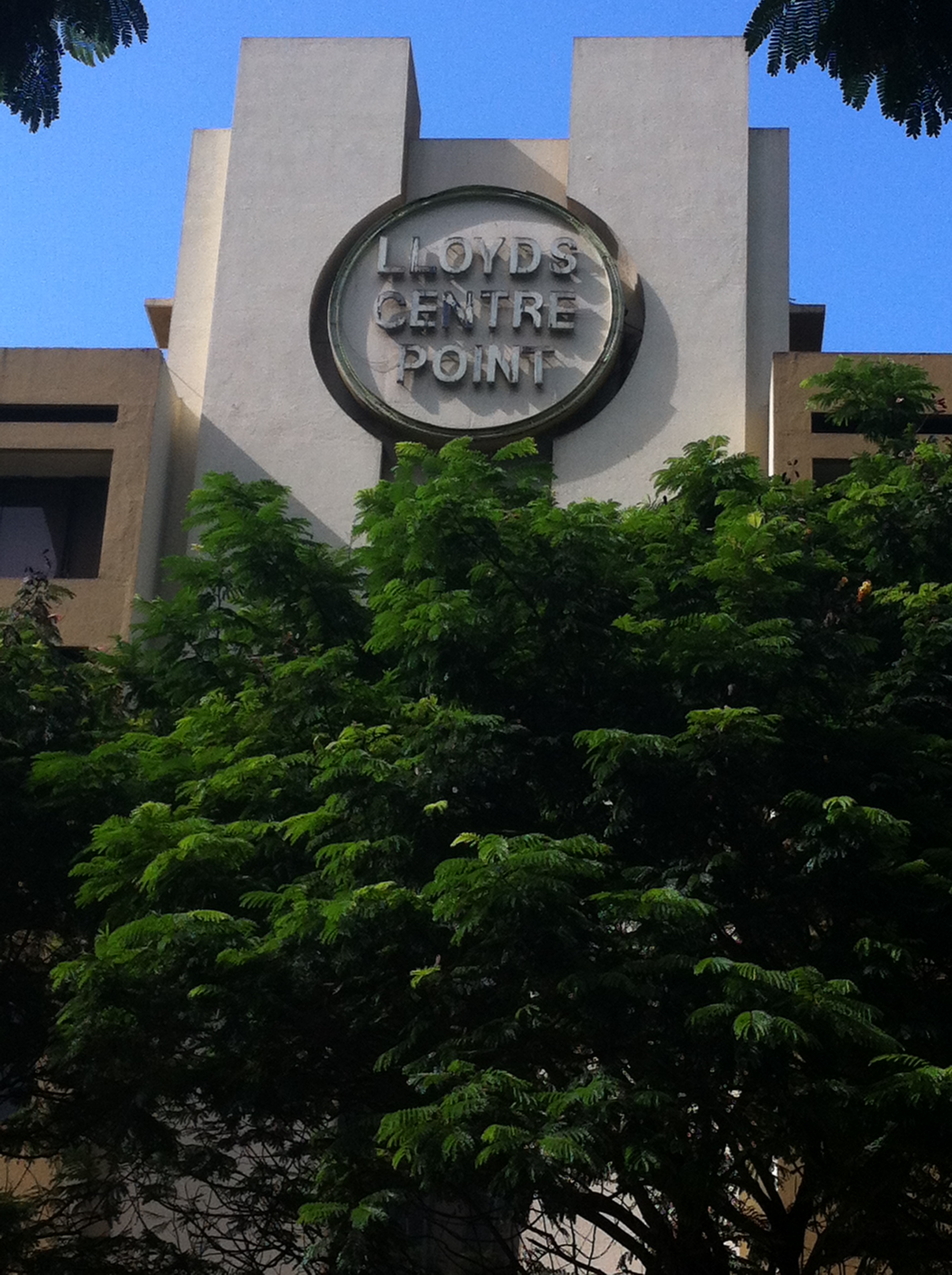
Rest easy, Portlanders. I am not so far from home. We even have a LLoyd Center.
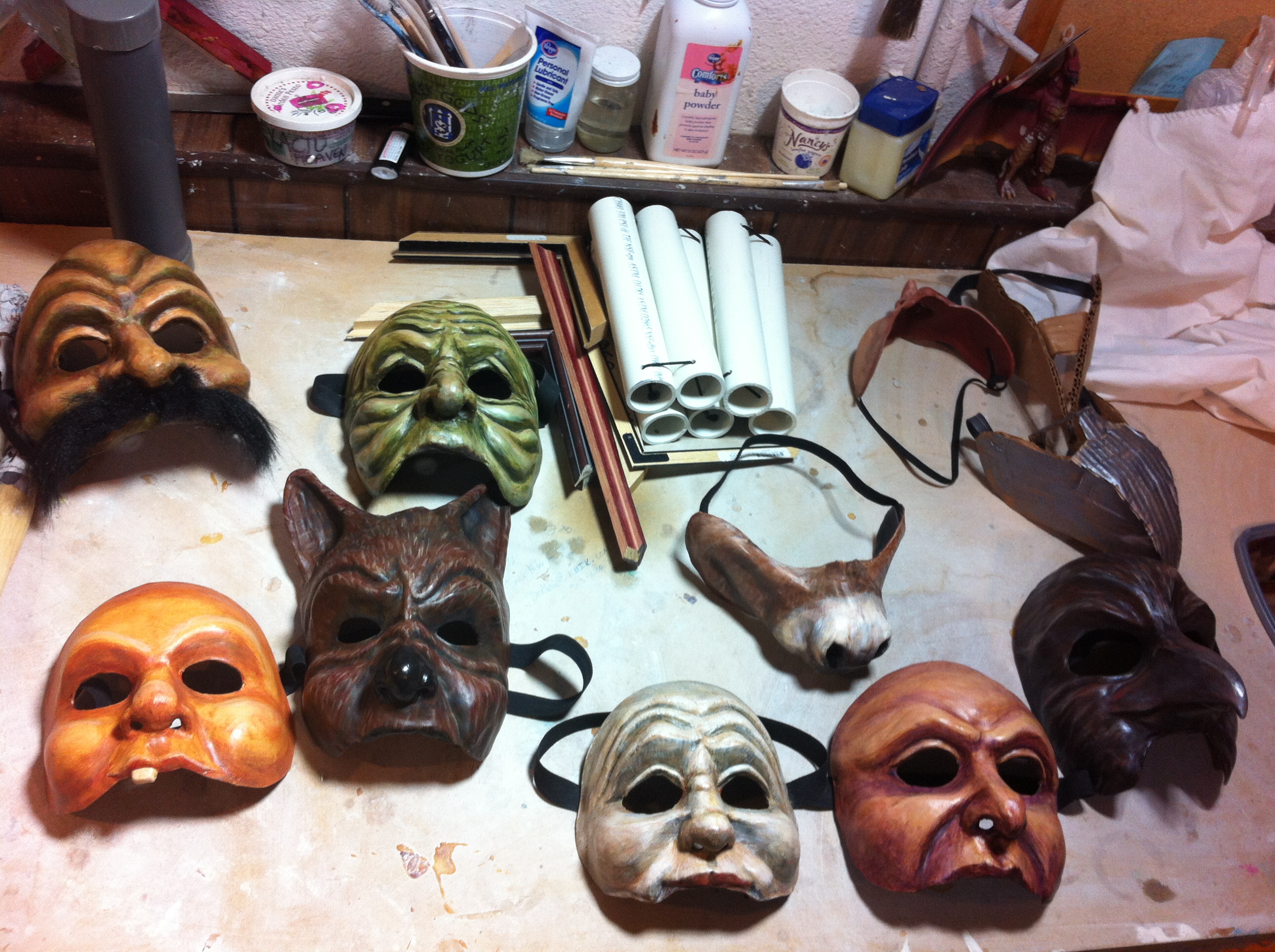
Some of my masks are commissioned. Some are designed as a part of a specific theatre or dance production. Some are the results of experimenting in the studio. But nearly all of the masks I make are intended for performance—or at least for wearing. The materials I use and painting styles I employ follow this sense of functionality.
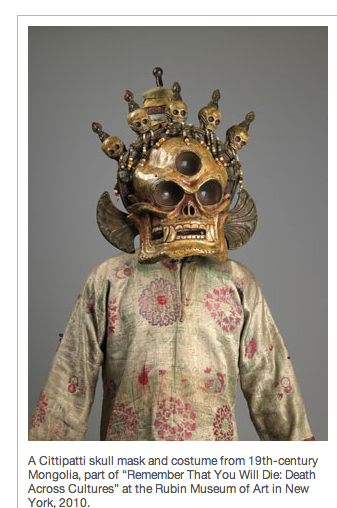
However, masks are not only present in the arena of performance, but in visual art world and the ritual world. They can be sacred, profane, entertaining, instructing, comic, tragic, symbolic, magical, instructive, characters, metaphors, disguises, and more.
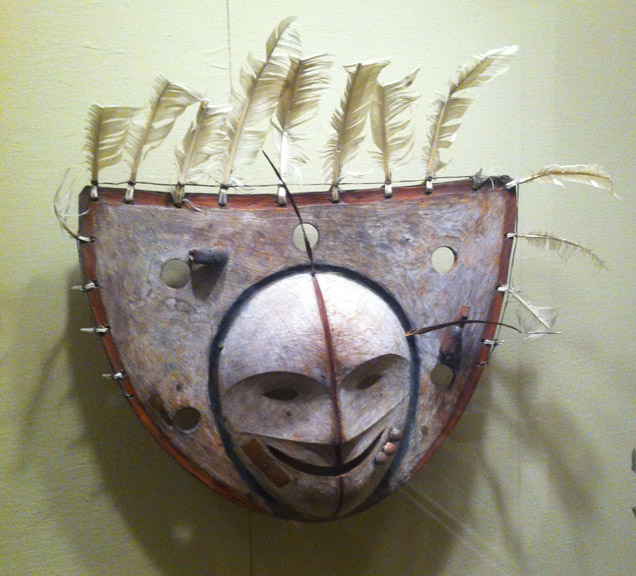
The feathers on this Inuit mask are important for what they are, not for the way they create an illusion of a face.
In some masks, the materials used have equal or greater importance than the character or image of the mask. And in certain schools of theatre, the mask is a metaphor to describe everything: there is a mask of a character, of a space, of a time, of an atmosphere.
And it’s always evolving! New materials and processes arise. New technologies have implications on the way we find and maintain community. New needs become apparent, and new rituals develop to meet them.
Here are some links of some newer things I find interesting
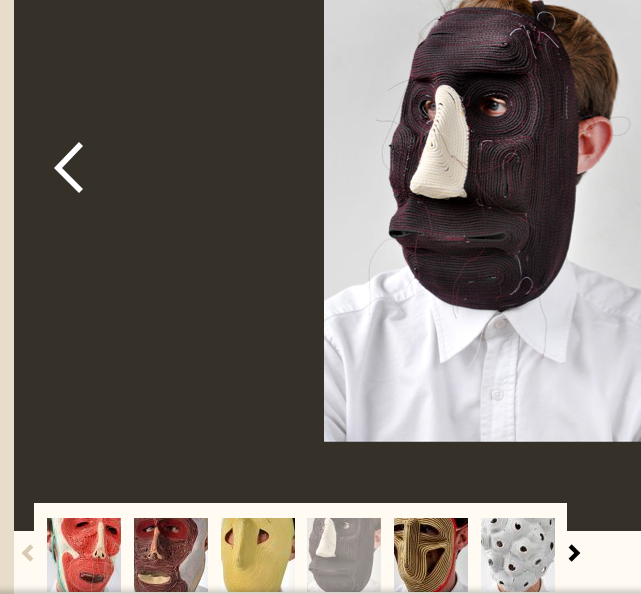
These masks were born by accident, but they are quite interesting faces.
“I wanted to find out if by stitching a rope together I could make a large flat carpet. Instead of flat, the samples got curvy. When I was about to give up on the carpet, Vladi came up with the idea of shaping the rope into masks. The possibilities are endless, I’m meeting new faces every day.”
Creative Compulsive
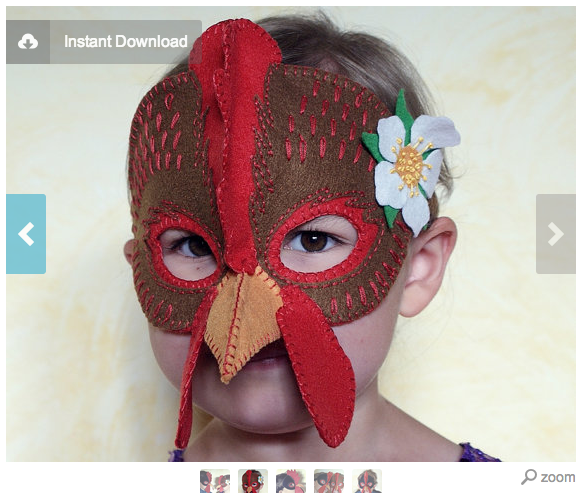
Daisey Bingham makes many wonderful things. I first met her as a fellow design student, and we spent many hours together in the costume shop.
Recently, she has begun to make many awesome masks stitched from felt, and even sells her patterns on her Etsy shop. You can follow her blog here.
Sasadesign
I met Aleksander Skoric in Amsterdam in 1999. He is a multidisciplinary artist that makes wonderful paper masks. Check out his gallery on his website here.
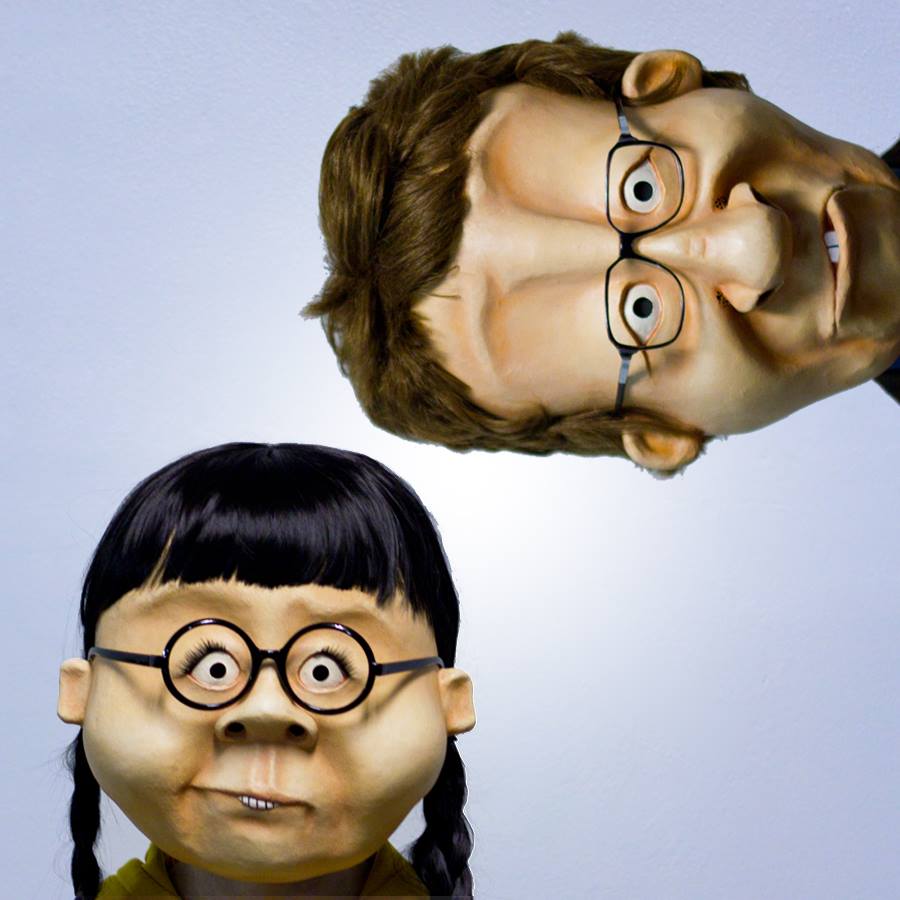
The Wonderheads are a performance company based in Portland, Oregon. Their comical shows feature a style of storytelling which is almost completely non-verbal. These masks completely surround the head and are fitted with accessories like wigs and glasses.
Two character from “The Middle of Everywhere”. Actors bring these characters and the story to life with a nuanced use of the body.
Taylor Mac
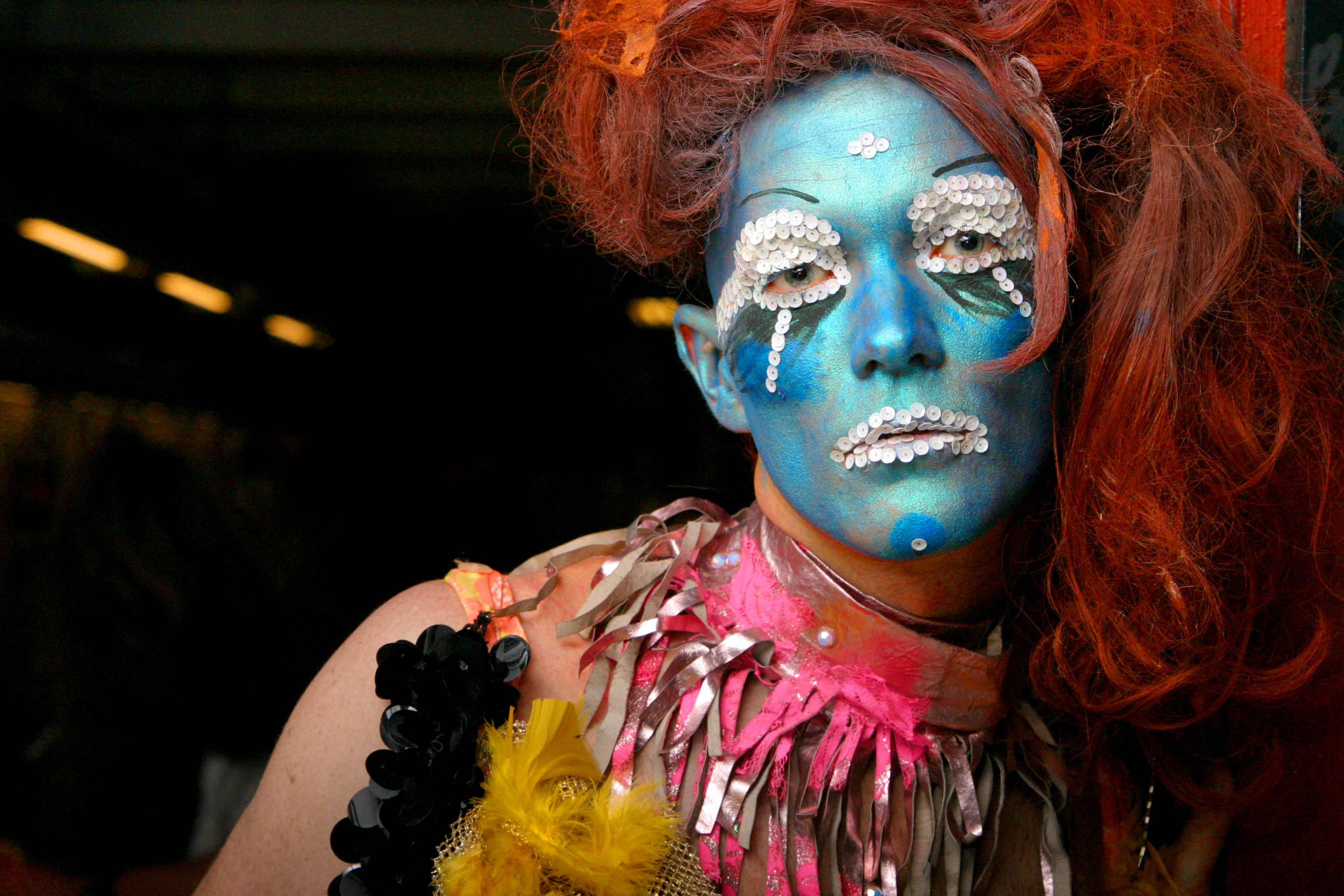
Image from “The Be(A)st of Taylor Mac”
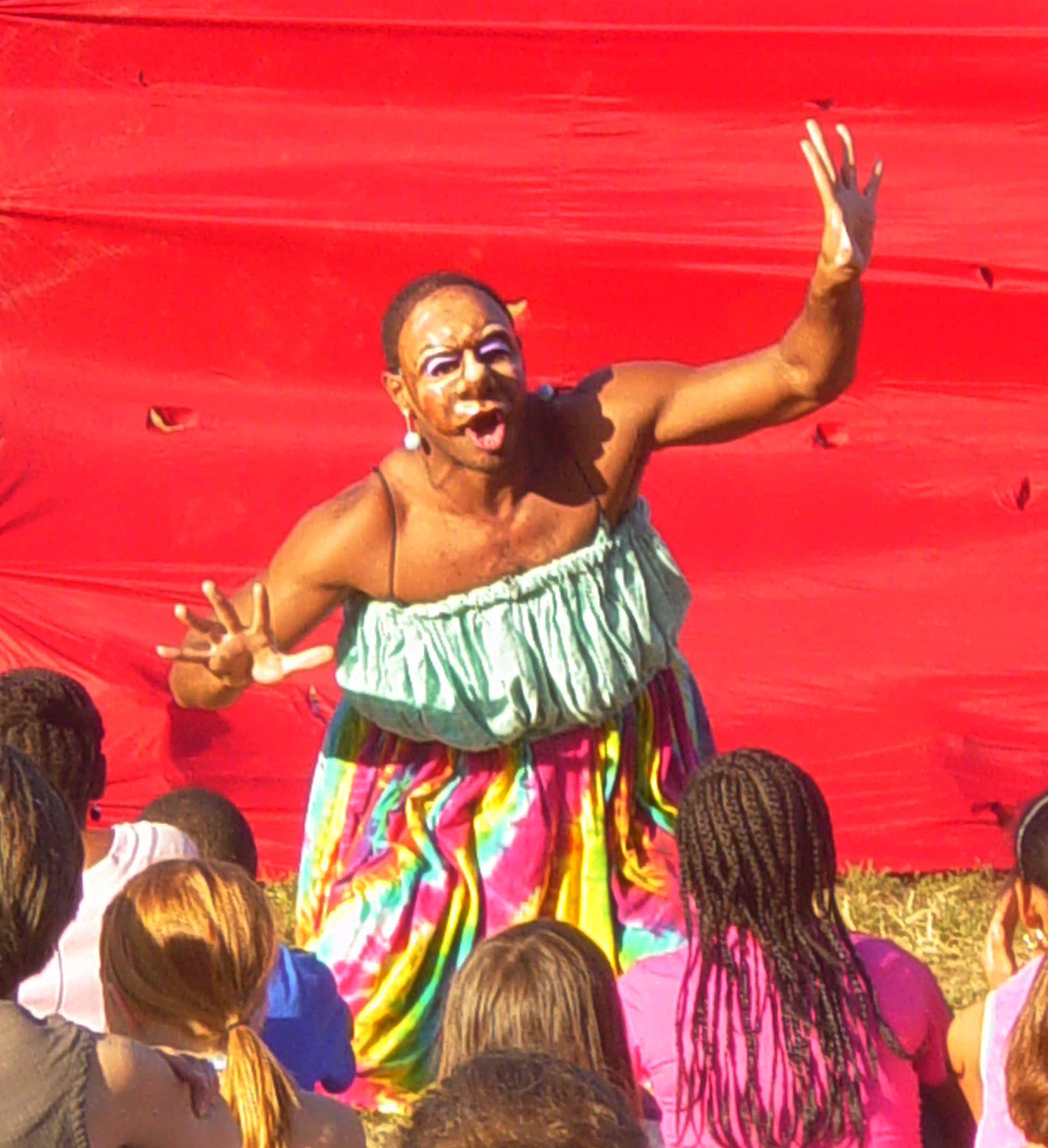
Taylor Mac is a force. I repeat, a force. Do yourself a favor and [buy a ticket to New York if necessary] and see him perform. He is a captivating performance artist using surprise and imagination to connect with the audience. And he’s a drag queen with a great sense of style. Is it a mask? Is it makeup? Is it something else? Let me know what you think.
And now, it’s OFF TO INDIA to work on the Maya project!
I’m traveling to India! I will be volunteering the next two months for the Maya Project, a joint project of two great organizations, Teach for India and Artists Striving to End Poverty. It’s a wonderful project, aimed at the empowerment of children to creatively work for the change they would like to see.
I will be working in Mumbai and Pune for the Maya Project.
A significant part of this program is the touring of an original musical titled “Maya.” I will be making about 60 masks and puppets for this fantastic story! Nine-headed snakes, a rhino, and soul-sucking shadows are just the tip of the iceberg. The plot involves the daughter of the Kingdom of Light and her quest to keep the world in light through the lifting of three curses on the kingdom. She can only fix these problems, as it turns out, by finding her inner strength, compassion and wisdom.
This show will be performed by about 90 kids from the lower and middle classes for thousands of other kids around India. Through this project, thirty of the performers have been investigating these themes and their real world applications for the last year. Though the performers and audience may experience the themes of the show in slightly different ways, this project is a great way to inspire youth to share their voices and their light.
From Teach For India’s website:
“In India today, 4% of our children never start school. 58% don’t complete primary schools. And 90% don’t complete school. At Teach For India, the fact that only 10% of our children go on to college both saddens and angers us.
Teach For India exists because of a deep belief that every child can and must attain an excellent education. Teach For India exists to prove that no child’s demographics should determine his or her destiny. To us, the end of educational inequity is the freedom for all children to have the opportunity to reach their potential. And the day that all children reach their potential is the day that India reaches her potential.
Teach For India believes that that day will come in our lifetime.
Teach For India believes that it will take a movement of leaders with the idealism, belief, skills and commitment to actualize this vision. We are committed to finding, developing and supporting India’s brightest, most promising leaders for this to happen.”
Ganesha (depicted here in small finger puppet form) is a remover of obstacles and bringer of wisdom. He is also associated with new beginnings.
This is a hugely significant project, and I’m honored to be a part of it. What could be a more fitting project for me than one that involves creating masks and puppets, working with you, and working to make the world better?
I will be flying to Mumbai this week to begin work. Many have already been so generous with their presence, advice, hospitality, funds, warm wishes and spirit. Thank you all. I can’t wait to pay it all forward!