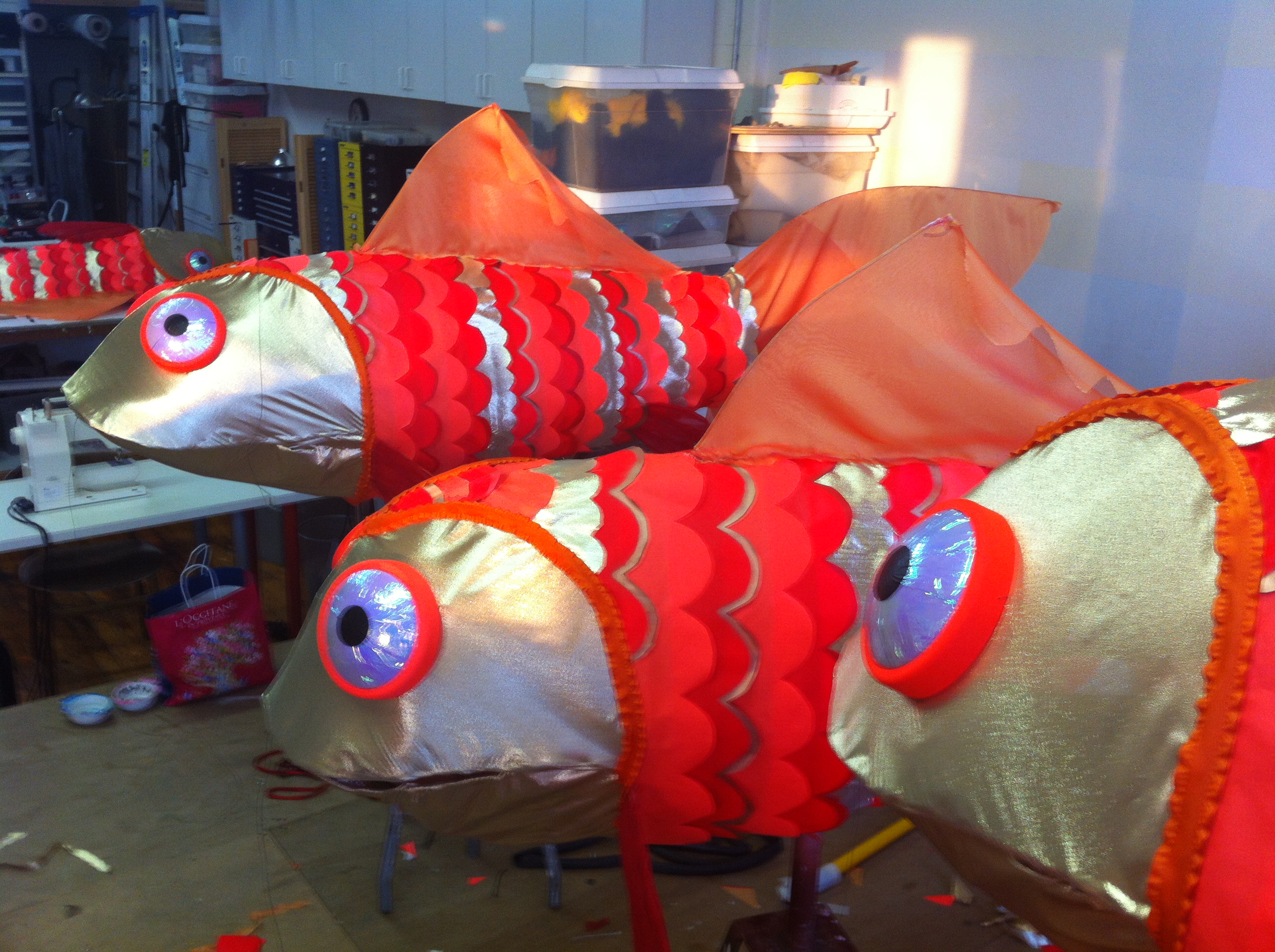
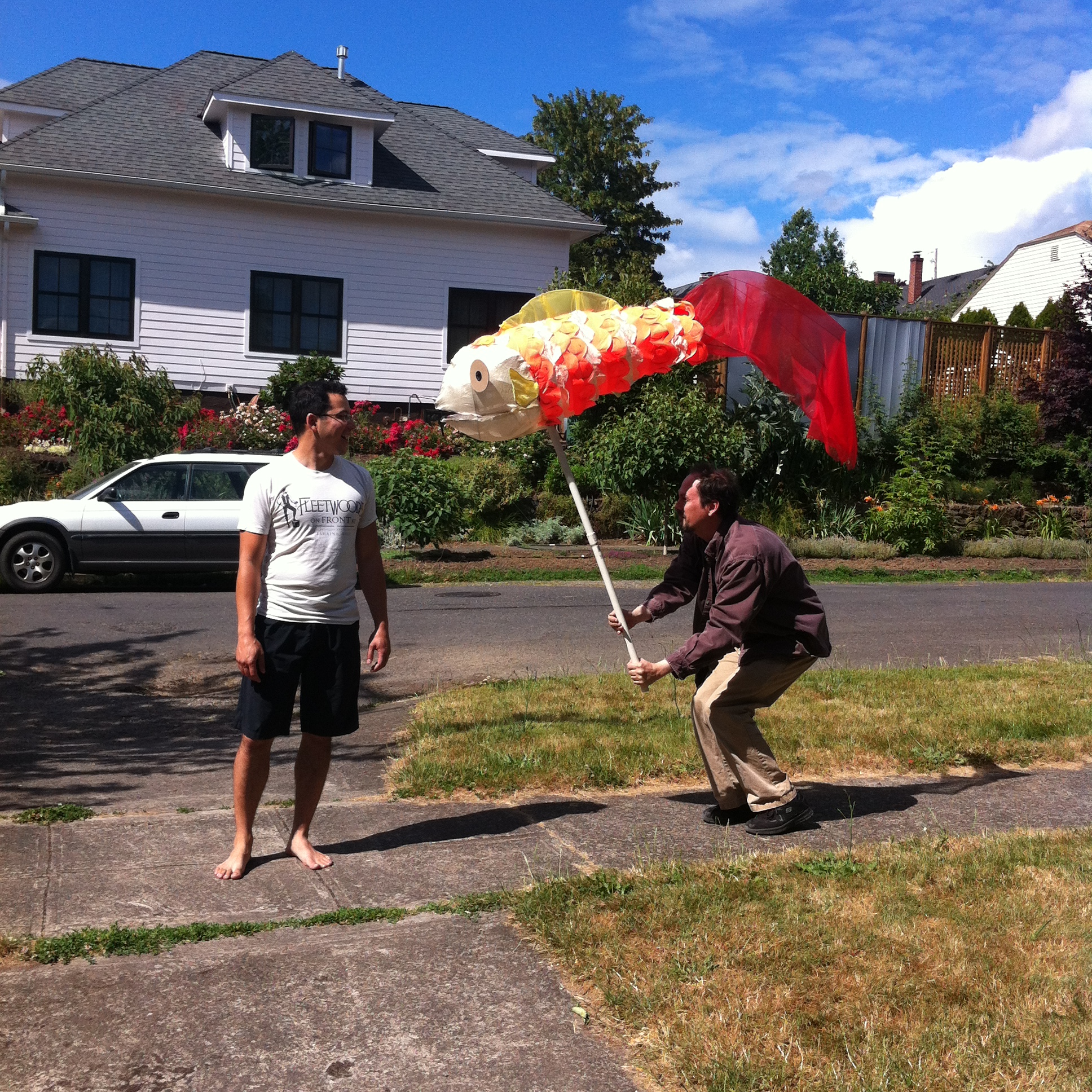
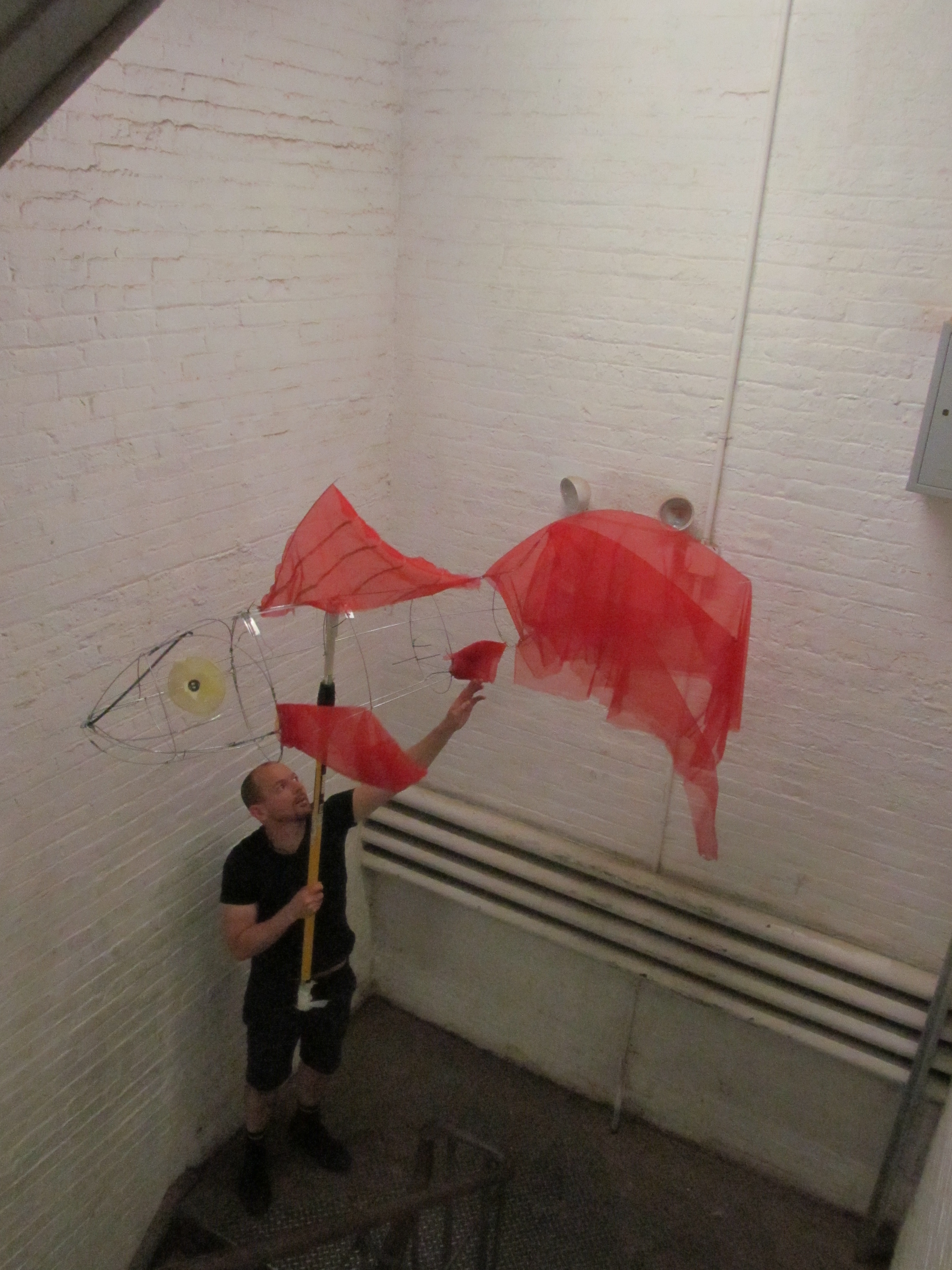
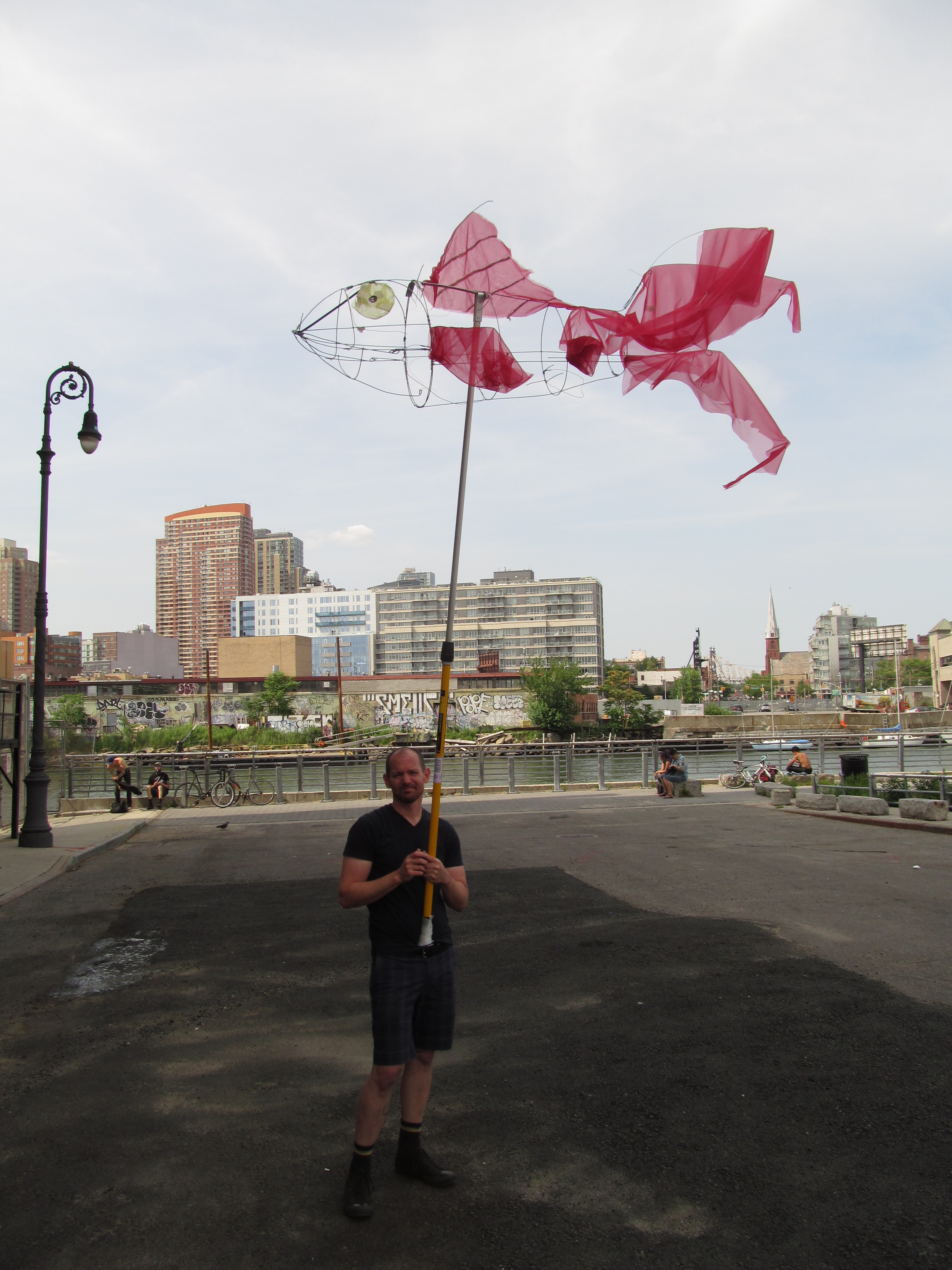
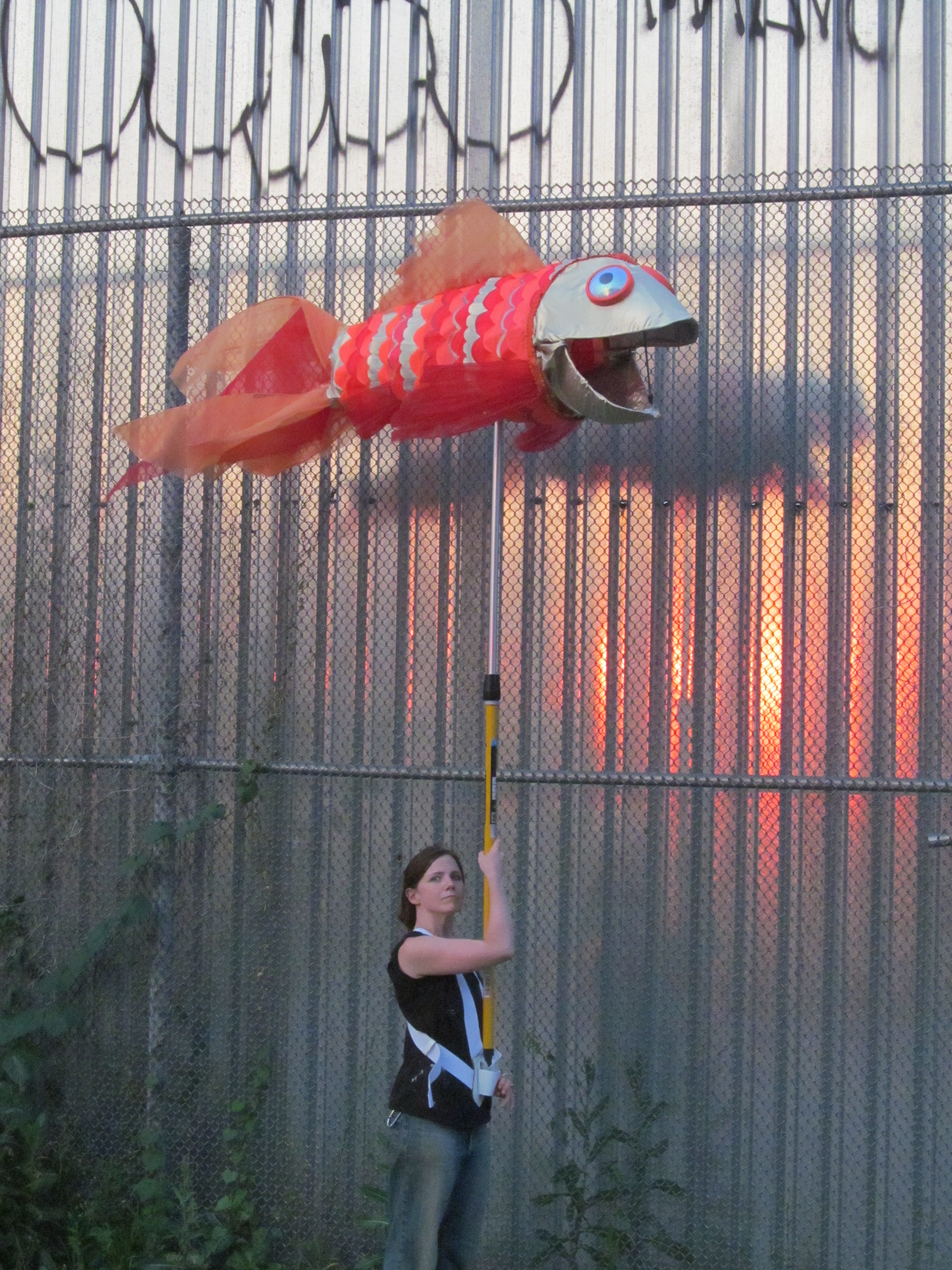
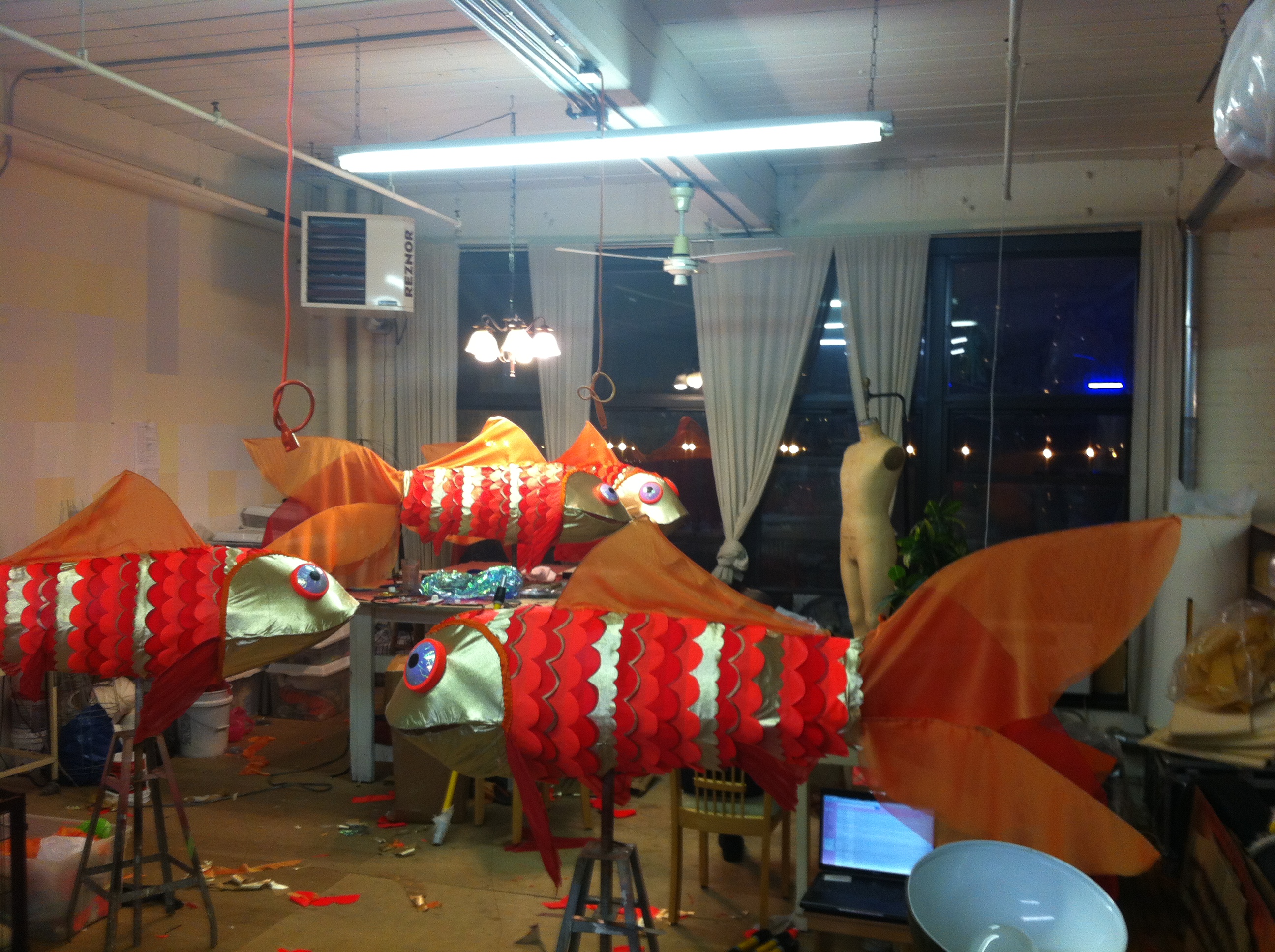
This summer I was hired by a production company in New York City to make five large fish puppets. This is their story.
Prototype
The puppets needed were to be operated outdoors by a single person over the course of a few days. I needed to find a lightweight solution that could respond to wind and other variations in weather.
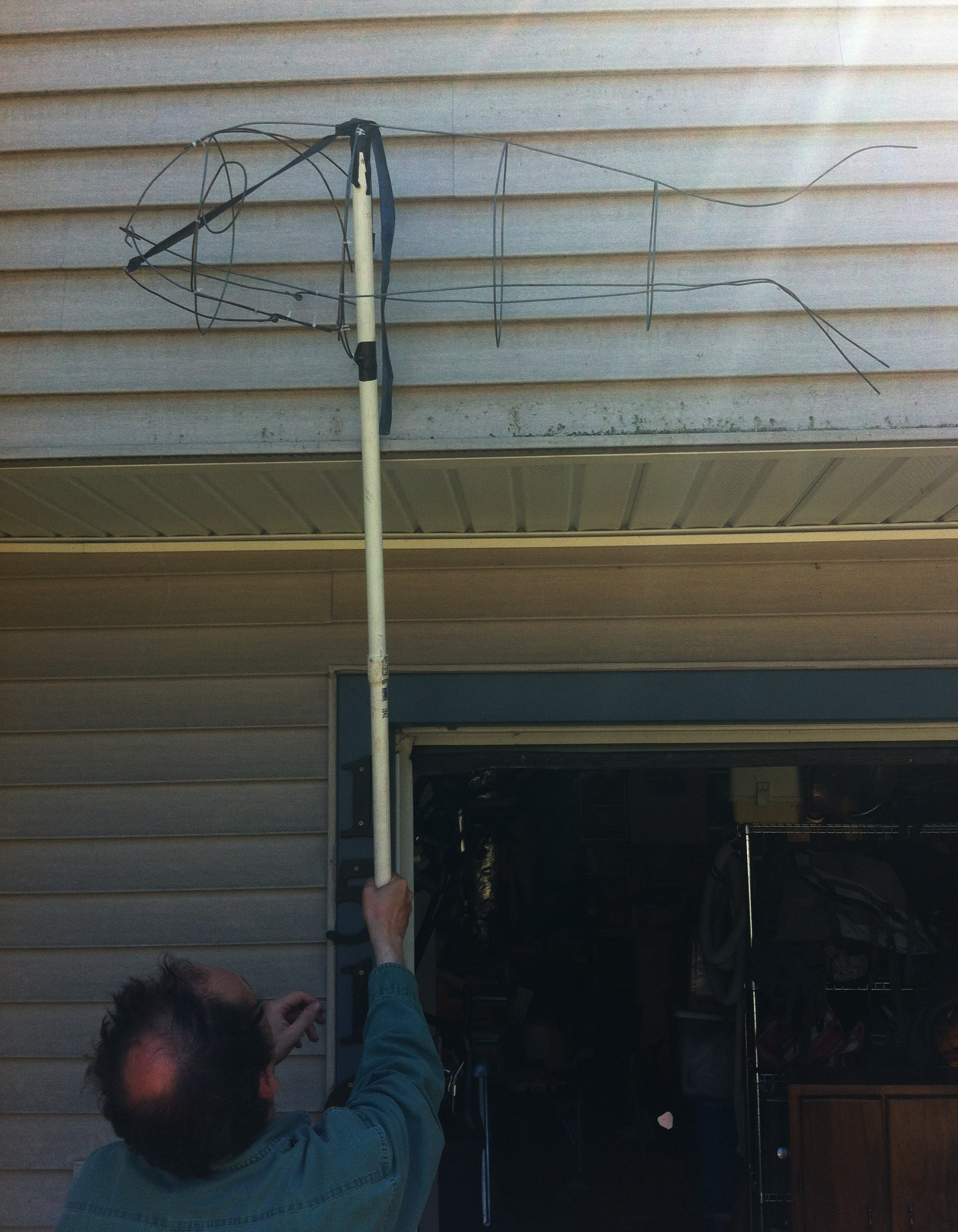
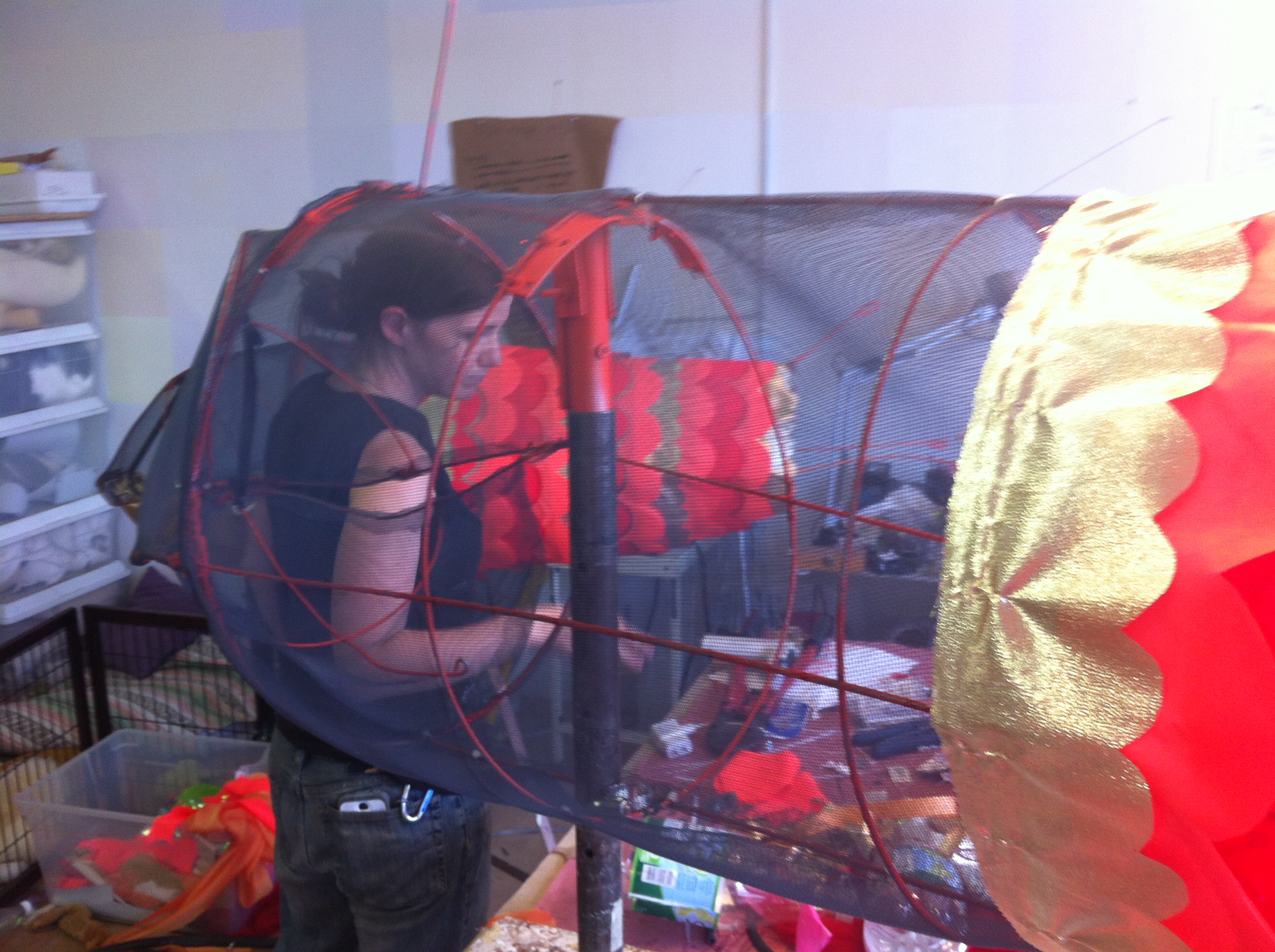
I started with the idea of using conical tomato cages as the base for the body. Also pictured: Bill.
The build time was short, and I only had a week to make a prototype before heading to New York for other work. I asked Bill Holznagel, an excellent builder and performer for Tears of Joy and his own company Signal Light (if you live in Portland and haven’t seen their show Playtime with Pete and Randy, do yourself a favor).
An emphasis was put on the desired “flowiness” of the puppets by the client. In an earlier test, I’d looked to find that element with a combination of materials and performance. It’s show here in shadow, ’cause when you’re videoing your self, you make sacrfices.
Some early variations of fabric choices and fin designs.Every puppet has certain elements that serve to create it’s personality and reflect emotion. The opening mouth and the eyes proved to be very importantThese puppets were intended to interact with people at a large party, so it was necessary to test the scale (no pun intended).
Finalizing the Design
In New York, I worked with my friend Sam Hill, a fellow mask maker and sculptor, to finish the build. We worked in studio in Greenpoint to figure out the final details.
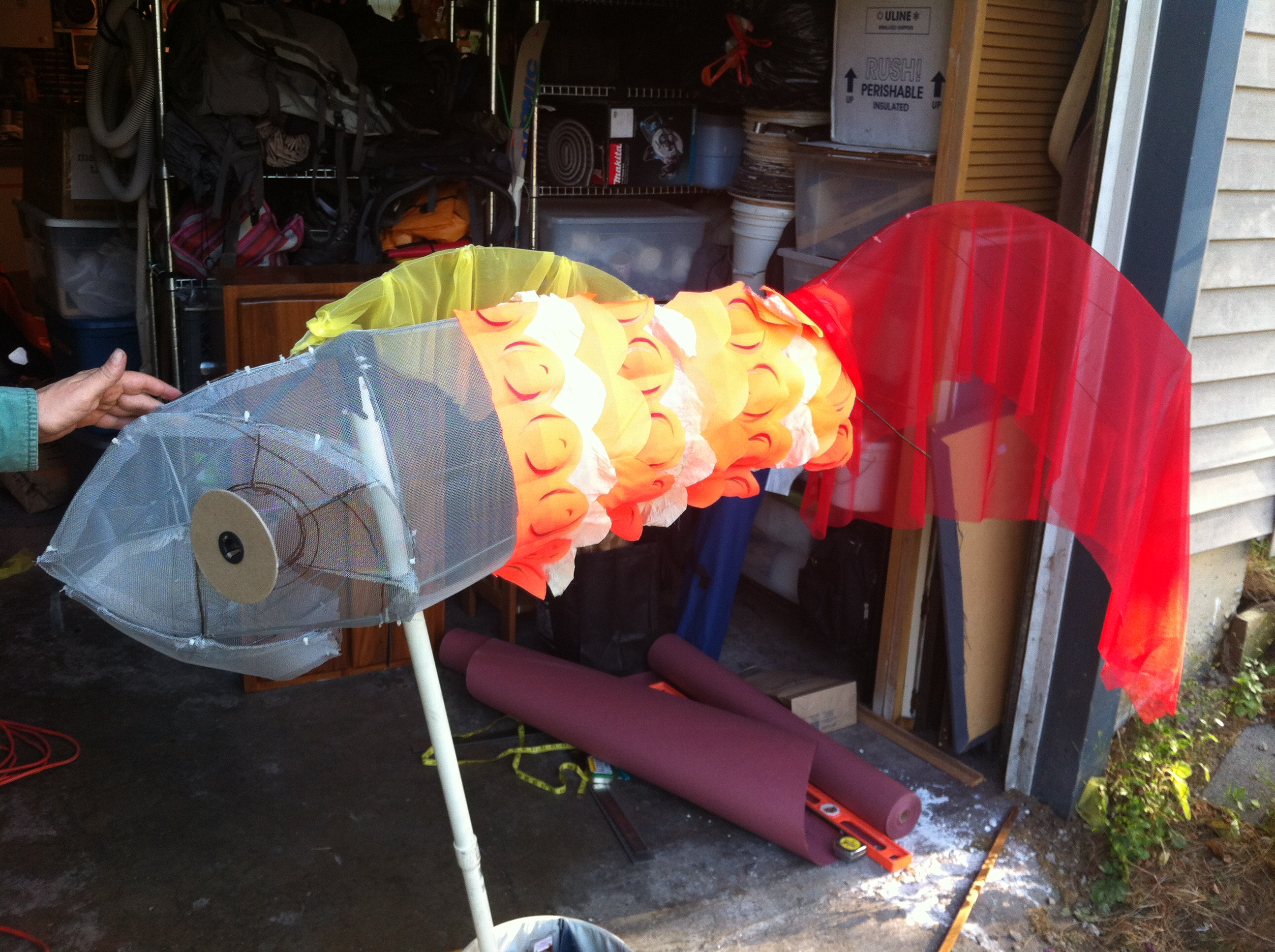
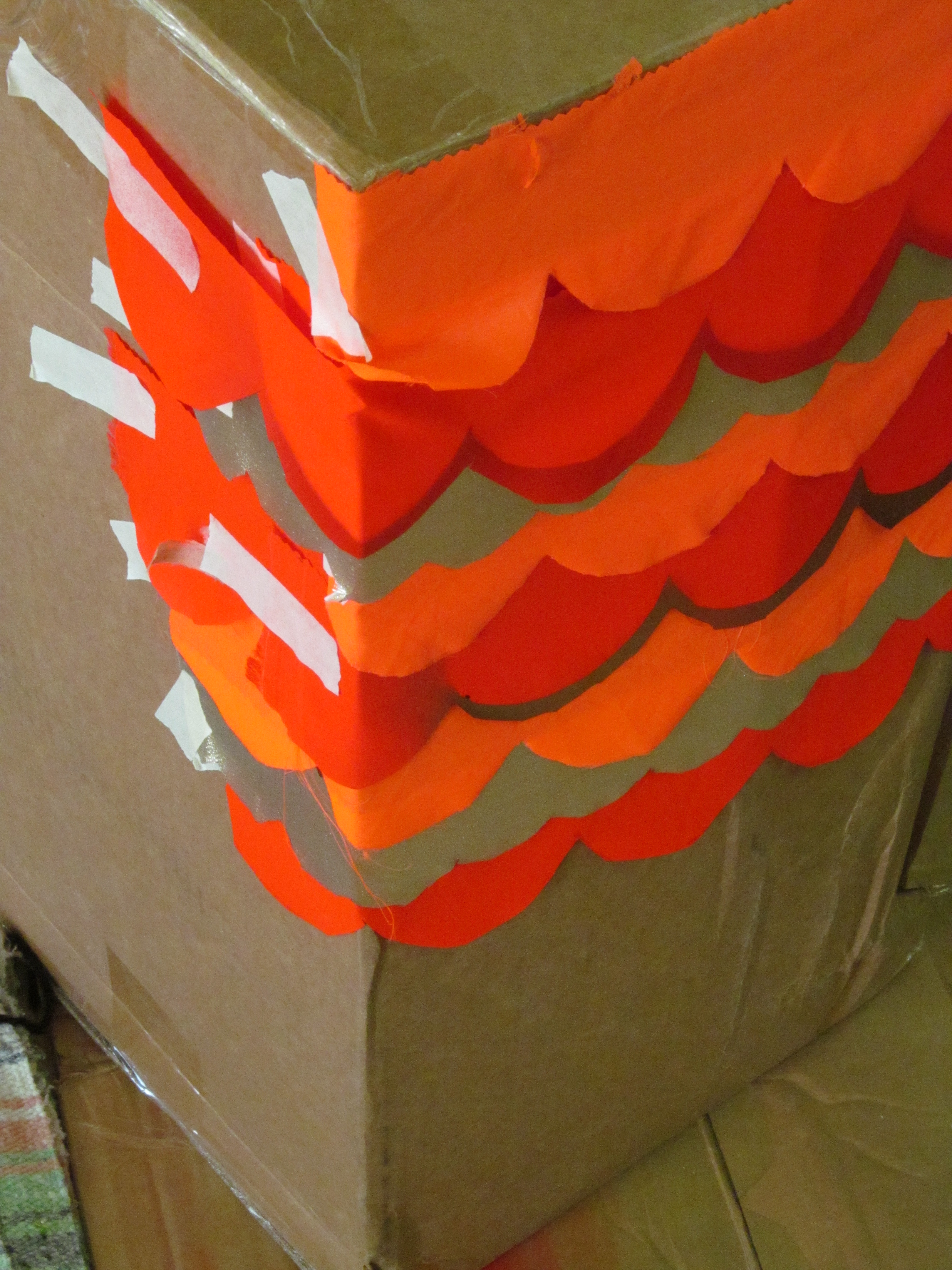
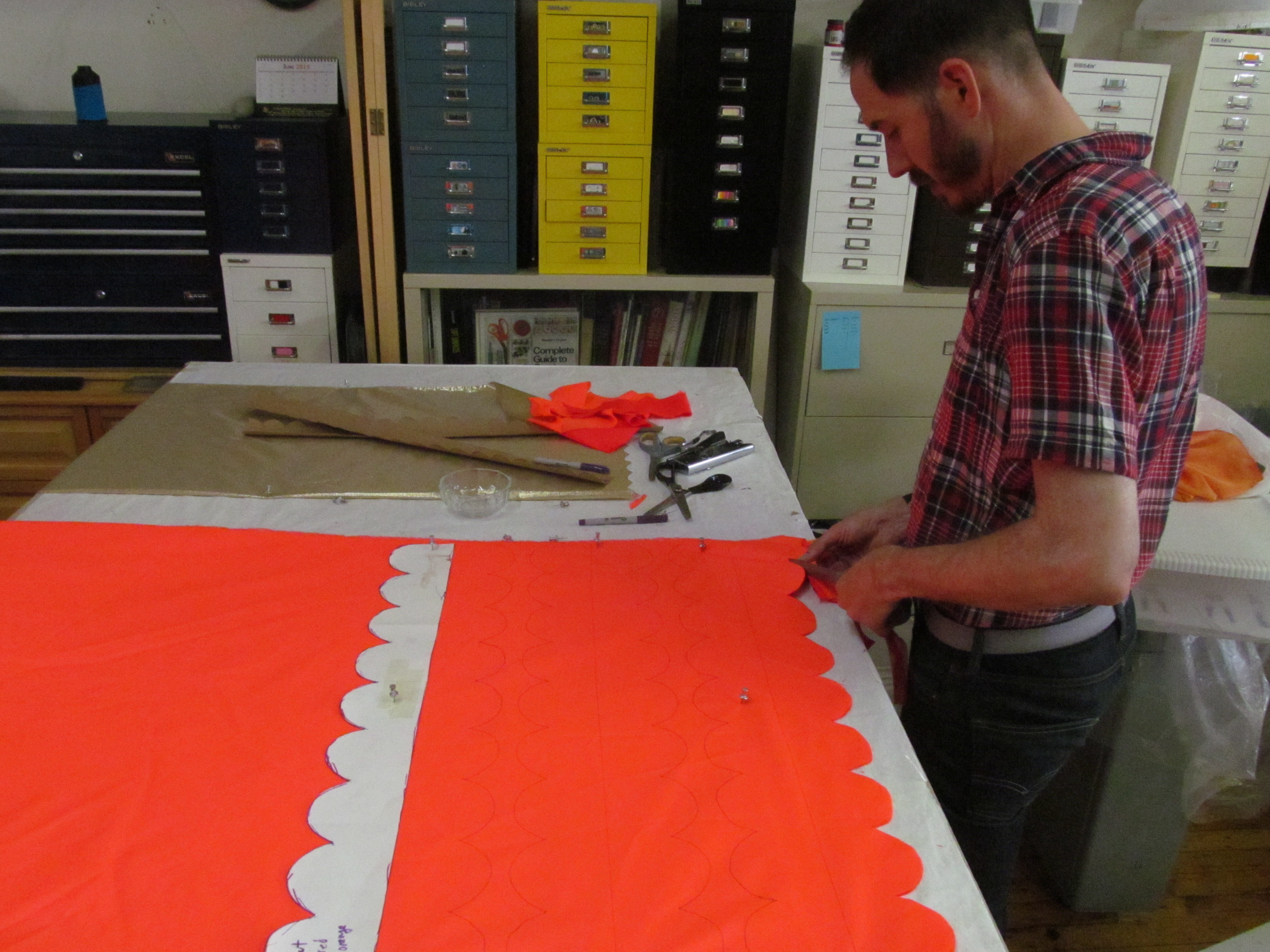
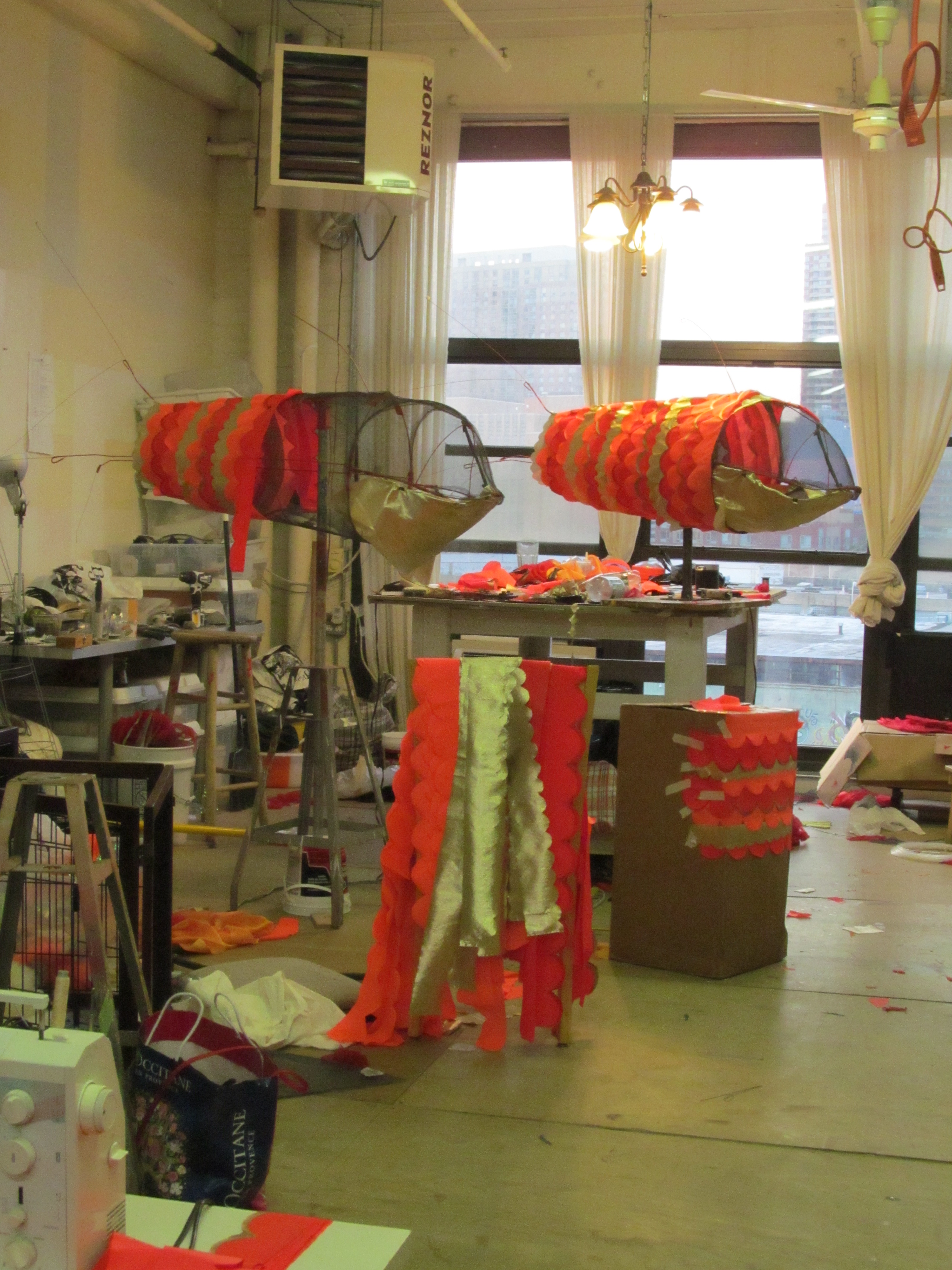
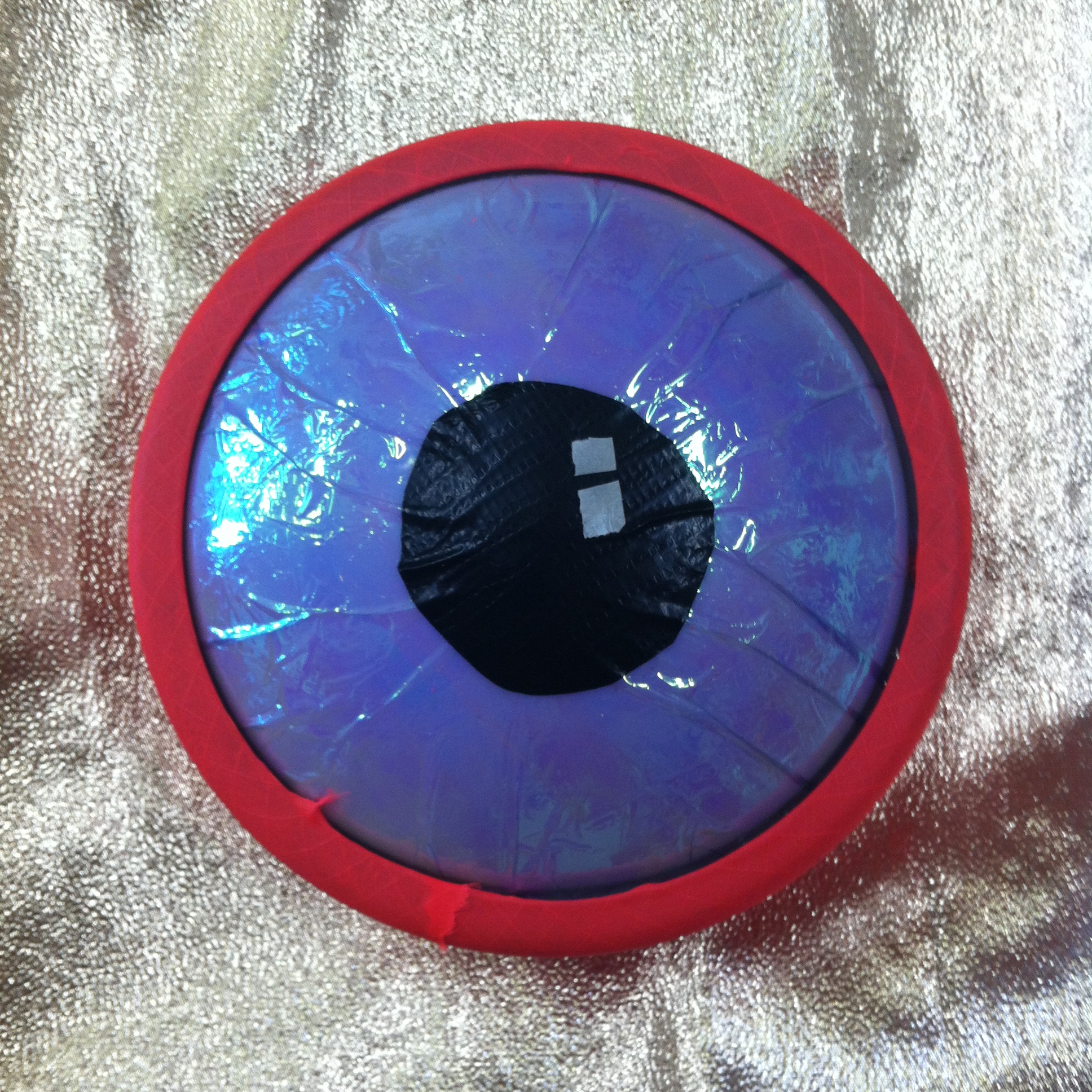
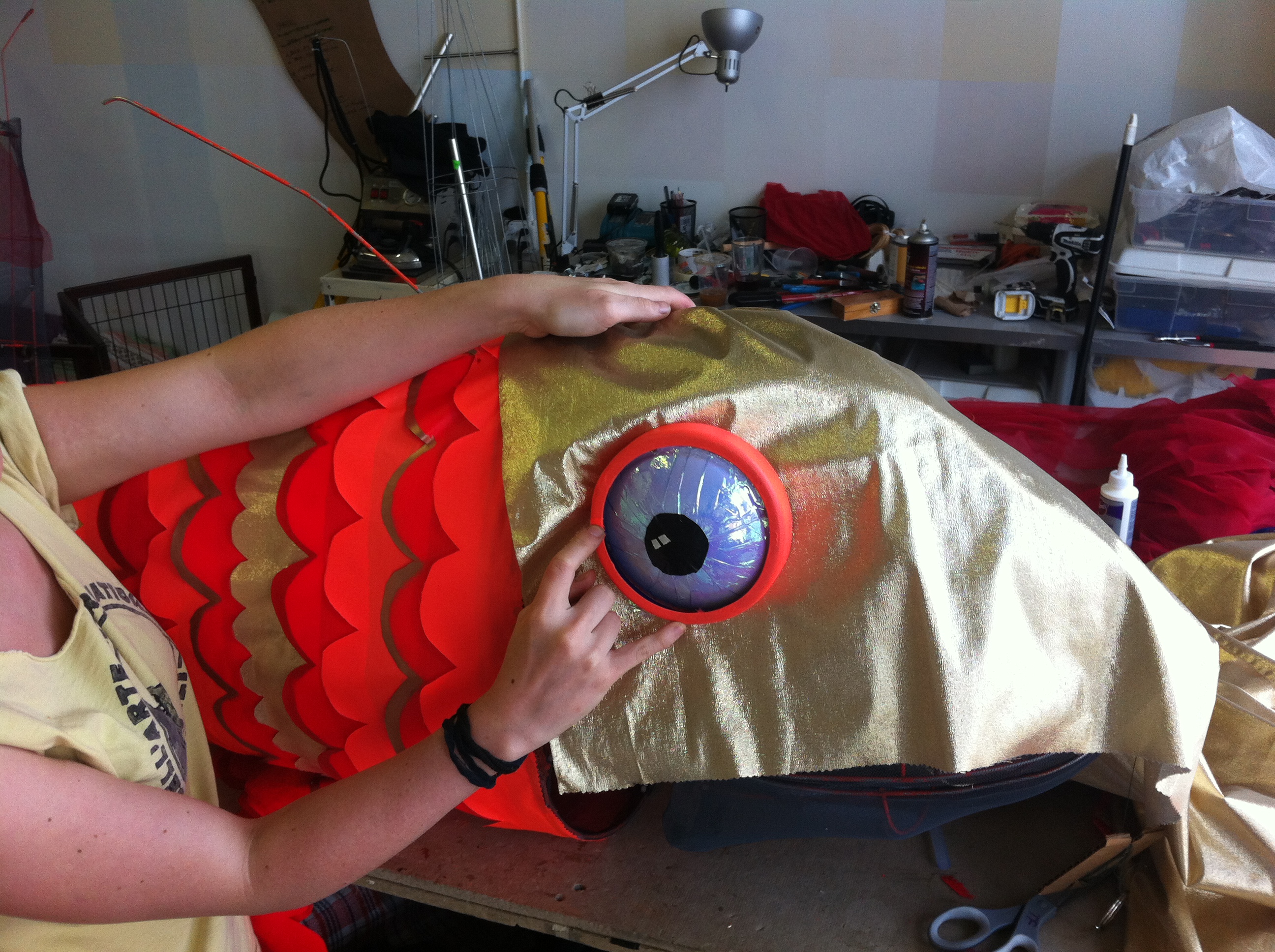
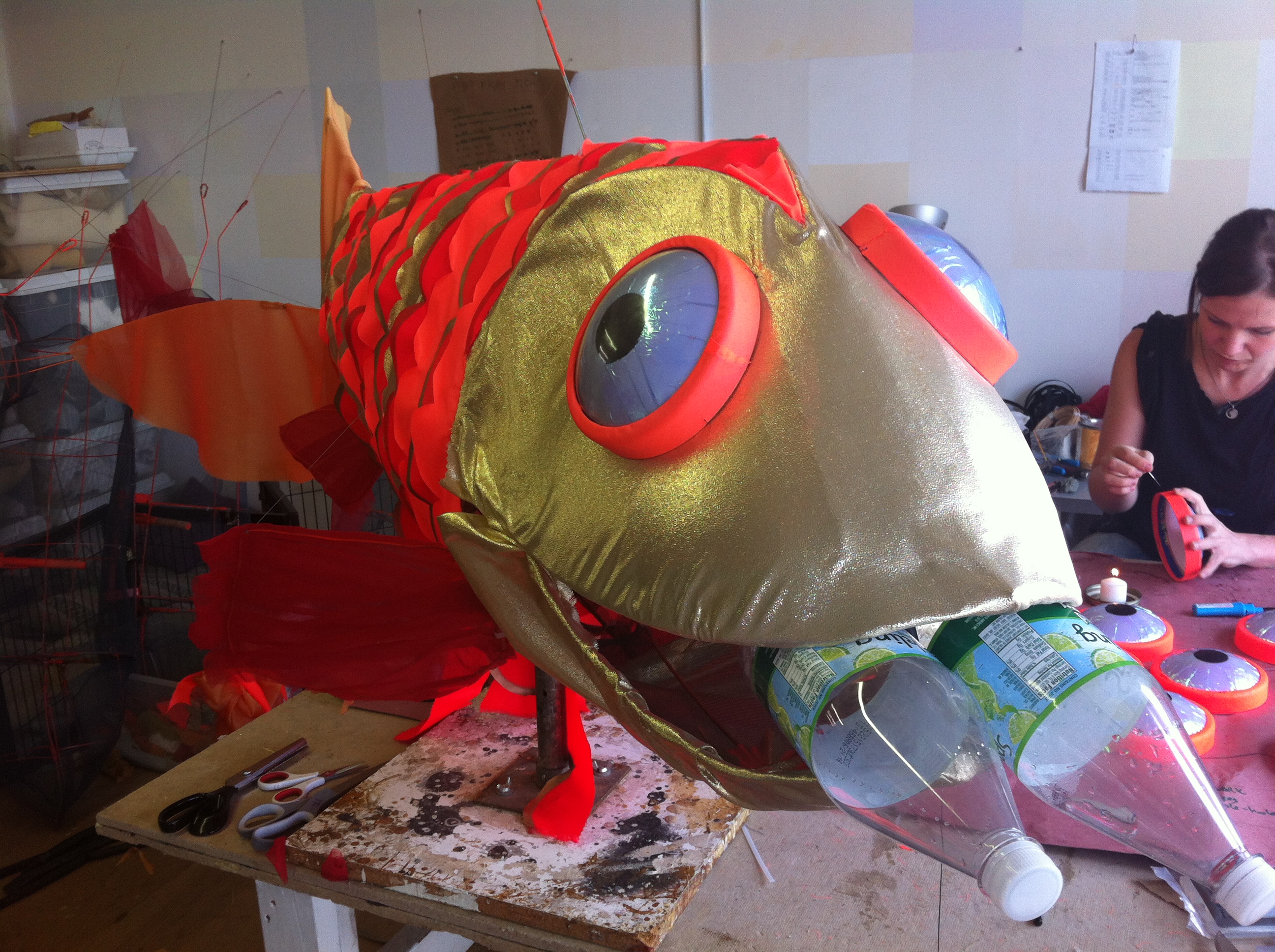
My first note was to make the fish bigger. It’s close to 6′ from mouth to tail.It took awhile to get the tail to stabilize.Trying out some scale patterns.Cutting lots of fabric.Fish factoryAttaching the scales required strategy. We still needed to be able to access various parts of the puppet during construction and throughout its life.The puppet needed to have a strong eye that could potentially let light pass through.Testing for optimal position: one that would reveal a sense of character and a clarity of focus.Finishing the attachment of the gold lamé around the mouth. It was a thirsty sort of day.
A few more tests…
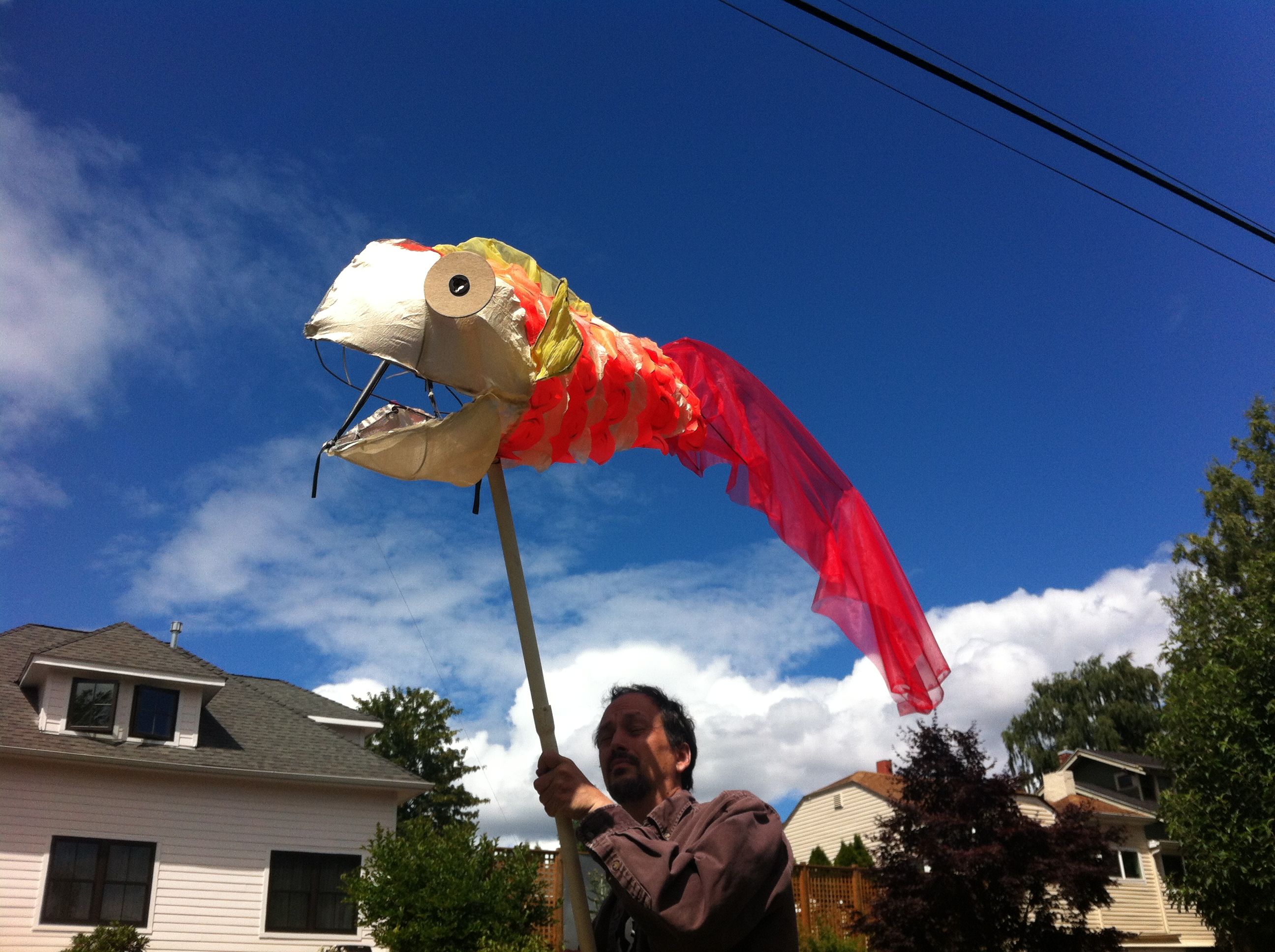
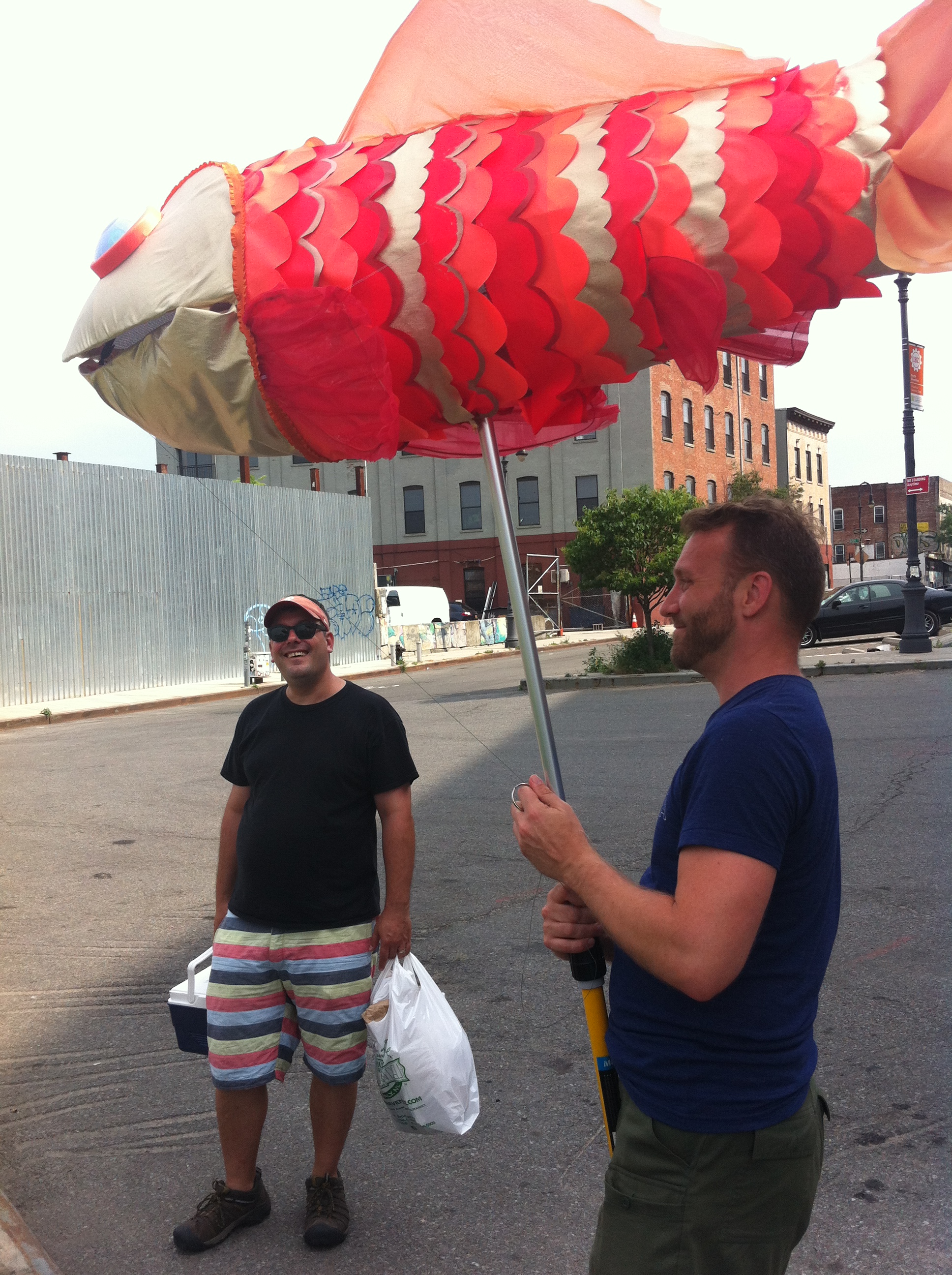
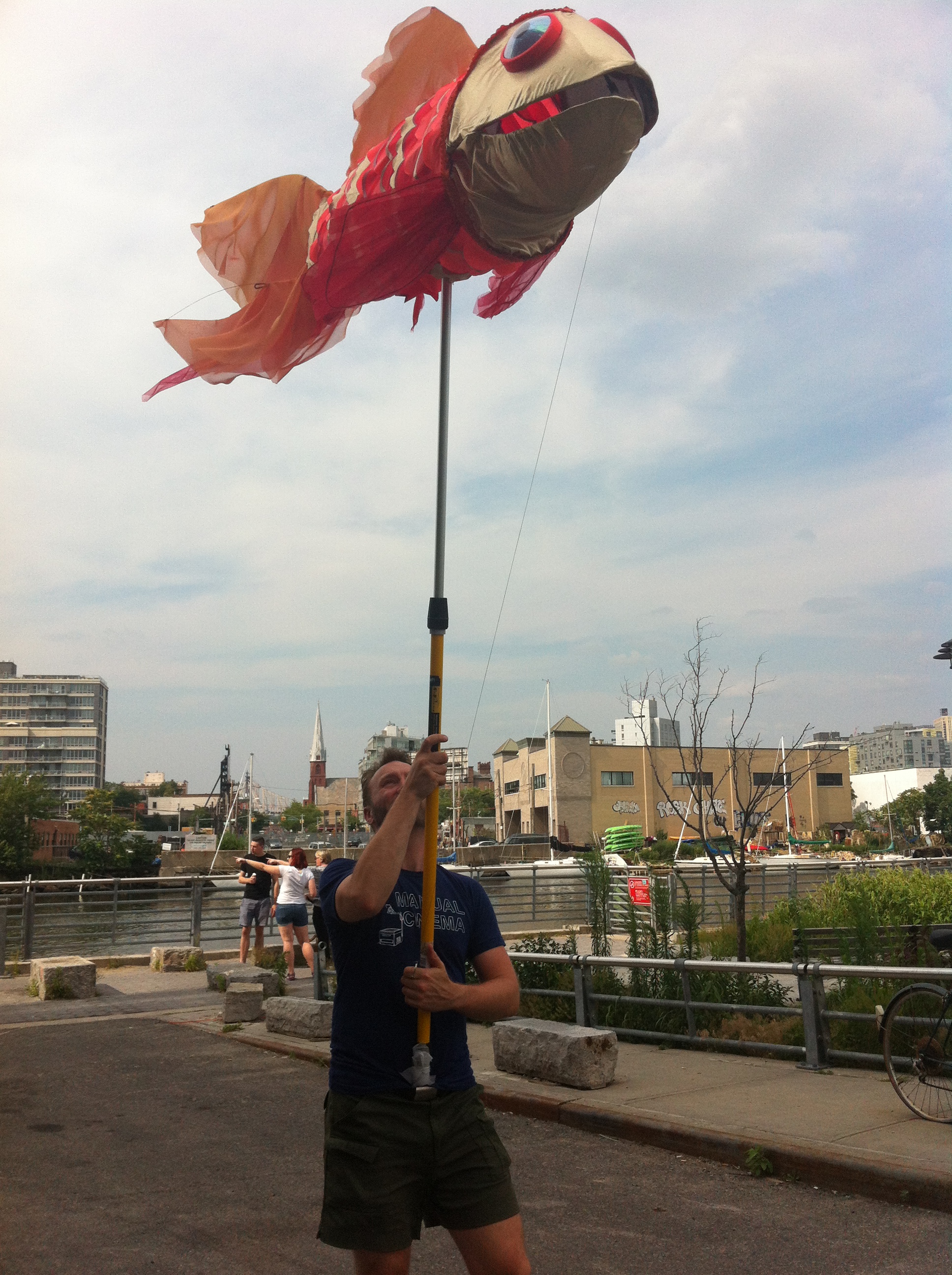
We took the first puppet out to see how it moved in the outdoors. You can tell from the video noise that it was windy day.
But we also got to interact with curious passersby, which was an unexpected benefit 🙂Many times during the tests, I had to watch to catch all the details I wanted to adjust. It was fun to finally get to be a puppeteer too.Checking the puppet at the studio at sunset. That’s a happy fish.The school awaits pickup.
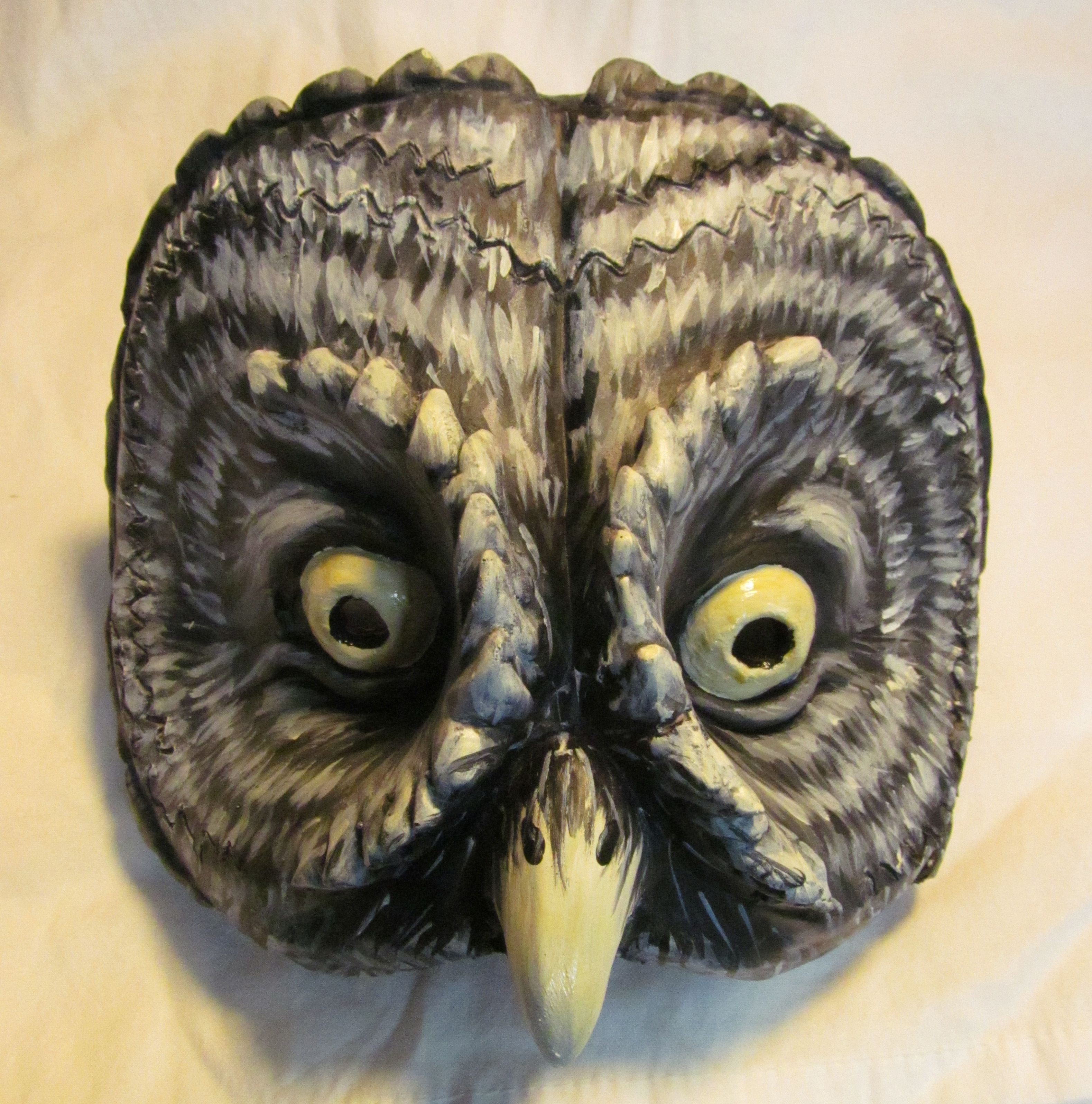
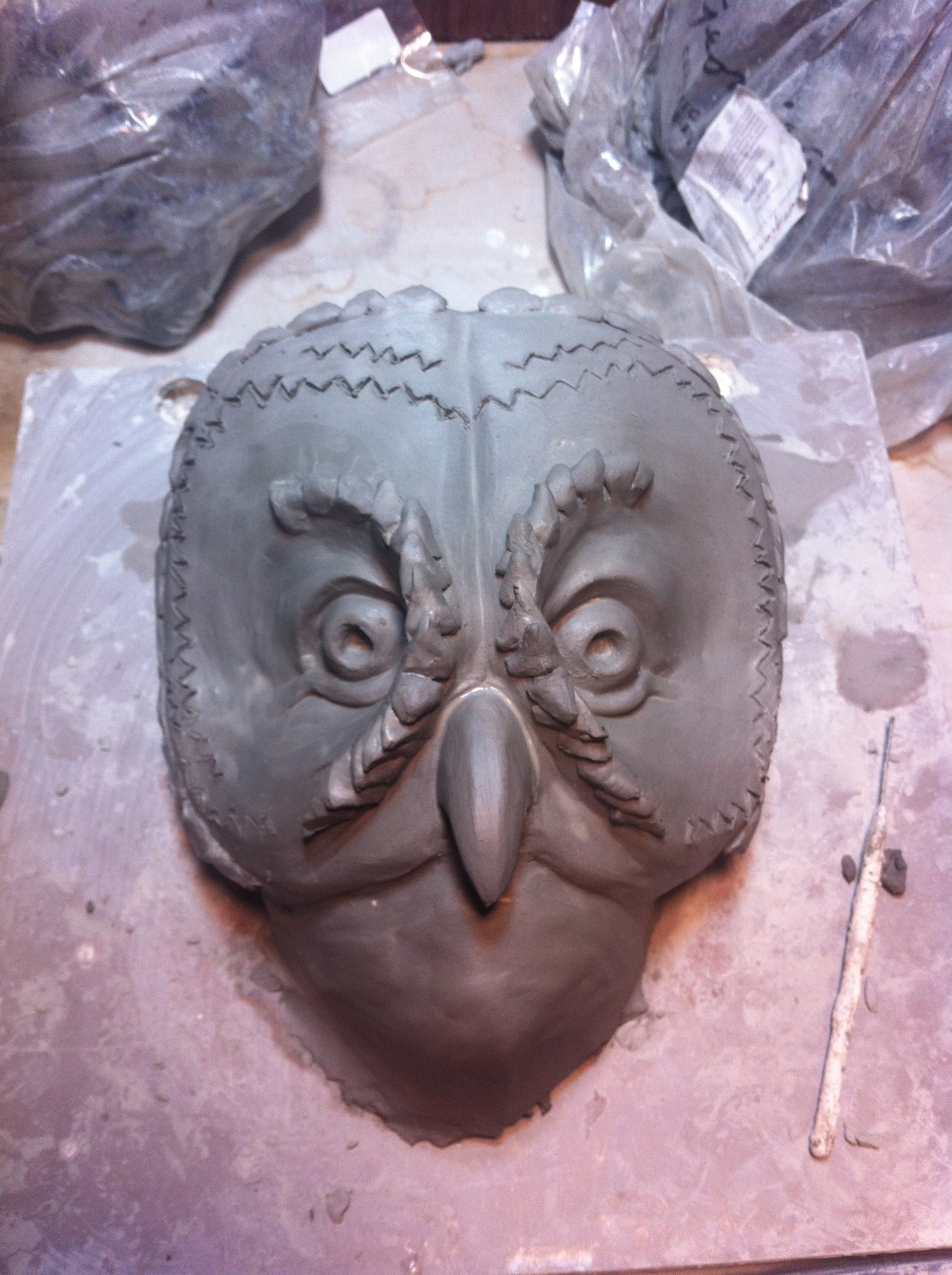
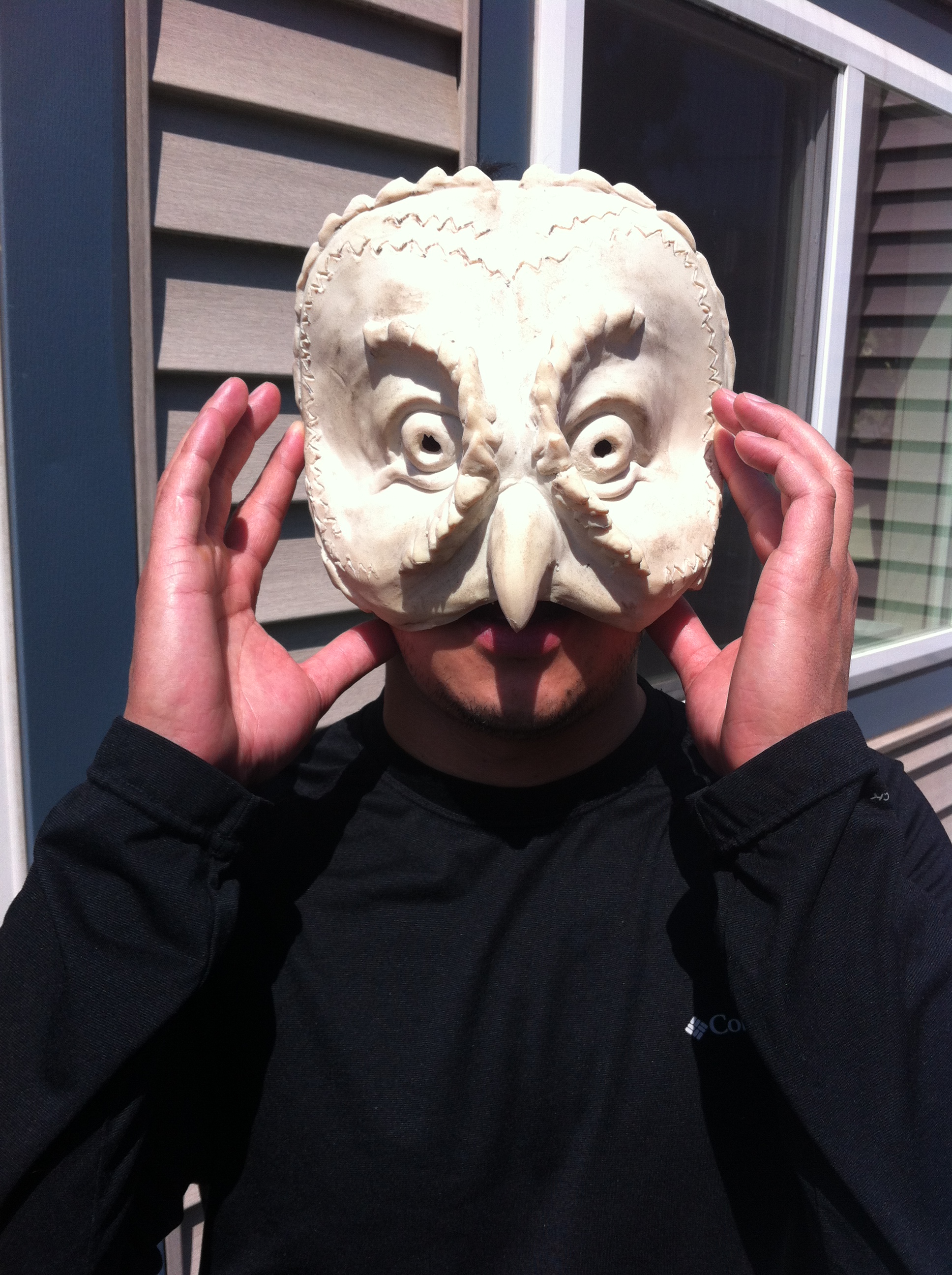
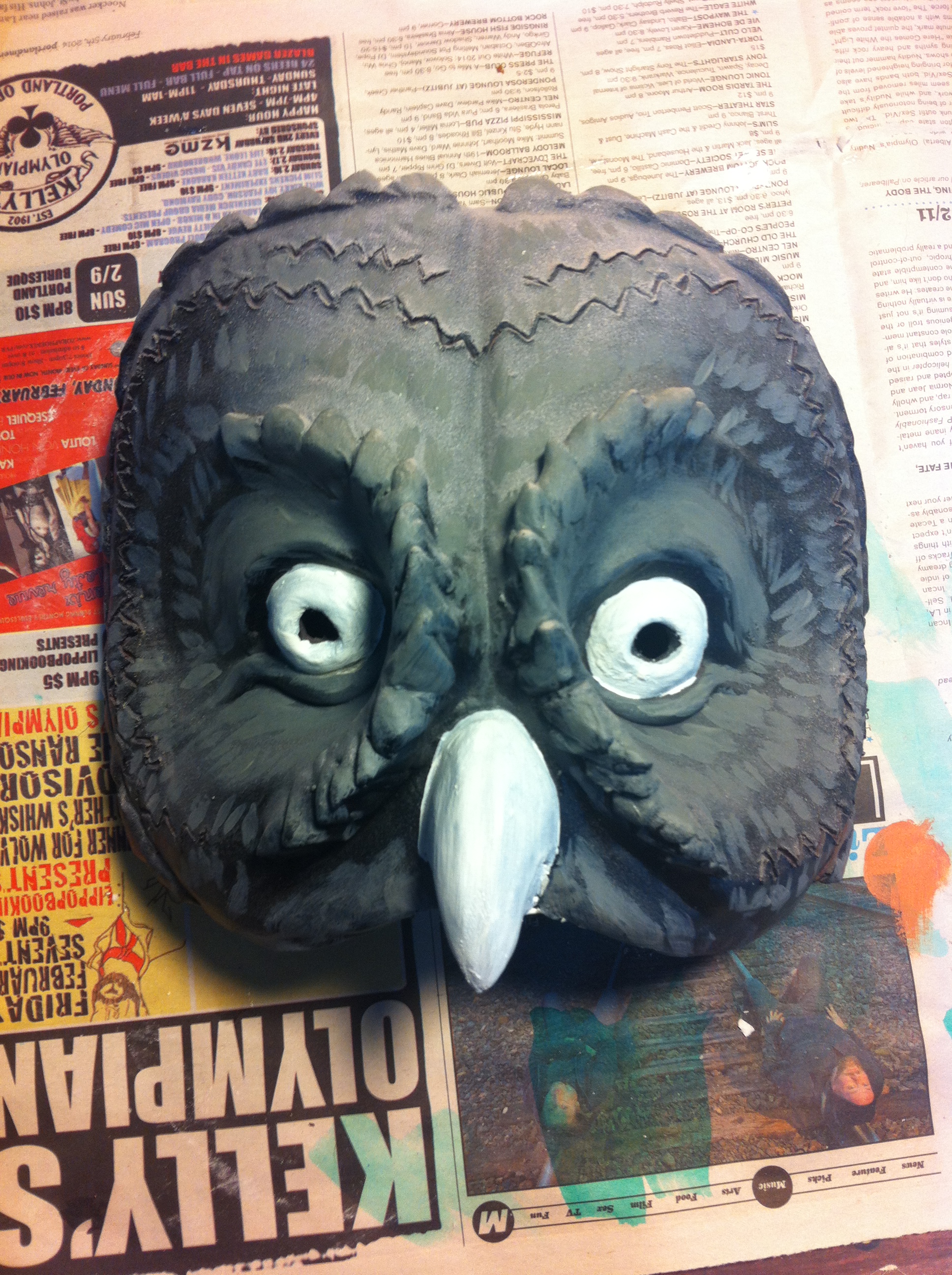
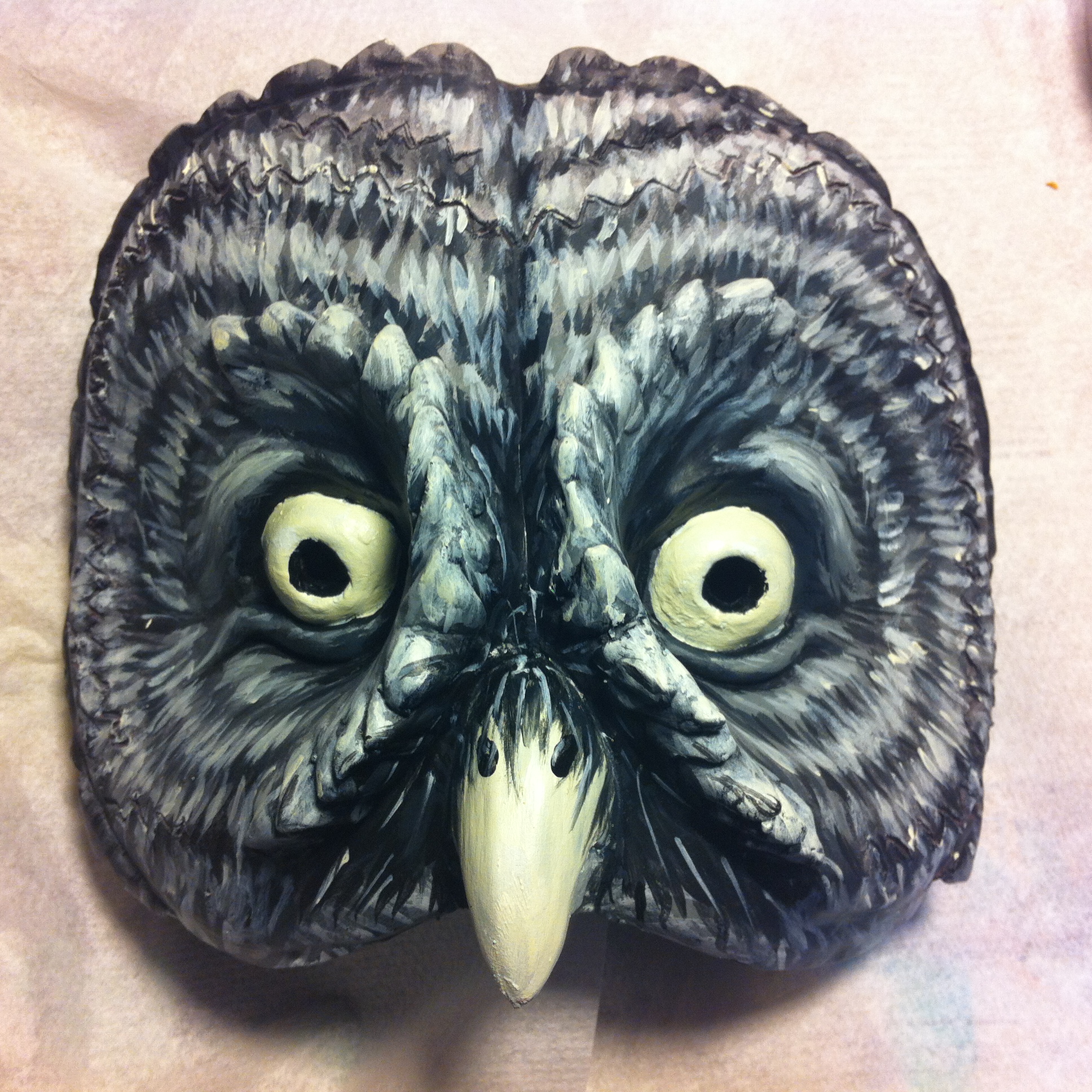
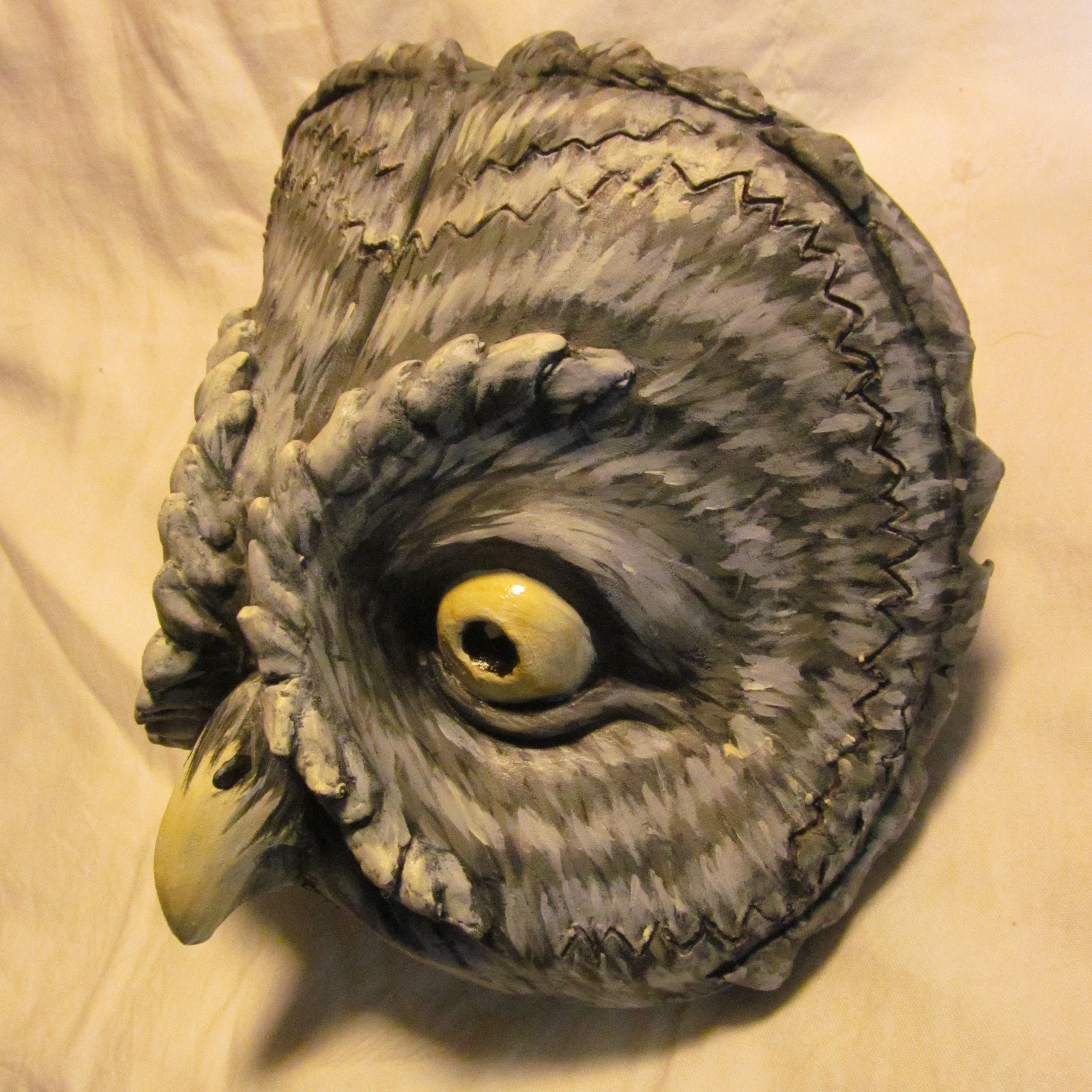
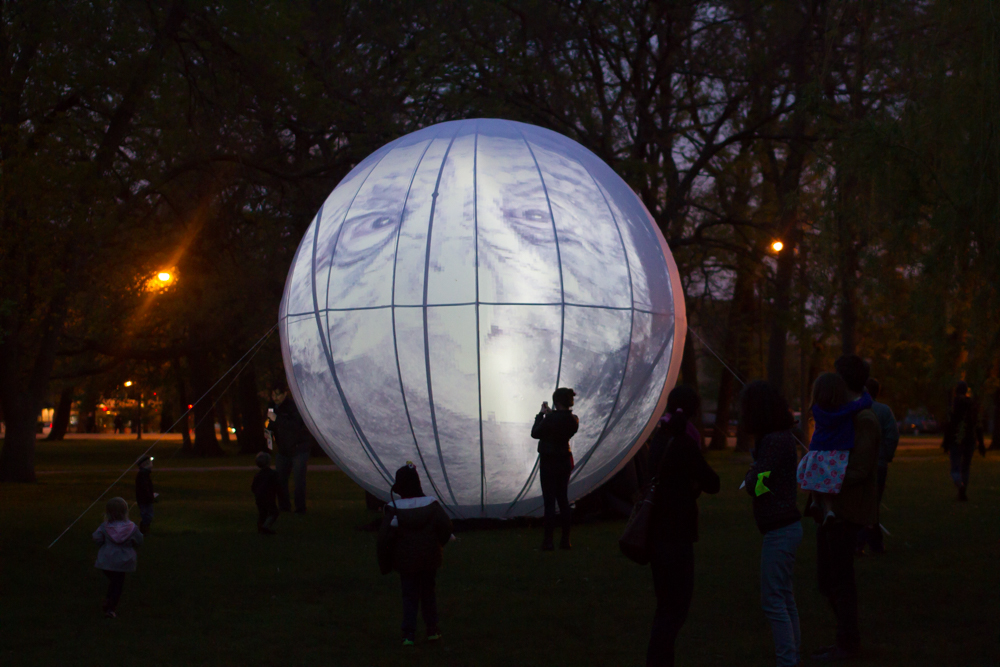
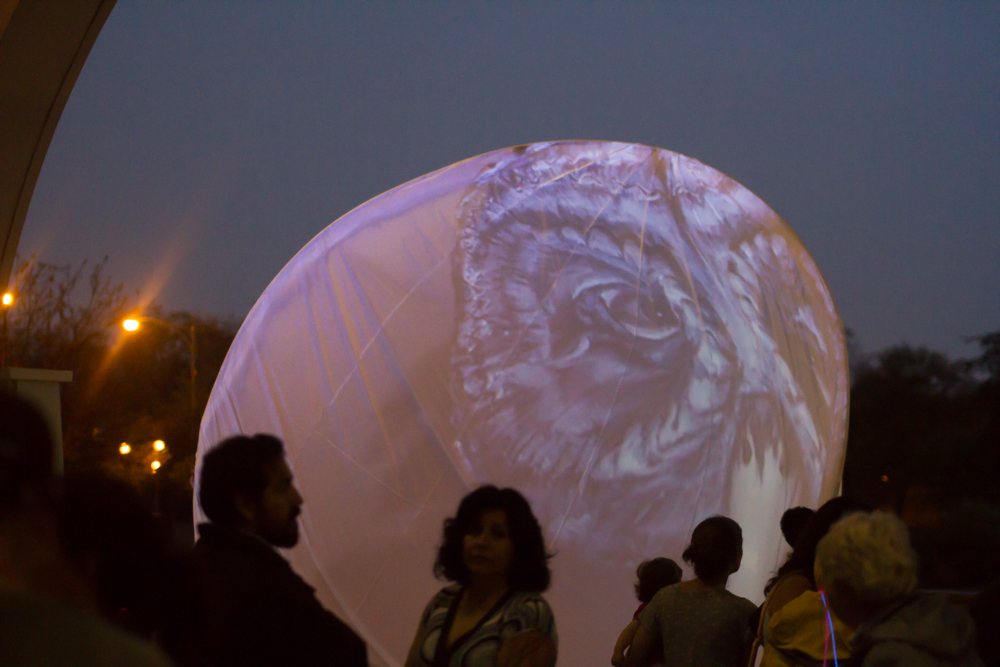
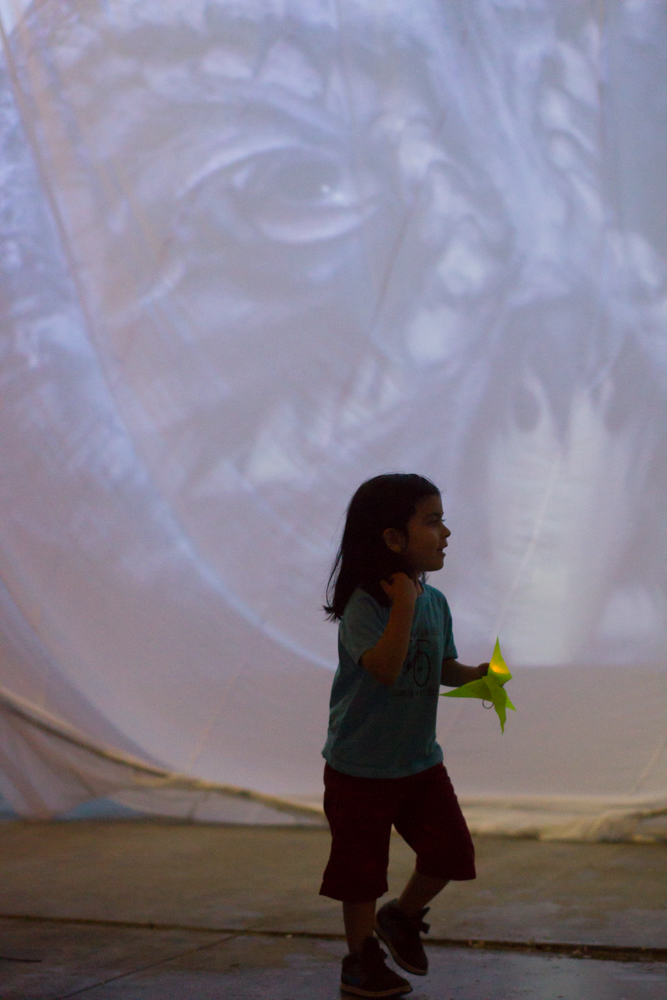
Opera-matic, a collaborative arts group in Chicago, contacted me this last spring to make a mask for The Moon on the Lagoon, The community performance featured lullabies and the faces people find in the moon. What a cool idea!
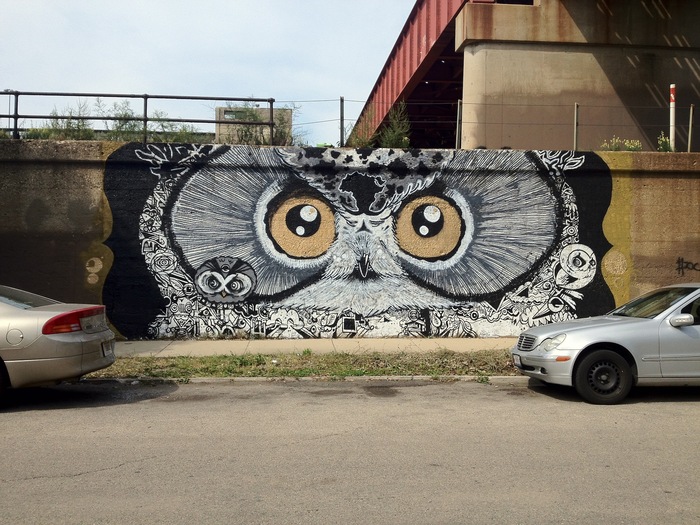
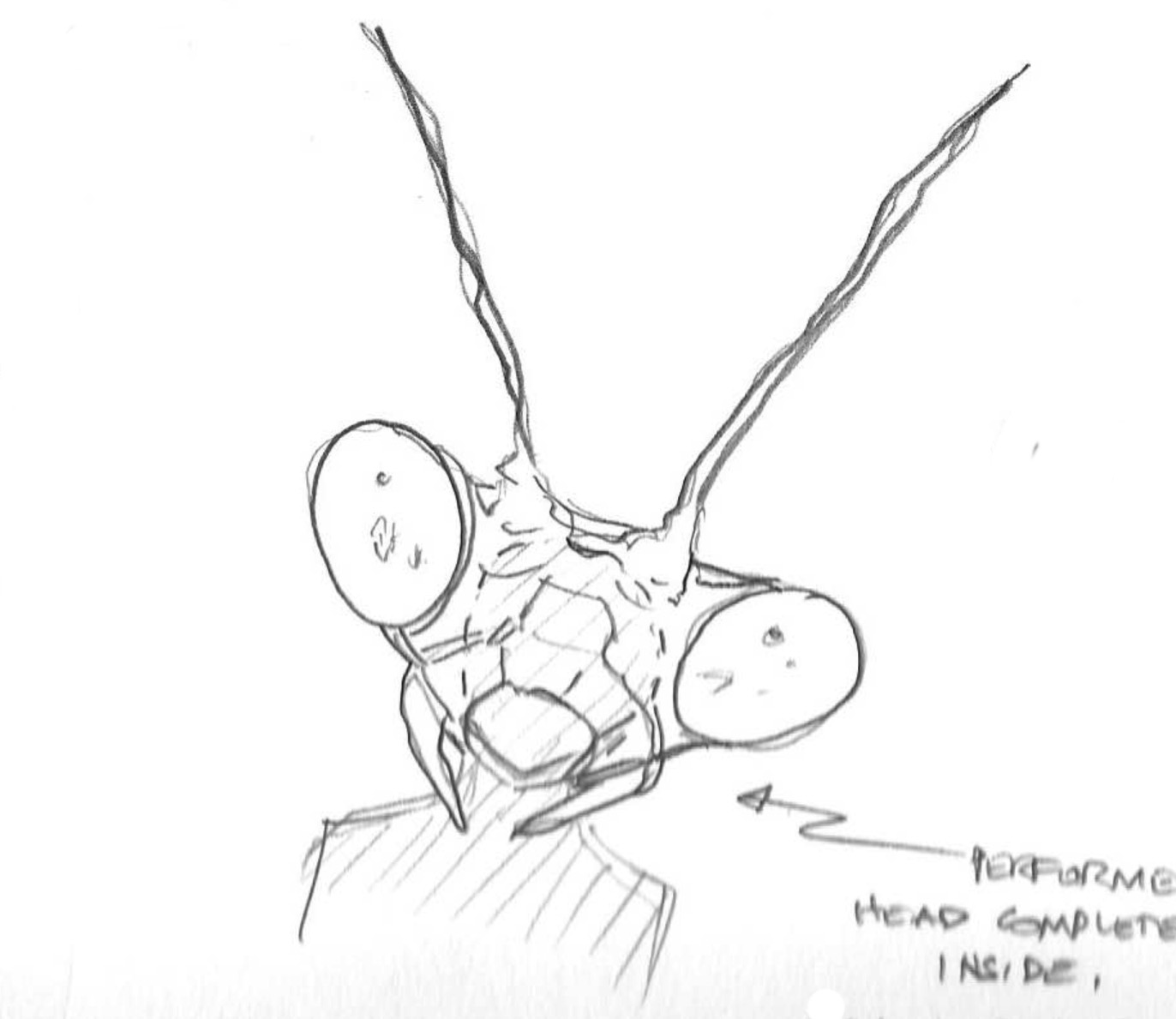
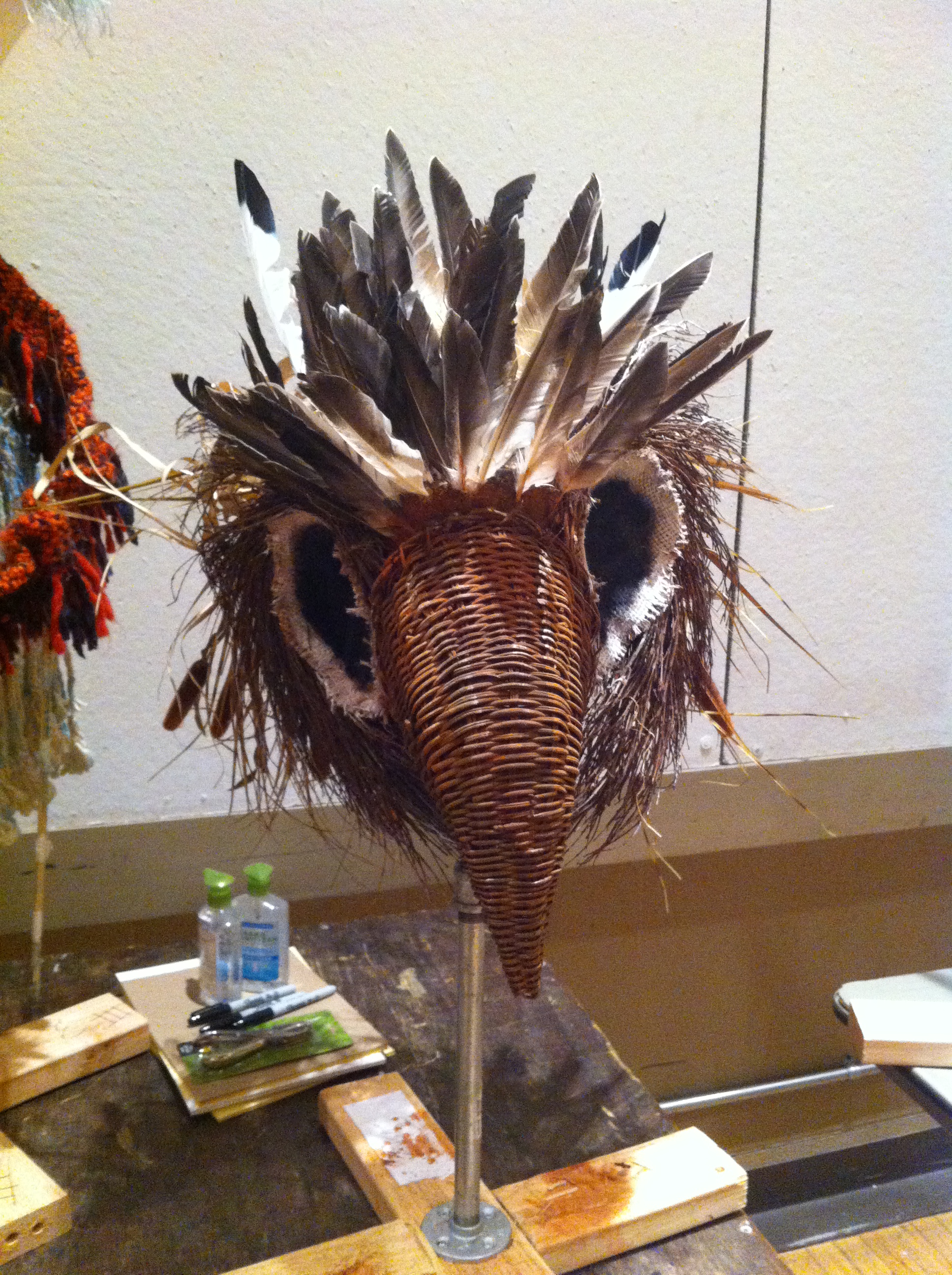
I was sent this image by a group in Chicago commissioning an owl mask.
Part of designing the mask is figuring how it will align with and/or cover the performer’s face. The producers knew they wanted the mouth of the performer available, so I approached it much like a three-quarter character mask.
Inspiration and discovery continue throughout the process of making. Those moments are my favorite in my process. These inspirations can manifest in an accident, through a coincidence of timing, etc.
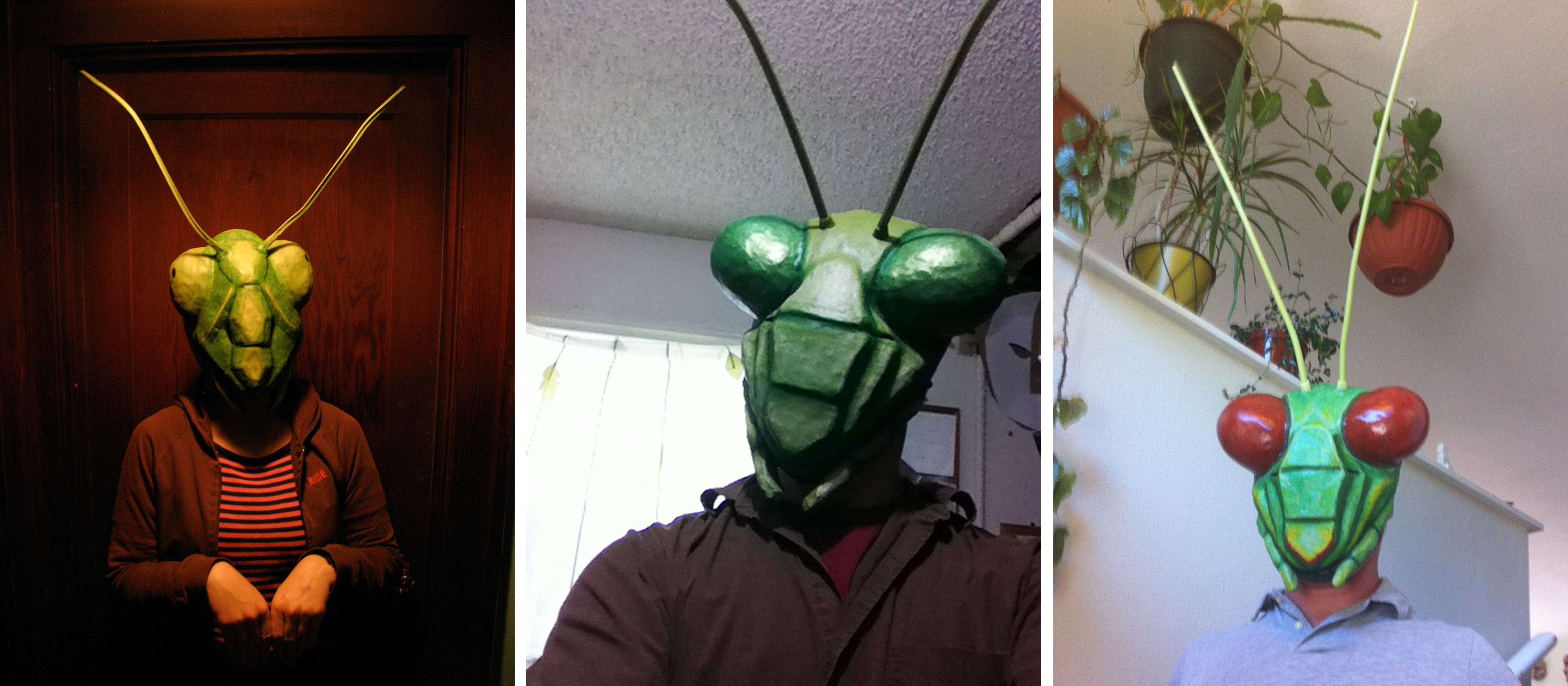
The first version of this mask was made for the Grand Guignolers company in Los Angeles. It was to be human in scale, which directed my choice about how to create visibility for the actor.
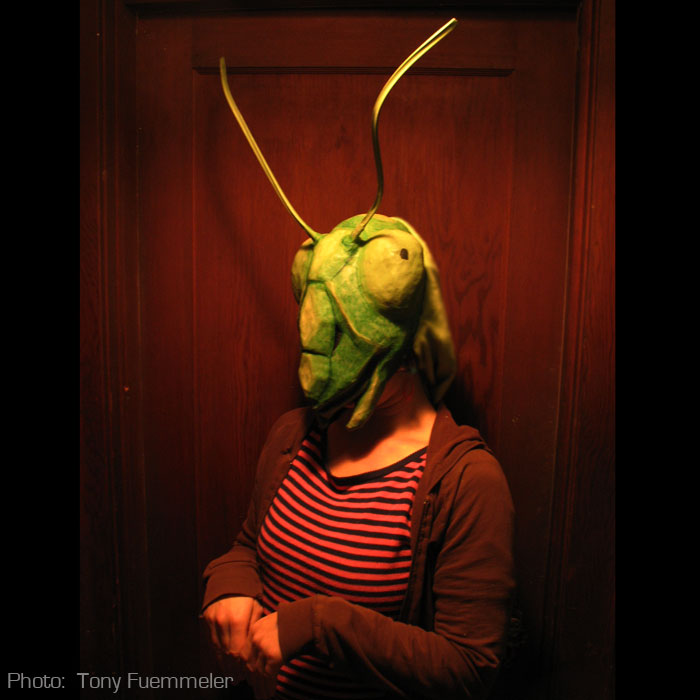
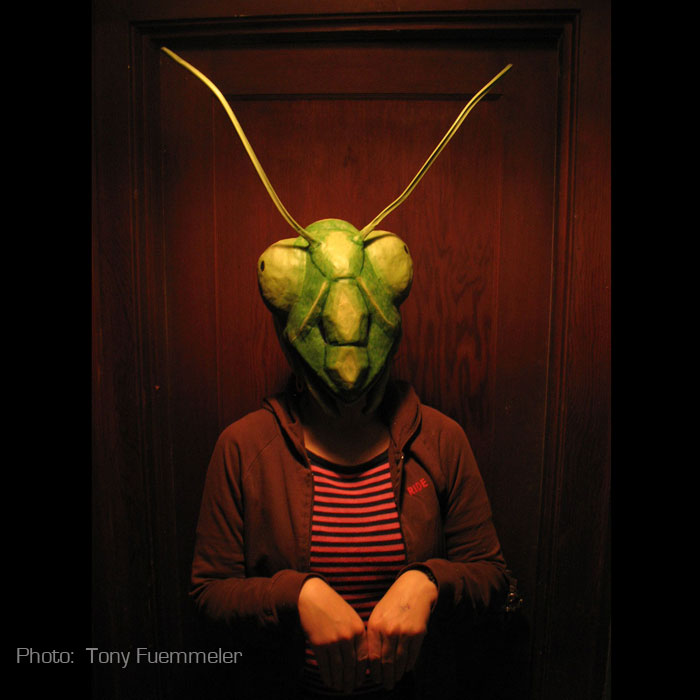
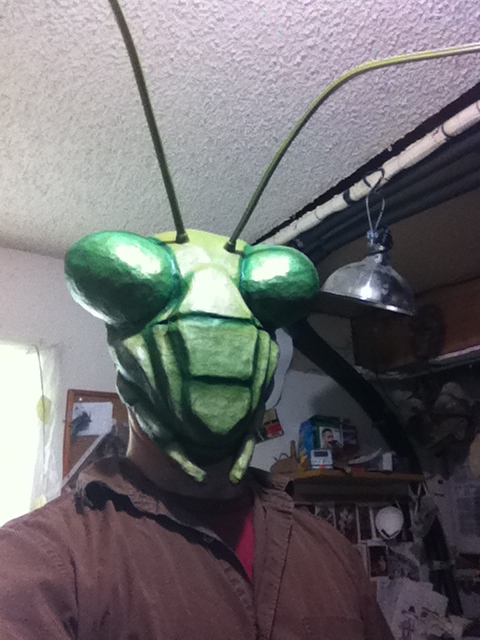
Coy. So coy. Just a like a mantis.Though difficult to see here, the exoskeleton is textured with small brushstrokes to add life to the painting under stage lights.
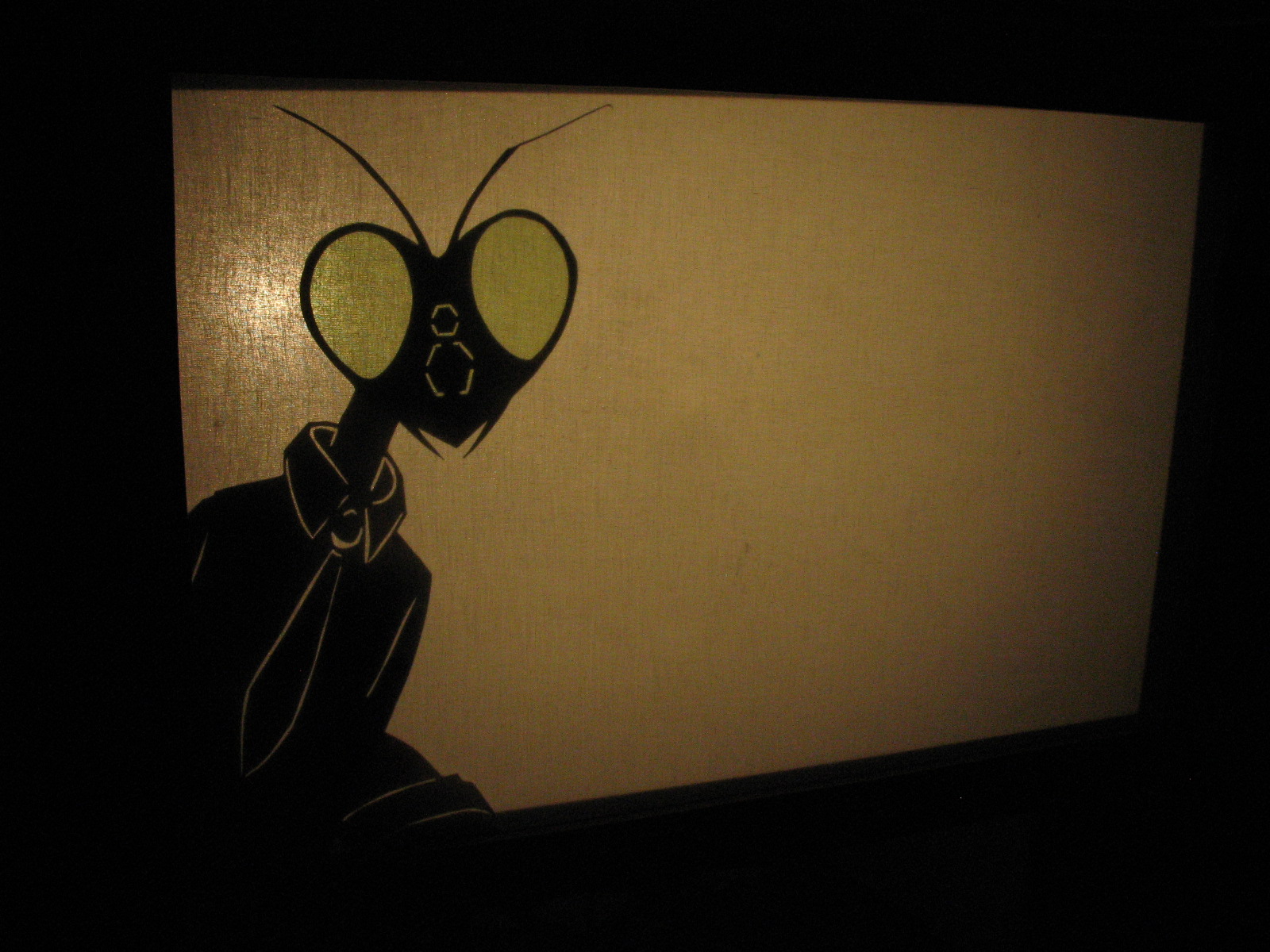
This amazing insect was so inspiring, it started appearing in other projects, like the shadow puppet show bugged, created with Rollin Carlson.
An exploratory image from the making of “bugged”—like so many images, it didn’t make it into the show.
Working in shadow encourages an essentialization of form. It’s interesting to look back and see which elements carry on and evolve through the various iterations. After this further exploration of this form through puppetry, I realized wasn’t quite satisfied with the silhouette. I jumped at the chance to improve it with my next commission for the insect.
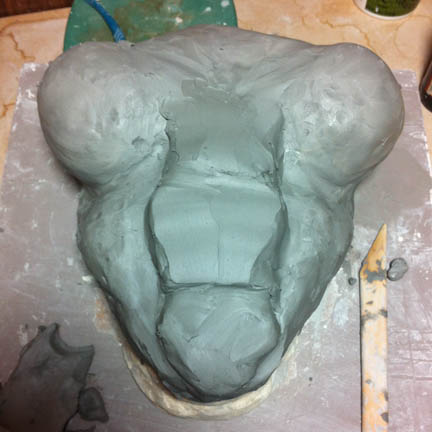
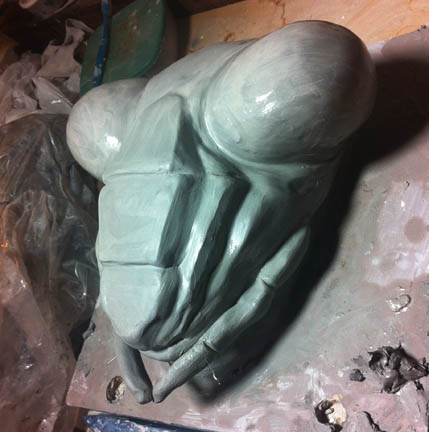
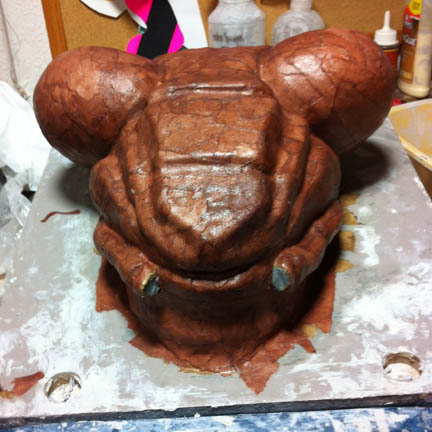
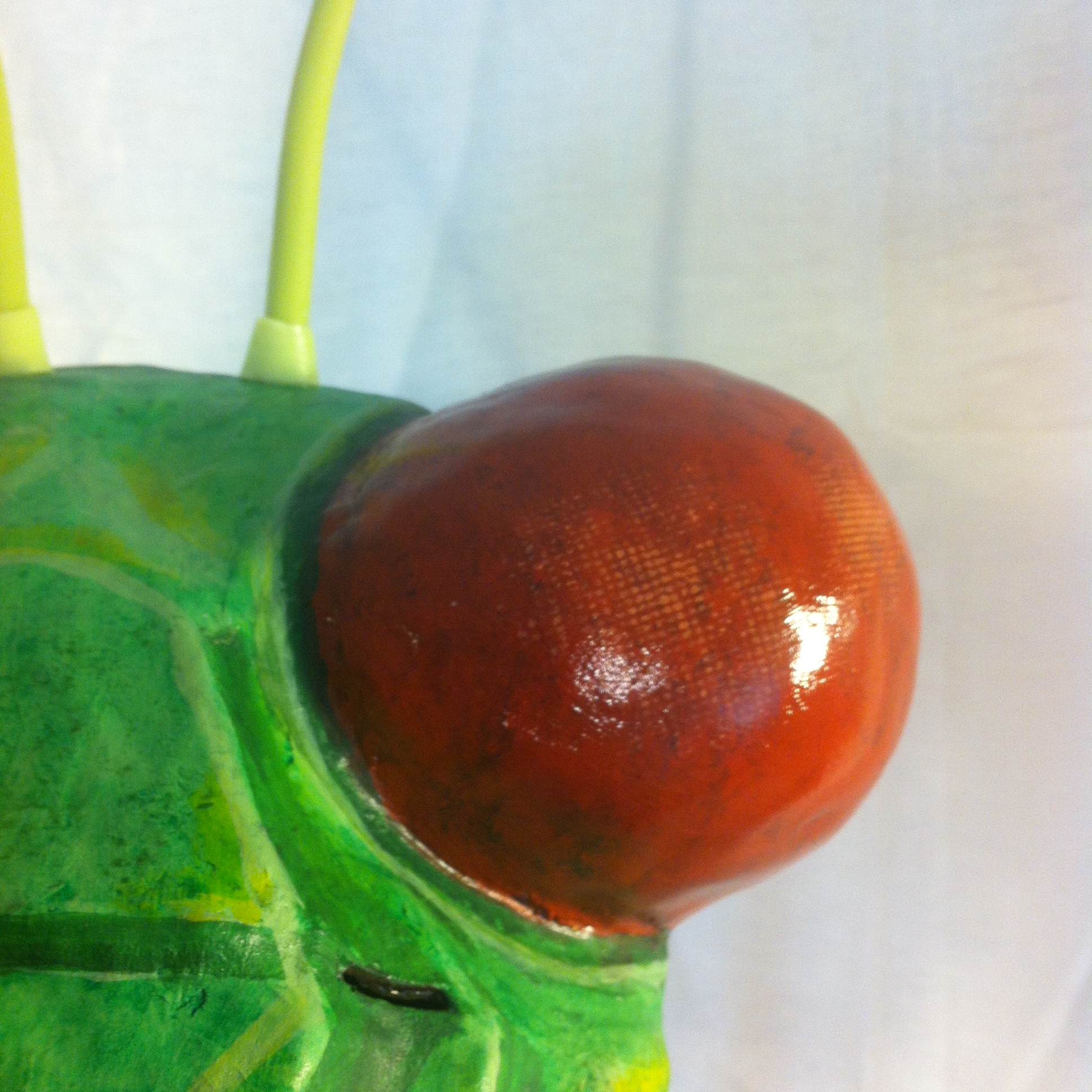
Round 2: blocking in a sculpture for a new version.Refining the sculptureI had to cut off part of the clay mandibles to accomplish the papier-mache. They were made separately and joined once the cast had been pulled from the clay.This praying mantis has more texture on the eyes than the exoskeleton. It also has a special paint on the eyes to create a feeling of iridescence.
I refined the eye hole to be even more incorporated in the geometry of the sculpture. The next time I had the opportunity to work on this mask, I played around a little with color. Research images guided my thoughts.
A variation from the previous sculpture. Research provided additional ideas fro coloring. The eyes were further refined and smoothed with paper clay.For the eyes on this version, I began with a sponge technique to break up the flatness of the red. On top of that, I used a stencil technique to suggest the segmentation of the eyes.
I’ve learned great things each time about this he next time I work on this mask, I want to explore greater width. Here are all the versions so far:
Side by sideIn this silhouette, the mask is almost three times as wide as the human head!
Inspired by the study of mythology by Joseph Campbell (a favorite of mine too!), as well as theatre creators Ariane Mnouchkine, Jacques Lecoq, Peter Brook, and Complicite, Professor Stephanie Roberts is leading an exciting collaboration between UMKC Theatre and the UMKC Conservatory IMP Ensemble.
The working title is The Epic Project. It is a three year endeavor to weave contemporary and classic stories into an epic narrative suited to our times. The actors have been devising for nearly two years already. I was invited to be a part of that exploration this last February.
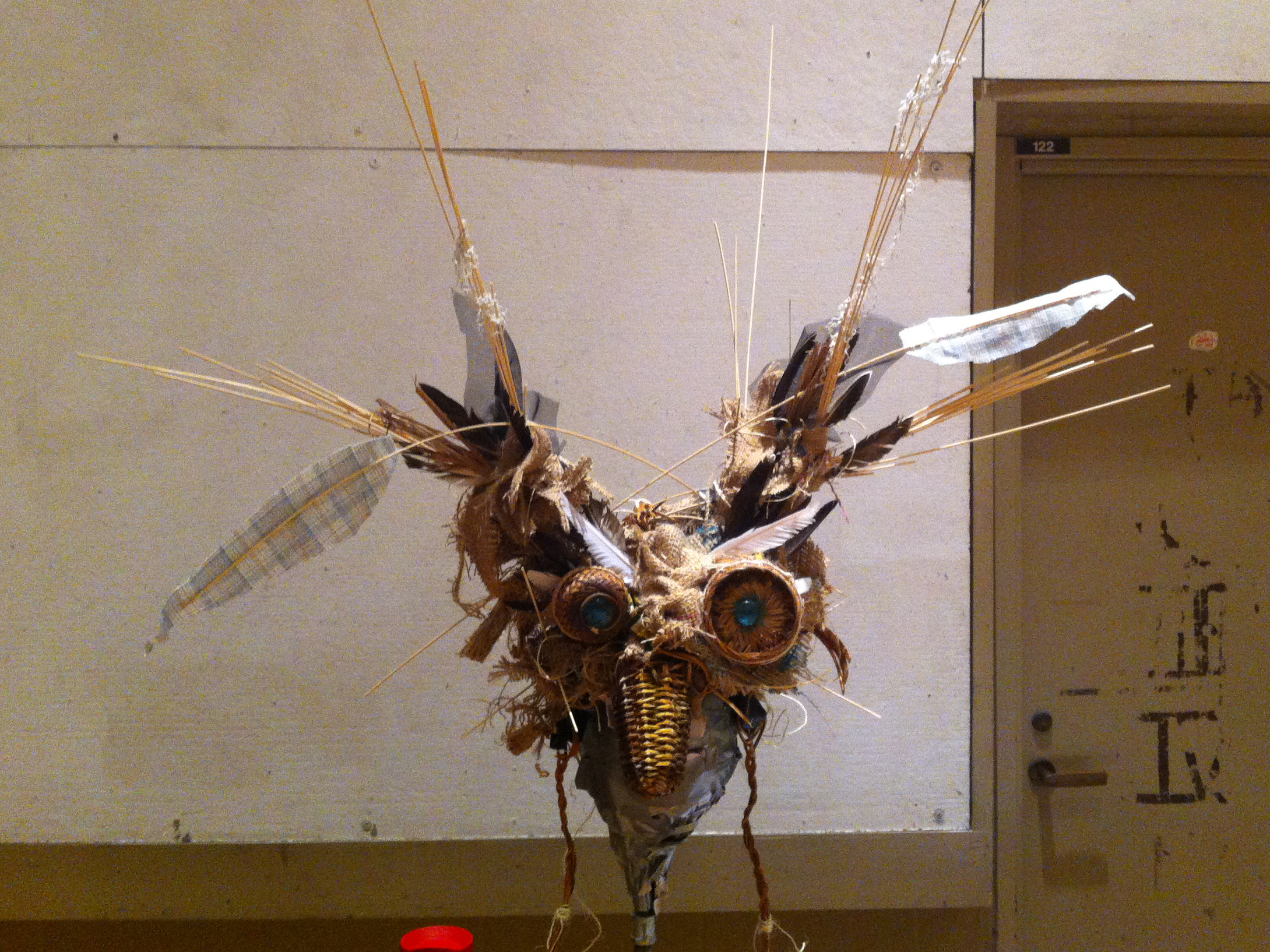
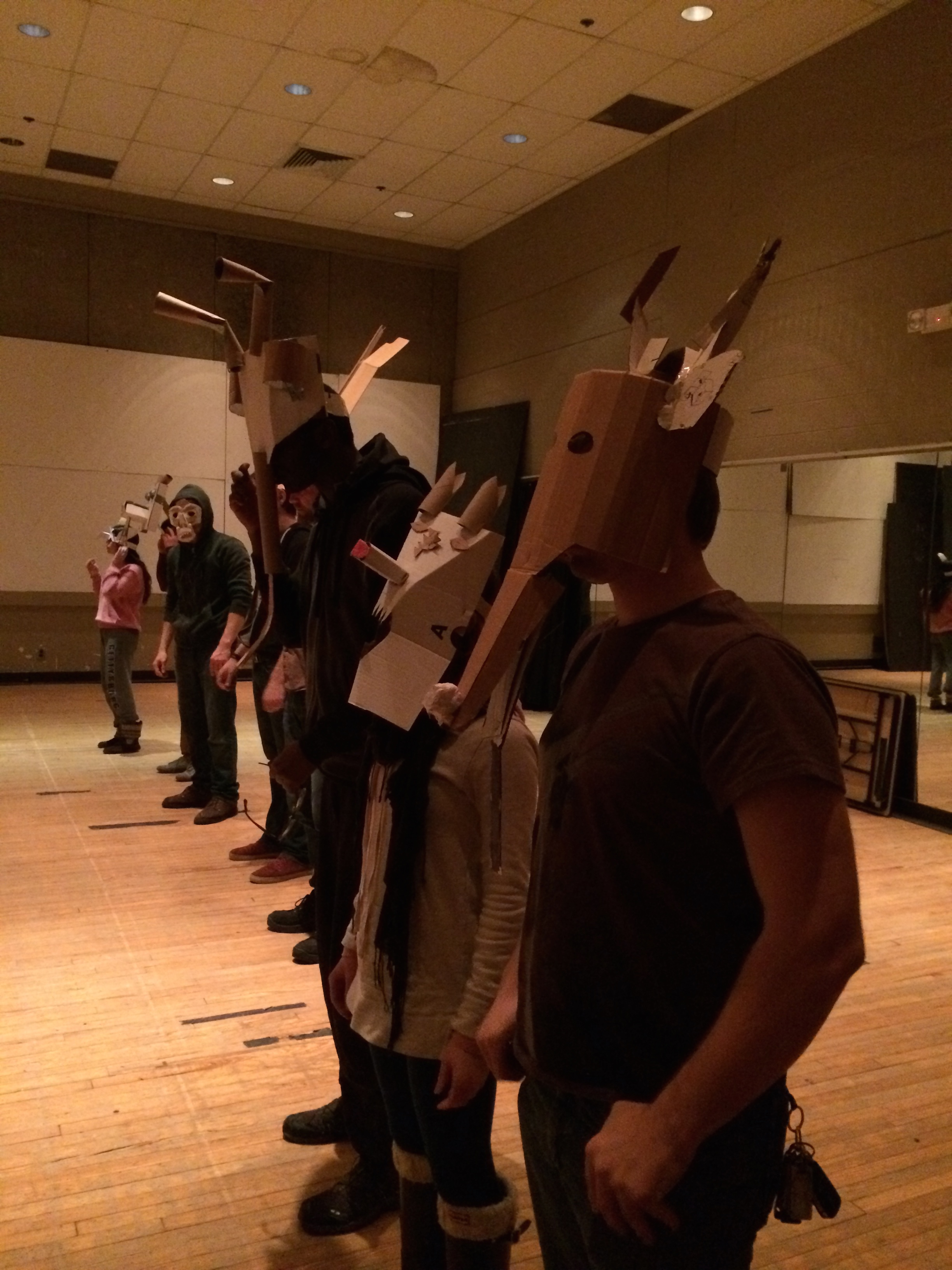
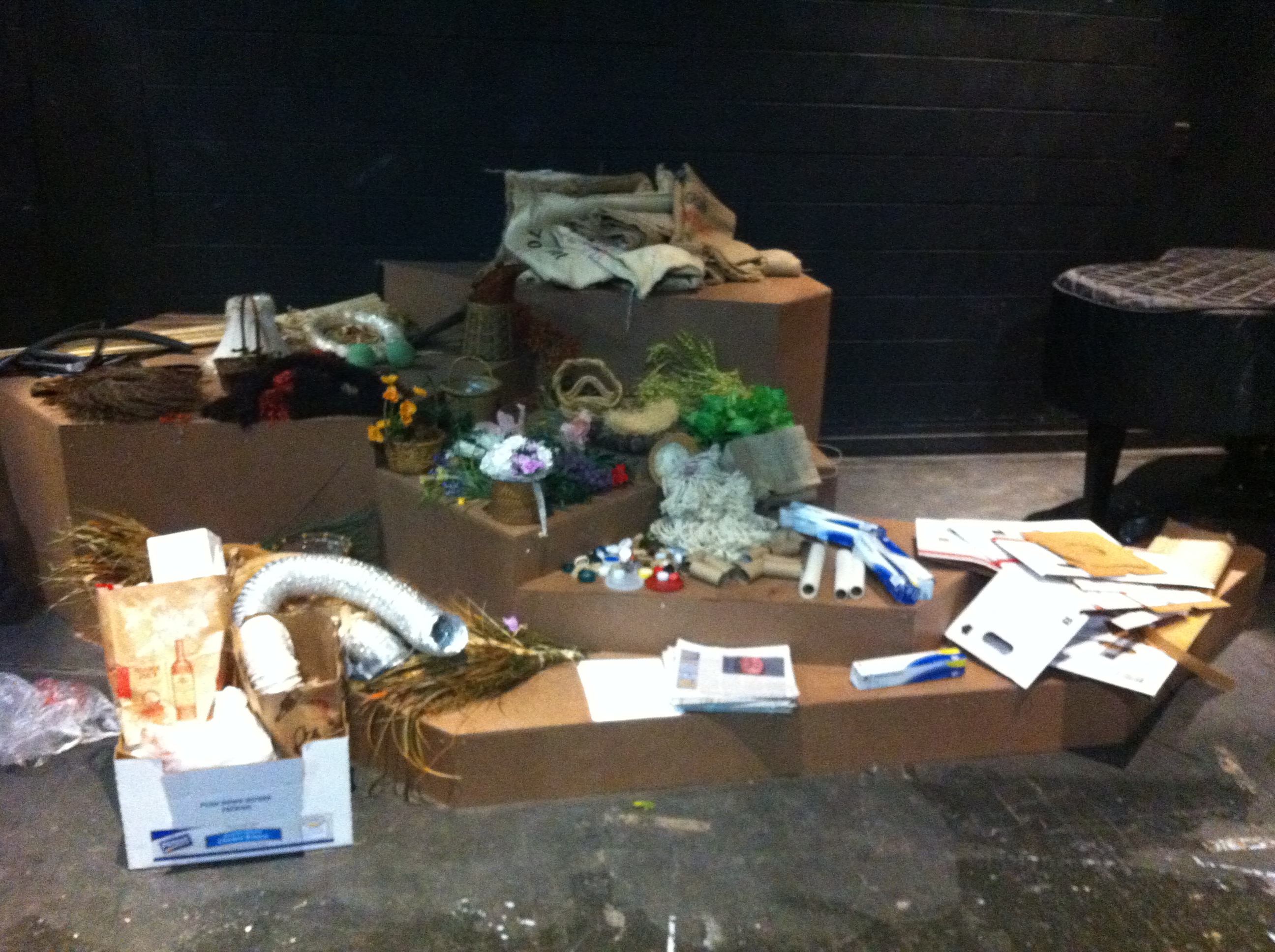
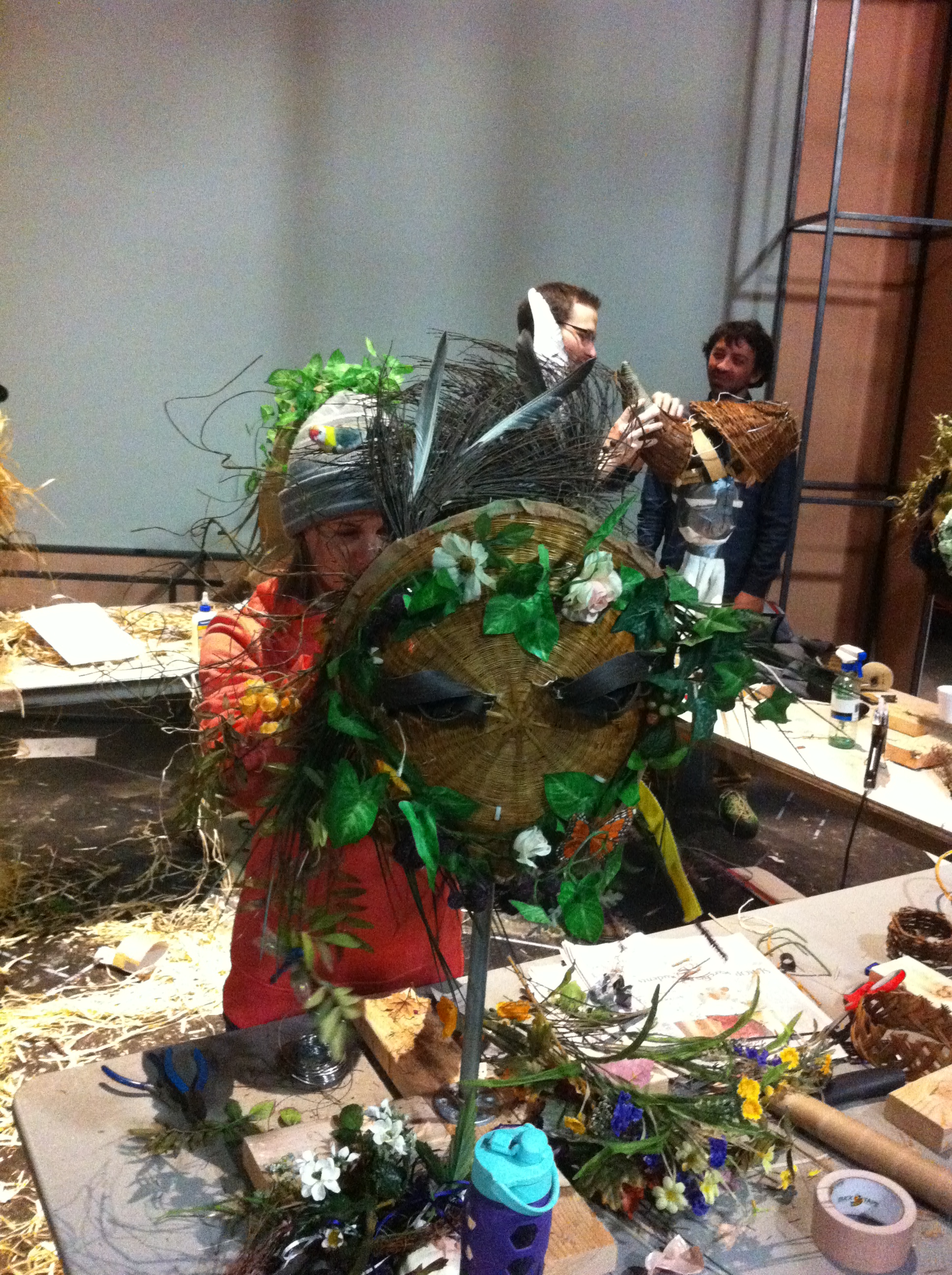
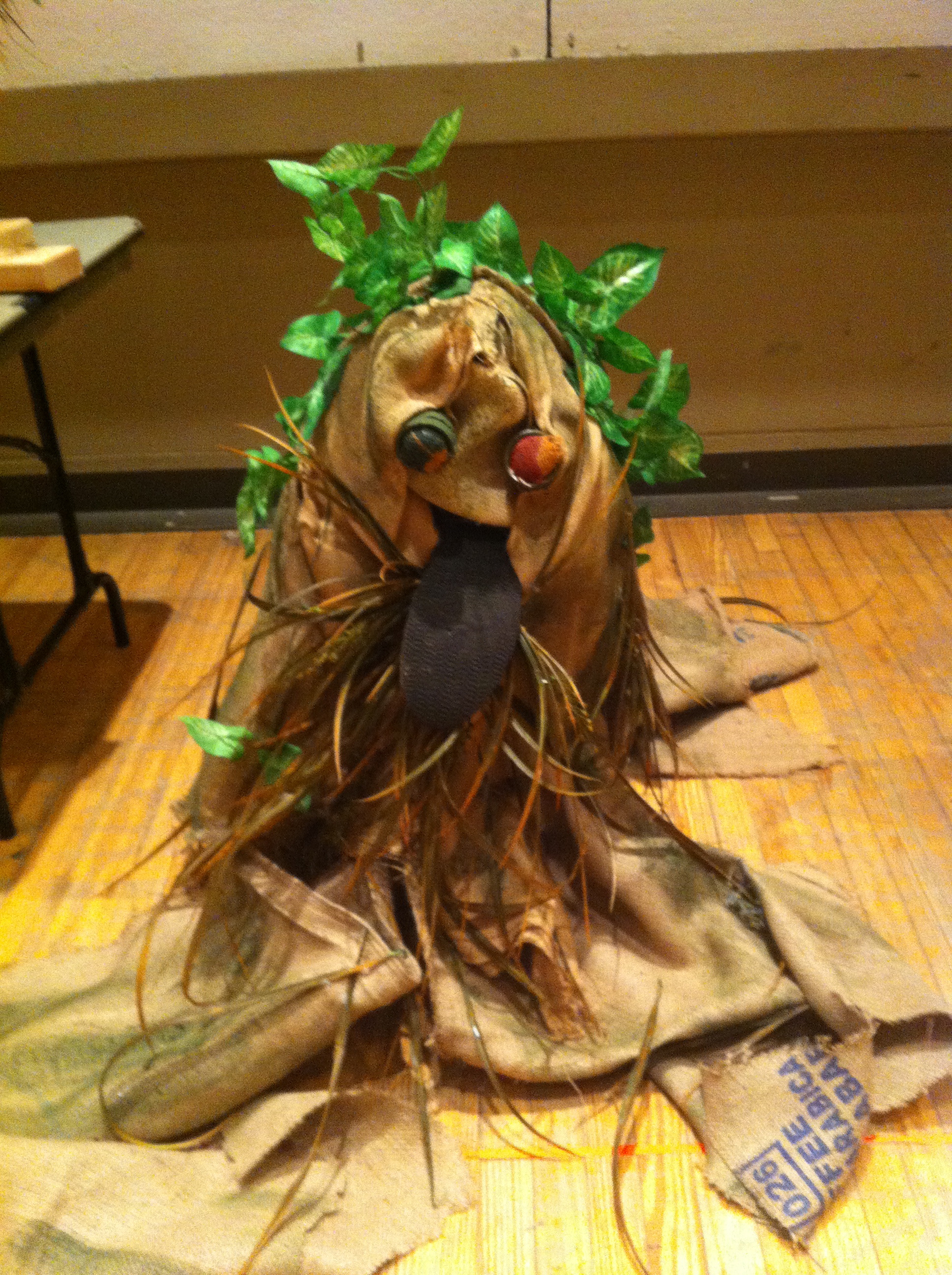
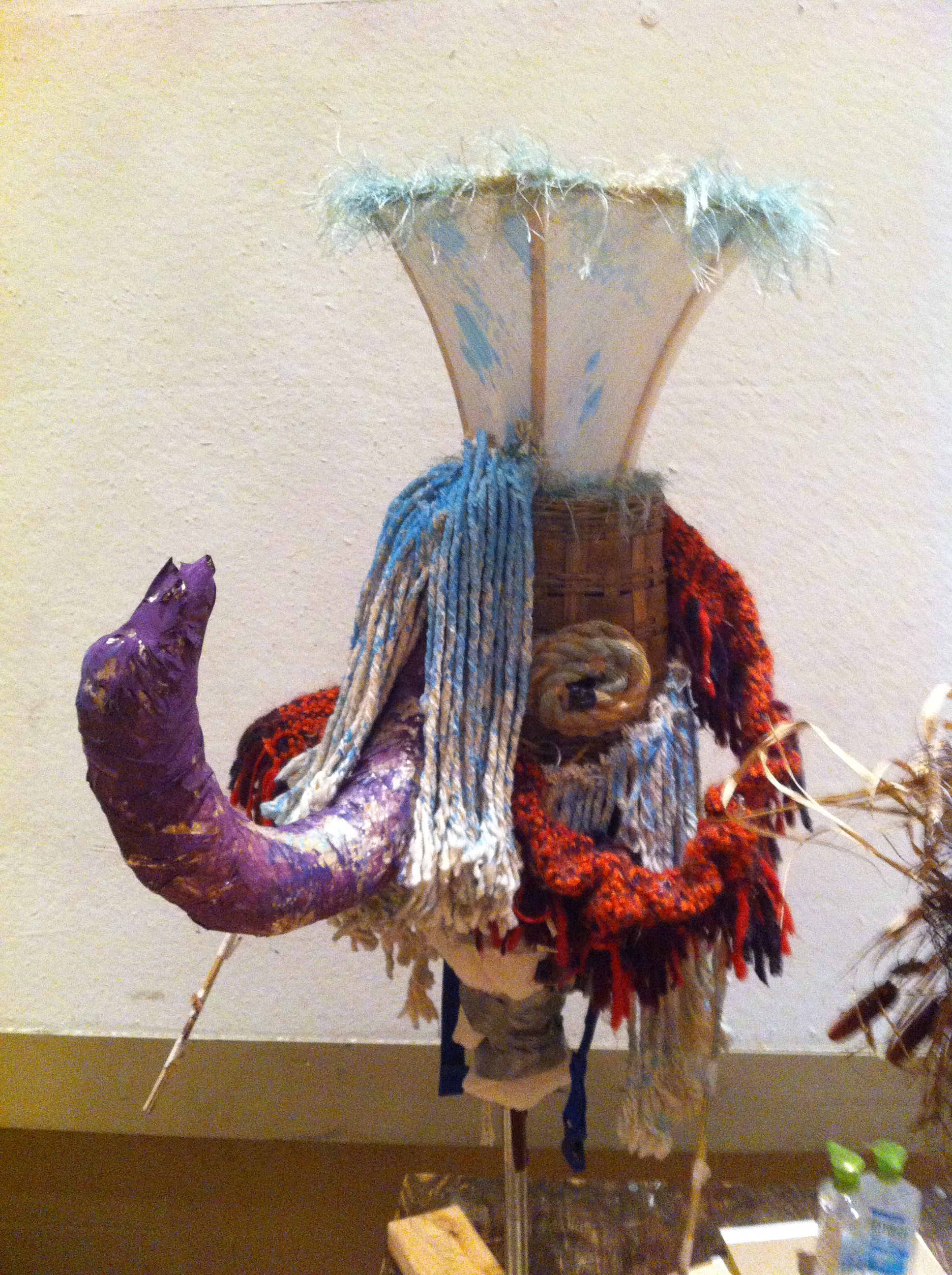
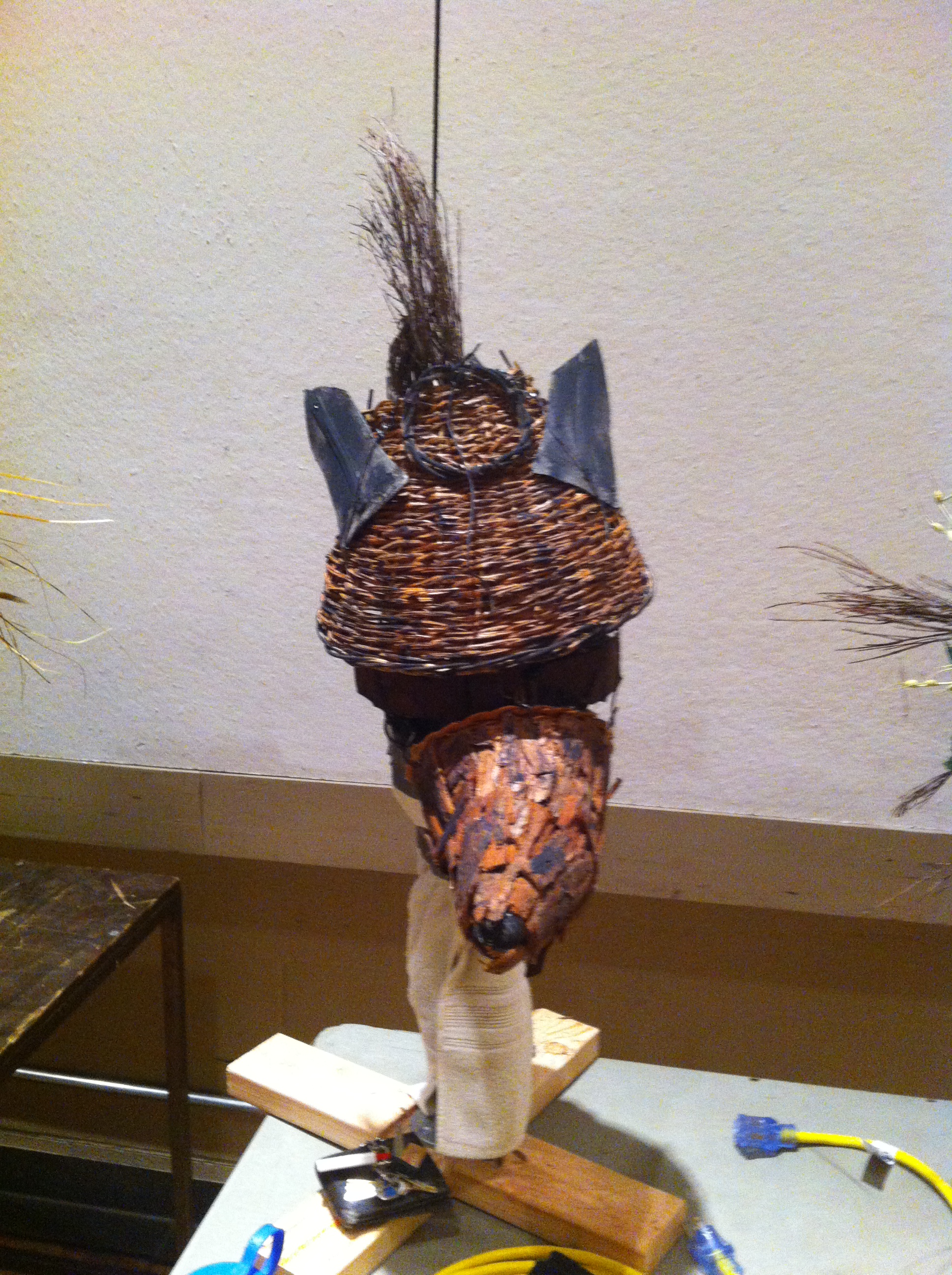
As a part of their exploration of character and archetype, I worked with the actors to create animal-spirit masks. The inspiration for this work came in part from old mask and mummer traditions from Europe and also from animal and spirit masks from around the world. I asked the students to engage with familiar objects and new materials as they uncovered the spirit of the animal within.
Enough chatter. Here are some pictures!
Initial experiments
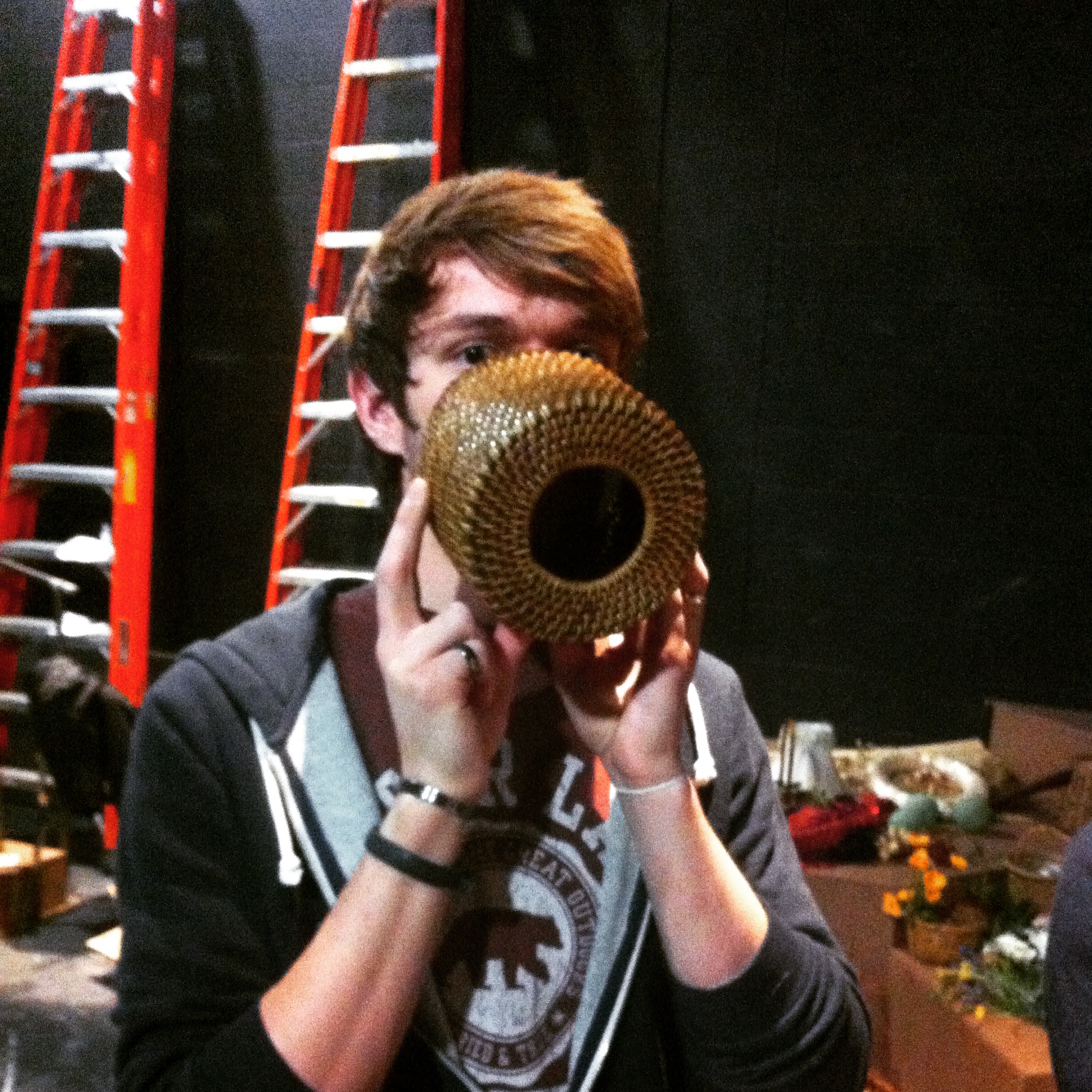
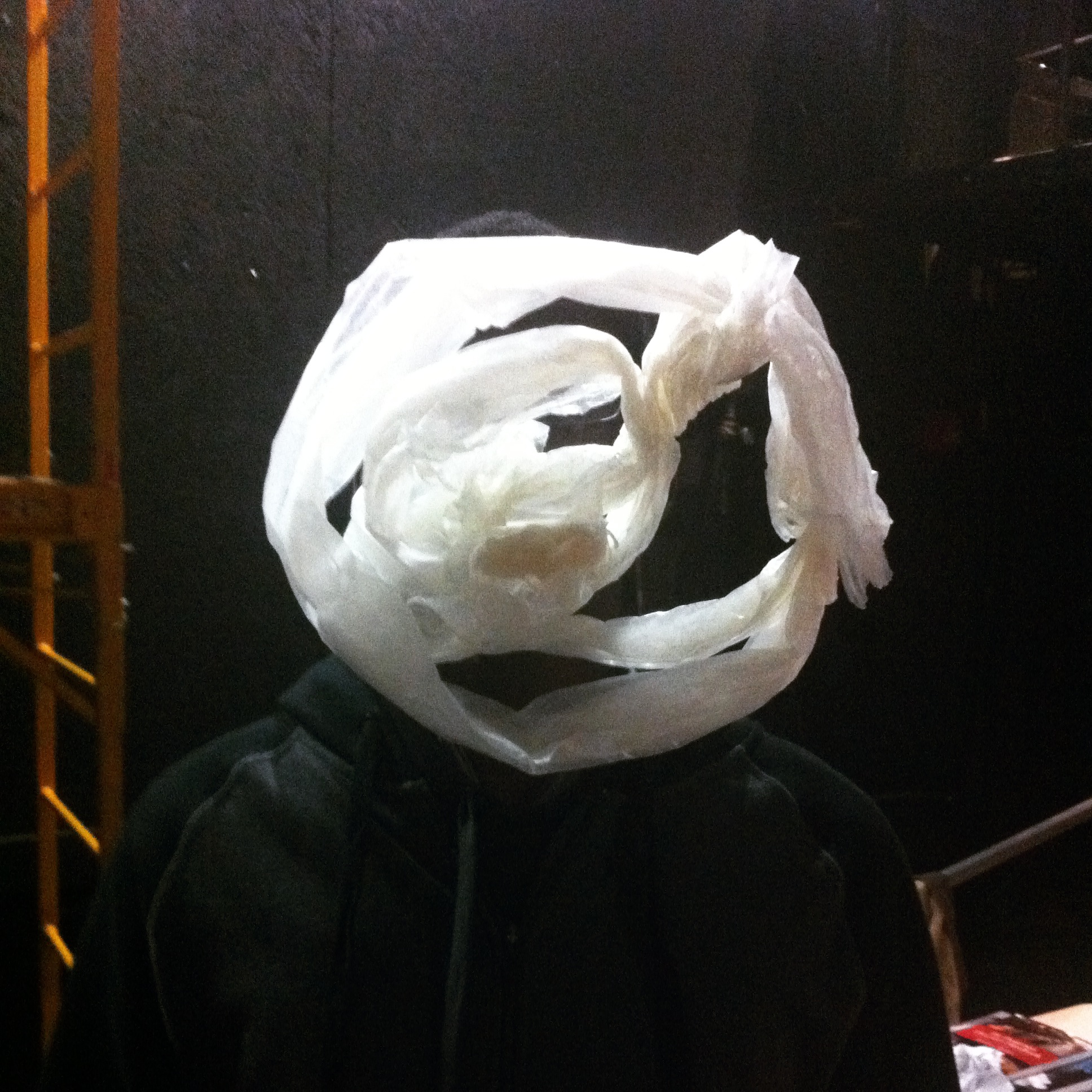
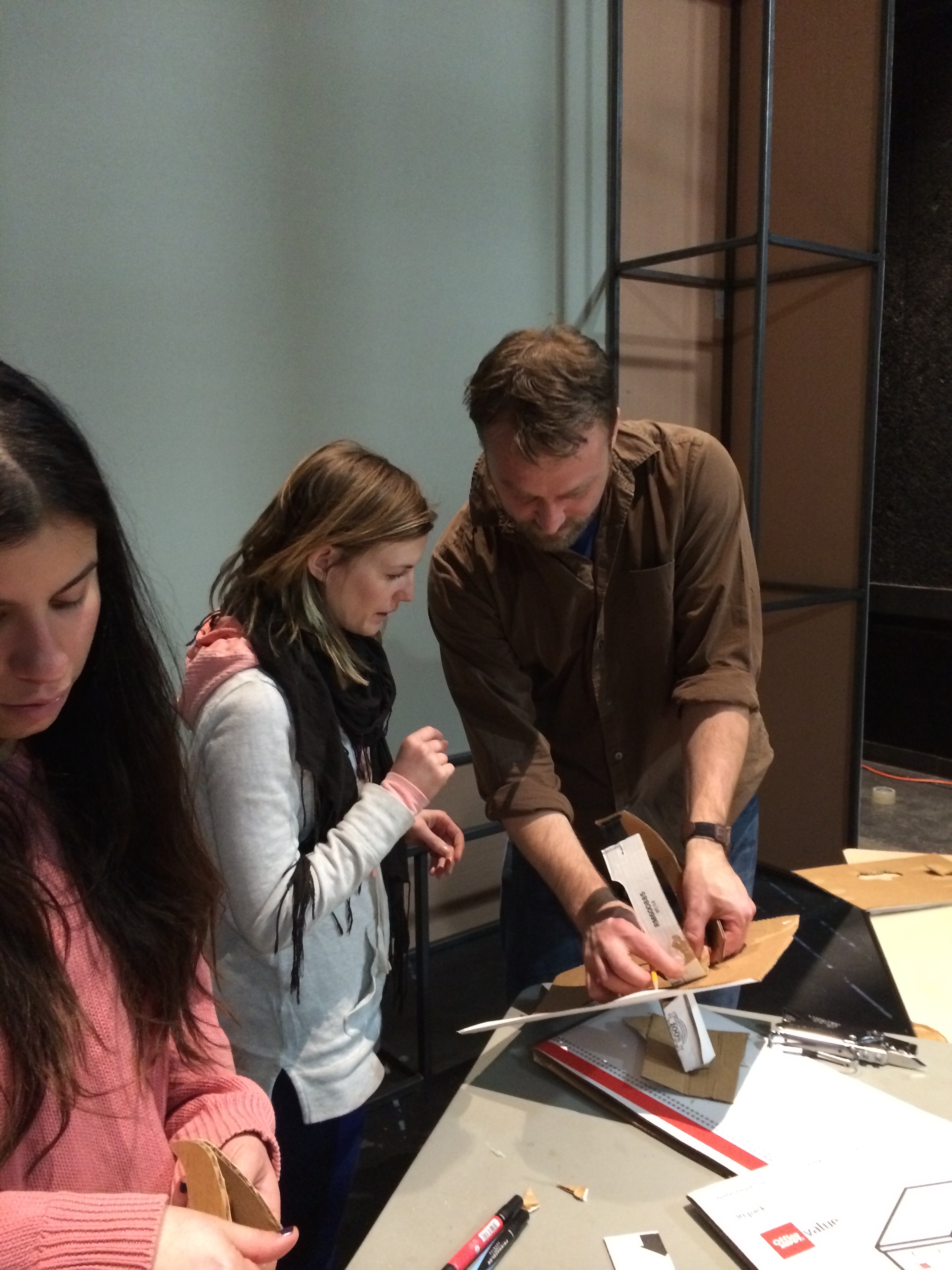
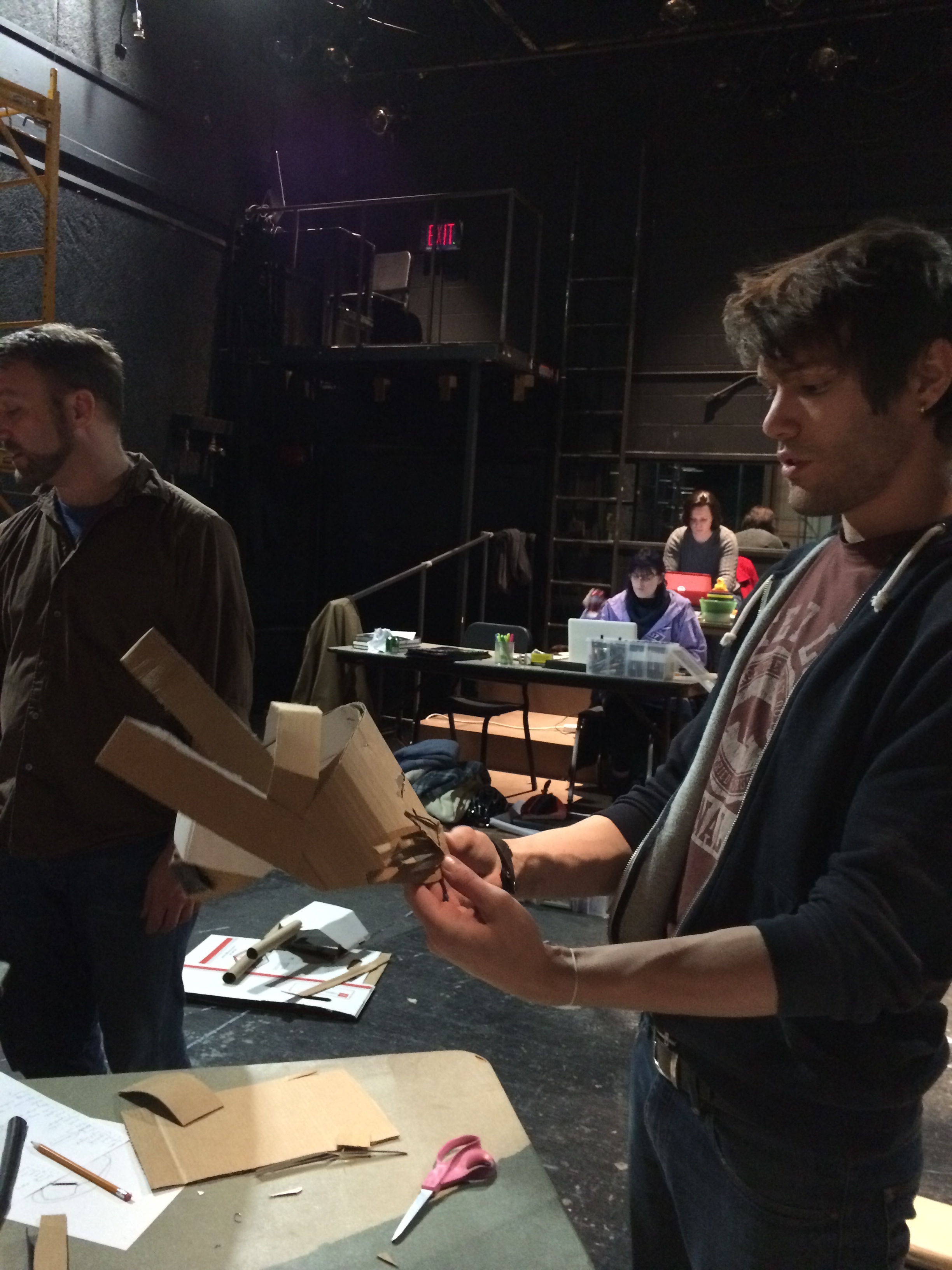
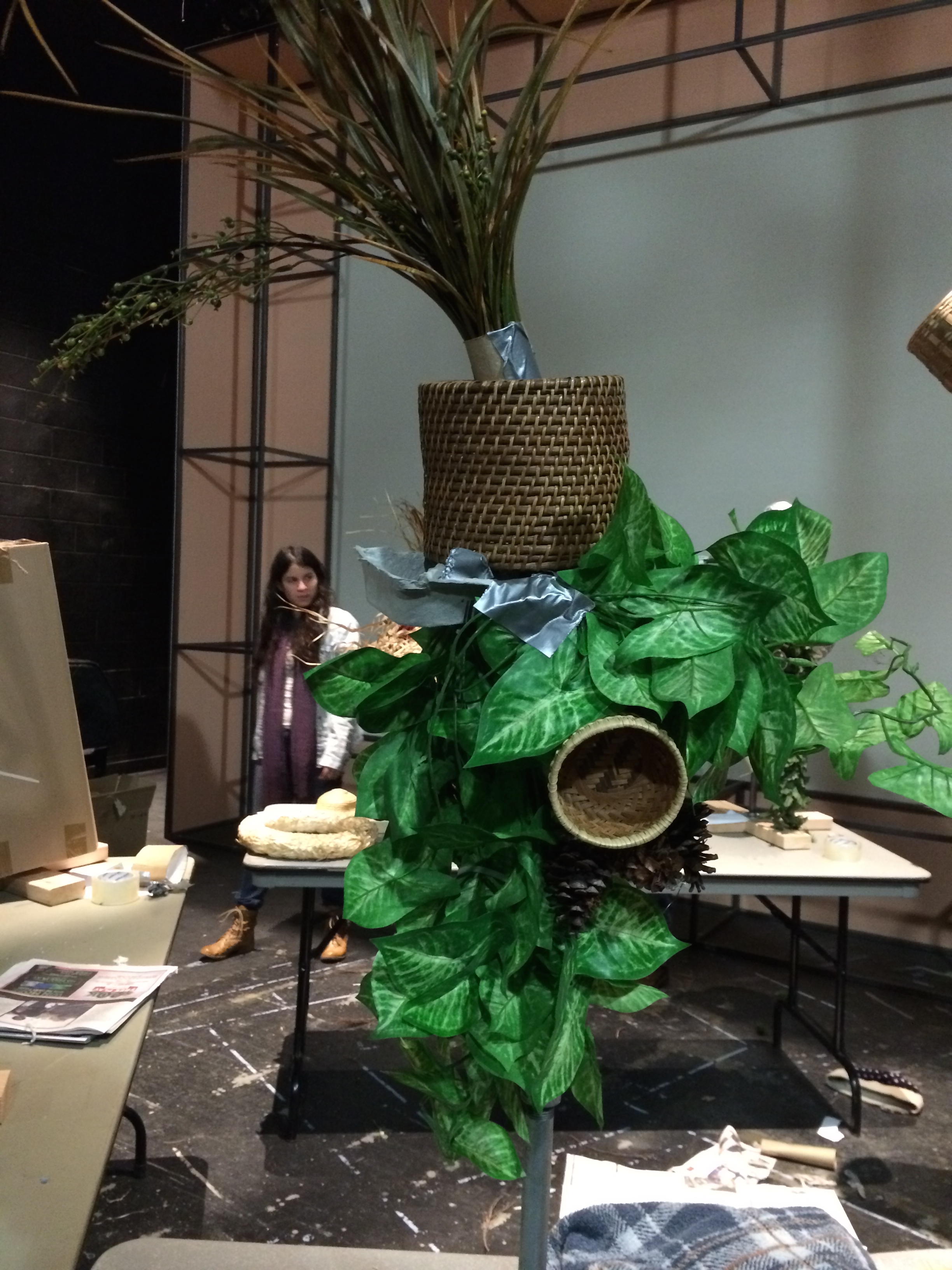
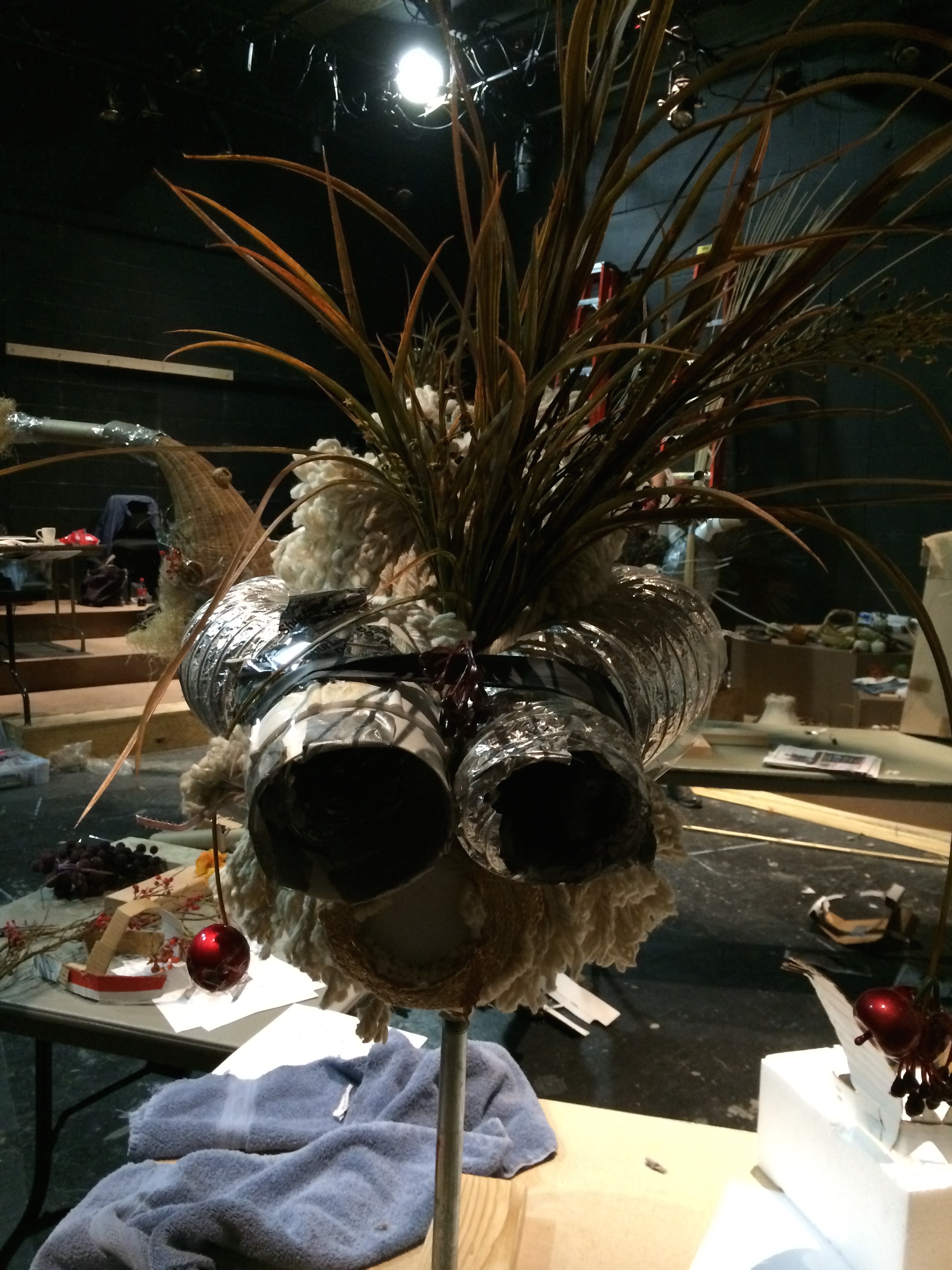
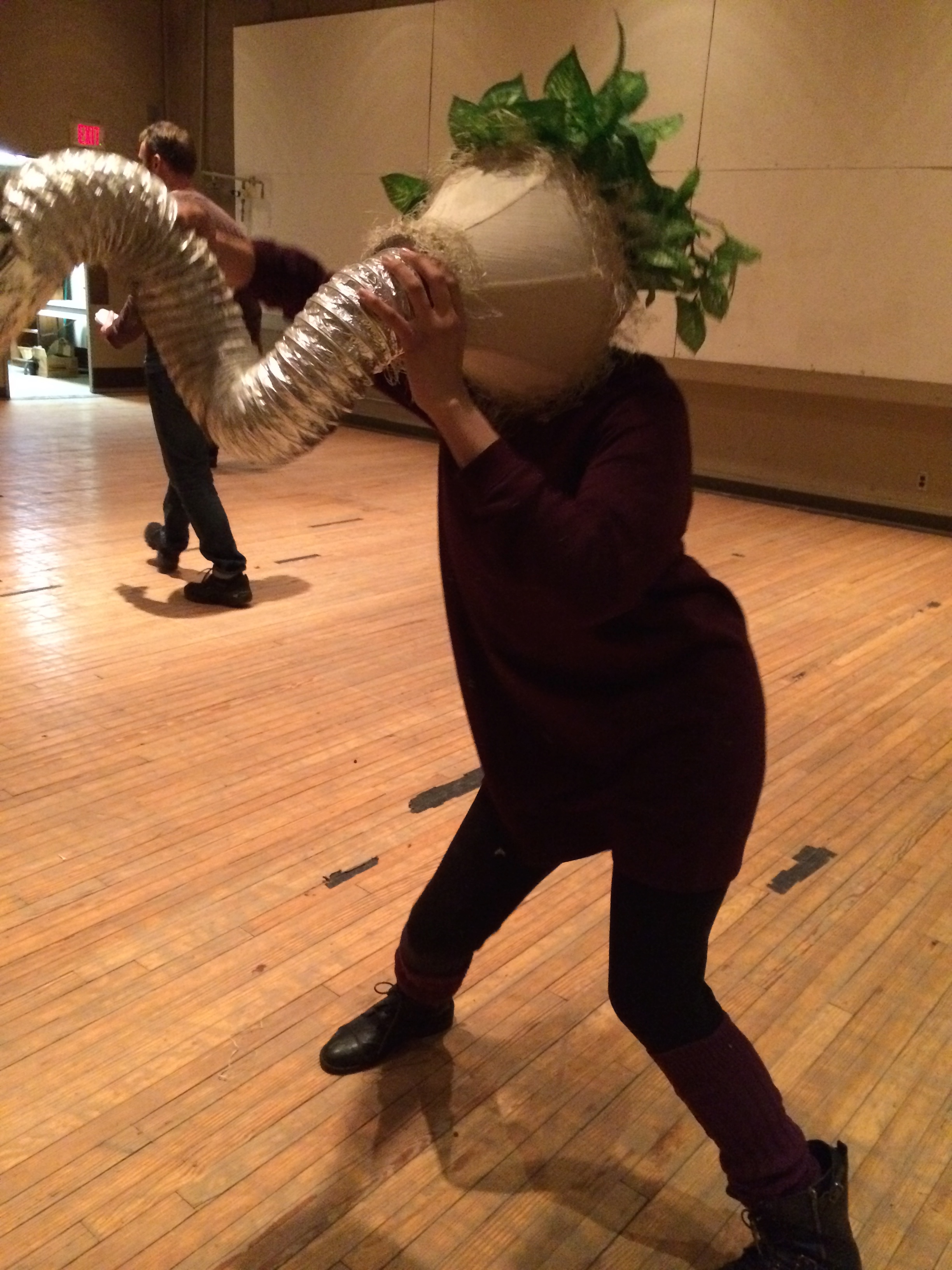
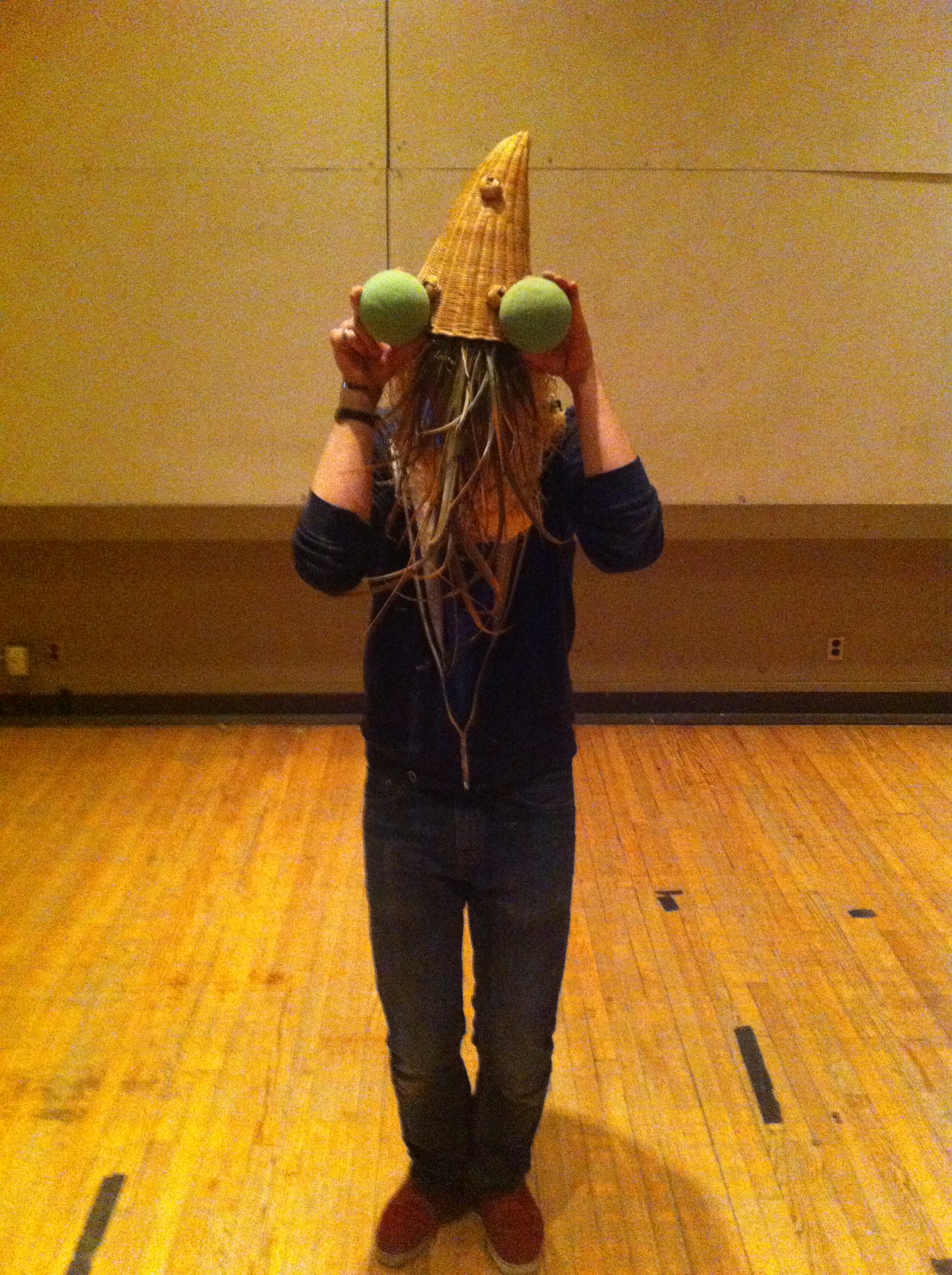
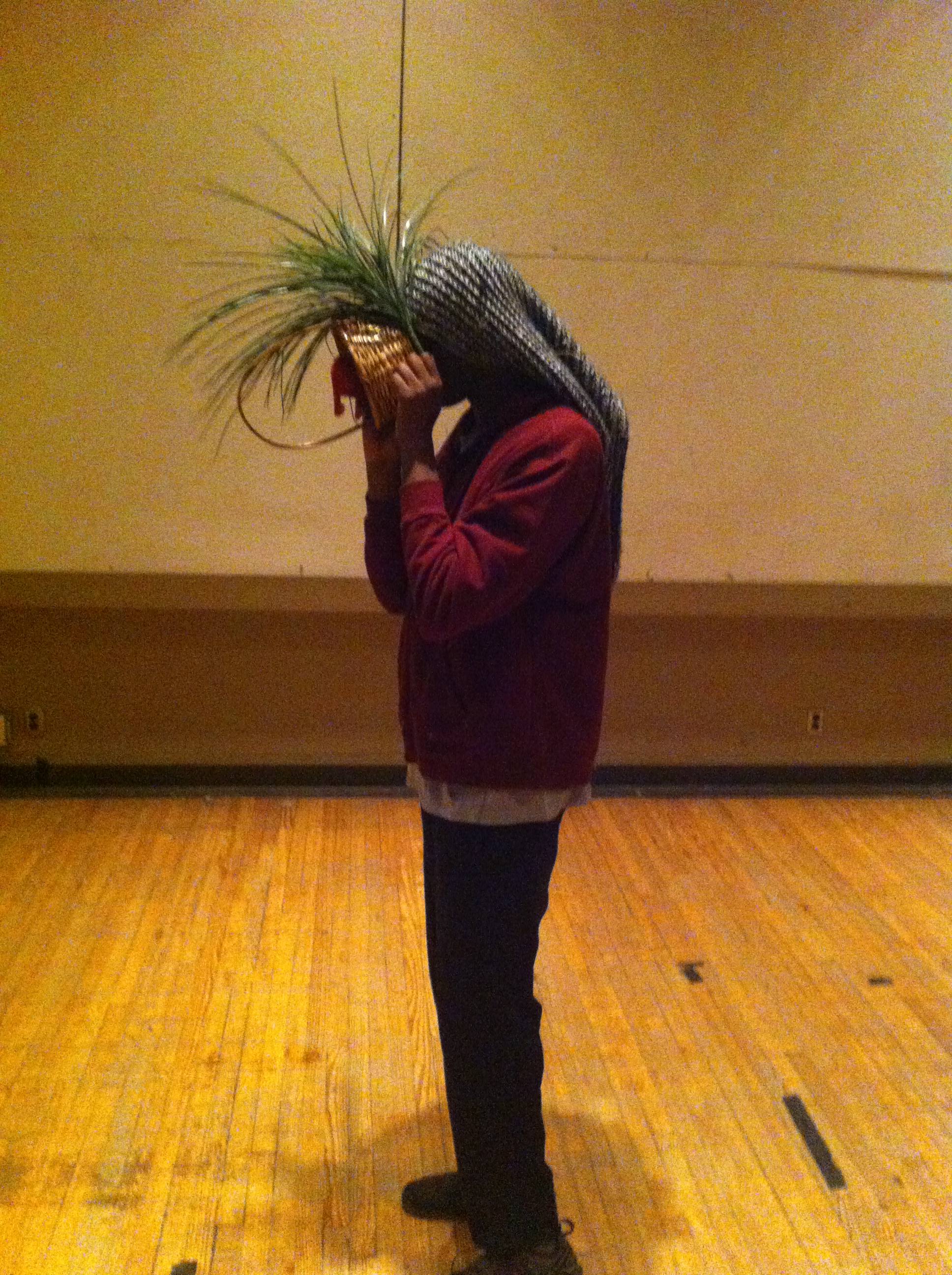
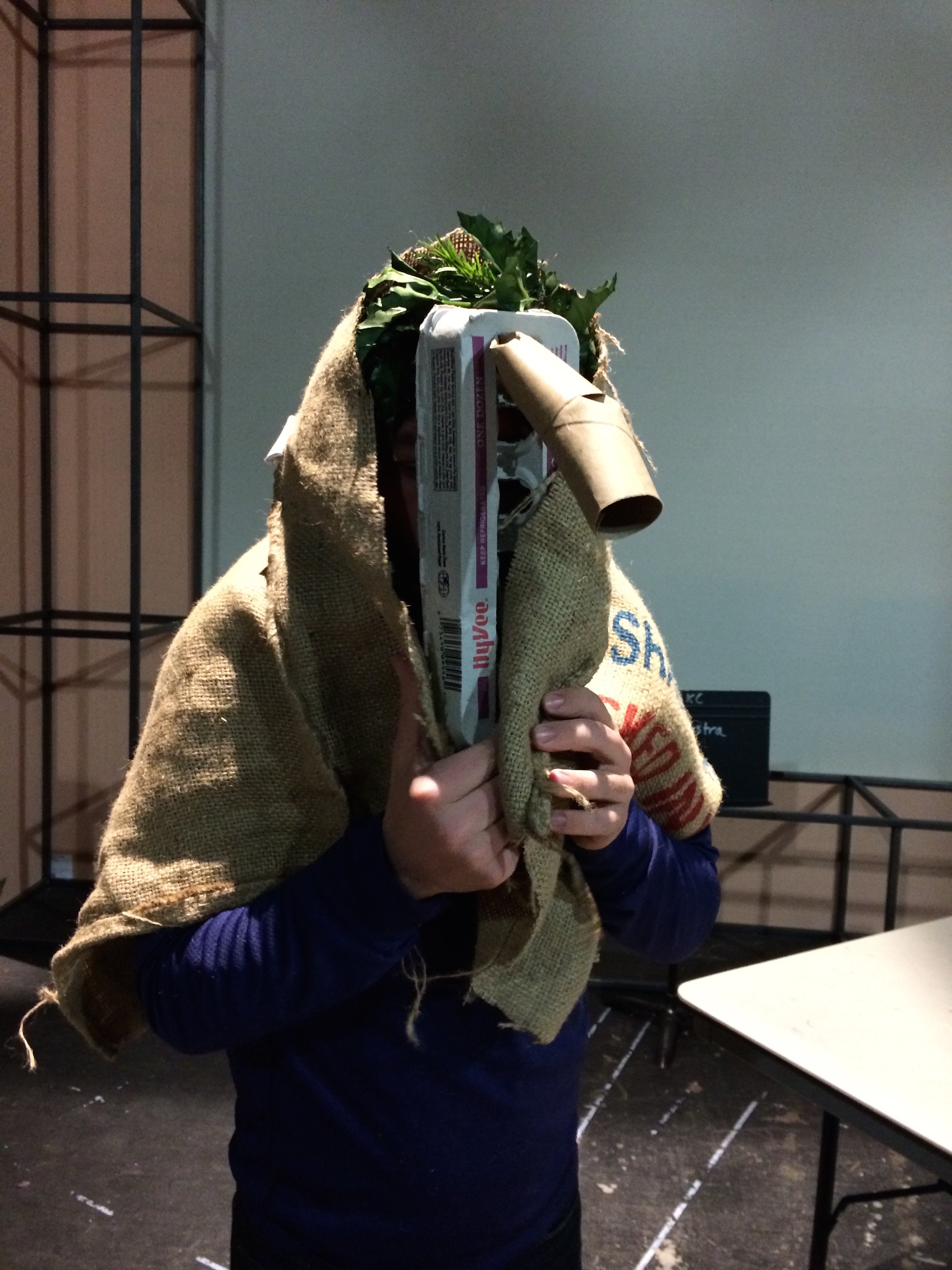
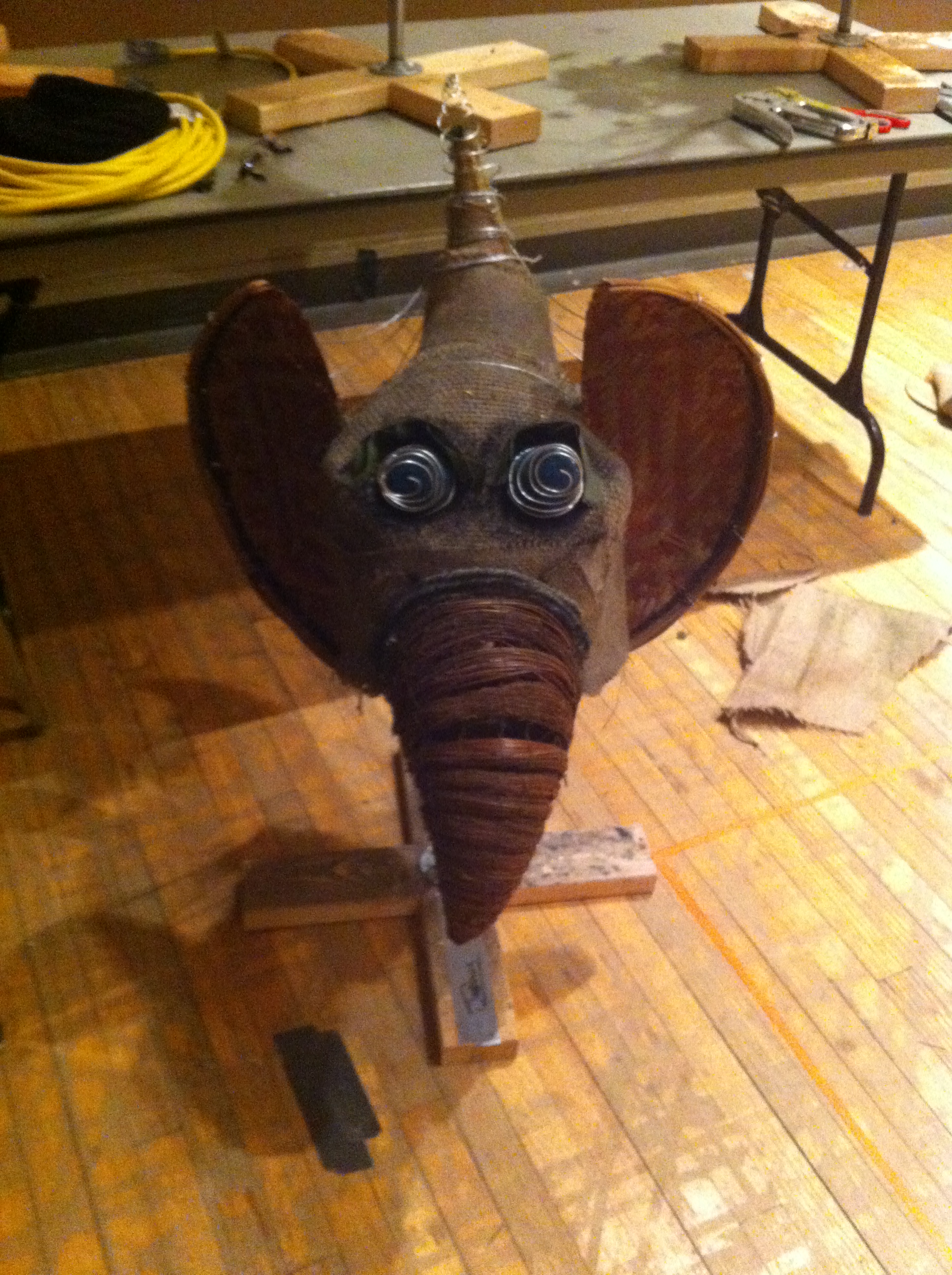
Joshua uses a basket to create a mouth.An experimental mask made by Edwin. It’s made of wax paper and captures the movement and essence of a different material.We then tried making animal masks using only one material: cardboard.Making a mask not only requires choice of material, but constant check-ins along the way.Masks aren’t complete until the performer’s body is added. We used this as a way to check in on our work as we built.
Digging further into materials
What we’re working with.
Uncovering the animal spirit
We did many experiments with materials and forms, then took what we learned and started making the mask for each actor.
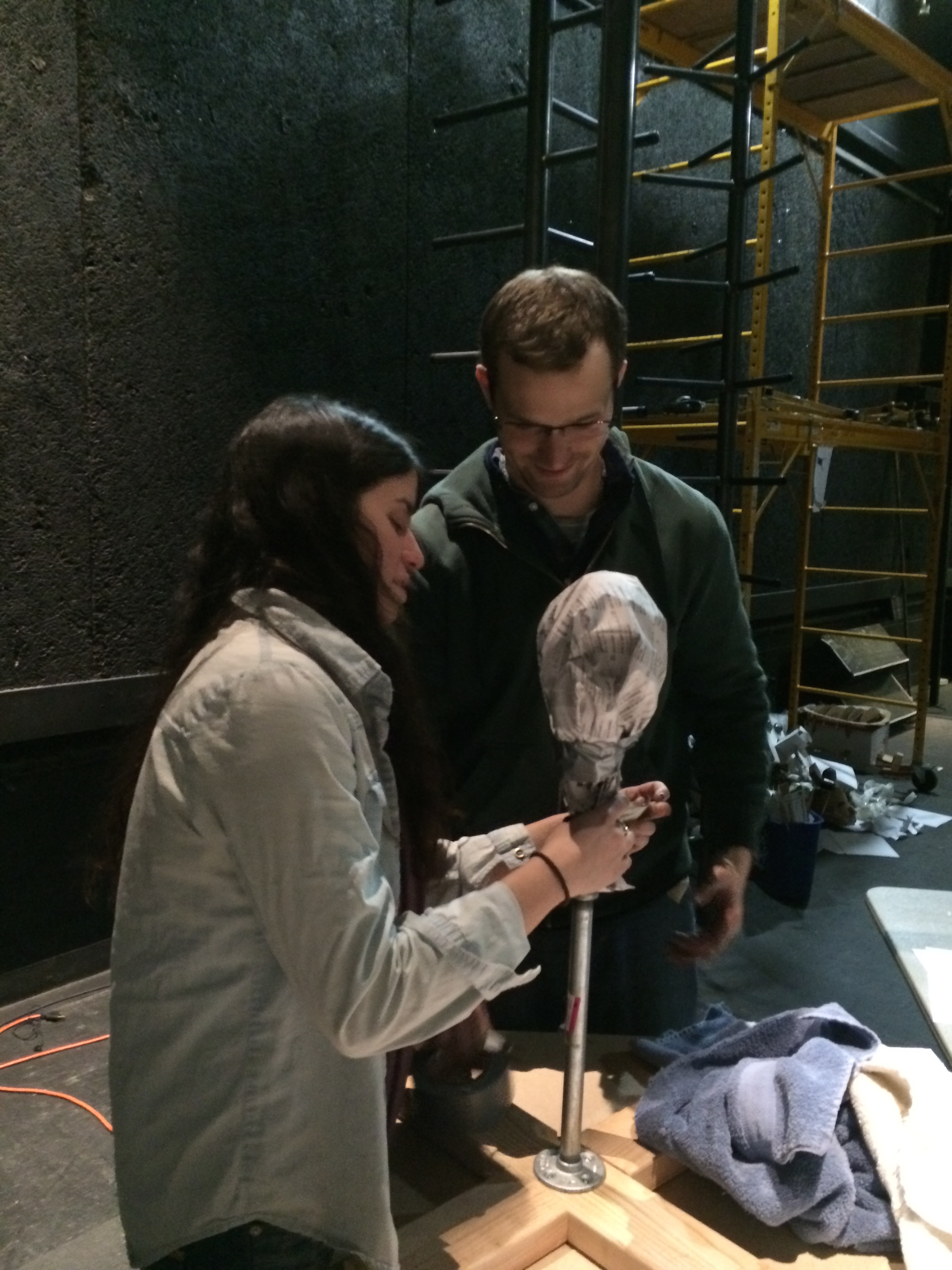
The actors made a ball of paper the size of their head and attached it to the armature stand. This helps them size the mask correctly.
On the second to last day of our process, Julie Denesha from KCUR came and interviewed some of the actors. Check out her amazing photos here.
Mariem/Mosquito Photo: Julie Denesha
See the work-in-action!
Come see the workshop performance in this phase of the Epic Project in Studio 116 at UMKC’s Performing Arts Center (4949 Cherry St.) Previews run from Friday Mar 6-8th and runs Mar 11-15th. Shows at 7:30 with the exception of Mar 15th at 2:00pm.
Seating is very limited so please reserve your FREE tix at 816-235-2782.
Over the course of the last three years, I’ve had the great pleasure to work with Many Hats Collaboration’s Jessica Wallenfels and Eric Nordin (and a slew of other talented artists) on the development of an original work of dance theater, The Snowstorm. It’s been a great journey, and I want to share a little of that process with you in this post.
Beginnings
Creating original work requires a lot of skills, in addition to having a vision for the show. Among these are communication, collaboration, being present, creative problem solving, flexibility, comfort with ambiguity, etc. The process was always a pleasure—largely due to the talents and leadership of Wallenfels and Nordin—and it also took us in many directions.
I played a couple of roles throughout. Initially, I worked as an actor to help develop physical vocabulary for some of the key scenes. Through this process, Wallenfels was able to get a sense of what it would take to tell a clear story through movement set against the music of Rachmaninoff.
The Hawk, the Bear, and the Hen in rehearsal for the 2013 workshop at Portland Actors Conservatory. One of these actors was eventually cast in the 2015 production.
A year or so later, after many such experiments, a short evening of scenes was presented. One of the things we were trying to determine was if masks were a good fit for the show. Since it was just a test, we used placeholder masks that approximated the feeling of each of the masked characters.
We found we weren’t sure if masks were the best solution. Early in 2014, Jessica and I met to discuss our thoughts on the approach. I had just returned from Bali—and Jessica had been there herself, years earlier—so we thought we could also explore shadow puppets.
Fox tries to free the HenShadow Bear!Hawk of Darkness
I decided to create a shadow puppet show that used the same two pieces of music in the first scene of The Snowstorm. I performed it with a second puppeteer for a Puppet Slam produced by Beady Little Eyes last spring. After more discussion, we decided that the shadows would likely be too difficult to see clearly in the thrust stage at the CoHo. We held on to the possibility of using both masks and puppets as we began to meet with the entire production team.
Though I didn’t pursue this further, the final wolf mask does have some textural similarity.The surface treatment is borrowed from various Russian folk patterns.Fabric was one material I considered using for the mask.In an early iteration, all the masks were face masks.
Researching the various animals in the story came next. Through our meetings, we had decided to go with masks. I tried to find a design concept that would serve the multiple needs of this particular production: a fantastical quality, a handmade look, and an ease of movement were among these needs. As I was working in India, I would make sketches and email them back to the production team so that all of our designs could work well together. Nothing was feeling like it hit the mark, so I tried to think of other ways to solve the problem. Finally, drawing on my recent experiences making a peacock mask for Maya, I proposed using a kind of helmet mask for the show. This option promised an interesting transformation onstage and seemed exciting to build.
The actor sees through a stylized opening in the mask.The actor puts the mask on like a hat.
Preparing for rehearsal
Typically, I prefer to provide the finished mask at first rehearsal. I feel this way because it allows the actors (who may have no experience performing with masks) to get used to the different performance style they will need to employ. With this show, we knew we wanted to have a little more flexibility and room for discovery. So with the design we thought we wanted in mind, I generated some rehearsal masks to give the actors a sense of what it would mean to perform in the masks.
Hawk’s rehearsal piece gave us both a way to test the scale of the mask.I made these cartooned masks from cardboard and bike tire…… and a simple head ring.
With the information from the rehearsal room, I was soon ready to sculpt. The discoveries did not really end there, which is really the fun of the whole thing!
Weighing options on the sculpture of the Wolf.Hawk gets his glare on.I used different colors of paper maché to help the actors see the image of the character before it was painted—but we liked the handmade quality so much we kept it!For the Wolf, I used a more varied color palette and texture.Rehearsing with the real masks provided lots of information about lighting, movement, and comfort. This is a lot of foam, which I later disguised with black broadcloth.
The Final Masks
The actors brought the masks to life beautifully! (Shadows still appear in the play, even though they are not the primary element. Knowing the process, it’s interesting to me to see how all of the different artistic impulses eventually found their place in the show.) Here are a few shots from the performance.
Beth Thompson as Bear. Photo: John RudoffEric Nordin (pianist) and Jamie Rea (Swan). Photo: Brud Giles(L to R): Beth Thompson as Bear, Elisha Henig as Fox, Brian Demar Jones as Hawk, and Kira Batcheller as Hen.
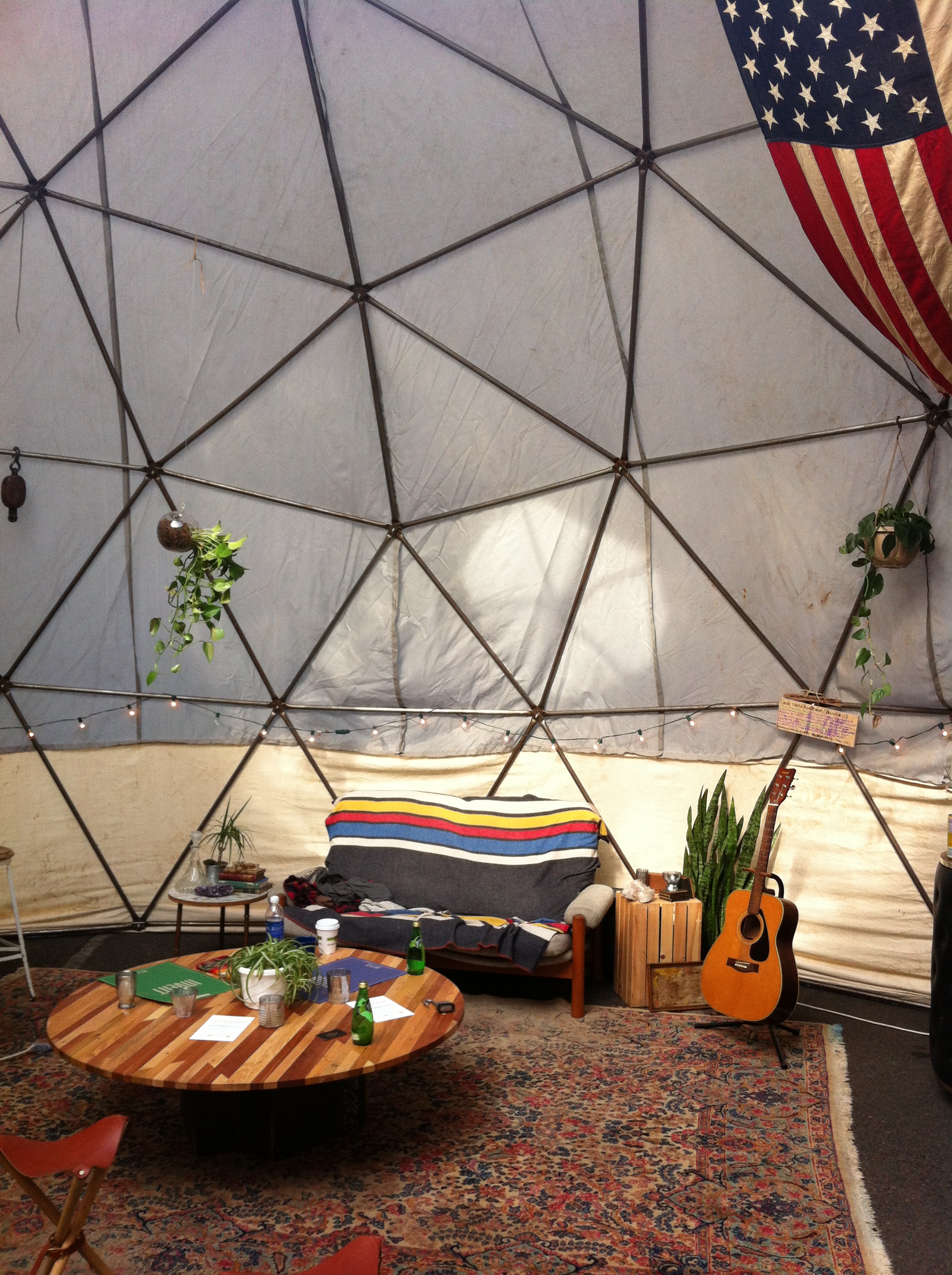
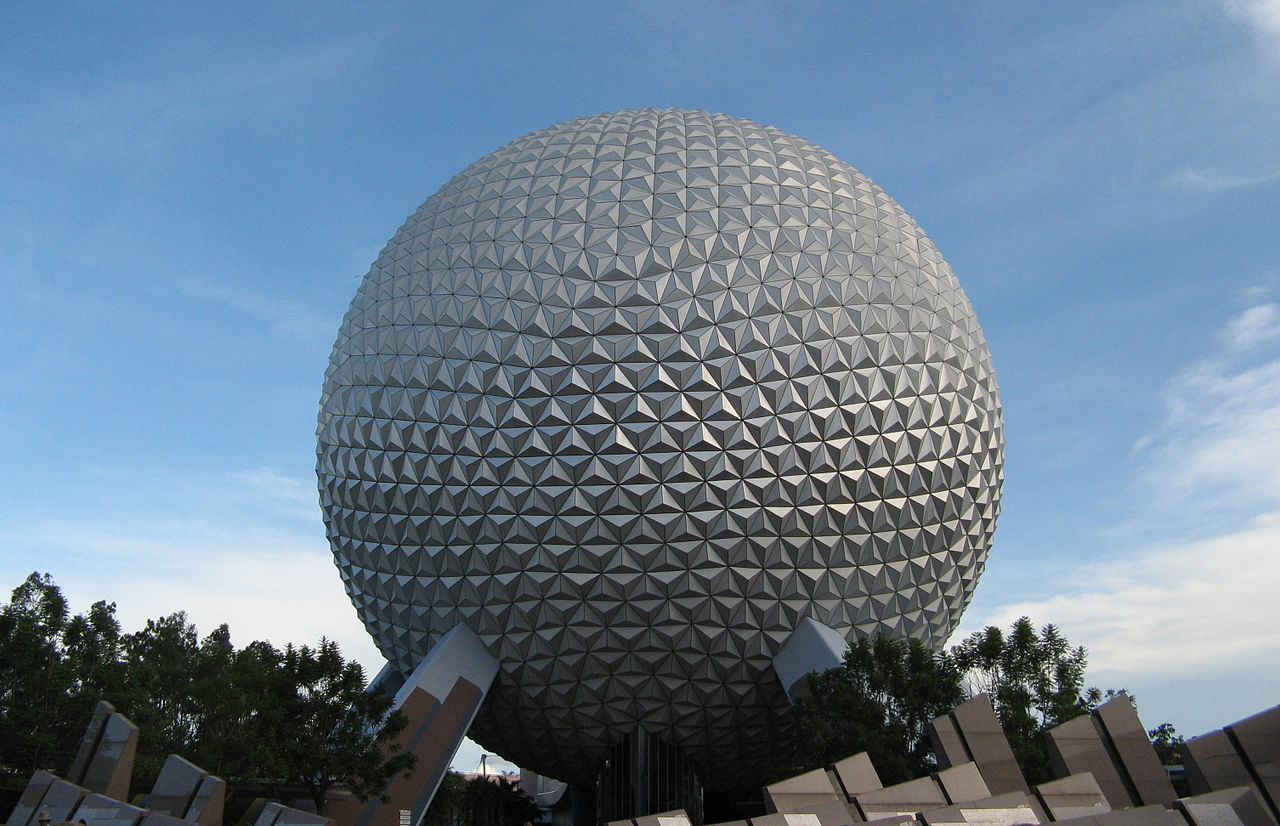
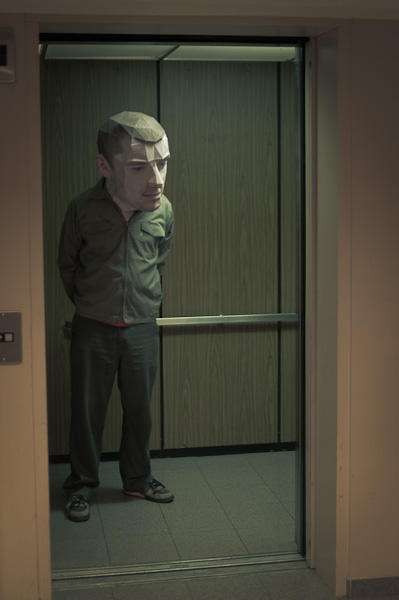
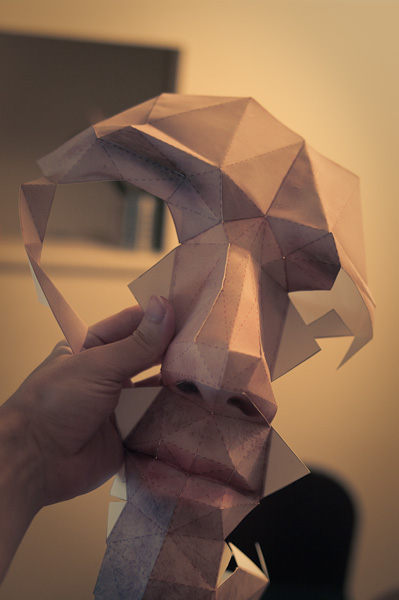
Among its charms are the masks four of the dancers wear. One thing that caught my eye was the texture of the face. It reminded me of Buckminster Fuller, actually, and geodesic domes. Granted, I know only a little little bit about geodesics, but the visual similarity is interesting.
Inside of a (rather comfy) geodesic dome temporarily set up in Portland in 2013.Spaceship Earth at EPCOT, a geodesic sphere
Wireframe Self Portrait
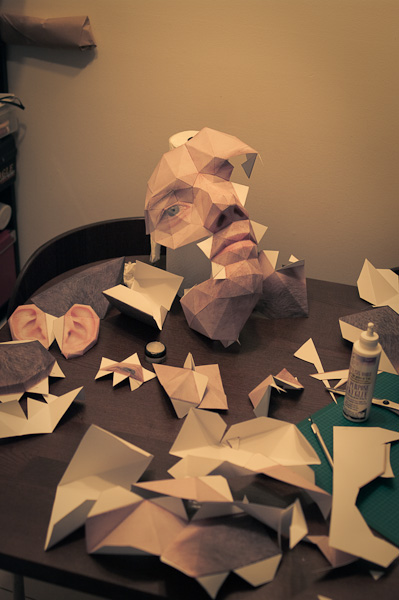
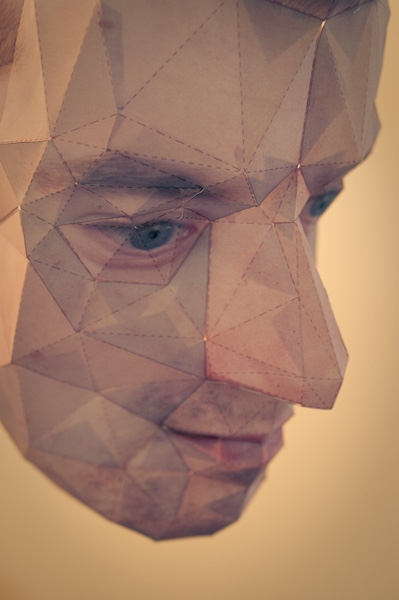
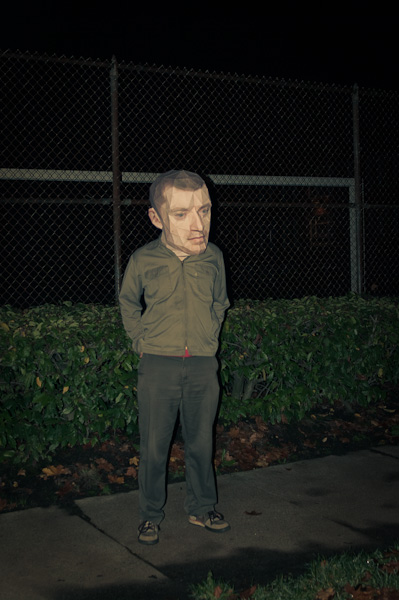
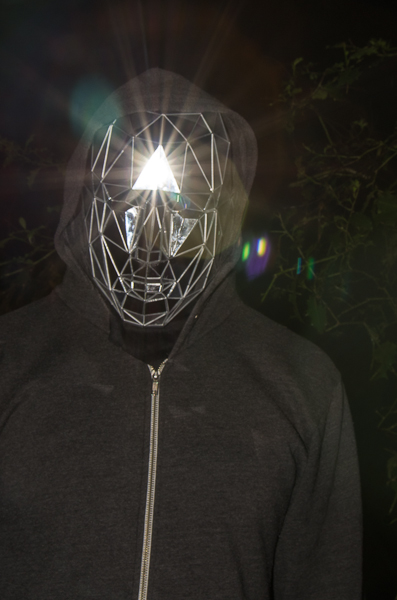
I followed my curiosity to the homepage of the designer Eric Testroete. Eric works often as a game designer, but also has had some side projects, including this self portrait mask from 2009.
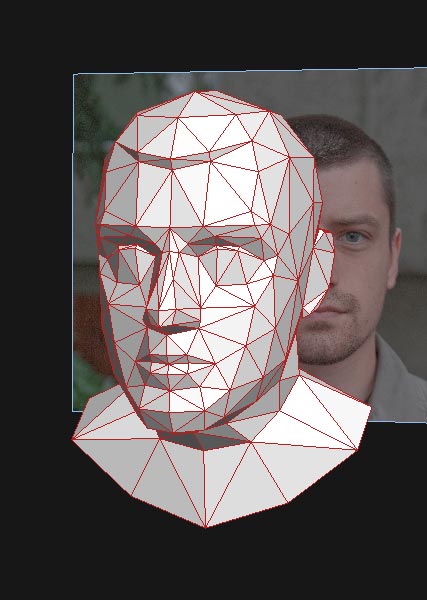
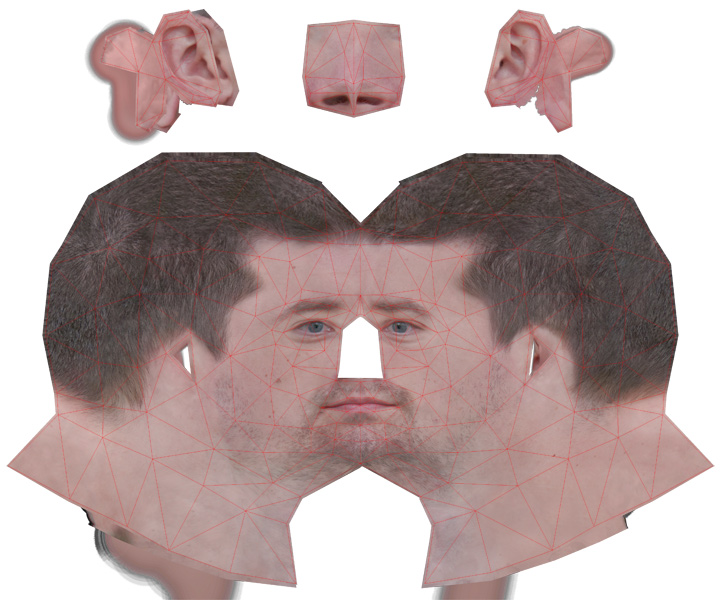
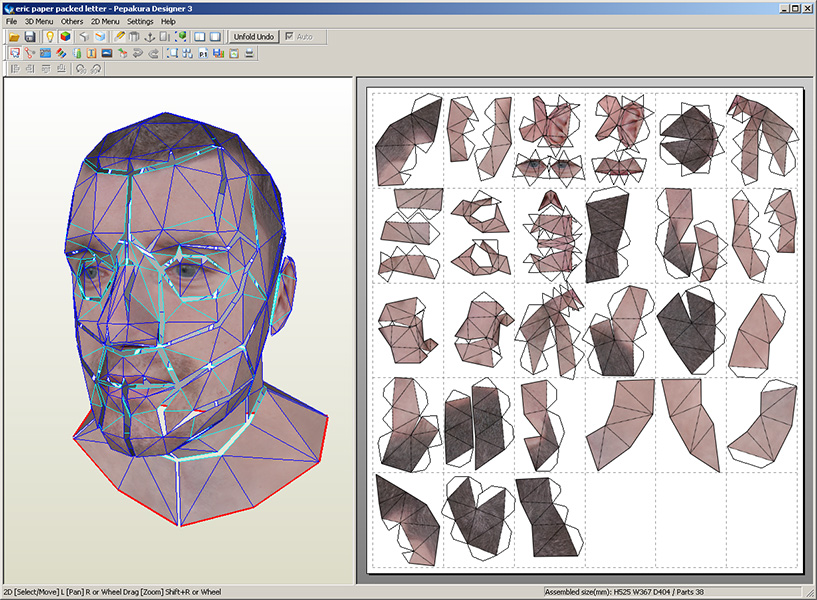
Here’s a look at some of his process. (Reposted with permission from www.testroete.com)
There are over one hundred triangles making up this faceI often find myself using bits of skills from other disciplines when making masks. This image reminds me of flat patterning for sewing.
Mirror, Mirror
Mask Self Portrait, 2011.
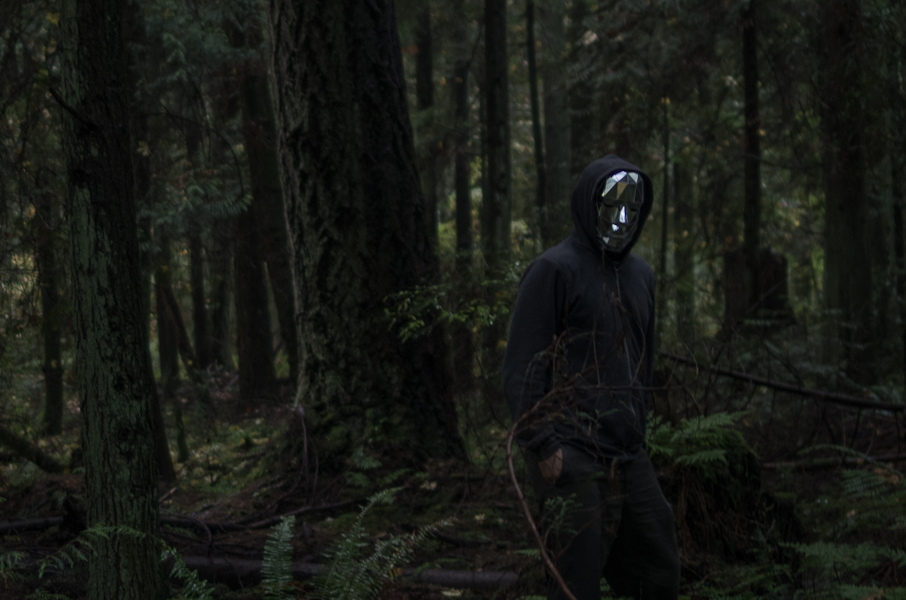
Eric used a similar construction technique to create this mirrored mask. I am always curious about how a mask plays in time and space, with the energy of a human beneath it, so I am really glad he posted this video it in use. And who doesn’t love a good walk in the woods?
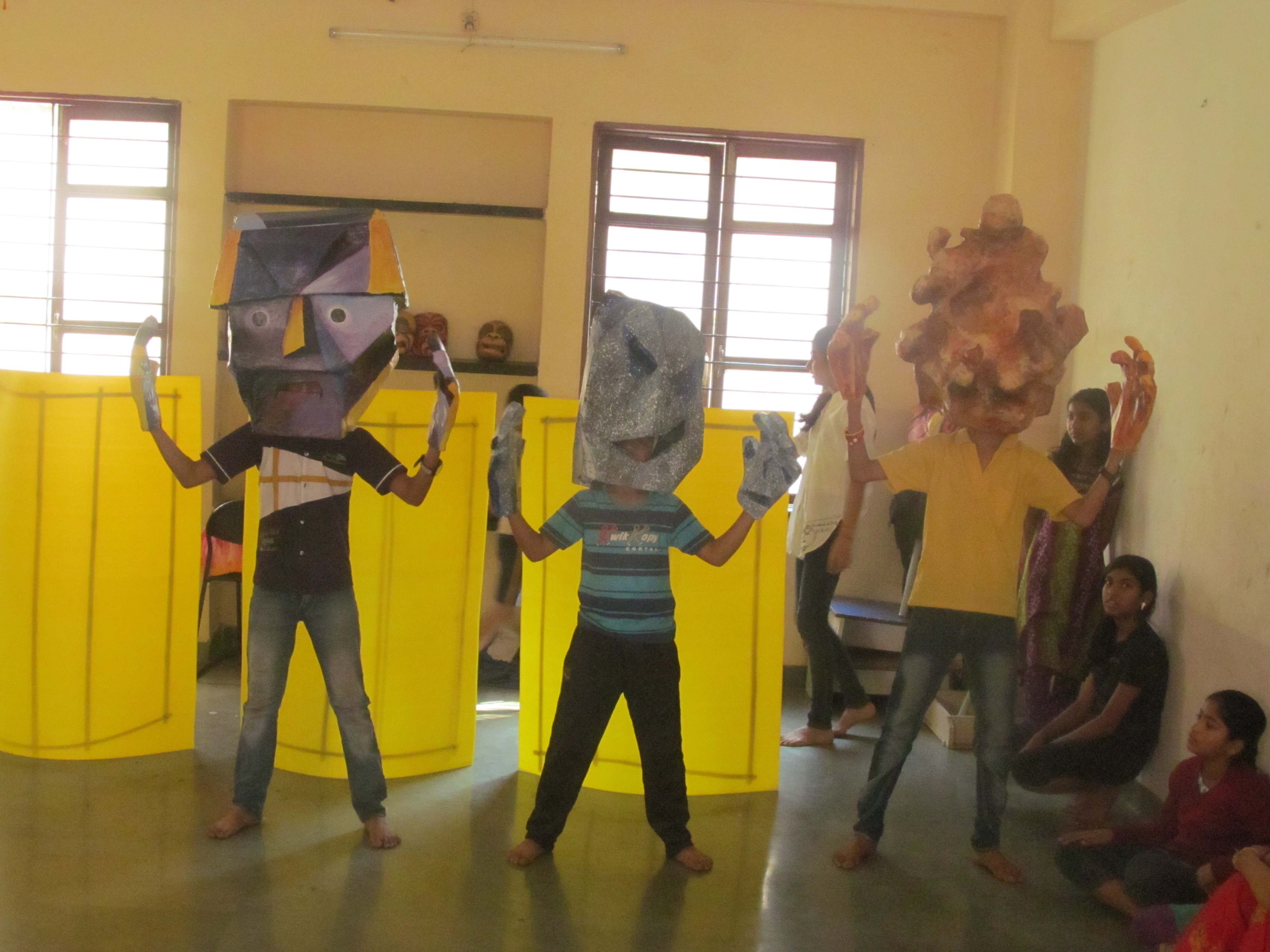
I spent this last week in Pune, rehearsing with the cast at KCT. We had more fittings and used the masks in rehearsal to discover any potential difficulties in comfort and sightlines.
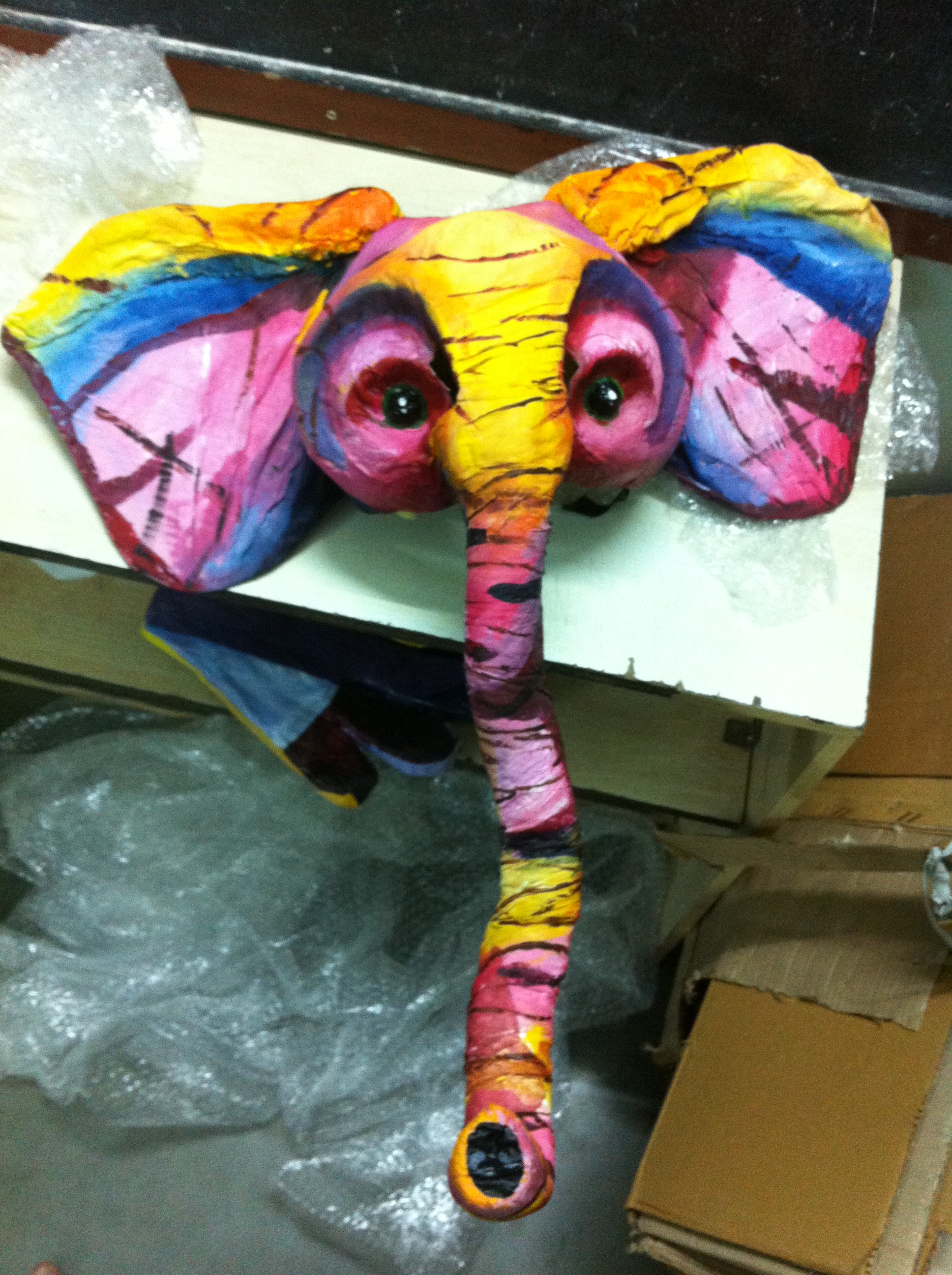
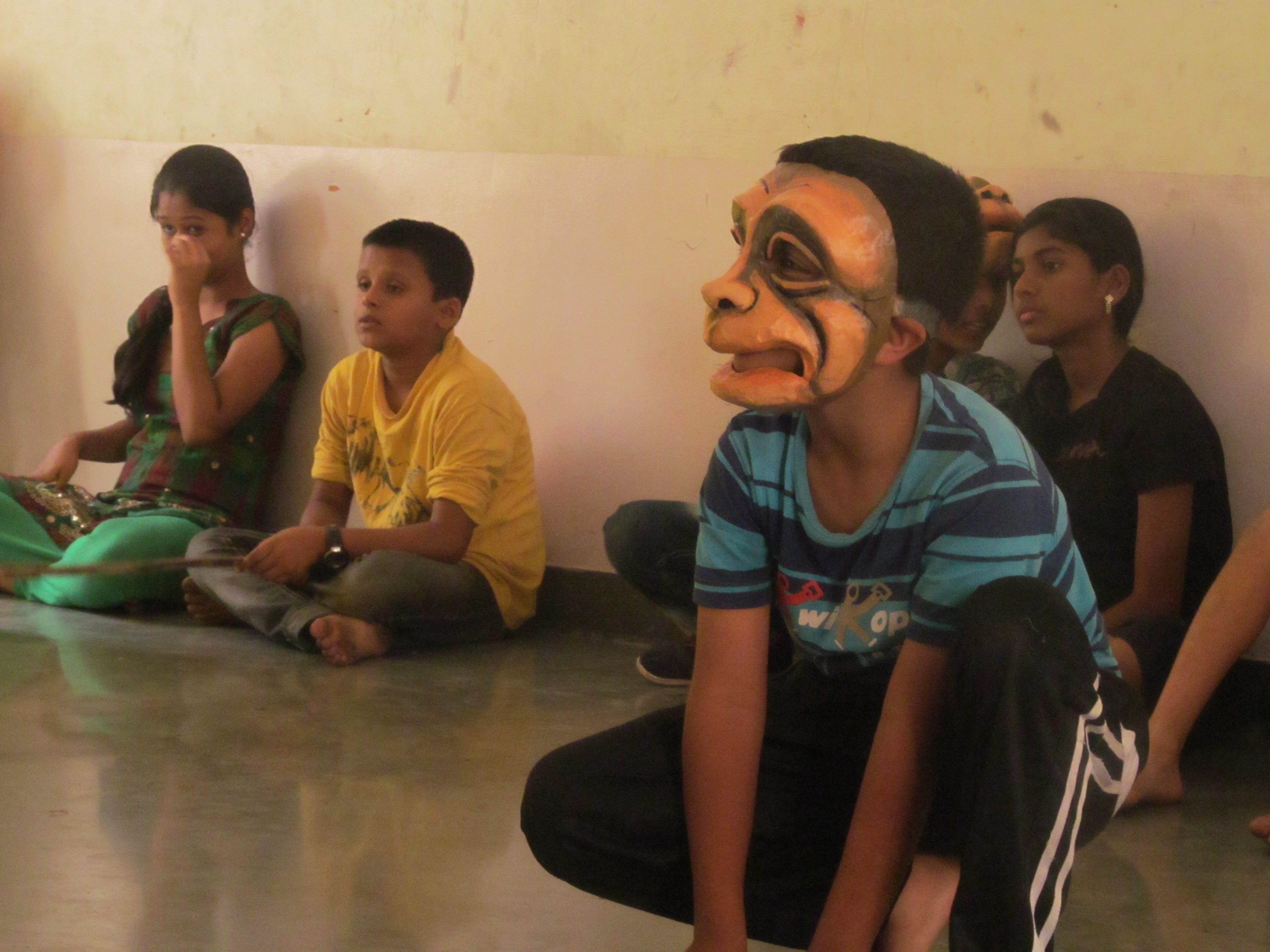
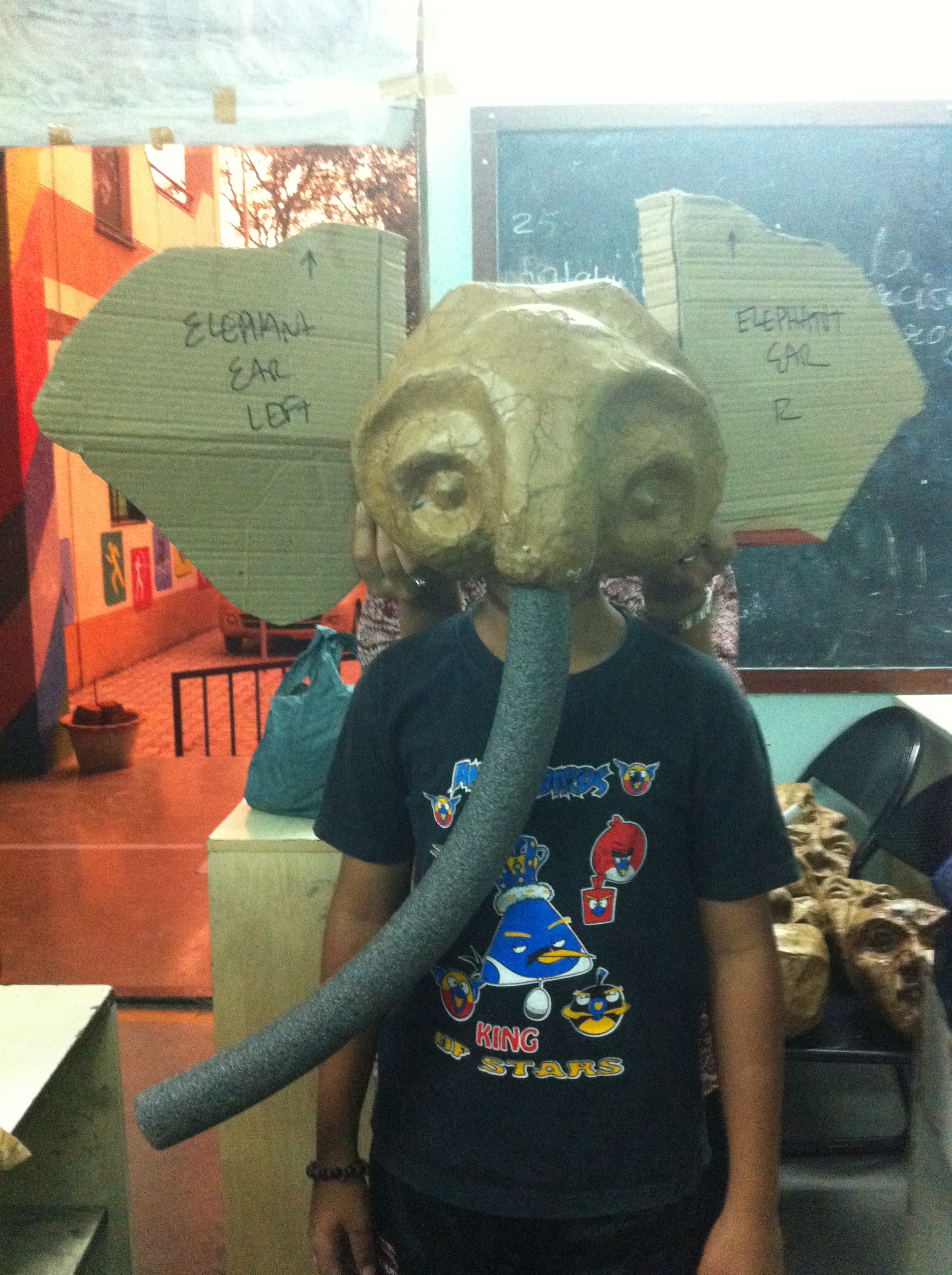
Sunset Elephant! I love it when I can conceal the eye-hole the actor looks through.Mountain Monsters: Obsidian, Dacite and Copper. These characters hurl rocks (puppeteered by other cast members) down the mountain at Maya and her companions.Hey Monkey Monkey! I used close-fitting face masks for the monkeys, and you can see the actor’s eyes move.
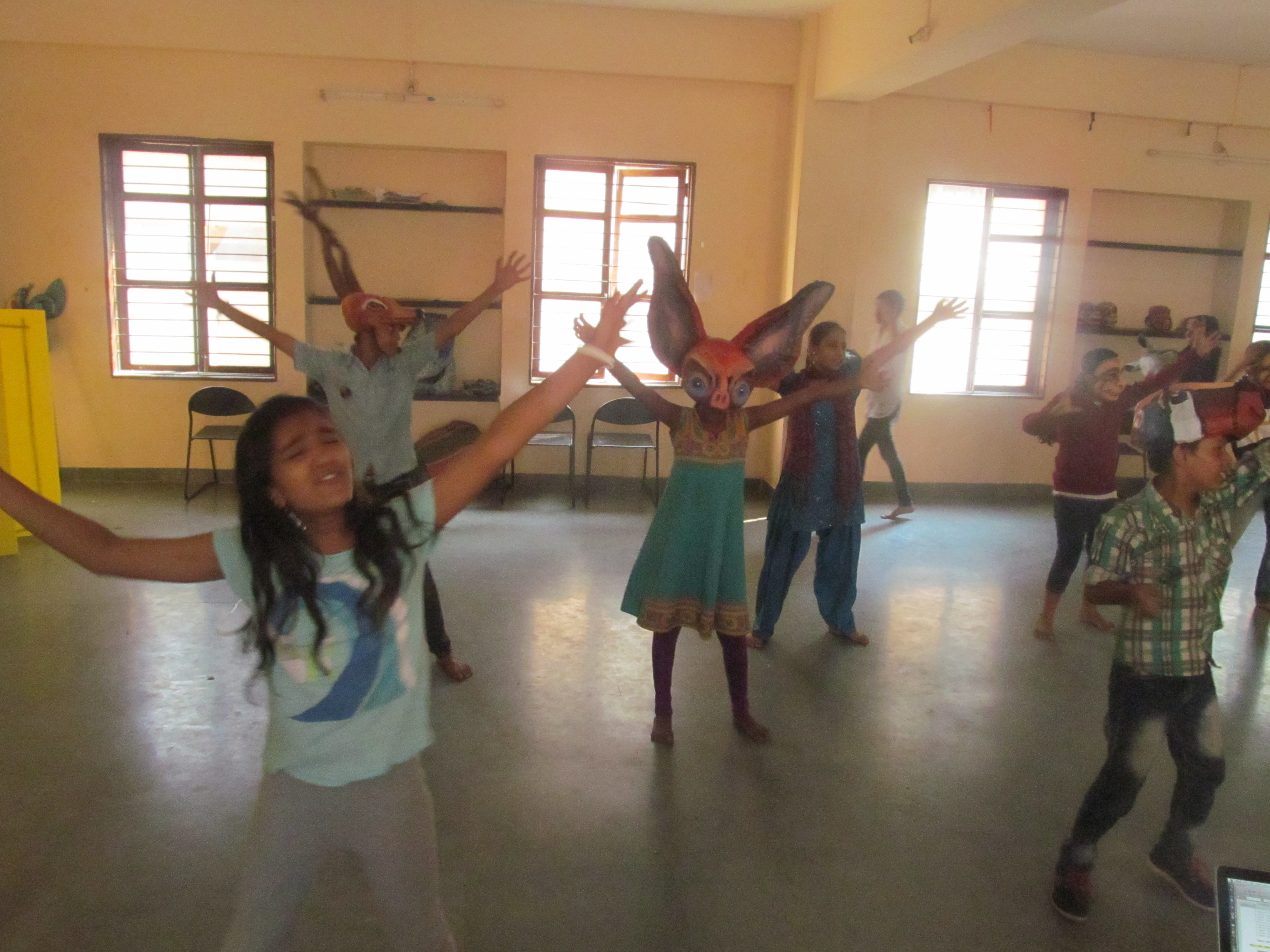
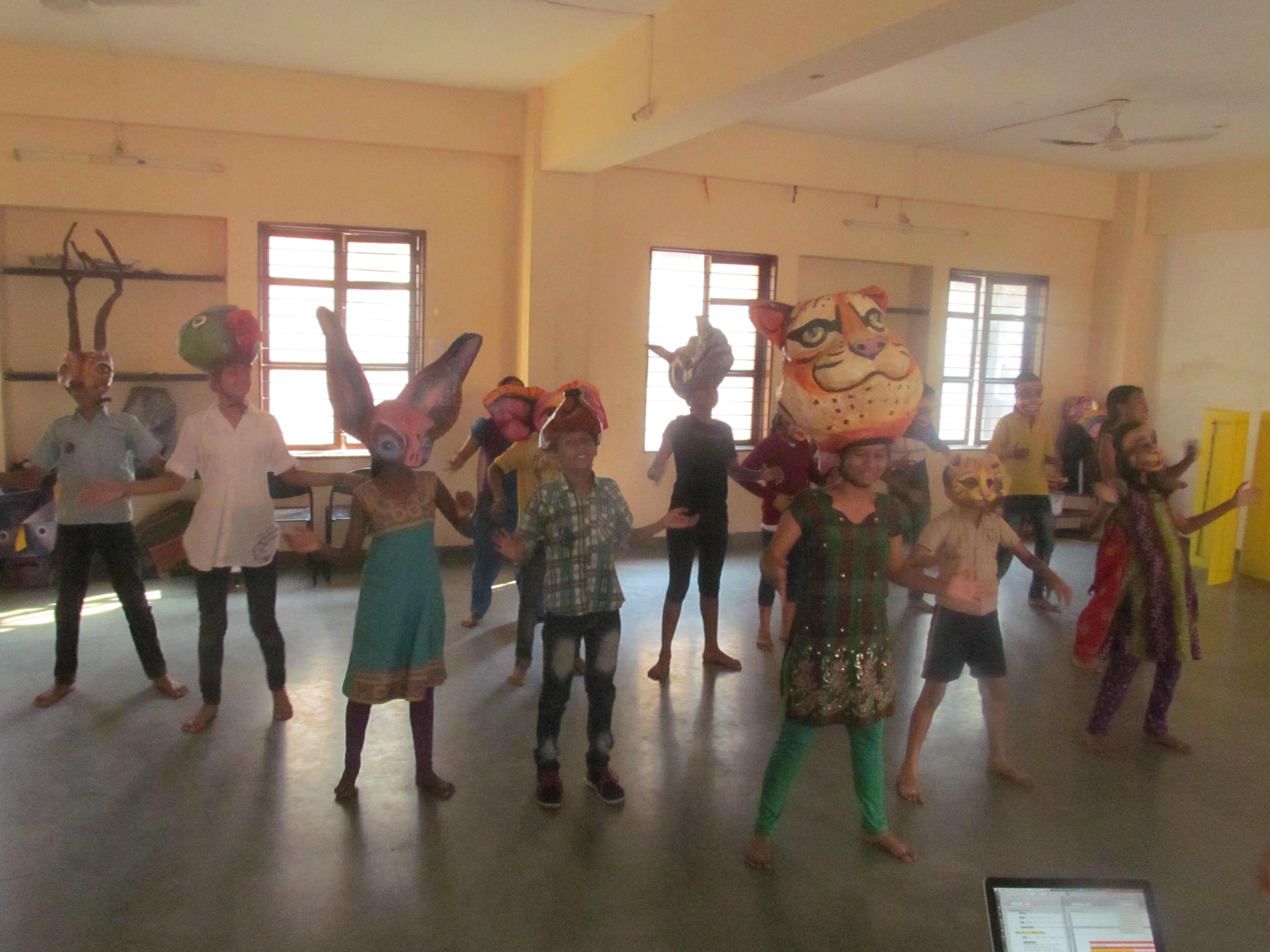
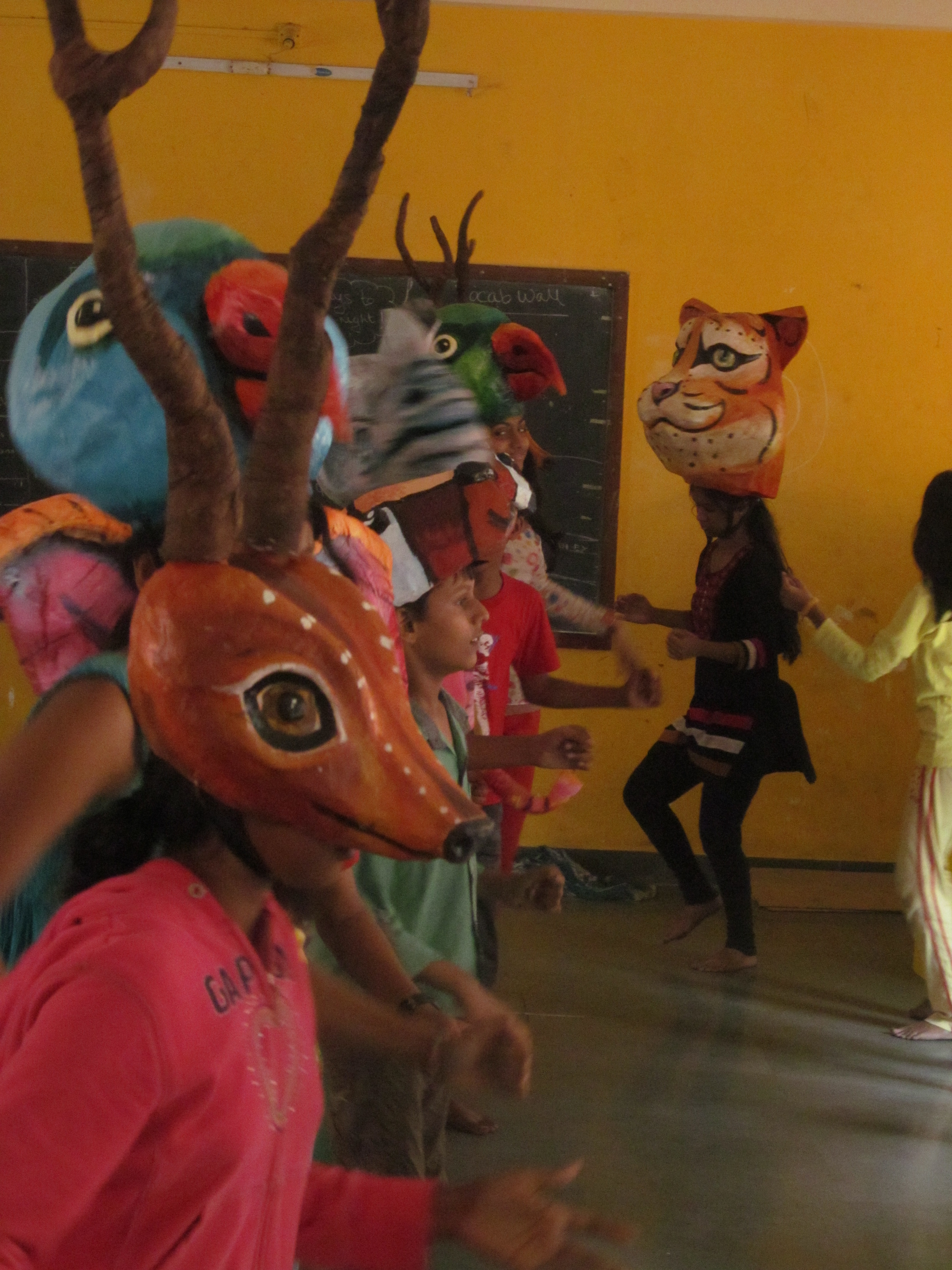
In the second act, there is a large dance featuring all sorts of animals, in a variety of masks styles that cover different amounts of the actors’ faces.
Queen Tiger leads a celebration dance. As we rehearsed, we only had to change minor details in spacing. Success!Deepak takes a rest in the dance rehearsal. Wearing a mask can be exhausting when you do the dance several times in a row!Beast Feast! The Queen Tiger’s mask is based on a bicycle helmet. When dancing, it still rocked front to back too much, so we added a bamboo back harness (not pictured).
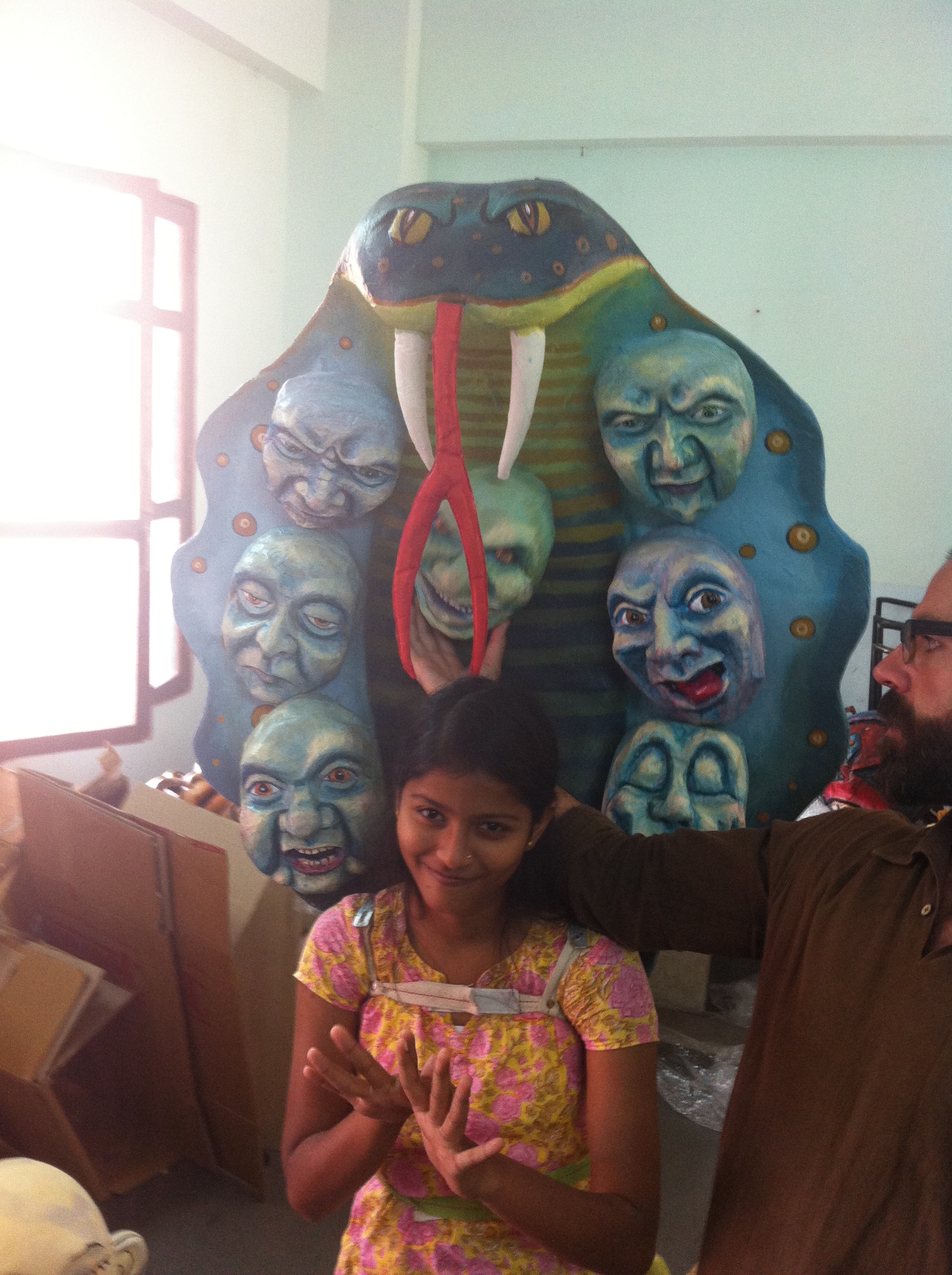
We also were finally able to try the full masks of the serpent Ska. There are some special tricks that these masks have to accomplish in the play, including the removal of three of the heads.
Priyanka surrounded by the sinful faces of the serpent Ska.
As a child, I would often hear my father say: “There’s more than one way to skin a cat.” The most pressing thing on my mind at the time was: Why would one want to skin a cat at all?
I still haven’t answered that question. However, I do know there’s more than one way to get something done. And I have been trying a good number of approaches as I work on the masks for the Mayaproject: different styles, different materials, different processes.
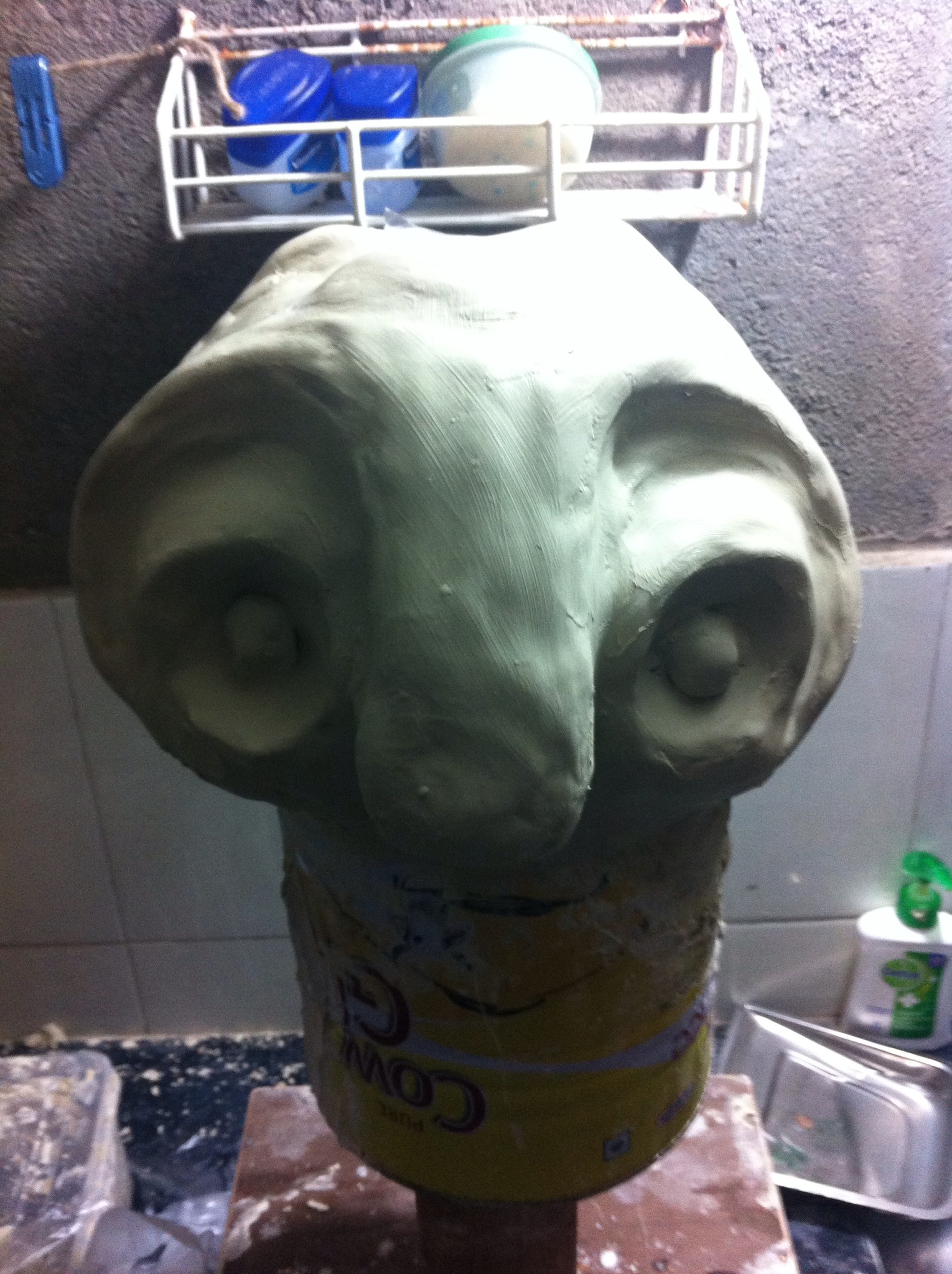
This (currently ear-less) cat was sculpted on top of a bucket on top of an old dabba of ghee on a pedestal, and skinned with papier mache.Ska, the 9 headed serpent, nears completion! The foam snake body was sculpted by Sunil, and I made the vice-laden faces to attach.
There’s also more than one way to feel successful. I think some of the success of a mask is measured by its accessibility. It is a really satisfying feeling when a person can pick up a mask I’ve made and instantly feel that they know what they will do with it. There is a feeling that the mask is strongly and clearly communicating its nature to the performer.
This parrot mask, modeled perfectly by Shahish, was built on basket augmented by newspaper, cardboard, and cello tape.
I’m not trying to say that masks can’t or shouldn’t be mysterious. Many a mask can take some work to get to know and to perform well. However, when there is a sense of recognition in the actor’s eyes because they can intuit the nature of the character, or see the possibilities in the mask, I feel I’ve done a good job.
Avian Evolution
Materials, working conditions, and needs of the performance are often in flux, so I find that adaptability is key. I have my preferred methods of creation when on my home turf, but while in India there are a number of differences. For example, used cardboard boxes, brown bags, and newspaper are not easy obtainium in Mumbai as they are in the US. Here they are commodities that can be purchased if you know where to look. The challenge can then become to use what you have in front of you to get the work done.
Phase 1: A costume mock-up before I arrivedPhase 2: Adding detail and dimension to the originalPhase 3: Altering the position of the maskPhase 4: Cutting it all up and putting it back together.Phase 5: Testing the altered mask on a new volunteer. Accessibility and wearability achieved!Phase 6: Painted and rehearsal-ready!
Furthermore when working on a project as large as Maya, often previously approved ideas need to change slightly to serve the show. Sometimes the choreography, blocking, and the style of mask just don’t synch up and to be successful we find how we might change.In some cases, the choreography can be altered with minimal fussiness. In the case of our peacock character, Prasad was so amazing and alive in physical characterization that it was better to change the position of the mask to match what he was proposing.
Five Sprites, Please
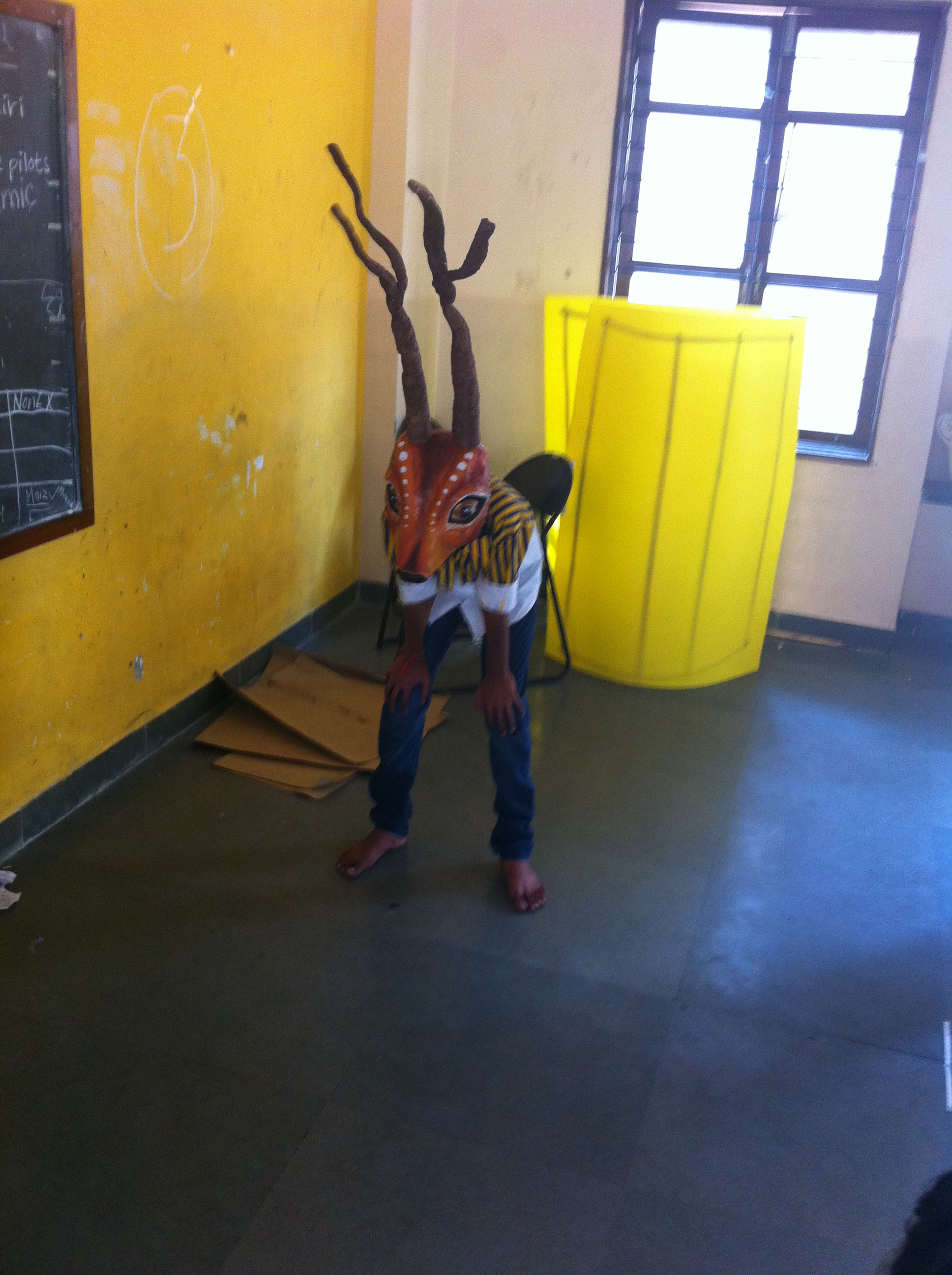
Just a few days before all the basic structures and paint jobs were due, I was asked to make the antlers of the deer masks removable. This would permit easier shipping from venue to venue on the tour. I decided to use old bottles and their lids as the mechanism for this request. A 600 ml Sprite bottle had the perfect neck, but also a very short lid to which I could attach the wire and foam antlers. But it would have to do. I went out into the madness of the Dadar market to purchase five Sprites, trying to decide whether I would drink any or just pour it out. It was a hot day. But I couldn’t find a single one. Then I found a plastics shop (owned by Shahish, incidentally. See parrot pic) that carried long neck bottles with tall lids. Success!
Thanks to my good friend Amy Jo, who shared this idea with me years ago.Mama Tiger with ears and paint. atop a bike helmet, atop an actor.
Today I complete another revolution around the sun. I am in the same place, but not in the same place. Unlike any previous year, I am in another country for my birthday.
Motorcycles and mopeds are everywhere in Mumbai.
I will be spending it NOT working, and doing a bit of roaming around Mumbai and sharing food with friends. I am so very lucky to do what I do. It’s not just the passive accident of where and when I was born, it is also the summation of active gestures—positive and negative— from people all over that create the circumstances in which I live. For all of these I am grateful.
Thank you to my supportive friends and family, to my boyfriend, to Teach For India and ASTEP, to the wonderful people of India, to the entire production crew of Maya, to all who have helped me afford to make this trip, to everyone whose actions may be invisible to me, but help me all the same.
Sheetal brought a Gujarati feast for lunch!
Special thanks to Sheetal, Raju, Sunita, Sajida, and Shaheen for helping me stay well fed.
To whoever invented the table top fan: I salute you. You have helped my sculpting in the back room of the Dadar studio feasible.
Cooling the workspace and decreasing drying time for papier mache—good work, fan.Masks for the 9 headed Hydra awaiting papier mache.
Thanks also to the Heart of the Beast and BareBones puppeteers of Minneapolis—Mark, Alison, Masa, Bart, Julian, Soozin, and all the others—who introduced me to the wonders of sculpting with recycled cardboard and to the eternally amazing Creature Stapler.
The P-35 “Creature” Stapler is a modern miracle. This one even has a handy knife at the tip. I use it all the time.Making puppets in Minneapolis, circa 2000.
Making the Keeper of the Copper Mask
Making a mask with cardboard armature is really fun. I started with a basic idea of an approach. As I made each decision, the next choice became clear. It’s one of the best things about creating.
Designer Drawing for the characterCreature Stapler at the readyI began with a big plastic bucket, cardboard strips and the silhouetteI added support strips and some dimensionLots of dimensionlI covered it in newspaper to establish the planes of the surfaceSajida and Sunita work to cover it in papier mache.After it dried, I pulled out all of the armature. Raju likes to dance in the big heads.