Mask Making Workshop in Portland April 29–May 1


Hello all! I’ve been  blog-silent, but studio-busy…  It’s been a great year of building shows, creating mask pieces for museums, selling masks at Mardi Gras, and making connections with mask lovers, performers and teachers all over. I’m pleased to announce another mask making workshop in Portland. See details below.

—Tony

Design, sculpt, cast and paint your own mask!

Find new sources of creative inspiration, learn about the qualities that promote dynamic onstage play, and discover techniques for shaping a well-engineered character mask. You will leave the workshop with a plaster cast of your face and one painted mask.

“This workshop was really fun and informative, great for a beginner. I’d take it again- Tony is a great teacher!” — 2015 Mask Workshop Participant

WHO:

This workshop is excellent for actors and performers, costume designers and mask enthusiasts at all levels of experience. Ages 18+

WHEN:

6–10 pm Friday, April 29

10am–7 pm Saturday, April 30

10am–7 pm Sunday, May 1

There will be an hour lunch break on Saturday and Sunday


WHY:

Masks are awesome! Though they obscure part or all of the face, masks reveal so much more. Masks are powerful objects that inspire character and transform the people that wear them. They have a part in nearly every culture of the world, they show up in holidays like Halloween and Mardi Gras, and they are one of the original elements of theater as we know it today.


“I’d never realized the depth of faces before. I’ve started noticing expressions in a 3D way, and also the amazing contours of different faces… I now feel confident in trying my hand at making masks- before I would’ve ended up wasting tons of time trying to figure out the basic, and now I have a cast of my face and some good principles.”—2015 Mask Workshop Participant


WHERE:

The Mask Studio, NE Portland


TUITION:

$300. Cost for materials is included. A $50 non-refundable deposit is required upon registration. Check, PayPal, Square, Chase QuickPay accepted.

If you register by Monday, April 18, secure the early-bird price of $275.


TO ENROLL: Email me at tony_fuemmeler@yahoo.com for more information and with any questions about the workshop.


ABOUT TONY:

Over the past 13 years, Tony Fuemmeler has designed masks for multiple productions on the

West Coast and across the country. Locally, he has designed and built masks for productions like the Drammy Award-winning The Snowstorm (Many Hats), The King Stag (Lewis and Clark College), The Velvet Sky, The Adding Machine (Theatre Vertigo), The Storm in the Barn (Oregon Children’s Theatre), and Alice in Wonderland (Nomadic Theatre).

Tony began working with masks at the University of Kansas in a production of Dario Fo’s Accidental Death of an Anarchist. After graduation, he spent a year with In The Heart of the Beast Puppet and Mask Theatre (Minneapolis), and then pursued further training with Bruce Marrs and Joan Schirle at the Dell’Arte International School (Blue Lake, California). In 2014, Tony traveled to Ubud, Bali, to study with master mask carver Nyoman Setiawan, and then to Mumbai, India as a volunteer mask maker for The Maya Project (a collaboration of Teach For India and Artists Striving to End Poverty). Tony is based in Portland, Oregon.


Web: www.tonyfuemmeler.com

Instagram: make_those_faces


Birds and Bugs

Owl Over the Moon

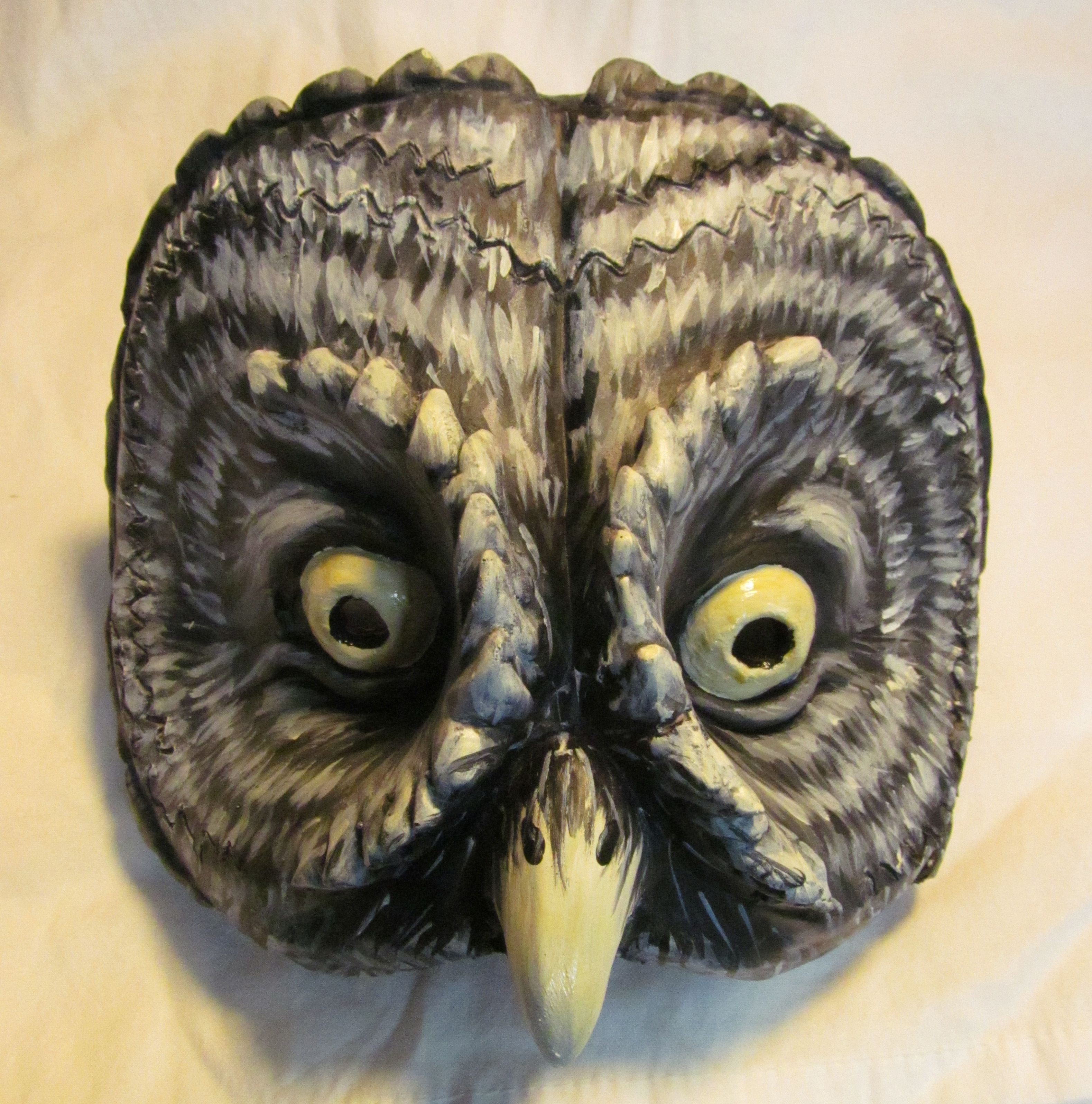
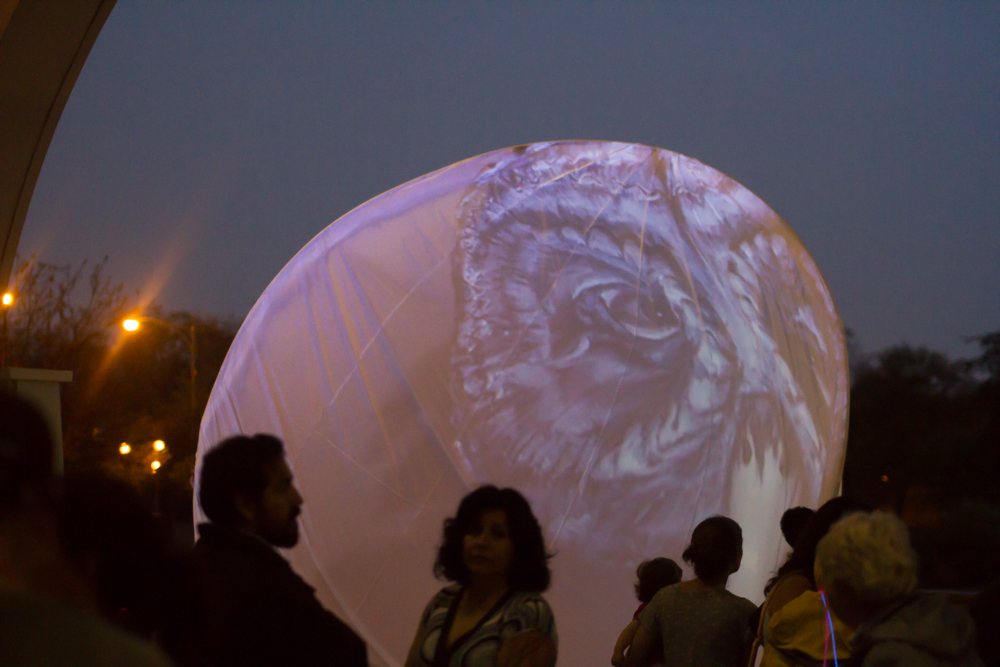
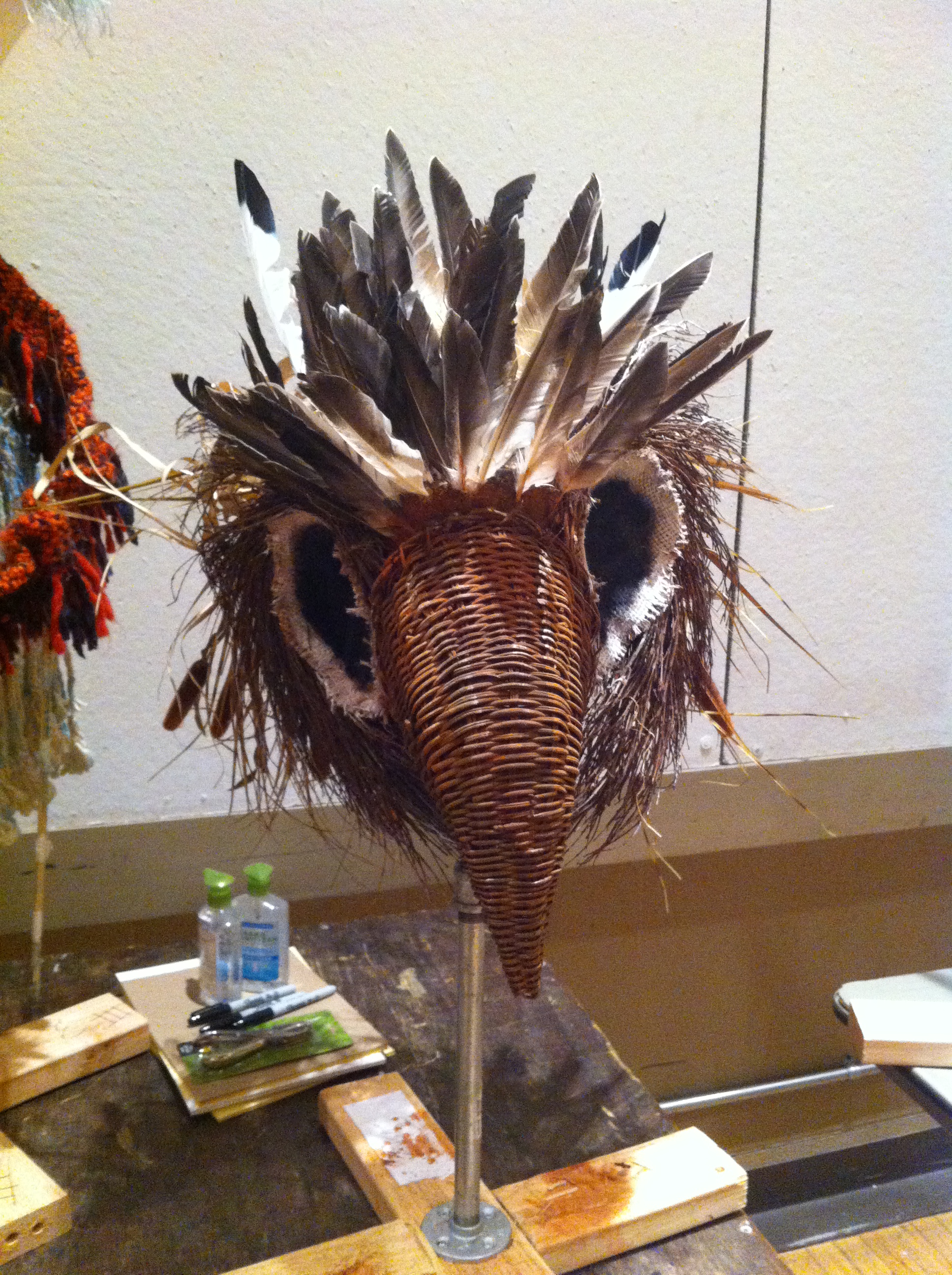
Opera-matic, a collaborative arts group in Chicago, contacted me this last spring to make a mask for The Moon on the Lagoon, The community performance featured lullabies and the faces people find in the moon. What a cool idea!
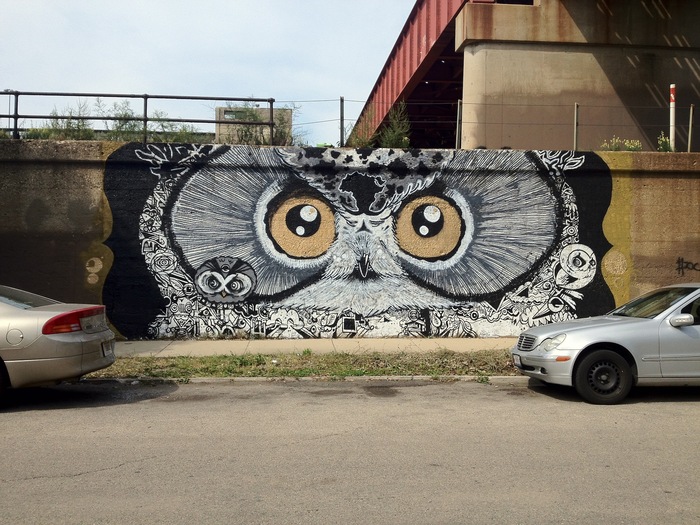
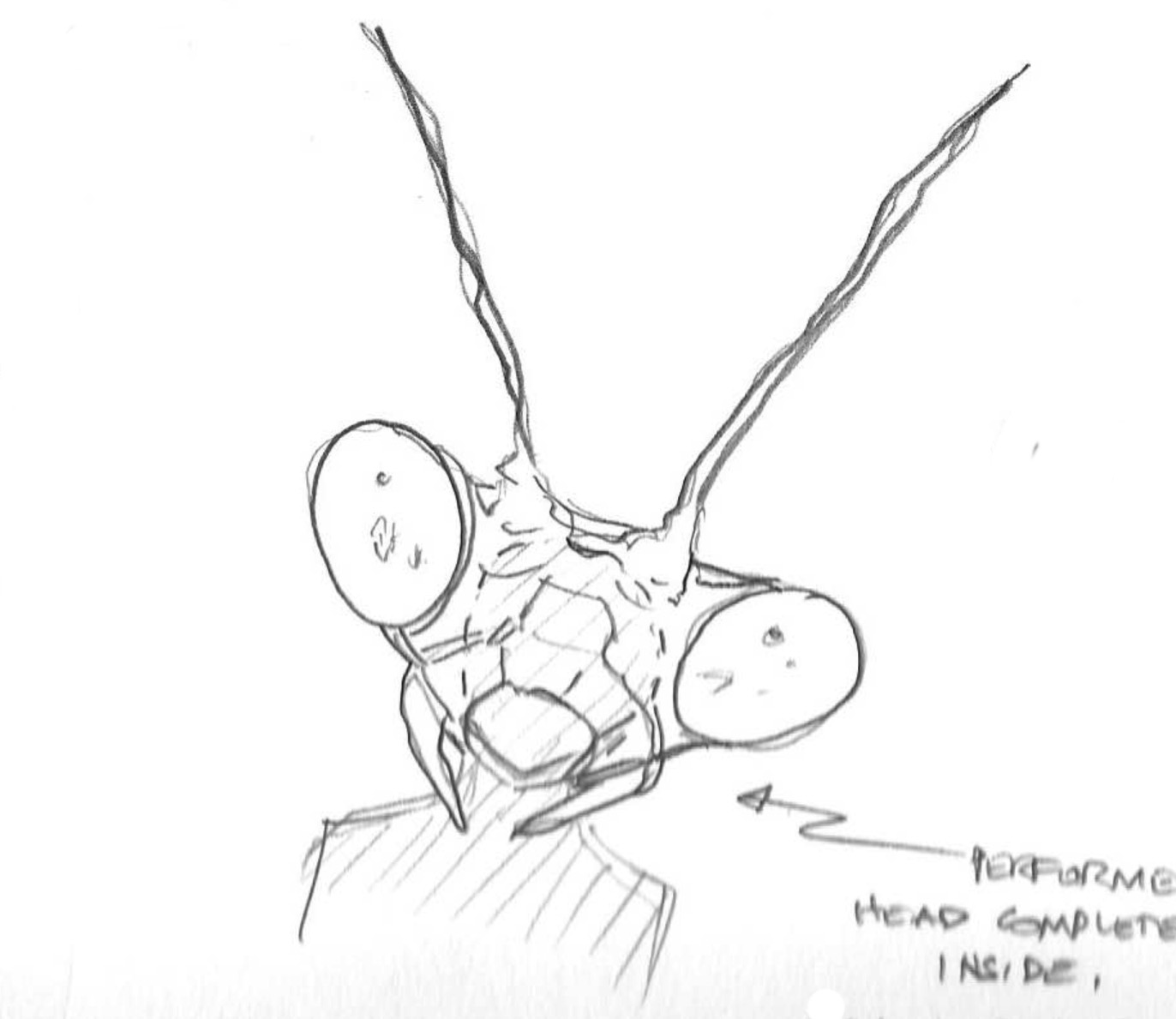
I was sent this image for initial inspiration.
I was sent this image by a group in Chicago commissioning an owl mask.

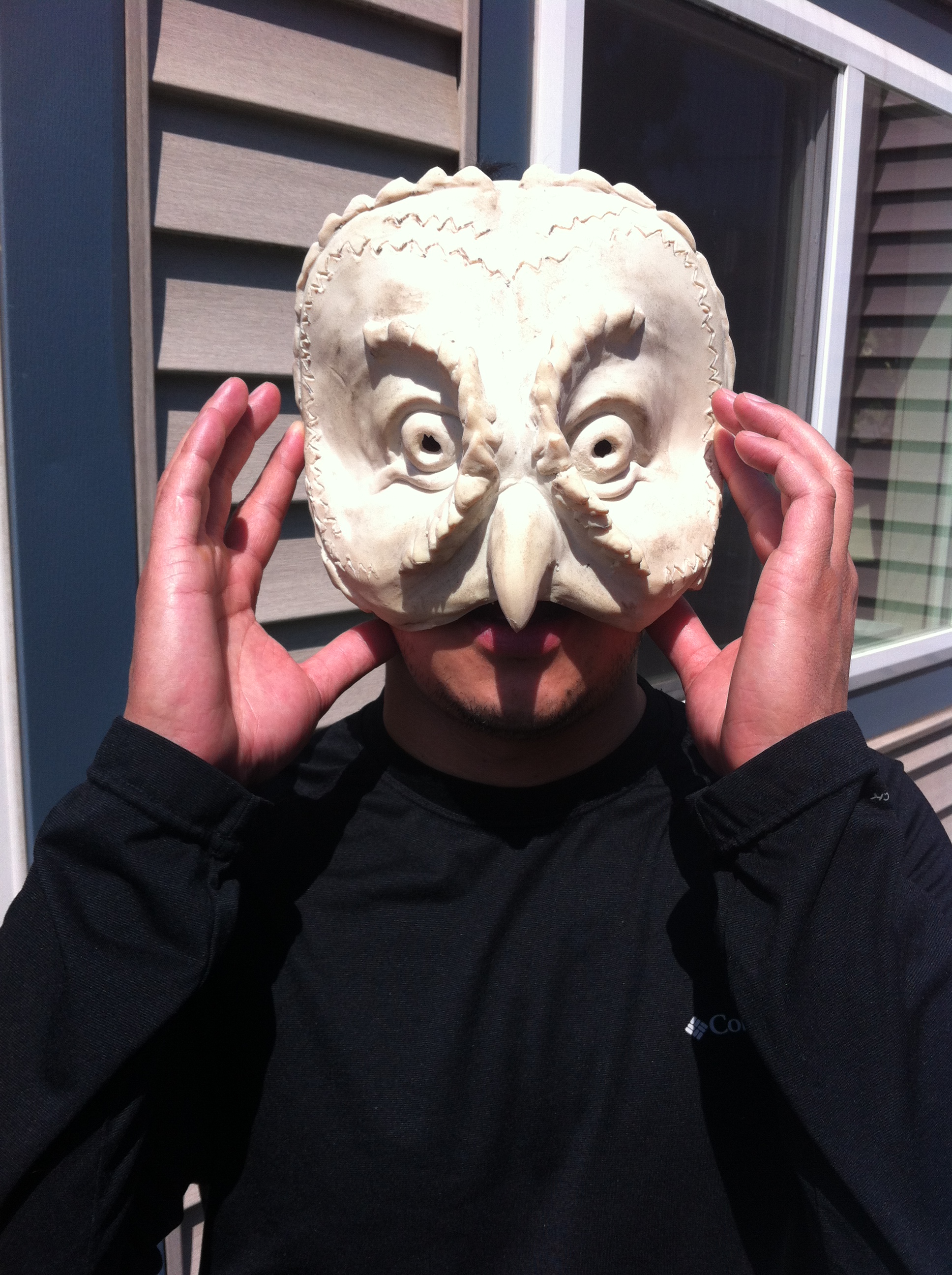
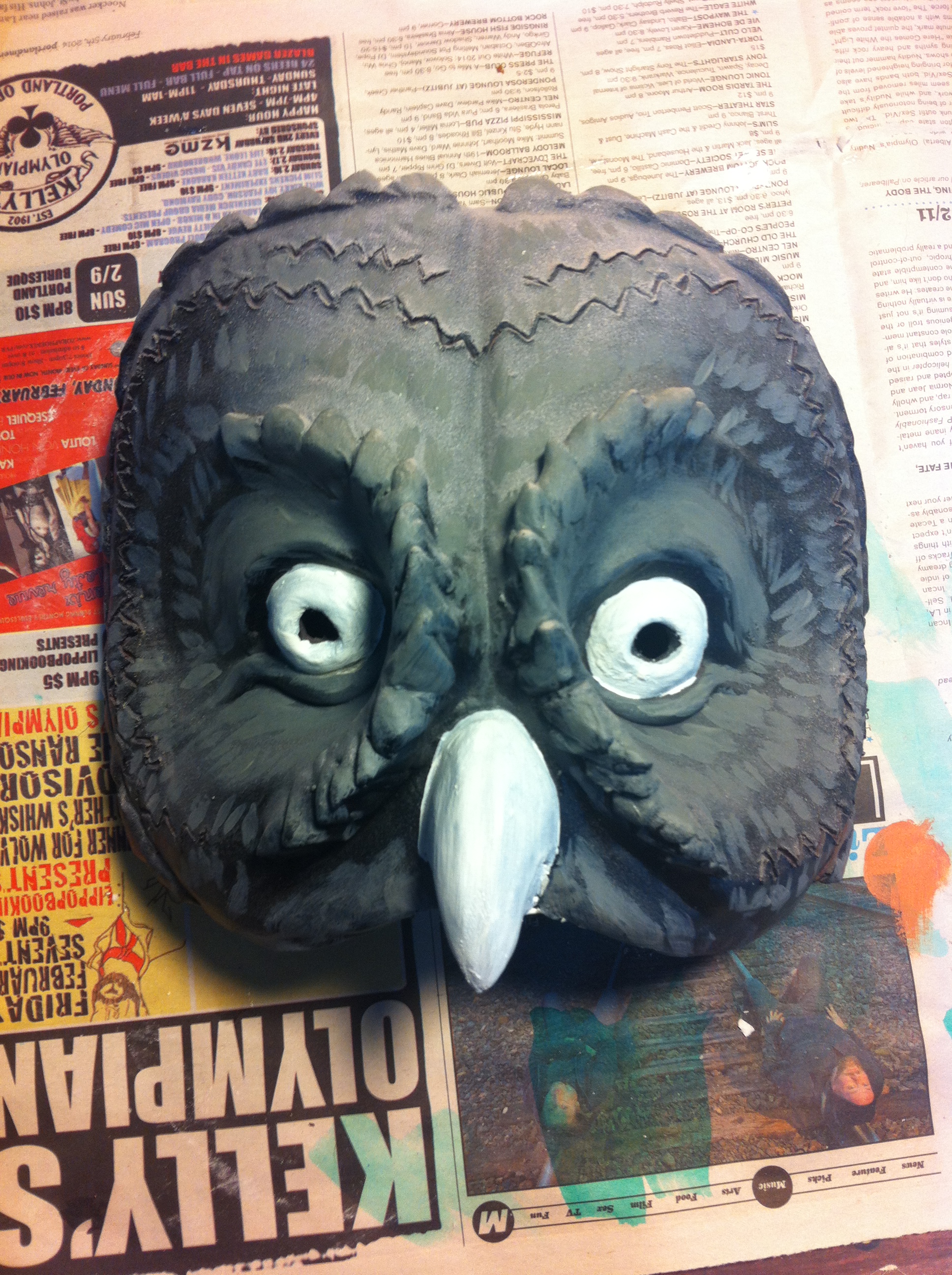
Part of designing the mask is figuring how it will align with and/or cover the performer’s face. The producers knew they wanted the mouth of the performer available, so I approached it much like a three-quarter character mask.

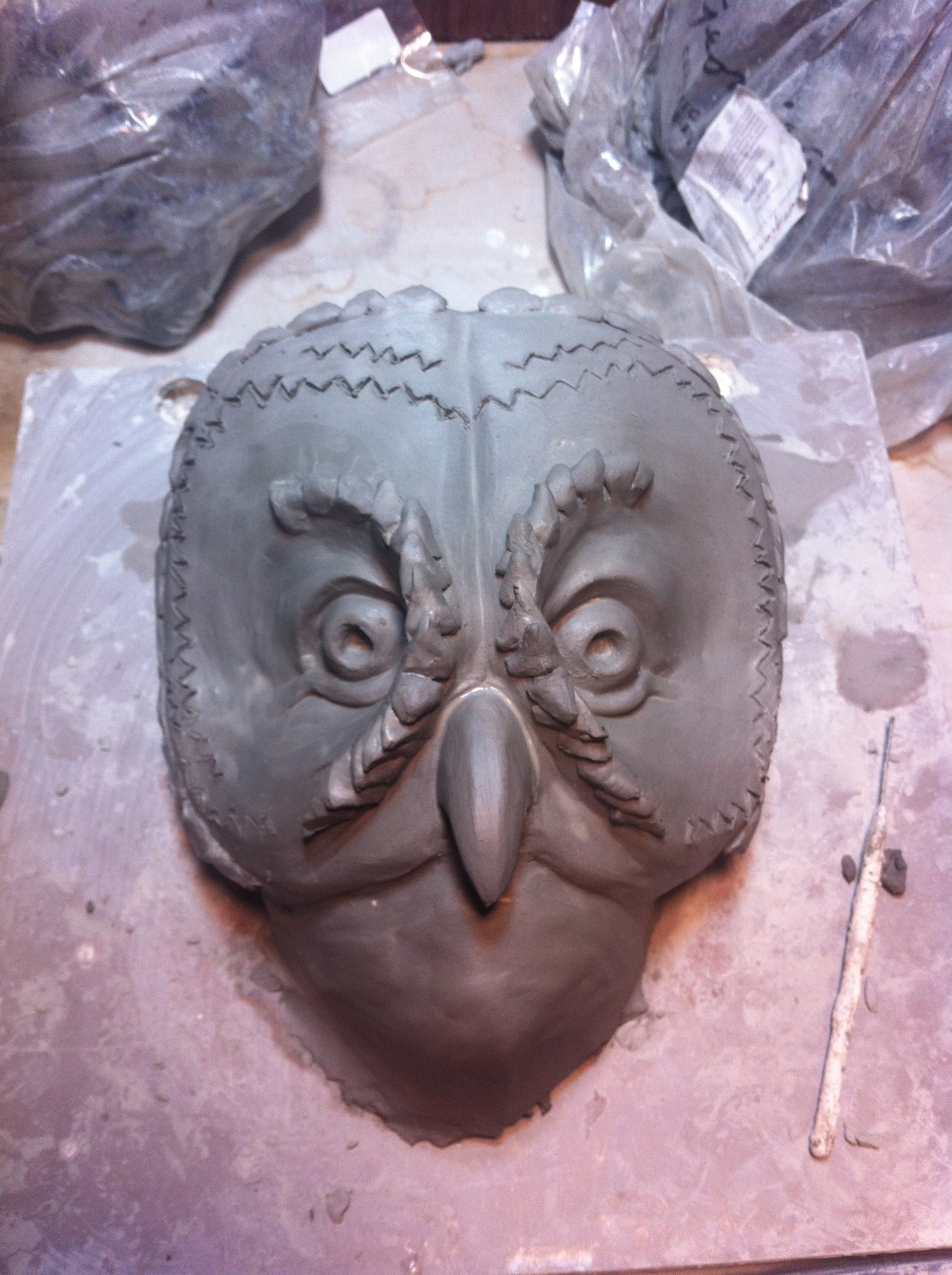
Sculpting happened quite quickly on this project because the mask was needed quickly.
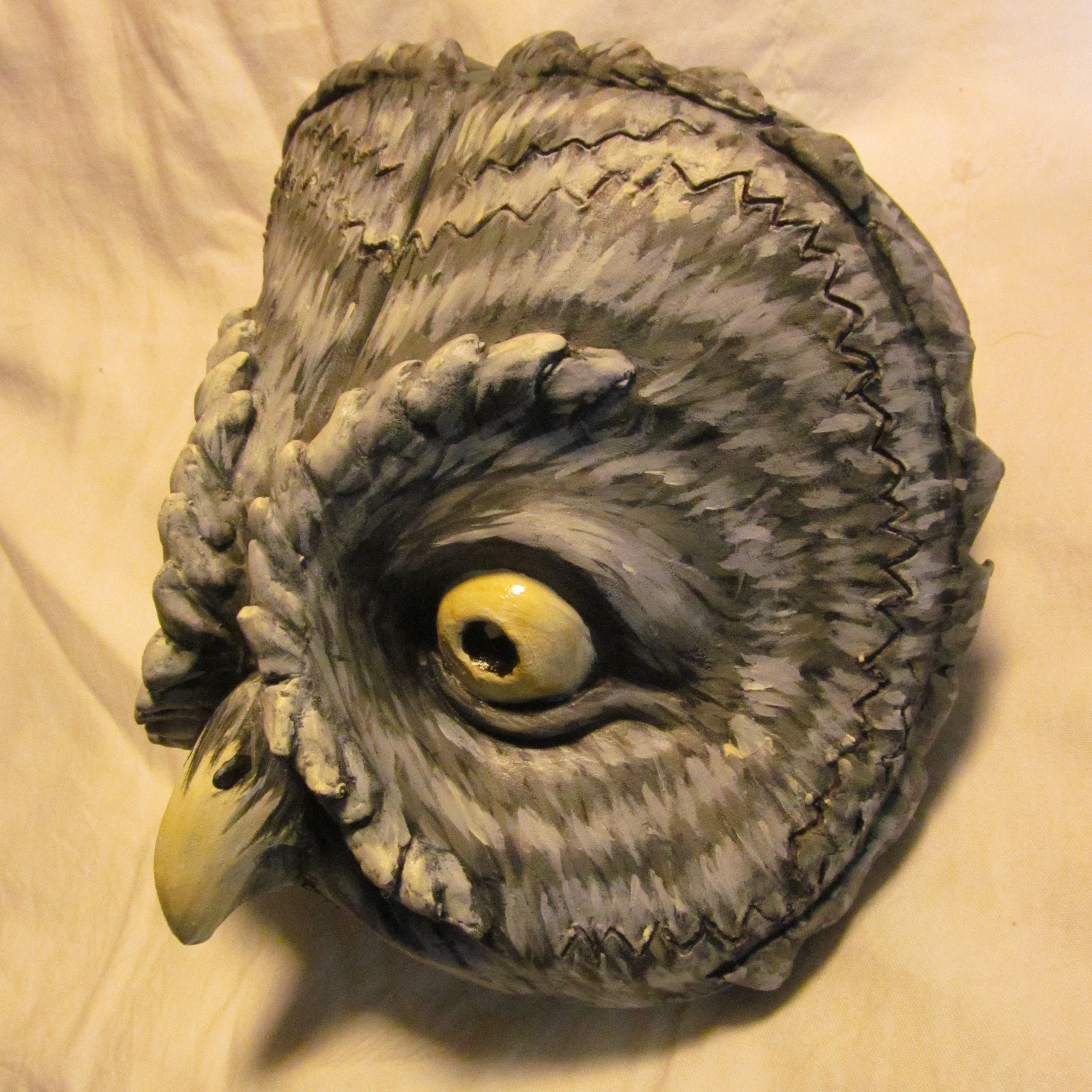
I knew the image of the performer in the mask would be projected onto a surface, so I wanted to be sure to include various amounts of relief in the sculpture.
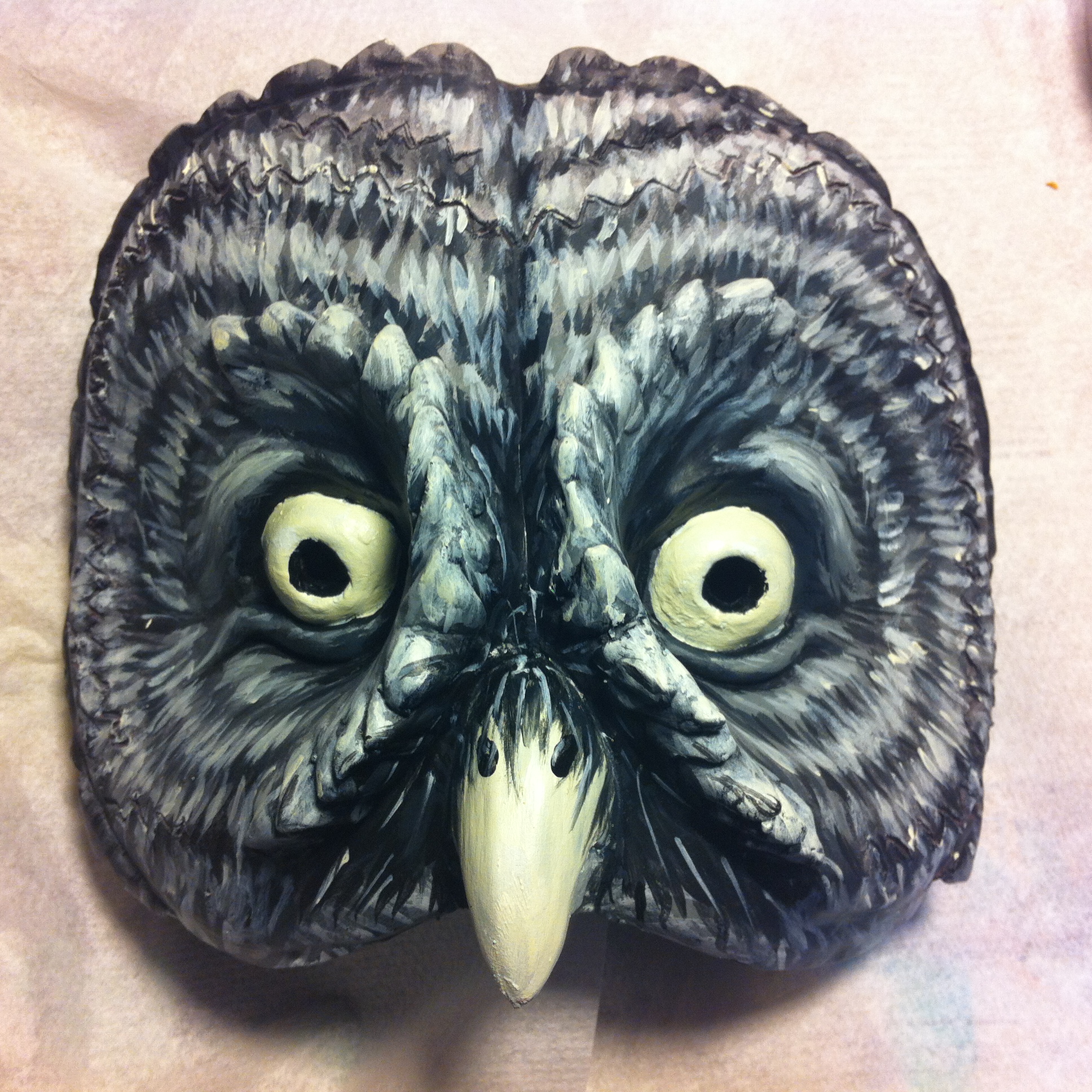
For this project, I used an underpainting technique for highlight and shadow. I started adding tones for the feathers after.
The initial painting treatment. Though I liked it by the light of day, it seemed like it might be too dark for the context in which it would be performed.
Luckily, the idea of underpainting continued as I lightened the tone with additional layers of feathers. It ended looking nice and complex.
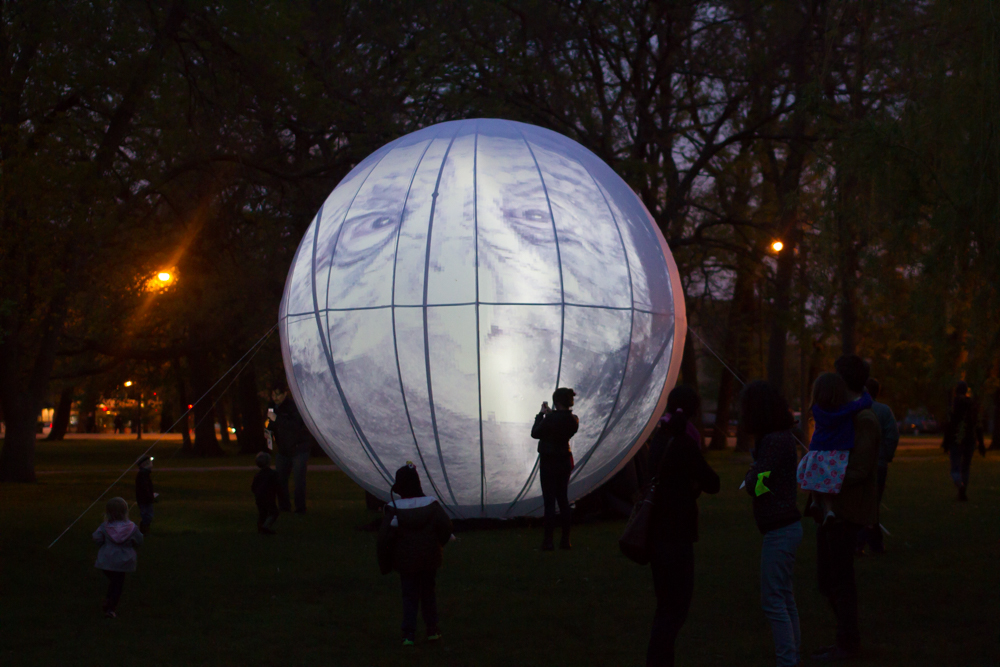
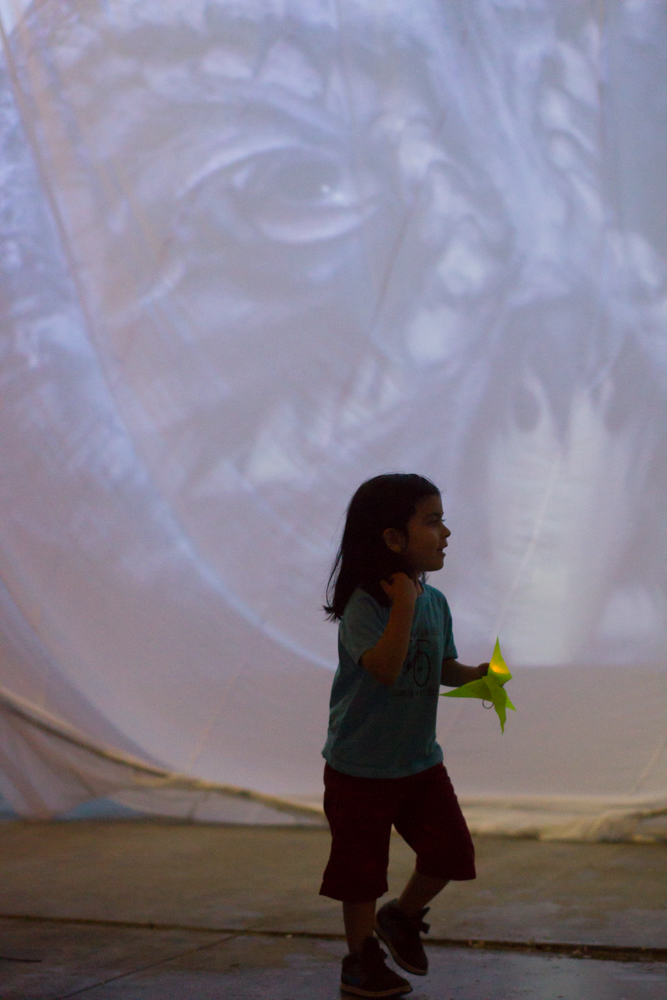
The mask projected on the image of the moon in Humboldt Park, Chicago. Photo ©2015 Kelly Peloza
The mask projected on the image of the moon in Humboldt Park, Chicago.
Photo ©2015 Kelly Peloza
The production team had their own discoveries. The found that they wanted more eye movement than anticipated, and adjusted the eyes accordingly.  Photo ©2015 Kelly Peloza
The production team had their own discoveries. The found that they wanted more eye movement than anticipated, and adjusted the eyes accordingly.
Photo ©2015 Kelly Peloza

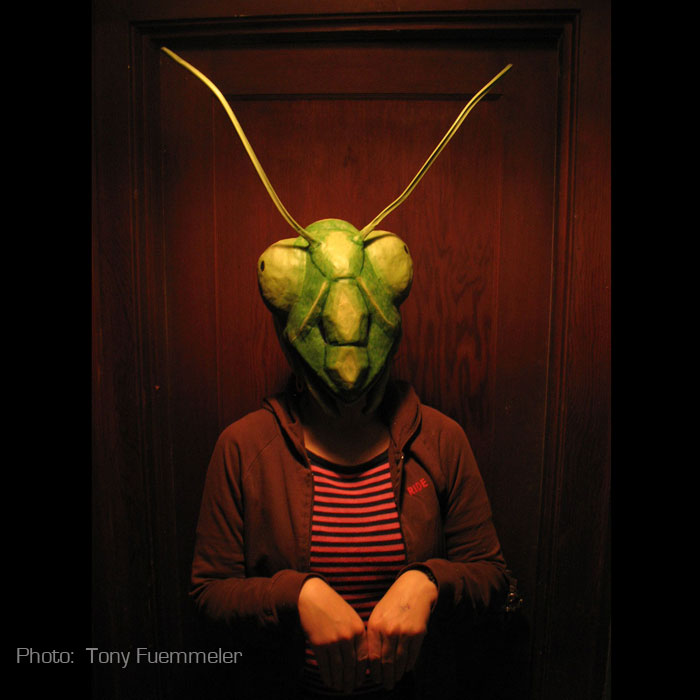
Variations on a Mantis

Inspiration and discovery continue throughout the process of making. Those moments are my favorite in my process. These inspirations can manifest in an accident, through a coincidence of timing, etc.

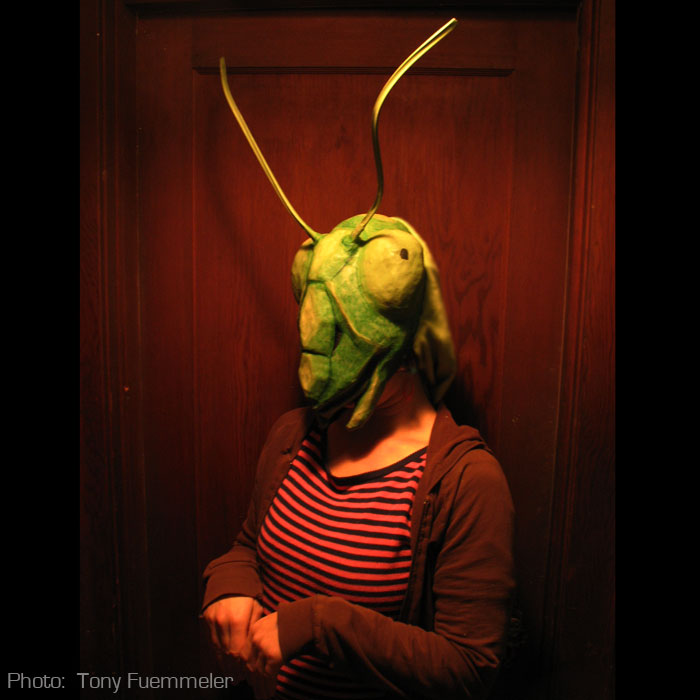
The first version of this mask was made for the Grand Guignolers company in Los Angeles. It was to be human in scale, which directed my choice about how to create visibility for the actor.

Coy. So coy. Just a like a mantis.
Though difficult to see here, the exoskeleton is textured with small brushstrokes to add life to the painting under stage lights.

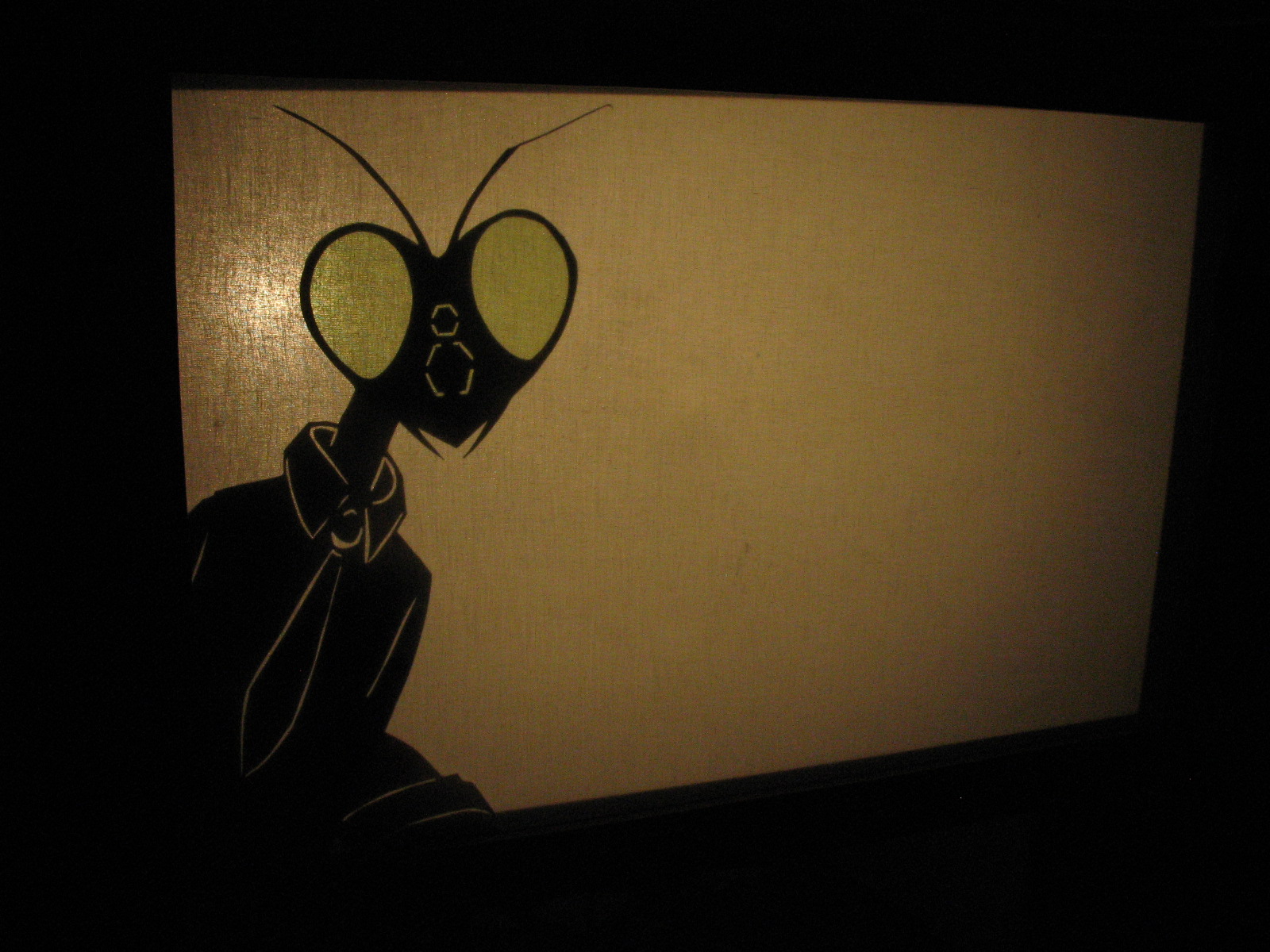
This amazing insect was so inspiring, it started appearing in other projects, like the shadow puppet show bugged, created with Rollin Carlson.

An exploratory image from the making of "bugged"—like so many images, it didn't make it into the show.
An exploratory image from the making of “bugged”—like so many images, it didn’t make it into the show.

Working in shadow encourages an essentialization of form. It’s interesting to look back and see which elements carry on and evolve through the various iterations. After this further exploration of this form through puppetry, I realized wasn’t quite satisfied with the silhouette. I jumped at the chance to improve it with my next commission for the insect.

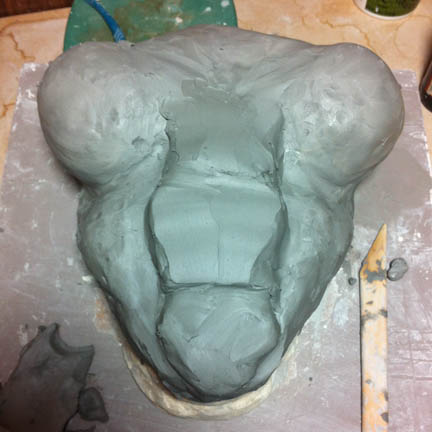
Round 2: blocking in a sculpture for a new version.
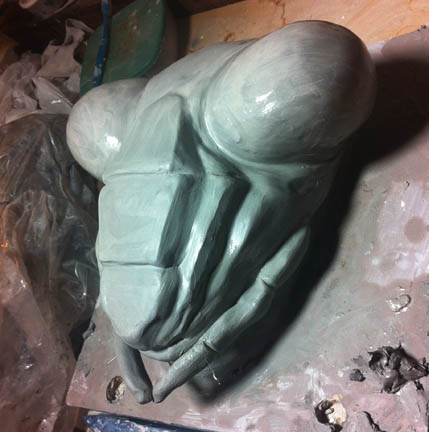
Refining the sculpture
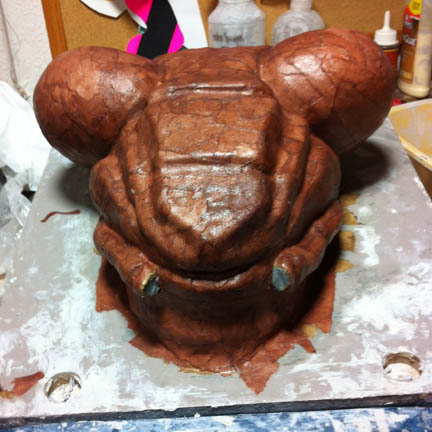
I had to cut off part of the clay  mandibles to accomplish the papier-mache. They were made separately and joined once the cast had been pulled from the clay.
I had to cut off part of the clay mandibles to accomplish the papier-mache. They were made separately and joined once the cast had been pulled from the clay.
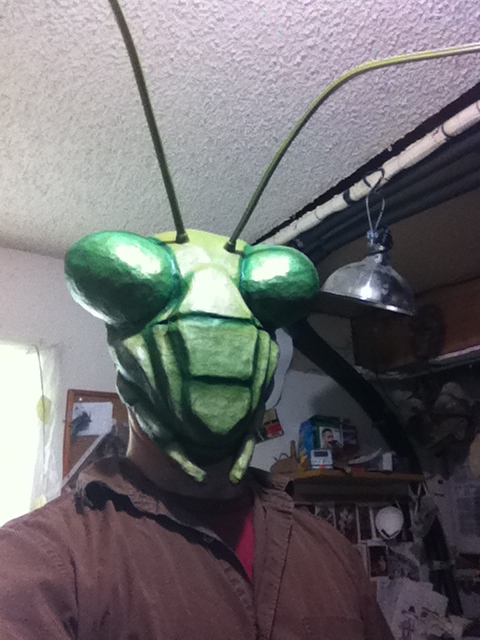
This praying mantis has a special paint on the eyes—a gold mixed with a green—to create an iridescence to the eyes.
This praying mantis has more texture on the eyes than the exoskeleton. It also has a special paint on the eyes to create a feeling of iridescence.

I refined the eye hole to be even more incorporated in the geometry of the sculpture. The next time I had the opportunity  to work on this mask, I played around a little with color. Research images guided my thoughts.

A variation from the previous sculpture. The eyes were further refined and smoothed with paper clay.
A variation from the previous sculpture. Research provided additional ideas fro coloring. The eyes were further refined and smoothed with paper clay.
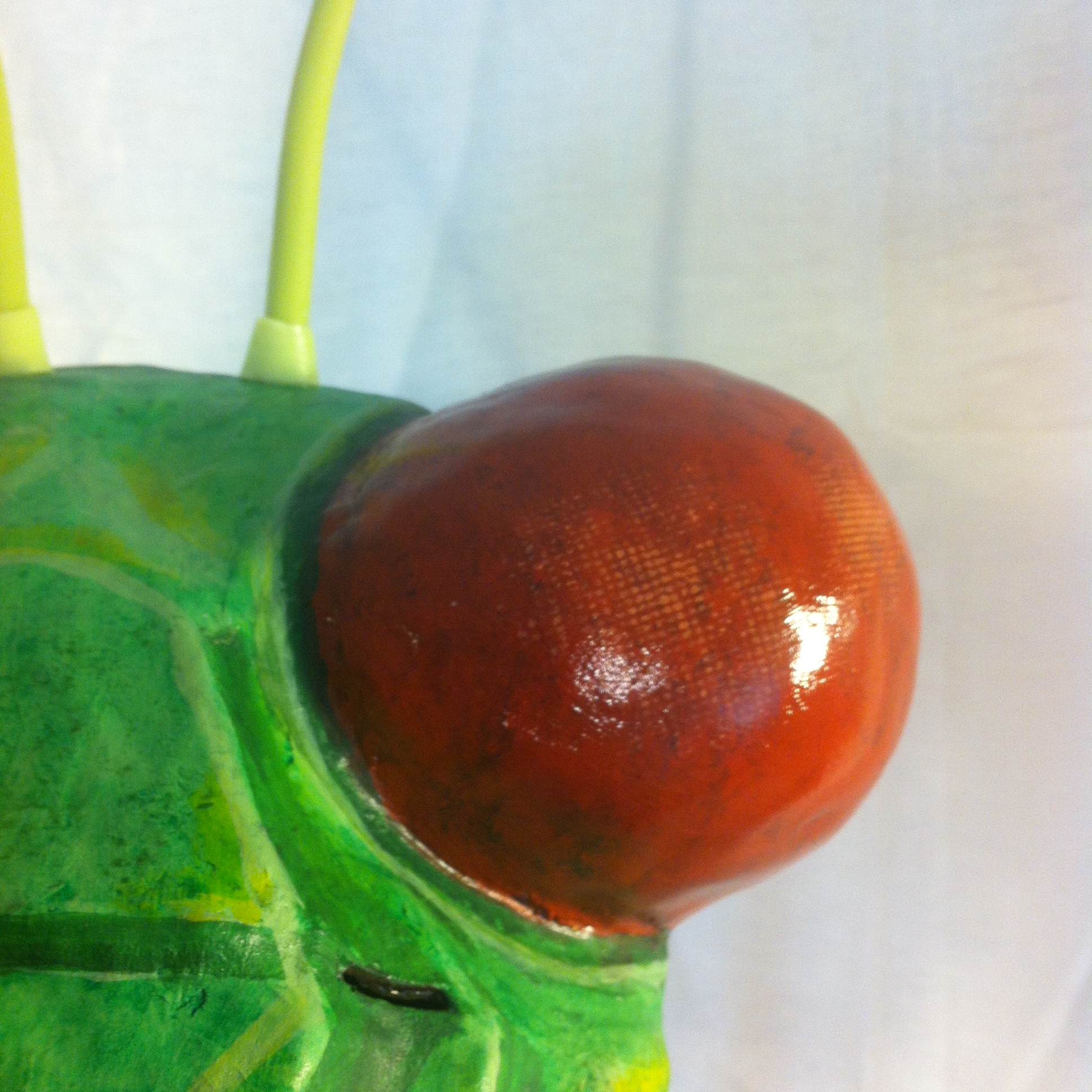
For the eyes on this version, I began with a sponge technique to break up the flatness of the red. On top of that, I used a stencil technique to suggest the segmentation of the eyes.

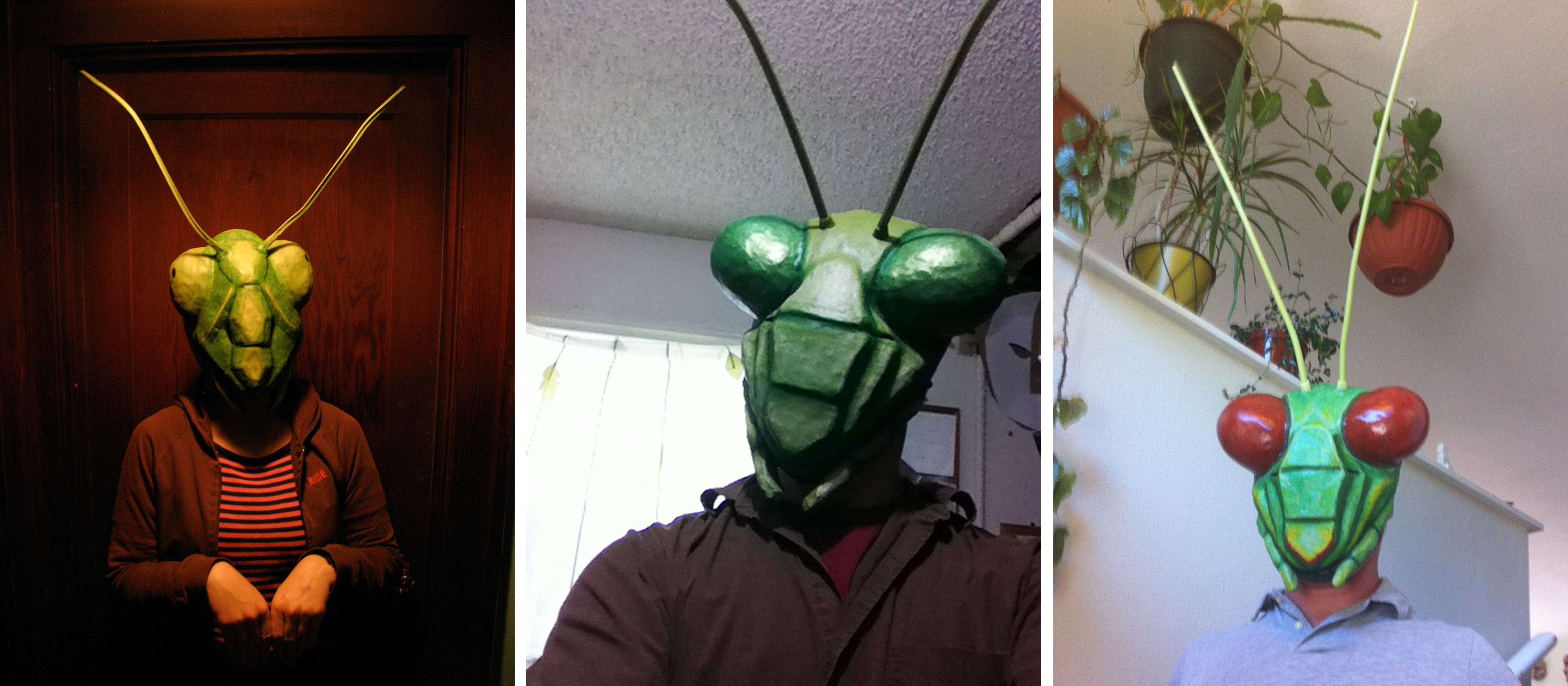
I’ve learned great things each time about this he next time I work on this mask, I want to explore greater width. Here are all the versions so far:

Side by side
Side by side
In this silhouette, the mask is almost three times as wide as the human head!

So. Epic.

The Epic Project

Inspired by the study of mythology by Joseph Campbell (a favorite of mine too!), as well as theatre creators Ariane Mnouchkine, Jacques Lecoq, Peter Brook, and Complicite, Professor Stephanie Roberts is leading an exciting collaboration between UMKC Theatre and  the UMKC Conservatory IMP Ensemble.

The working title is The Epic Project. It is a three year endeavor to weave contemporary and classic stories into an epic narrative suited to our times. The actors have been devising for nearly two years already. I was invited to be a part of that exploration this last February.

Screen shot 2015-03-05 at 11.54.49 AM

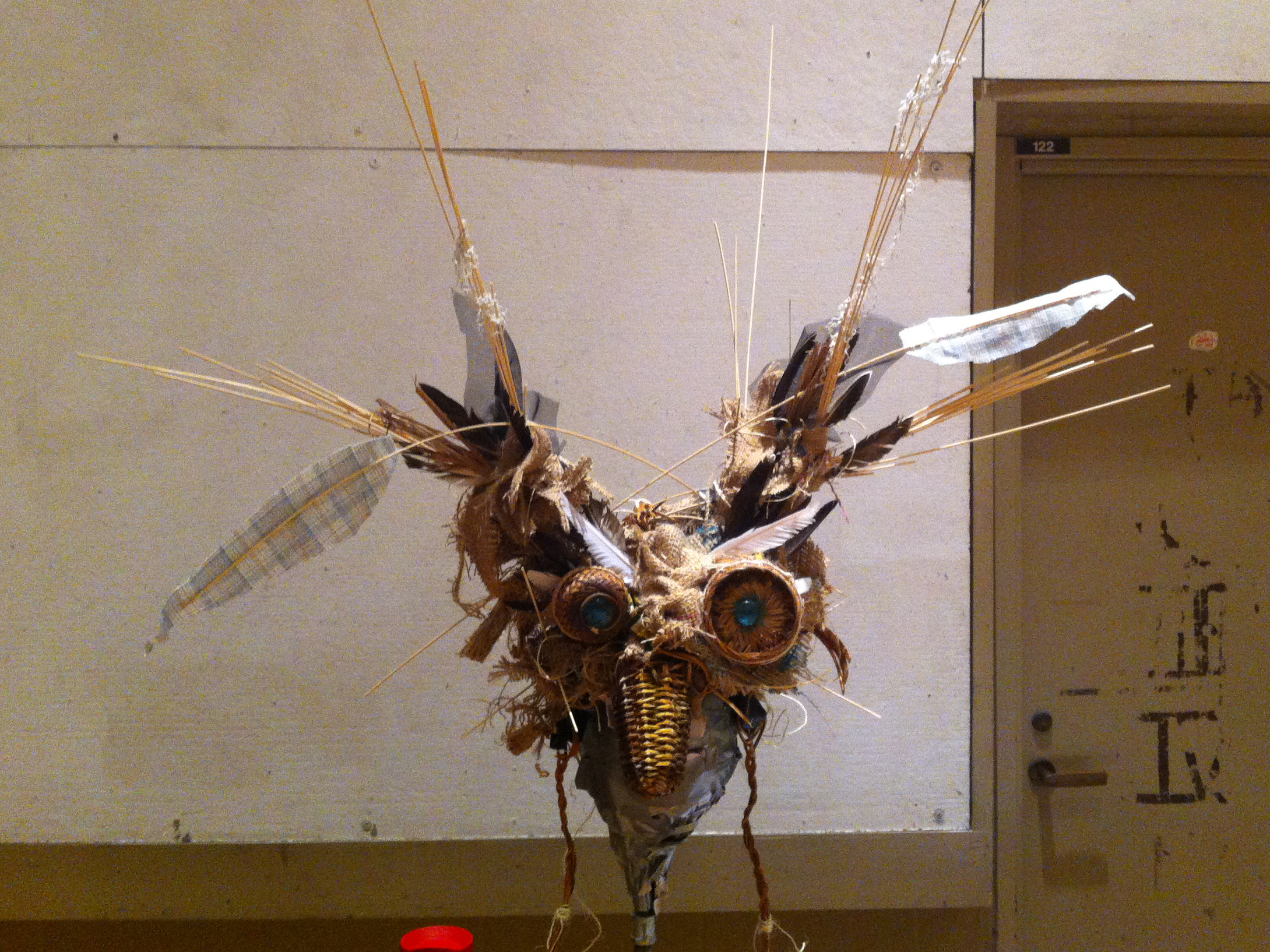
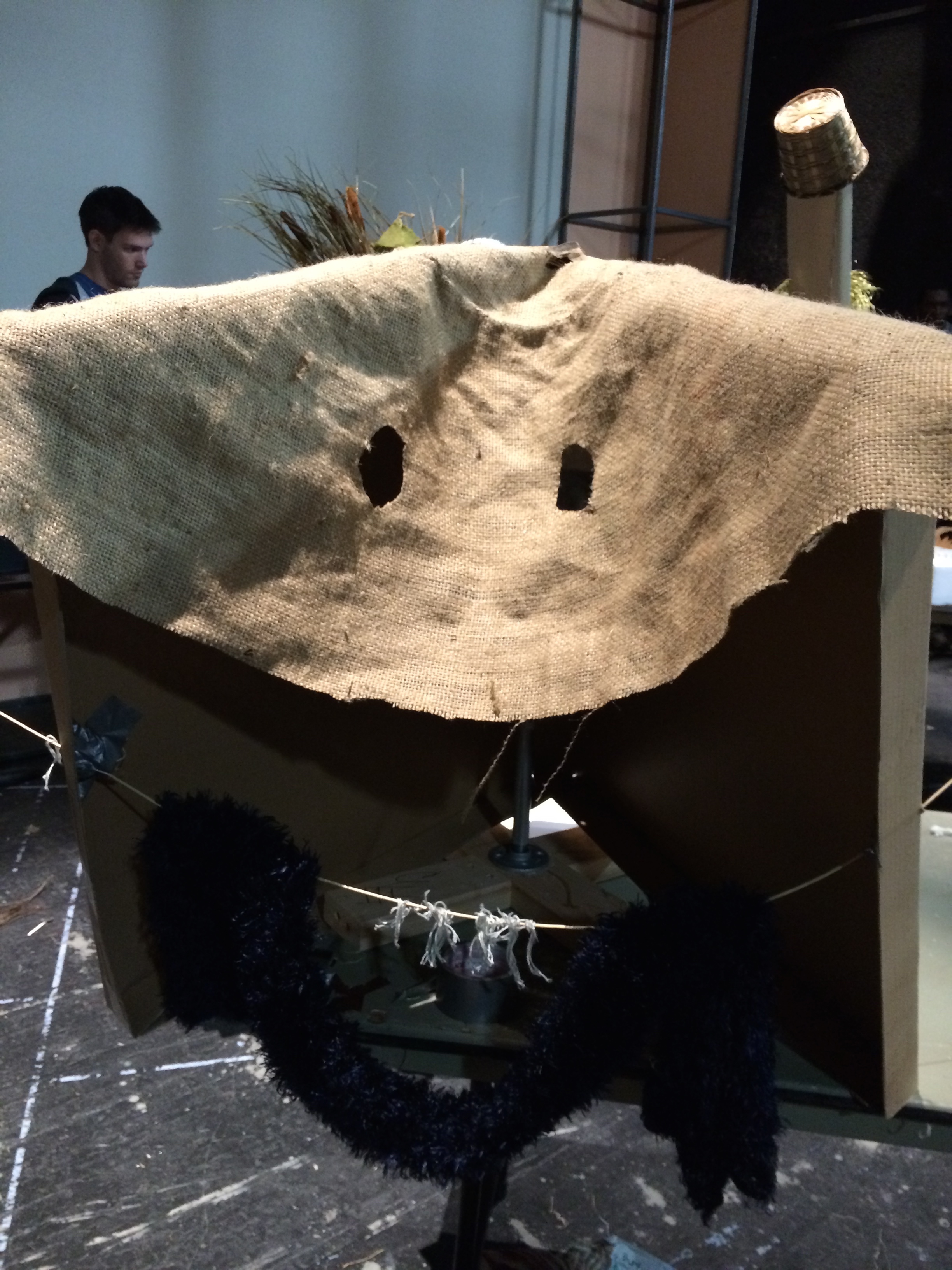
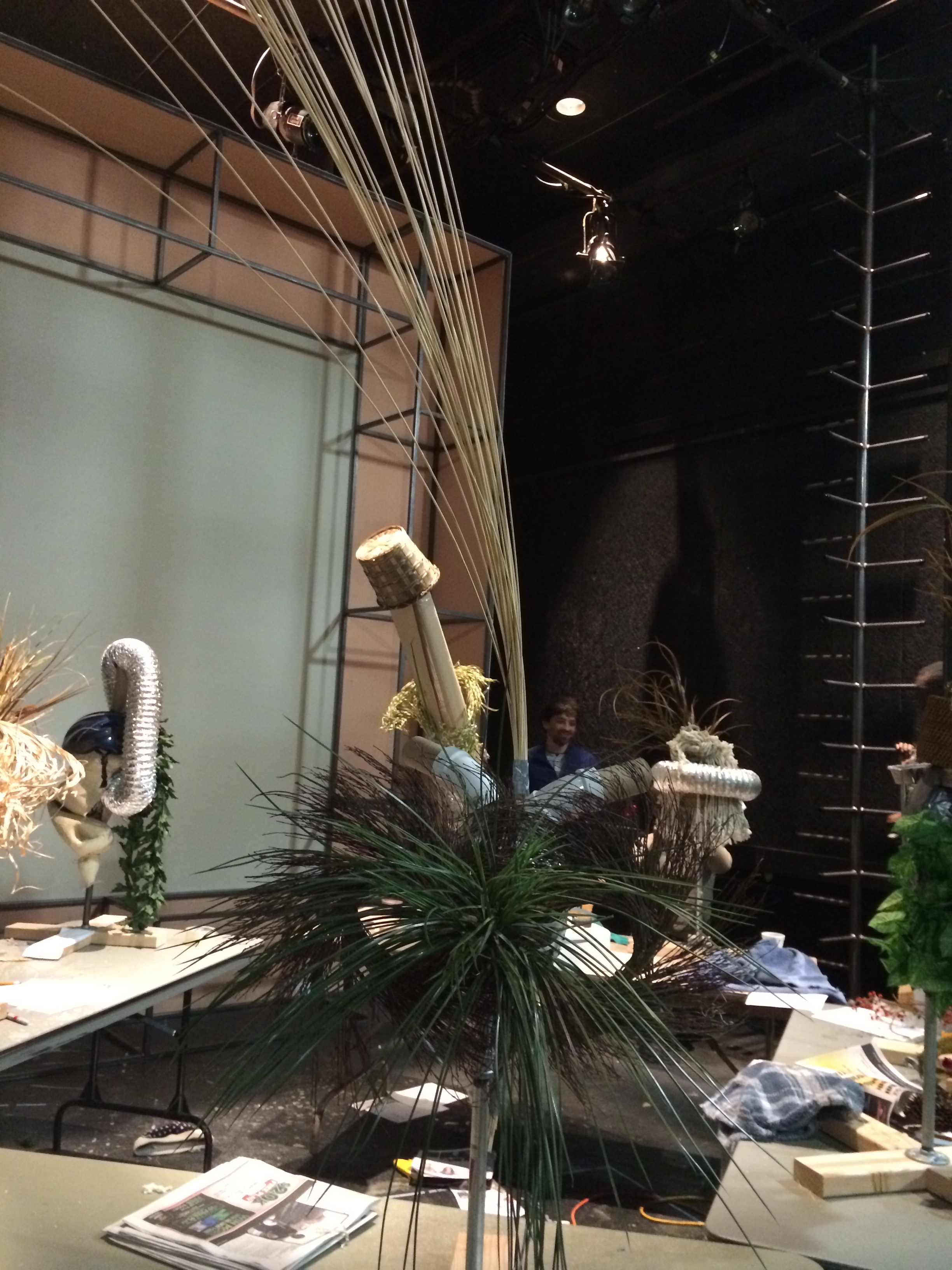
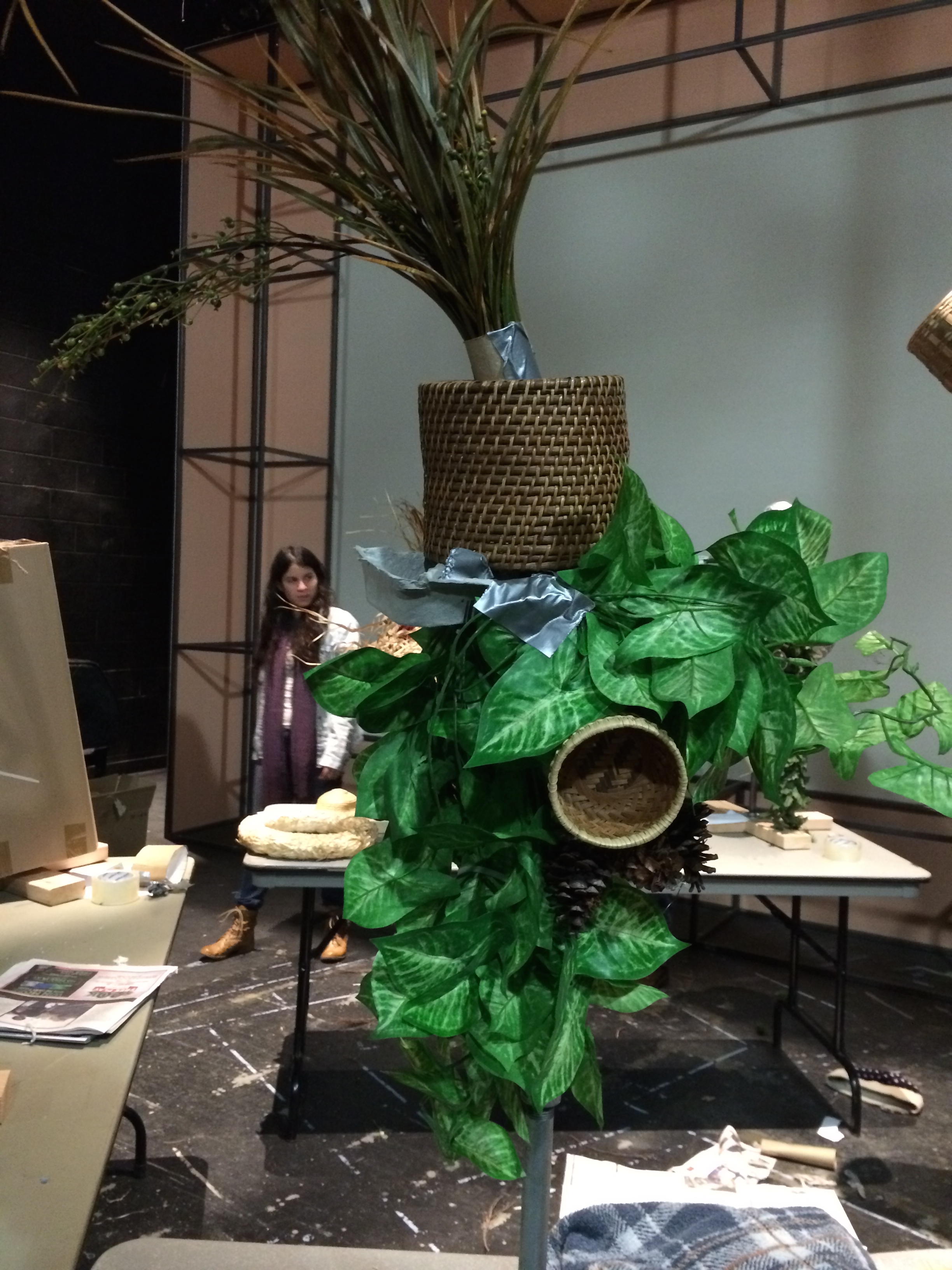
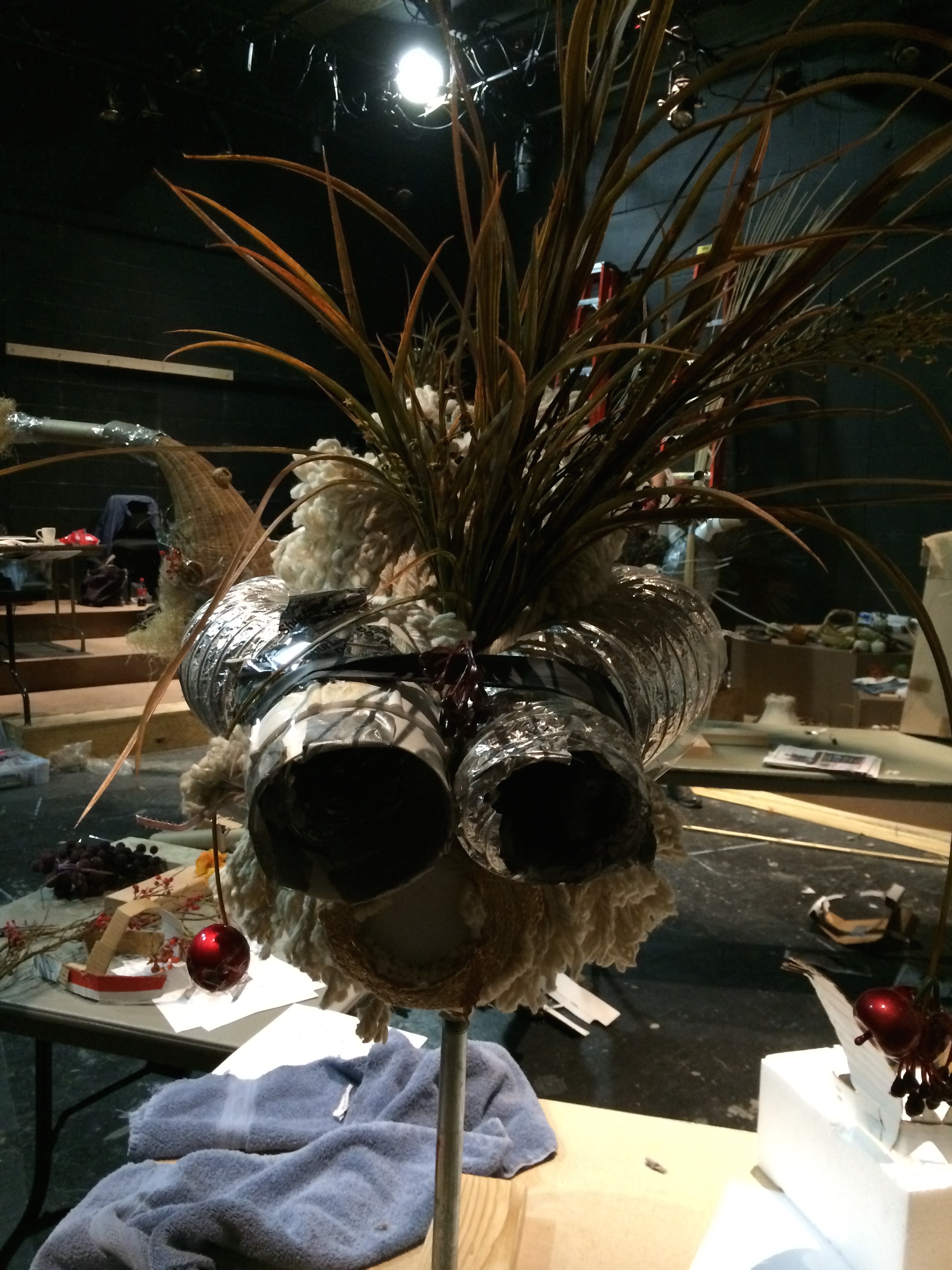
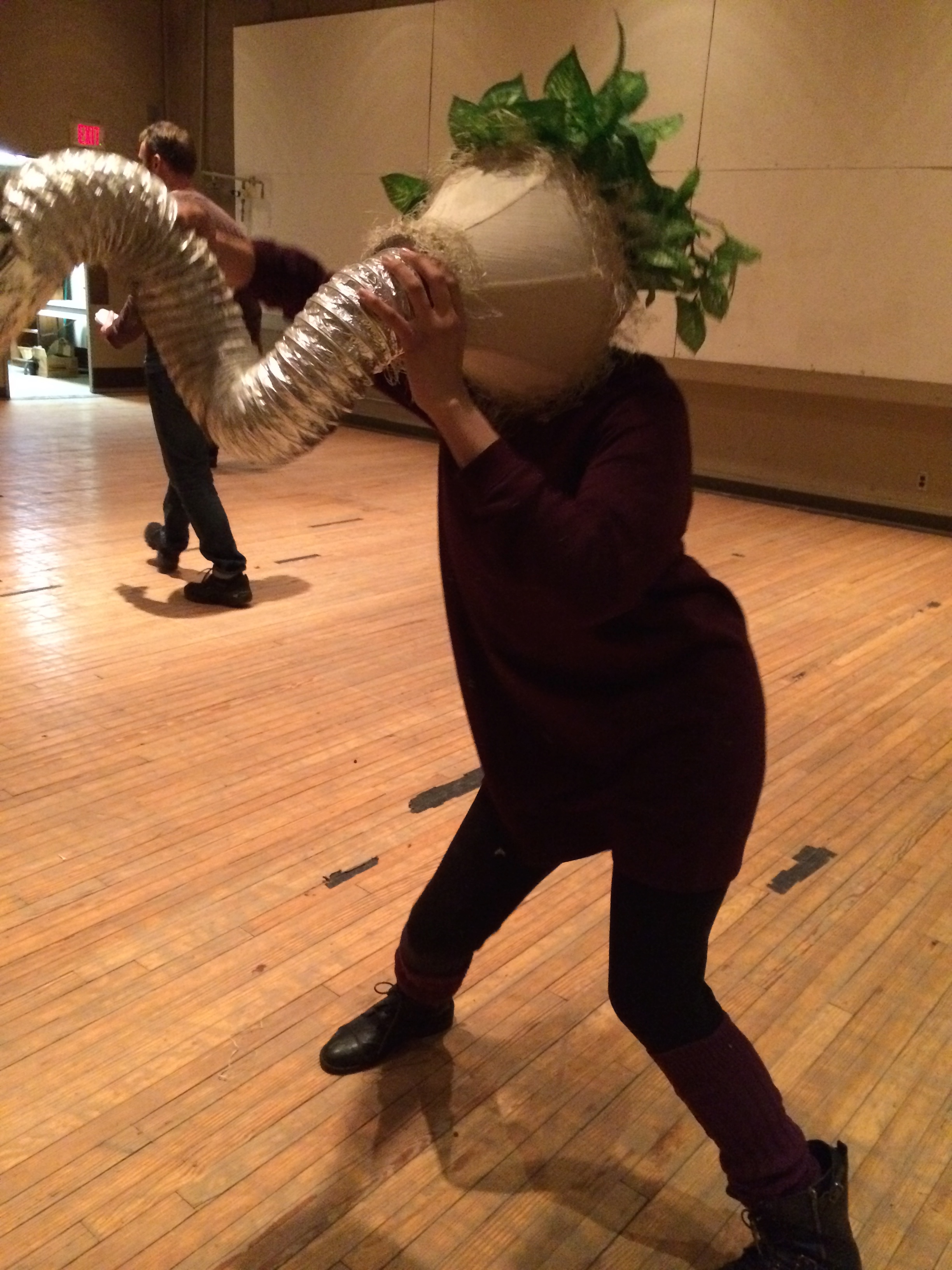
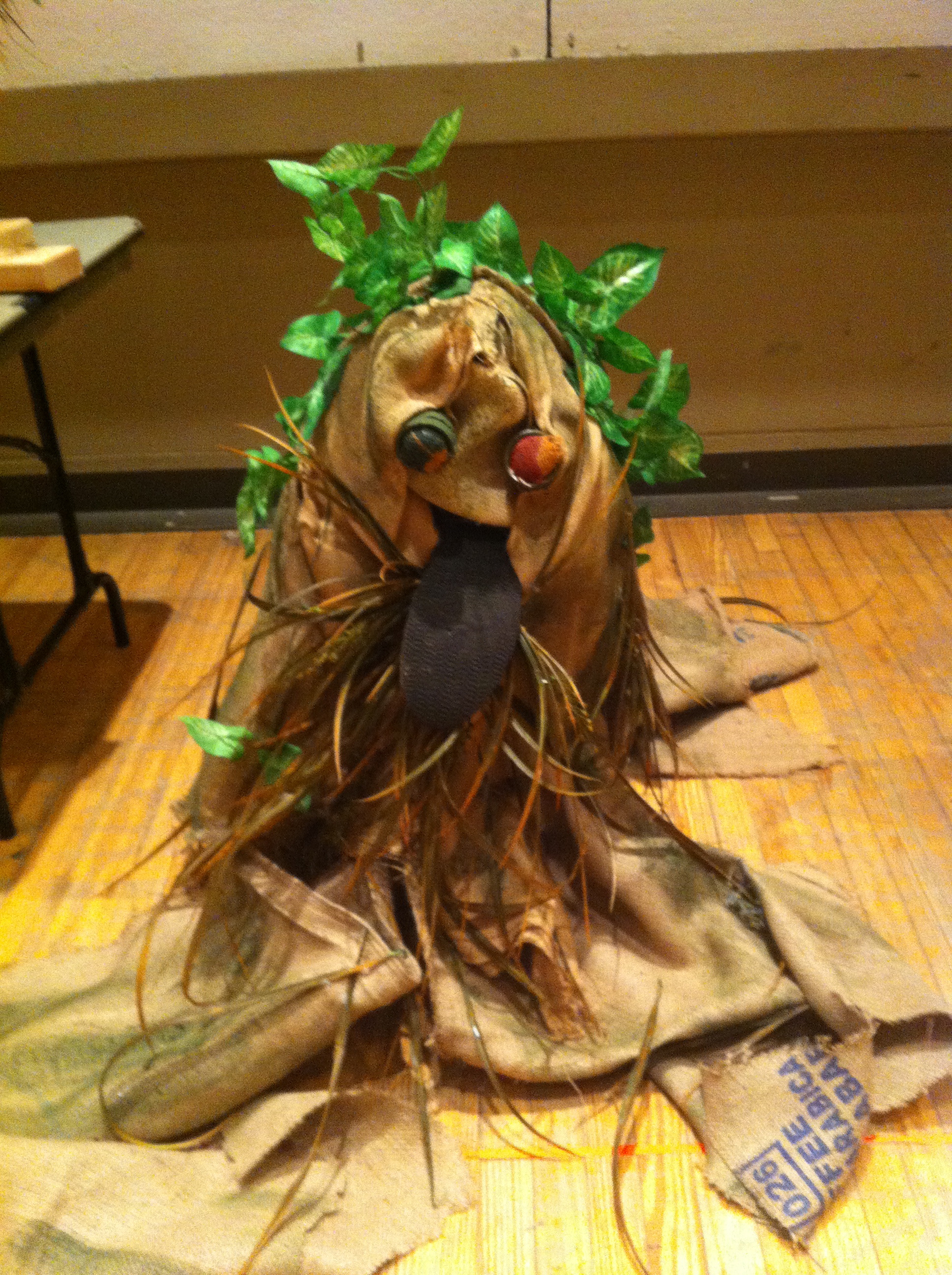
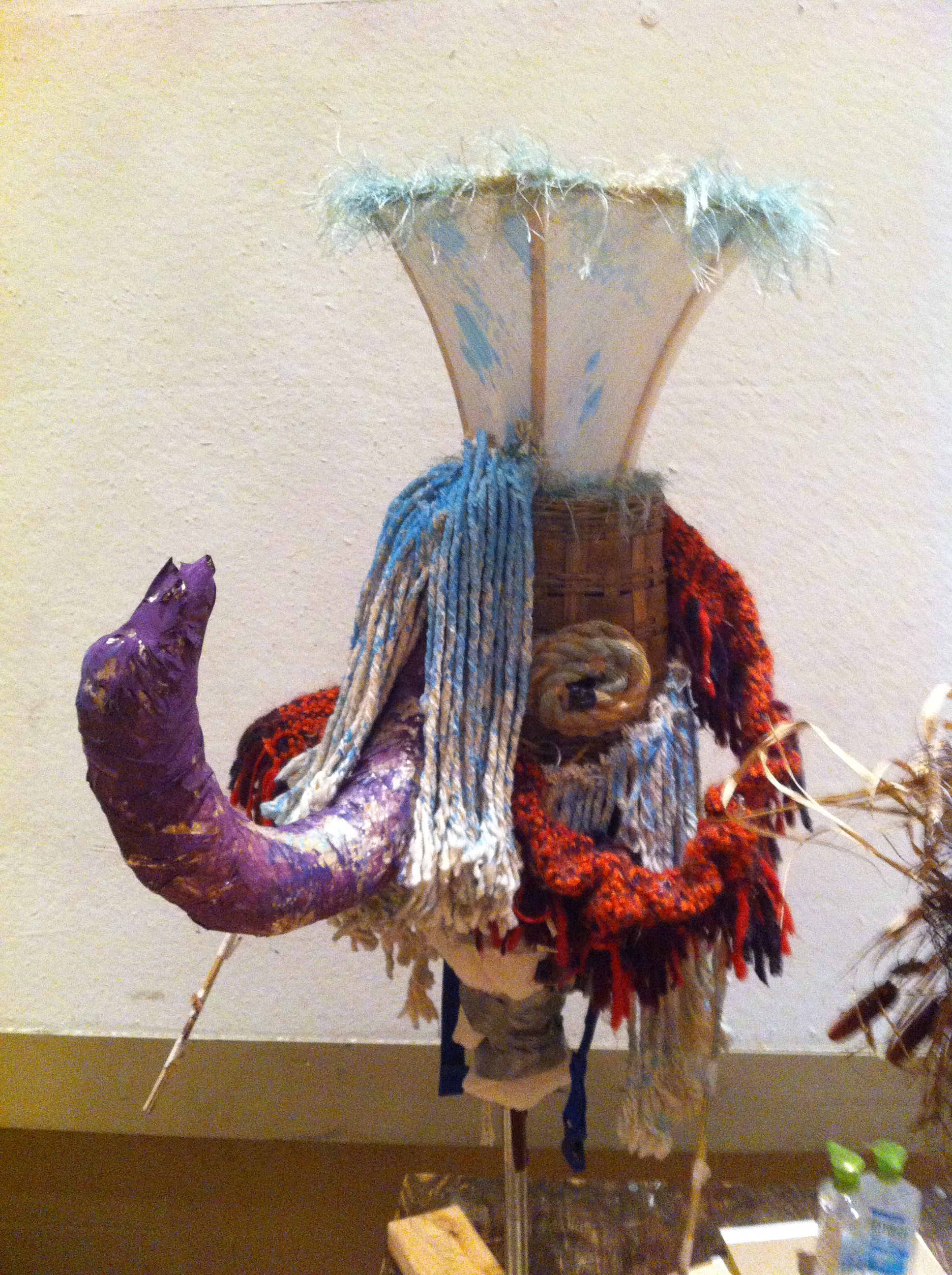
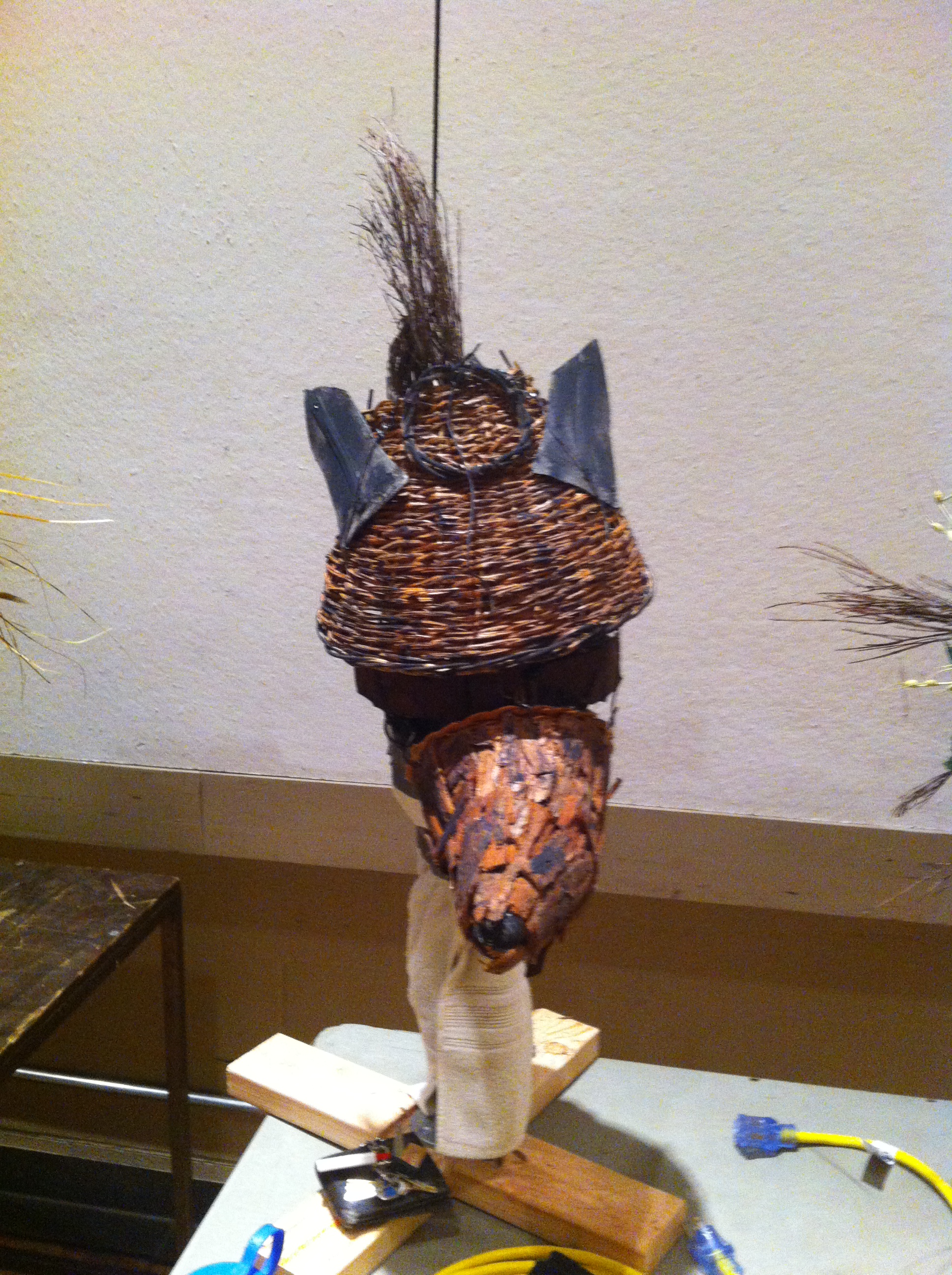
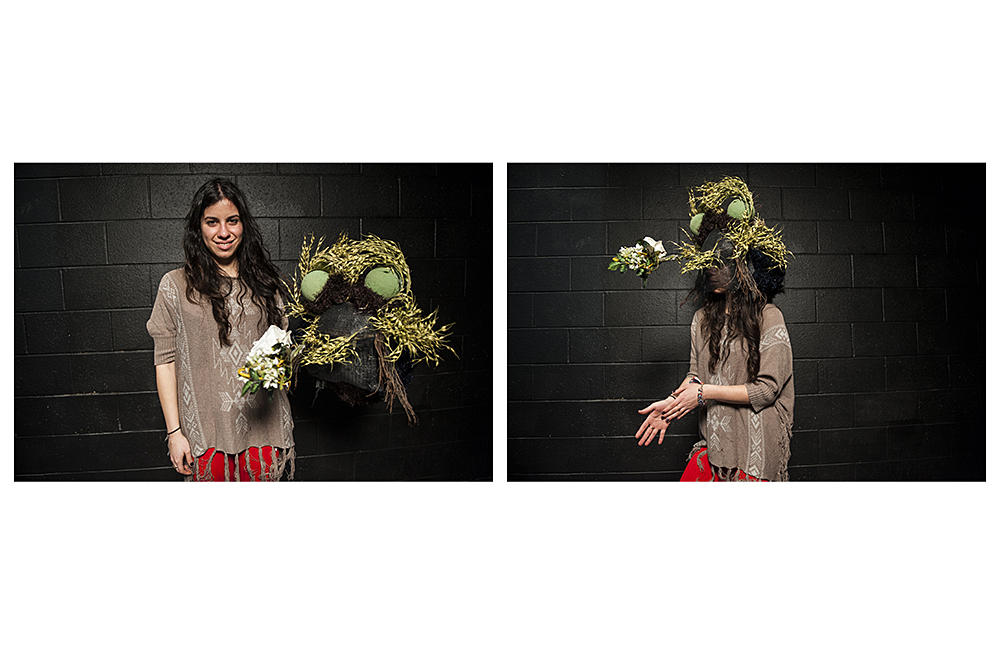
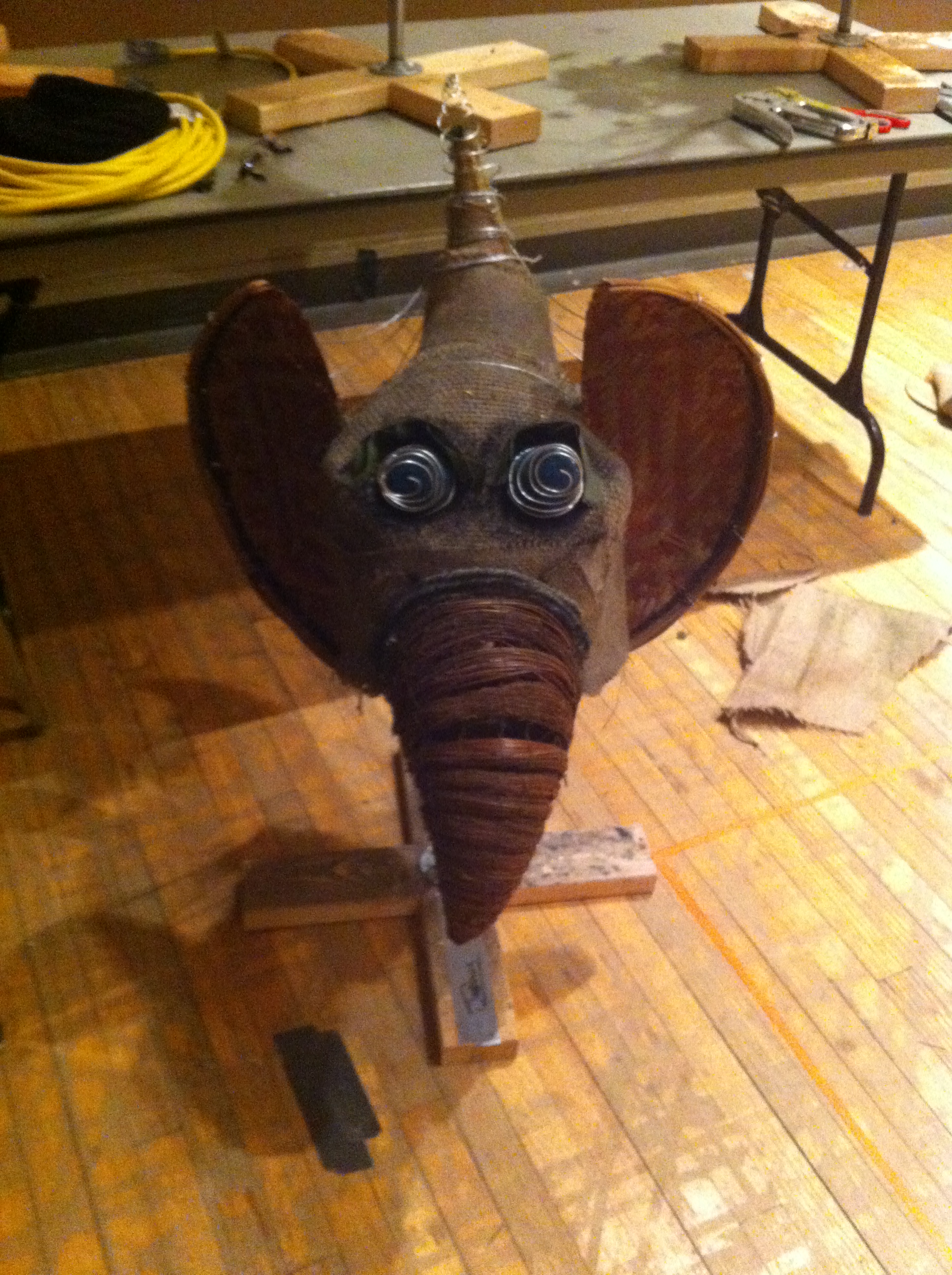
As a part of their exploration of character and archetype, I worked with the actors to create animal-spirit masks.  The inspiration for this work came in part from old mask and mummer traditions from Europe and also from animal and spirit masks from around the world.  I asked the students to engage with familiar objects and new materials as they uncovered the spirit of the animal within.

Enough chatter. Here are some pictures!

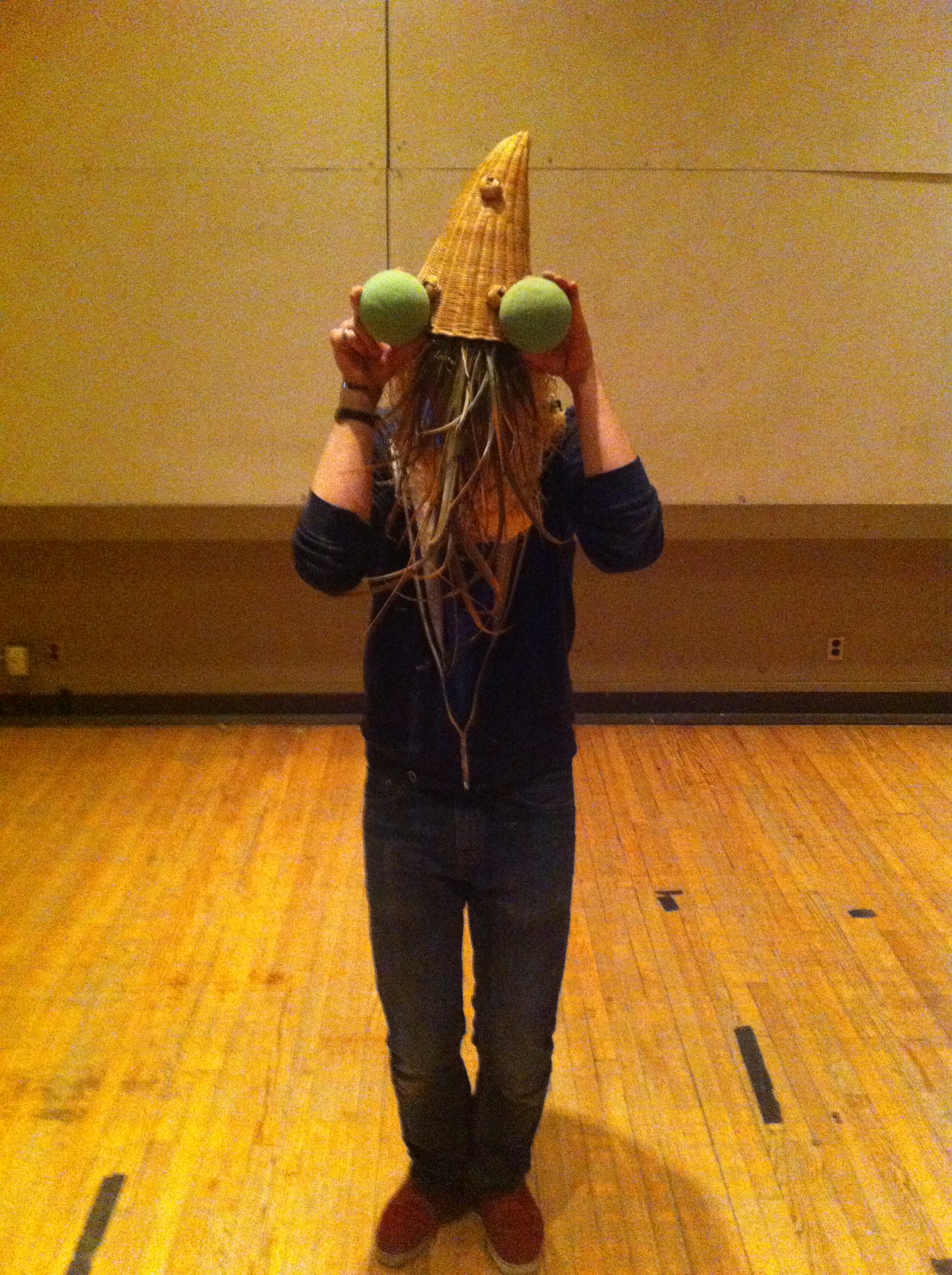
Initial experiments

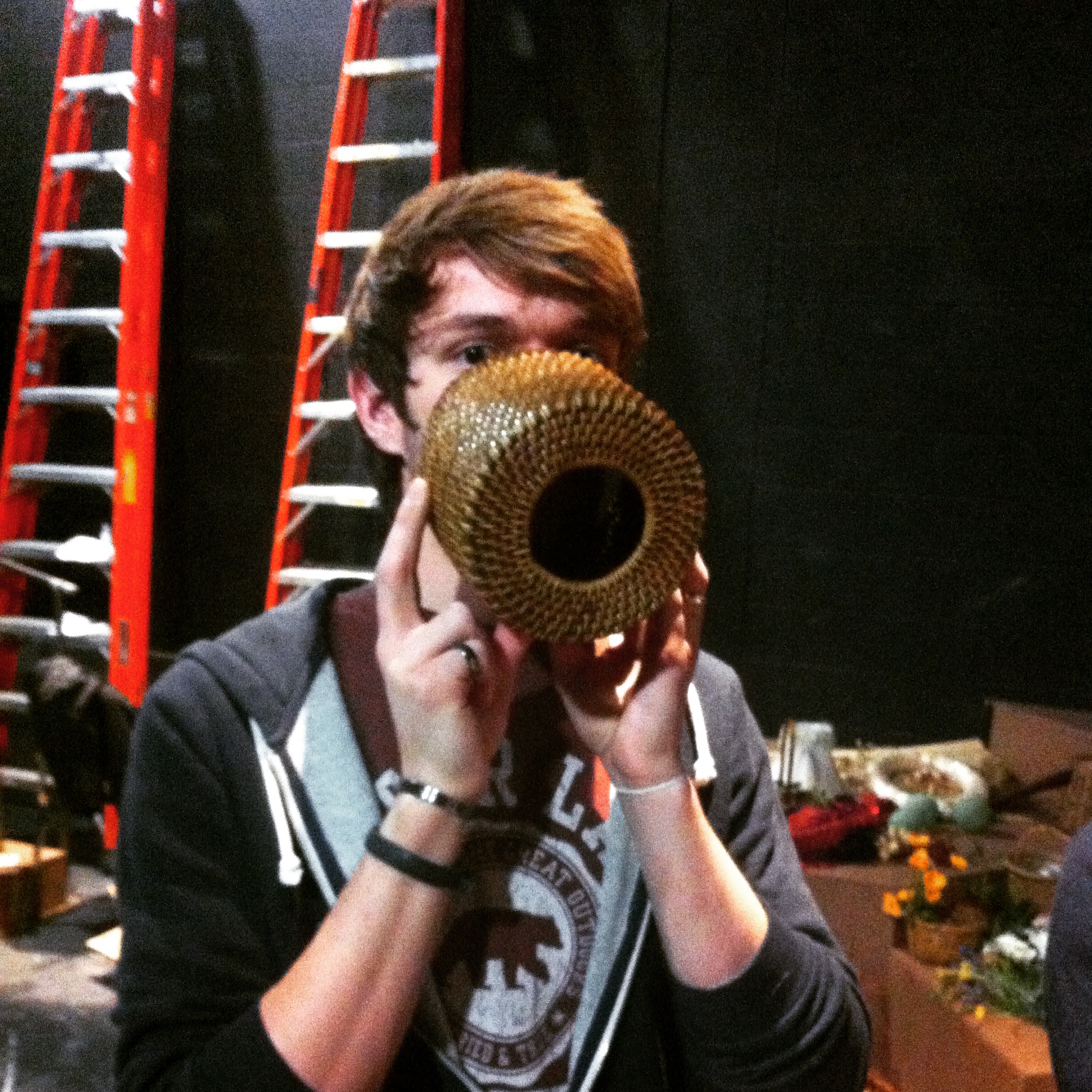
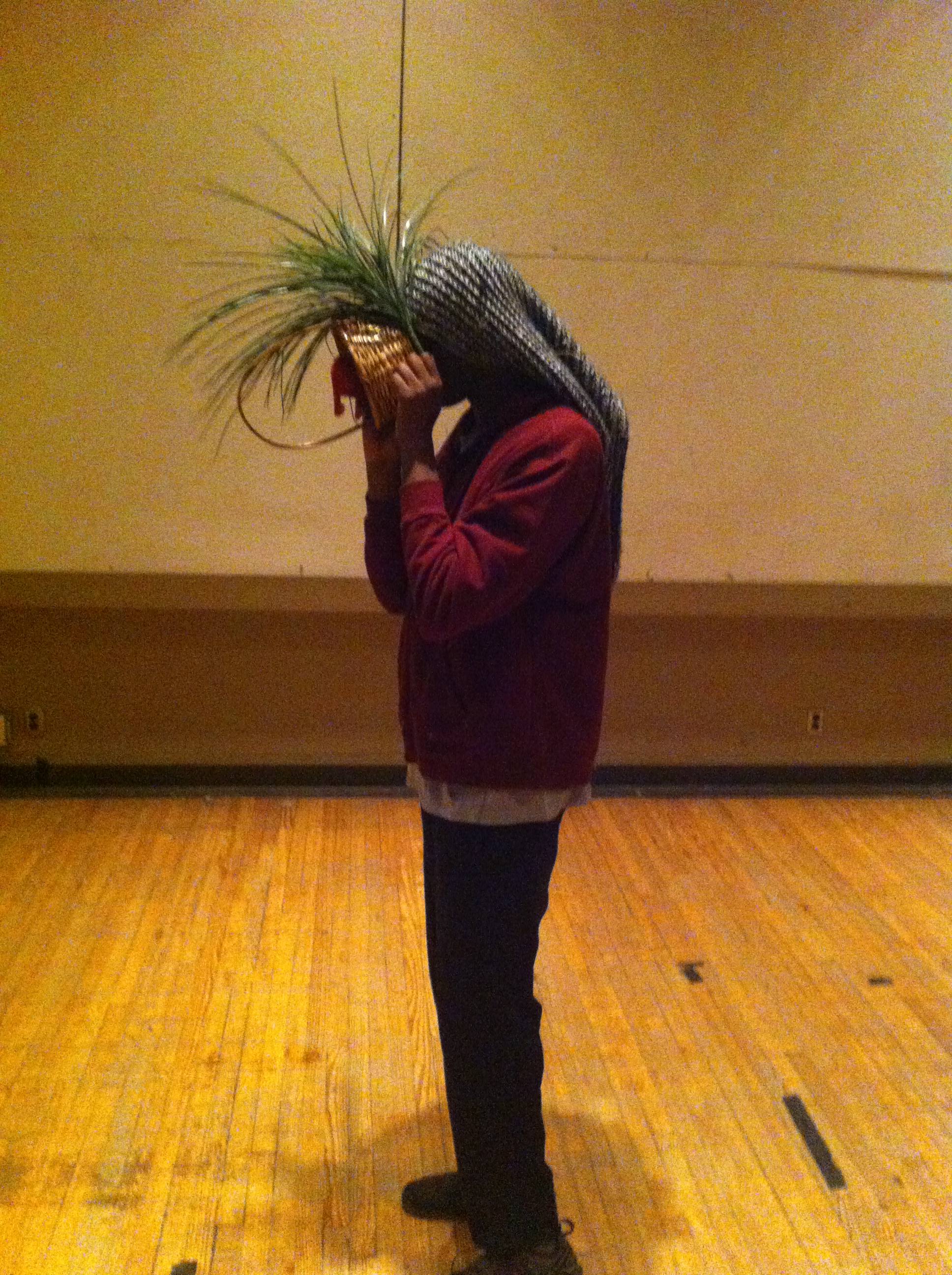
A new mouth for Josh.
Joshua uses a basket to create a mouth.
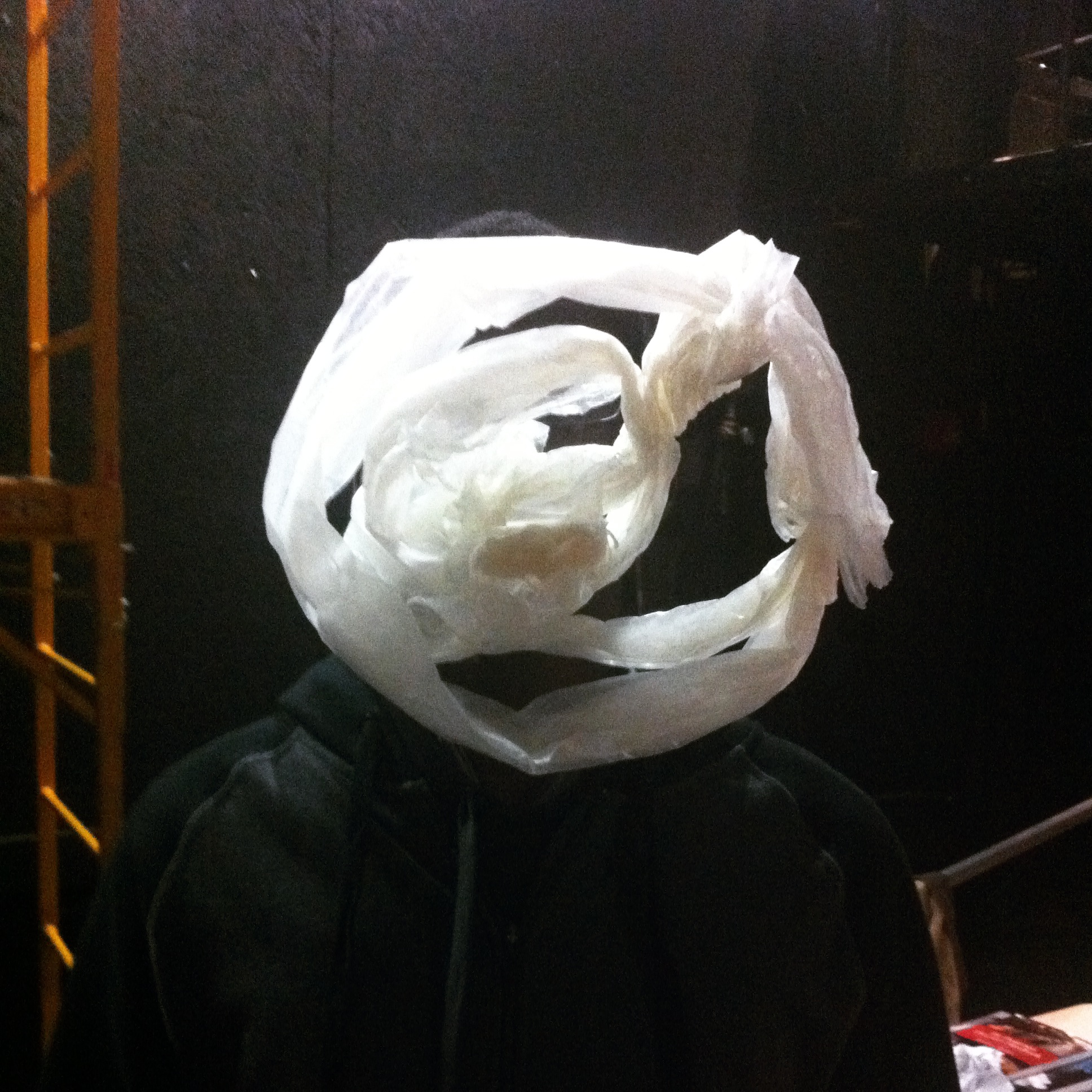
An experimental mask made by Edwin.  It's made of wax paper and captures the movement and essence of a different material.
An experimental mask made by Edwin. It’s made of wax paper and captures the movement and essence of a different material.
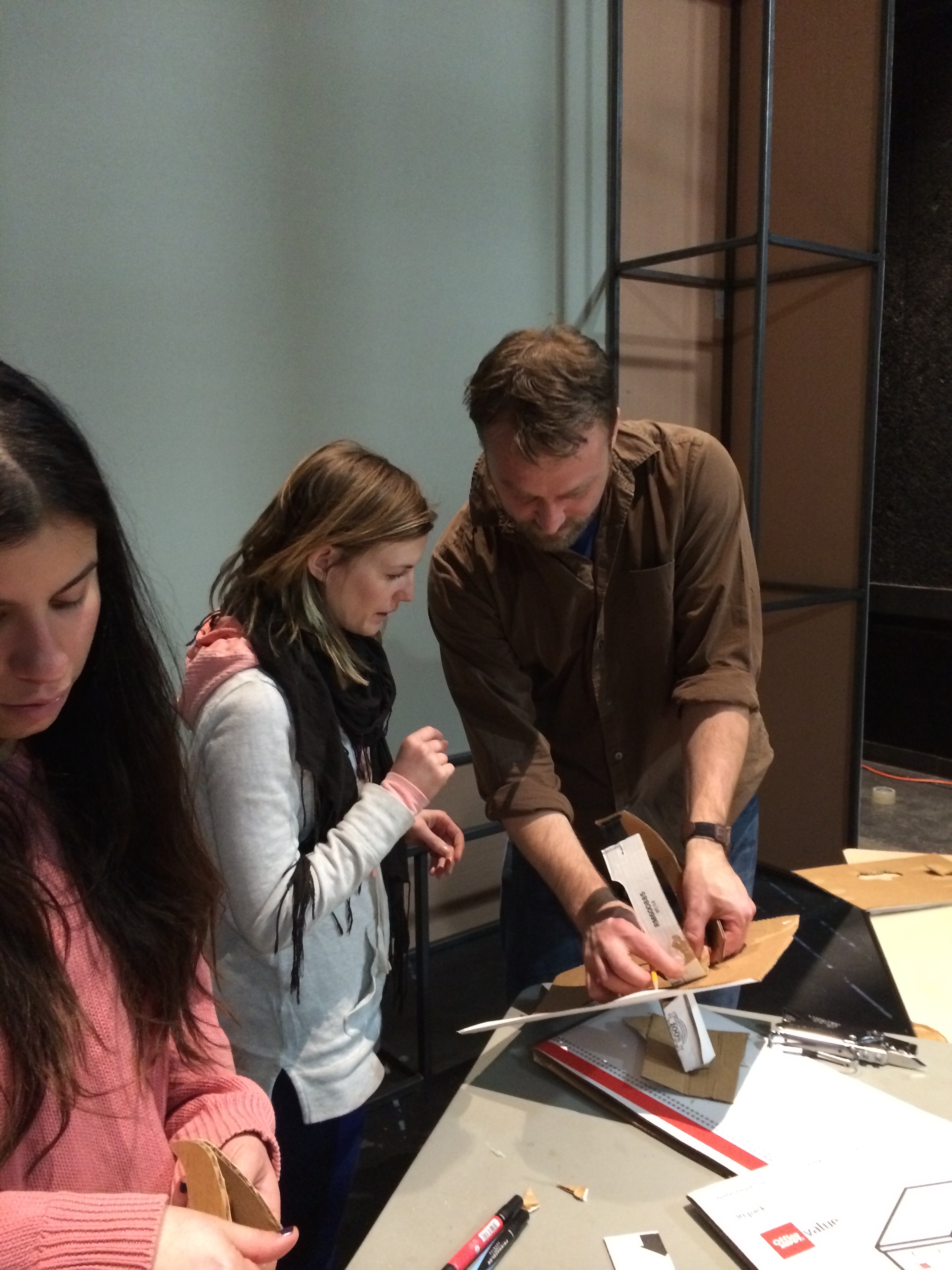
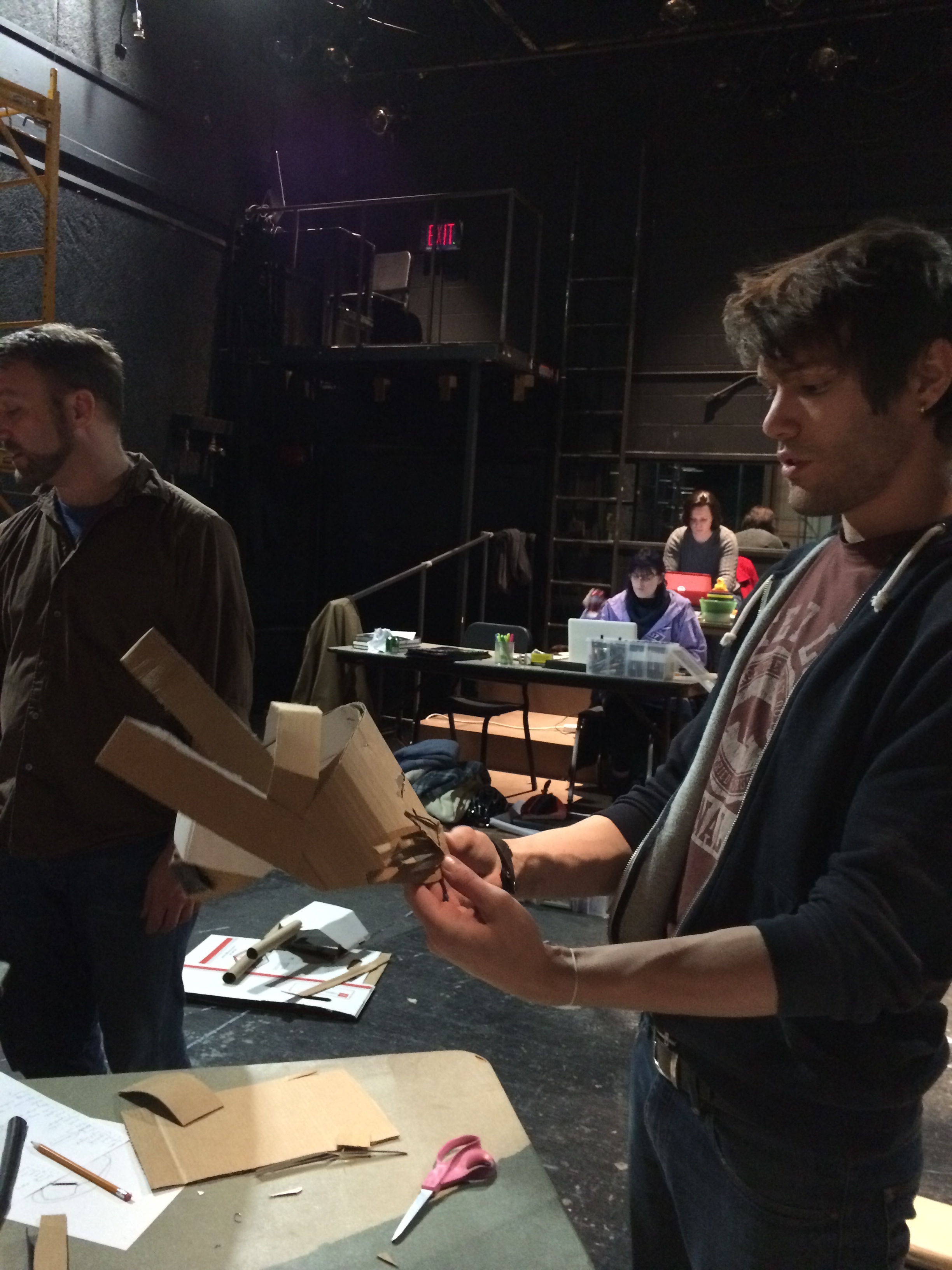
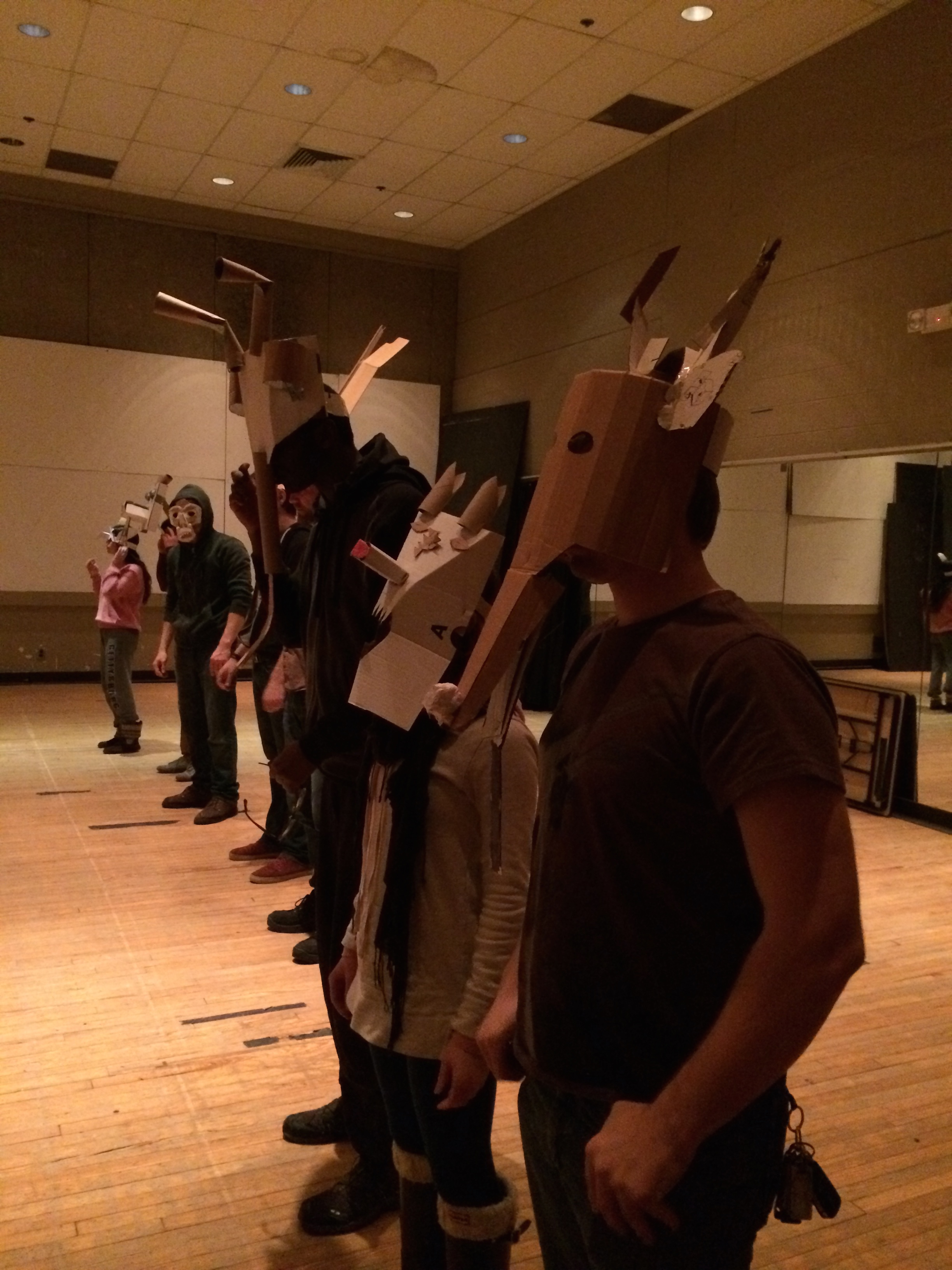
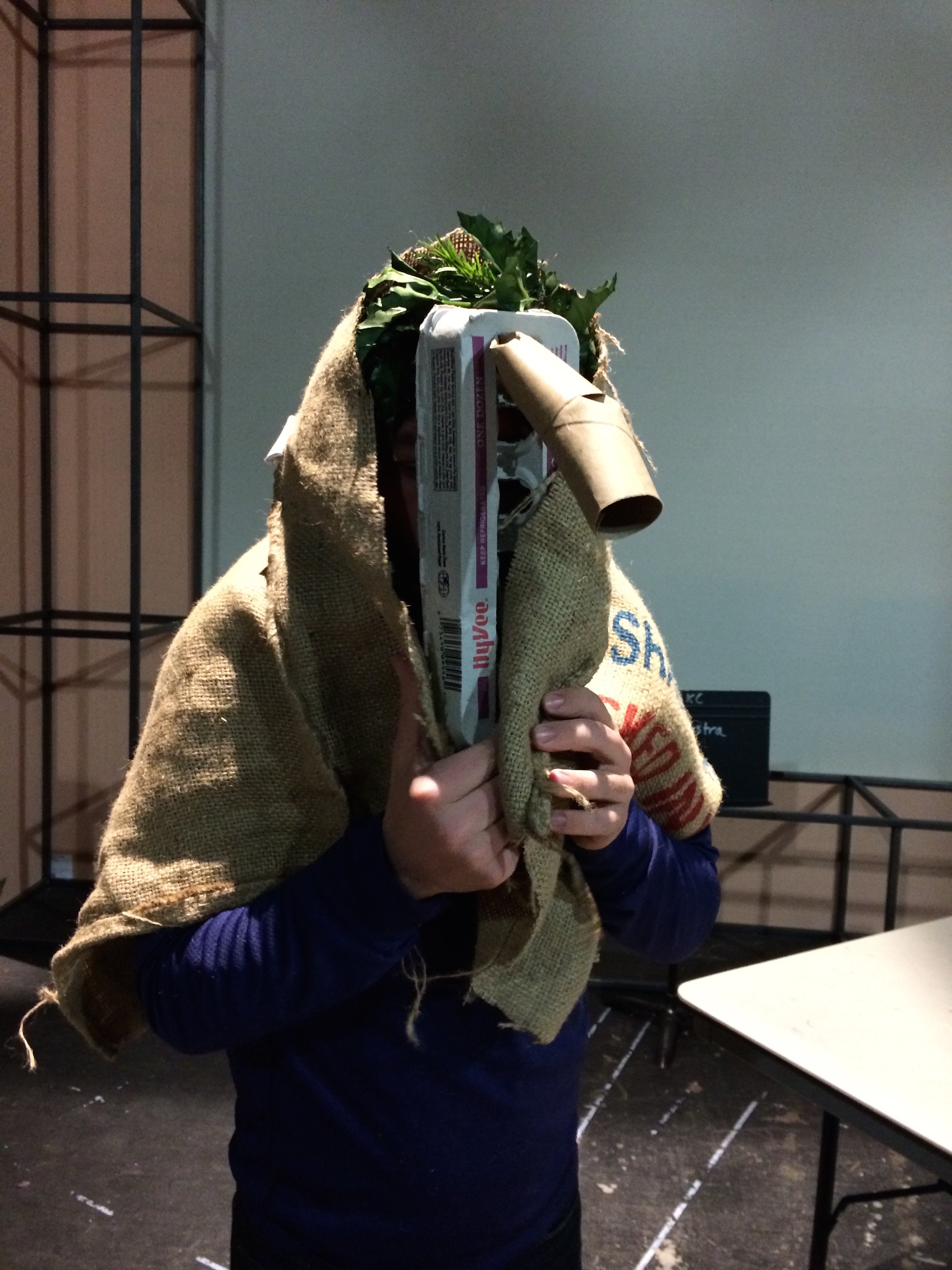
We then tried making animal masks using only one material: cardboard.
Making a mask not only requires choice of material, but constant check-ins along the way.
Masks aren't complete until the performer's body is added. We used this as a way to check in on our work as we built.
Masks aren’t complete until the performer’s body is added. We used this as a way to check in on our work as we built.

Digging further into materials

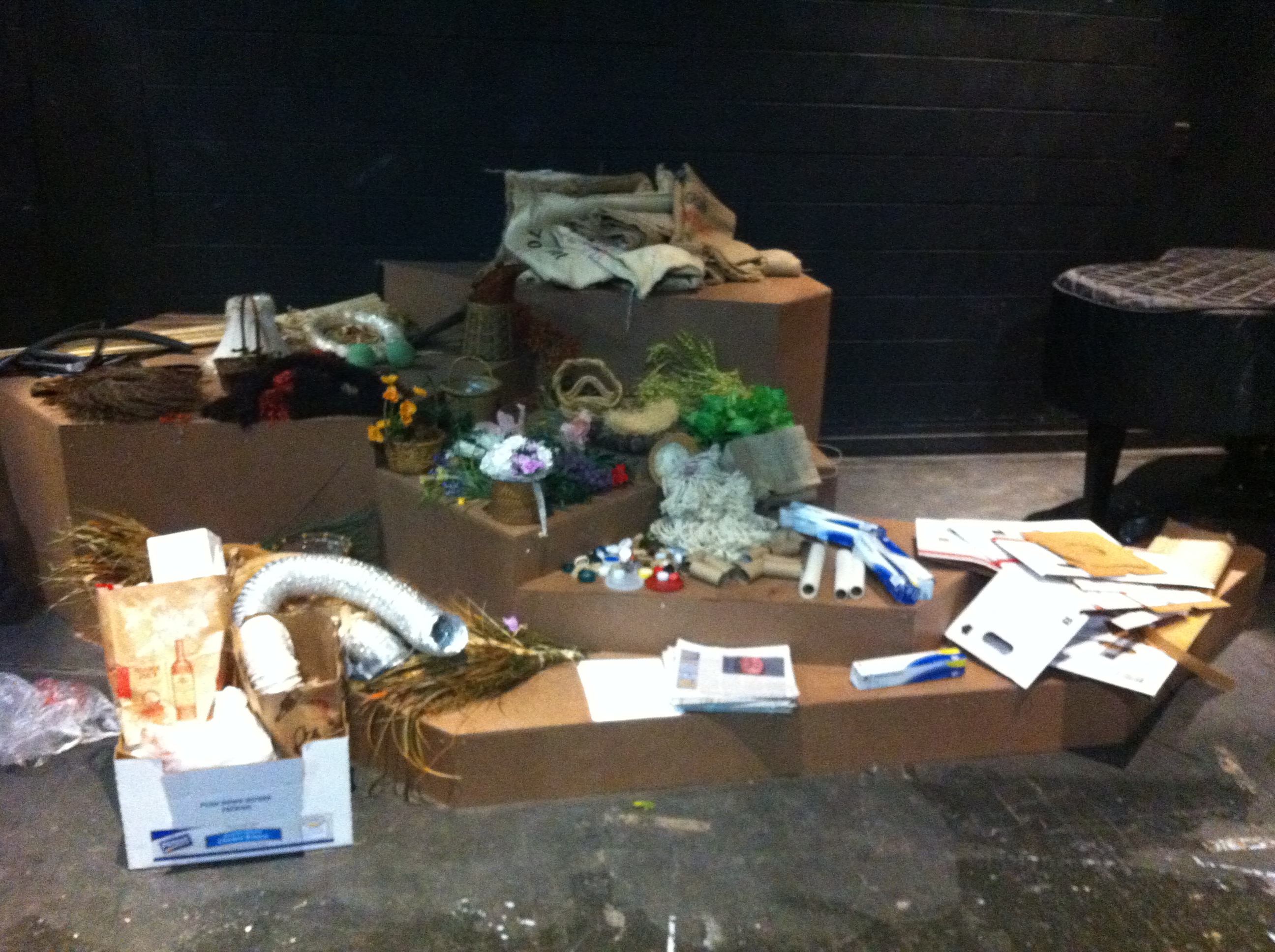
What we're working with.
What we’re working with.

IMG_0147IMG_0146IMG_0145IMG_0152IMG_0120IMG_5678IMG_5681IMG_0118

Uncovering the animal spirit

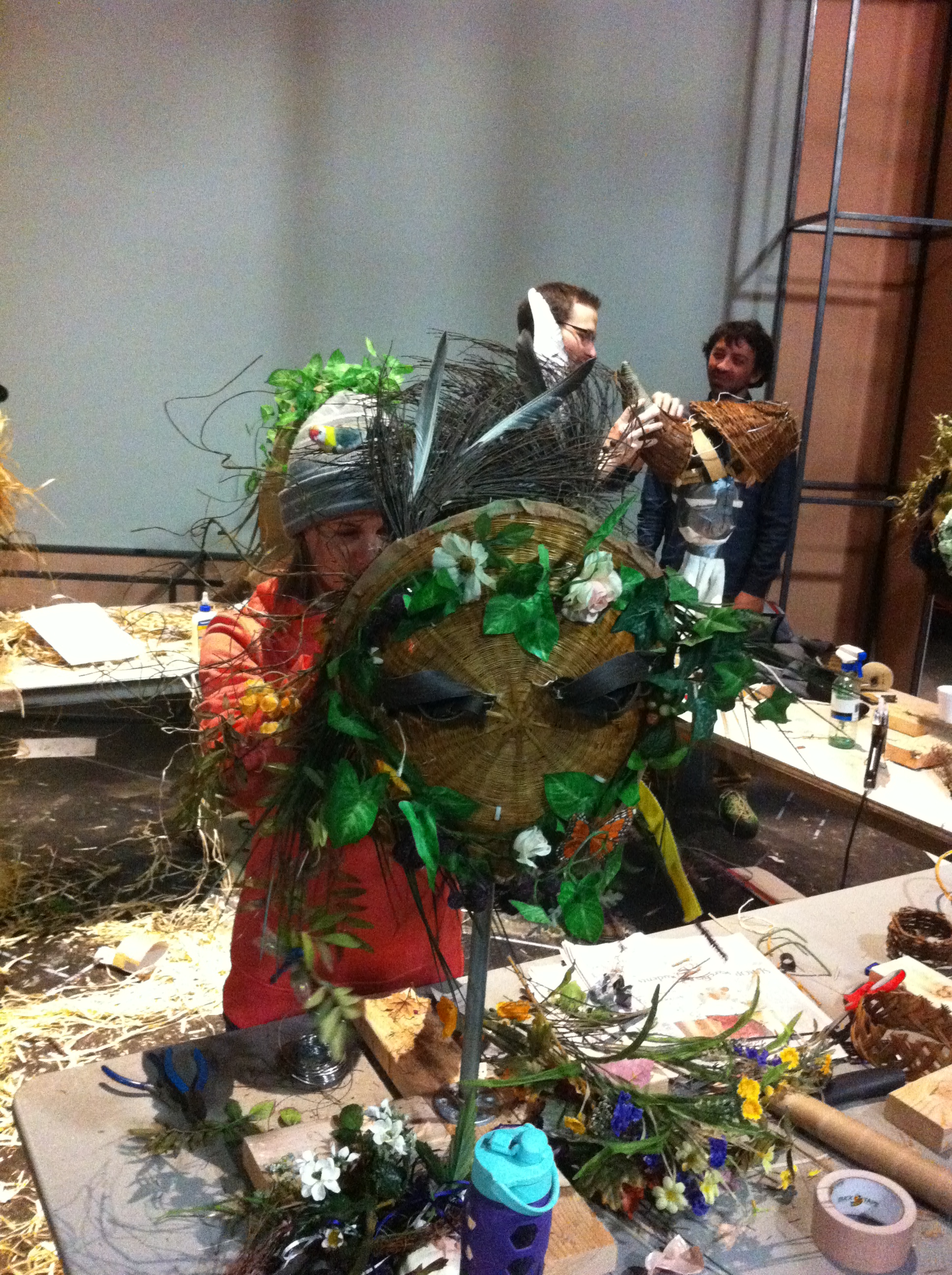
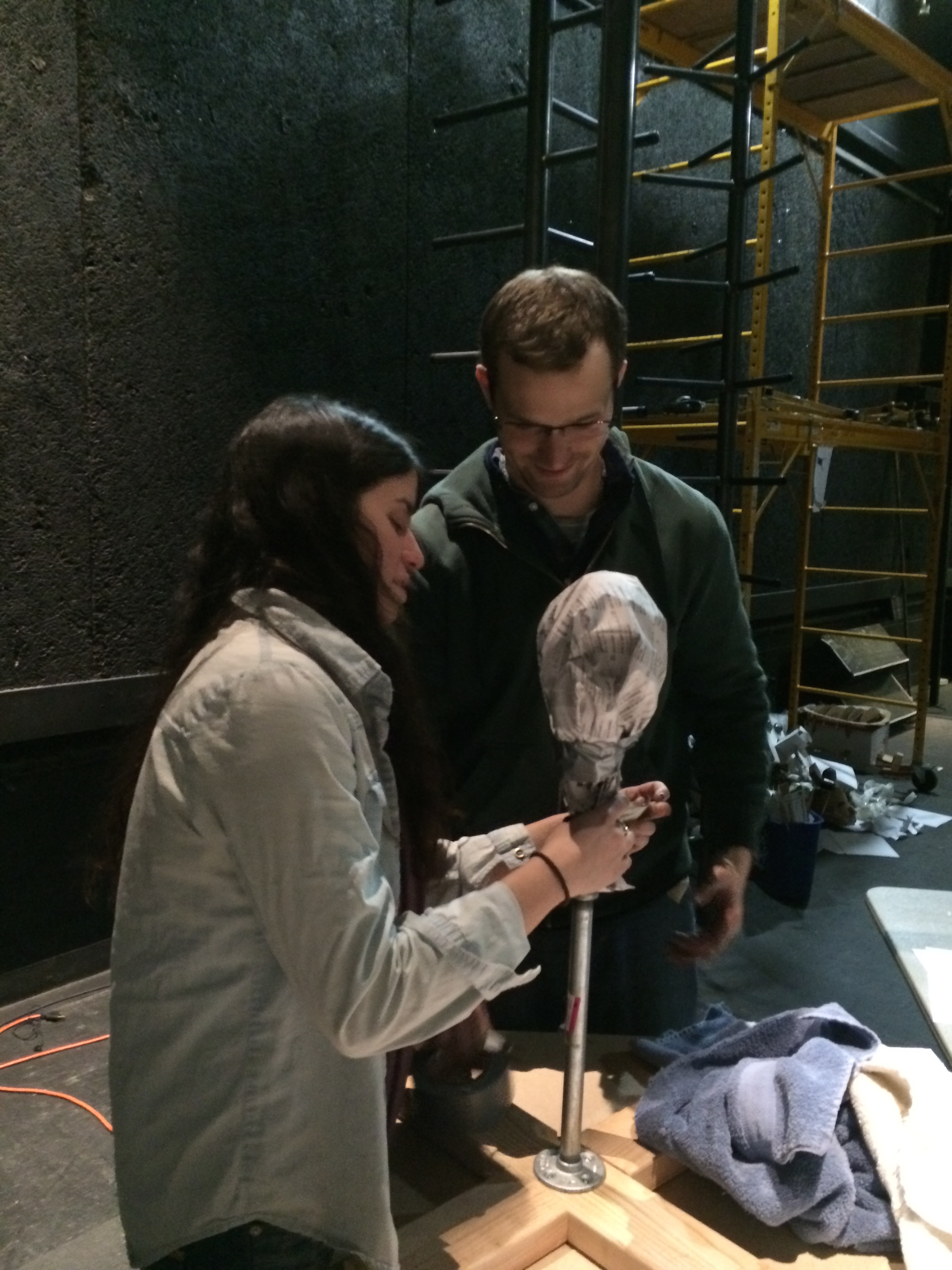
We did many experiments with materials and forms, then took what we learned and started making the mask for each actor.

The actors made a ball of paper the size of their head and attached it to the armature stand. This helps them size the mask correctly.

IMG_5773

IMG_5761IMG_5776 IMG_5775 IMG_5778 IMG_5774

On the second to last day of our process, Julie Denesha from KCUR came and interviewed some of the actors. Check out her amazing photos here.

Mariem/Mosquito Photo: Julie Denesha
Mariem/Mosquito
Photo: Julie Denesha

See the work-in-action!

Come see the workshop performance in this phase of the Epic Project in Studio 116 at UMKC’s Performing Arts Center (4949 Cherry St.)  Previews run from Friday Mar 6-8th and runs Mar 11-15th. Shows at 7:30 with the exception of Mar 15th at 2:00pm.

Seating is very limited so please reserve your FREE tix at 816-235-2782.

Support live, collaborative theatre!